Loading subject page…
- Mechanical Engineering
- 3 Dimensional Kinetics of a Rigid Body
Mechanical Engineering
All Micro-courses:28

1.
Physics Basics
13 Concepts
2.
An Introduction to Statics
10 Concepts
3.
Force Vectors
17 Concepts
4.
Equilibrium of a Particle
6 Concepts
5.
Force System Resultants
20 Concepts
6.
Equilibrium of a Rigid Body
9 Concepts
7.
Structural Analysis
17 Concepts
8.
Internal Forces
14 Concepts
9.
Friction
19 Concepts
10.
Center of Gravity and Centroid
13 Concepts
11.
Moment of Inertia
12 Concepts
12.
Virtual Work
12 Concepts
13.
Kinematics of a Particle
4 Concepts
14.
Kinetics of a Particle: Force and Acceleration
5 Concepts
15.
Kinetics of a Particle: Impulse and Momentum
12 Concepts
16.
Planar Kinematics of a Rigid Body
13 Concepts
17.
3-Dimensional Kinetics of a Rigid Body
10 Concepts
18.
Concept of Stress
8 Concepts
19.
Stress and Strain - Axial Loading
20 Concepts
20.
Torsion
12 Concepts
21.
Bending
18 Concepts
22.
Analysis and Design of Beams for Bending
4 Concepts
23.
Shearing Stresses in Beams and Thin-Walled Members
6 Concepts
24.
Transformations of Stress and Strain
10 Concepts
25.
Principal Stresses under a Given Loading
4 Concepts
26.
Deflection of Beams
9 Concepts
27.
Columns
7 Concepts
28.
Energy Methods
8 Concepts
3-Dimensional Kinetics of a Rigid Body
 10 Concepts
 4.8K Views
 Popular topics
Concepts: 10

01:23
736 views
01:24
798 views
01:20
450 views

01:11
312 views

01:09
331 views

01:15
329 views

01:13
356 views

01:12
453 views

01:19
416 views
01:15
622 views
3-dimensional kinetics of a rigid body encompasses the complex motion of objects rotating and translating in three-dimensional space. This JoVE Coach micro-course covers fundamental concepts from moment of inertia calculations to Euler's equations of motion, providing essential knowledge for understanding spacecraft dynamics, robotic systems, and gyroscopic applications in American aerospace and engineering industries.
- Understand the calculation of moments and products of inertia for complex three-dimensional objects
- Learn to construct and interpret inertia tensors for rigid body analysis
- Identify principal axes of inertia and their significance in rotational dynamics
- Explore angular momentum principles in arbitrary three-dimensional coordinate systems
- Analyze impulse and momentum conservation in three-dimensional rigid body collisions
- Apply kinetic energy calculations for bodies undergoing combined translation and rotation
- Understand Euler's equations of motion for rotating reference frames
- Examine torque-free motion and gyroscopic effects in practical applications
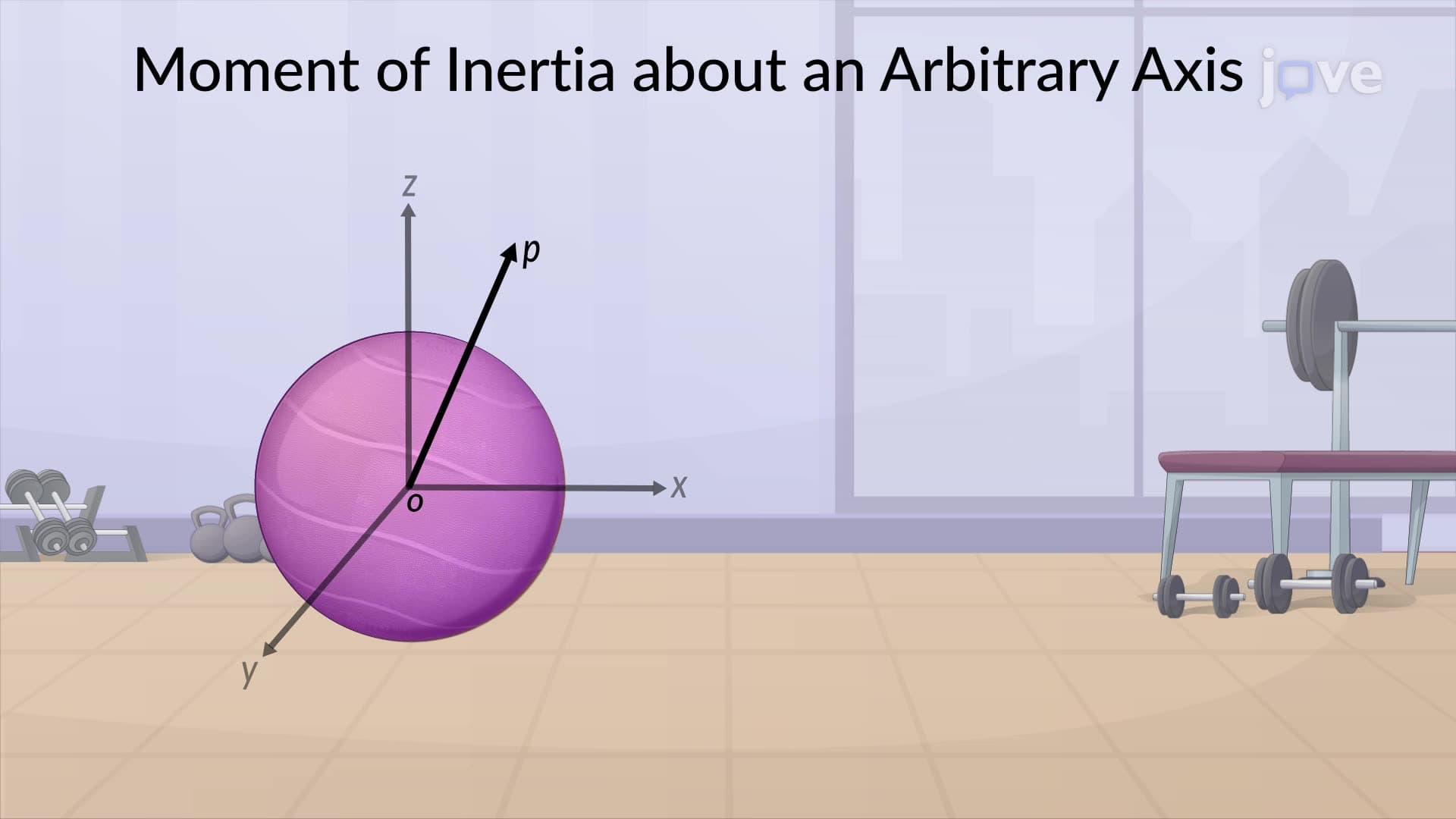
1. Moments and Products of Inertia Understanding how mass distribution affects rotational motion requires calculating moments of inertia about different axes and products of inertia between perpendicular planes. These calculations form the foundation for analyzing complex motions like those in satellite attitude control systems used by NASA or the spinning rotors in American-made helicopters. The sign and magnitude of these quantities determine how easily objects rotate about specific axes, crucial for designing everything from figure skaters' spinning techniques to the gyroscopes in smartphone navigation systems.
2. Inertia Tensor Mathematics The inertia tensor organizes all moment and product of inertia information into a comprehensive 3×3 matrix that completely describes an object's rotational characteristics. By selecting principal axes, engineers can simplify this matrix to contain only diagonal terms, making calculations more manageable. This mathematical tool is essential for analyzing the stability of rotating machinery in American manufacturing plants and for designing the control systems of Mars rovers that must maintain orientation during complex maneuvers.
3. Angular Momentum in Three Dimensions Angular momentum calculations become significantly more complex when objects move in three-dimensional space, requiring vector analysis and careful consideration of reference points. The choice of reference point-whether the center of mass, a fixed point, or an arbitrary location-dramatically affects the mathematical form of the solution. These principles govern the motion of everything from American football spirals to the International Space Station's attitude adjustments, where precise angular momentum management is critical for mission success.
4. Euler's Equations of Motion These fundamental equations describe how rotating bodies behave when subjected to external torques, providing the mathematical framework for analyzing gyroscopic effects and three-dimensional rotation. Named after Swiss mathematician Leonhard Euler, these equations are essential for understanding phenomena like bicycle stability, the precession of spinning tops, and the complex motions of aircraft in flight. American aerospace engineers rely on these equations when designing flight control systems and predicting aircraft behavior during complex maneuvers.
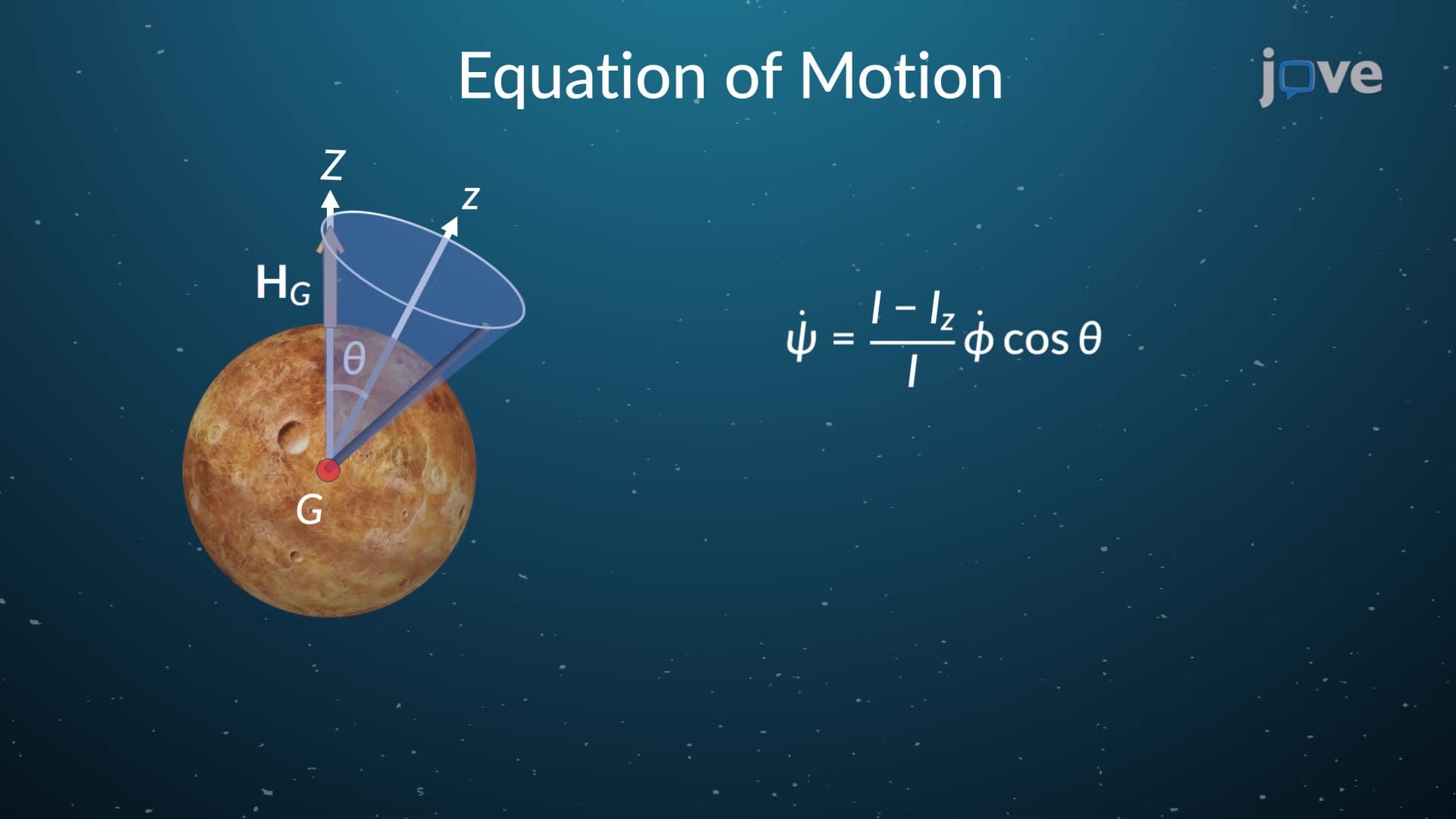
5. Gyroscopic Effects and Torque-Free Motion When rigid bodies rotate without external torques, they exhibit fascinating behaviors including precession and nutation, phenomena clearly visible in spinning gyroscopes and toy tops. These effects are crucial for understanding how navigation systems maintain orientation and how spacecraft naturally tumble in the absence of corrective forces. American-built inertial navigation systems in submarines and aircraft exploit these principles to provide accurate positioning information even when GPS signals are unavailable.