Loading subject page…


13 Concepts
10 Concepts
17 Concepts
6 Concepts
20 Concepts
9 Concepts
17 Concepts
14 Concepts
19 Concepts
13 Concepts
12 Concepts
12 Concepts
4 Concepts
5 Concepts
12 Concepts
13 Concepts
10 Concepts
8 Concepts
20 Concepts
12 Concepts
18 Concepts
4 Concepts
6 Concepts
10 Concepts
4 Concepts
9 Concepts
7 Concepts
8 Concepts
 9 Concepts
 10.9K Views
 Popular topics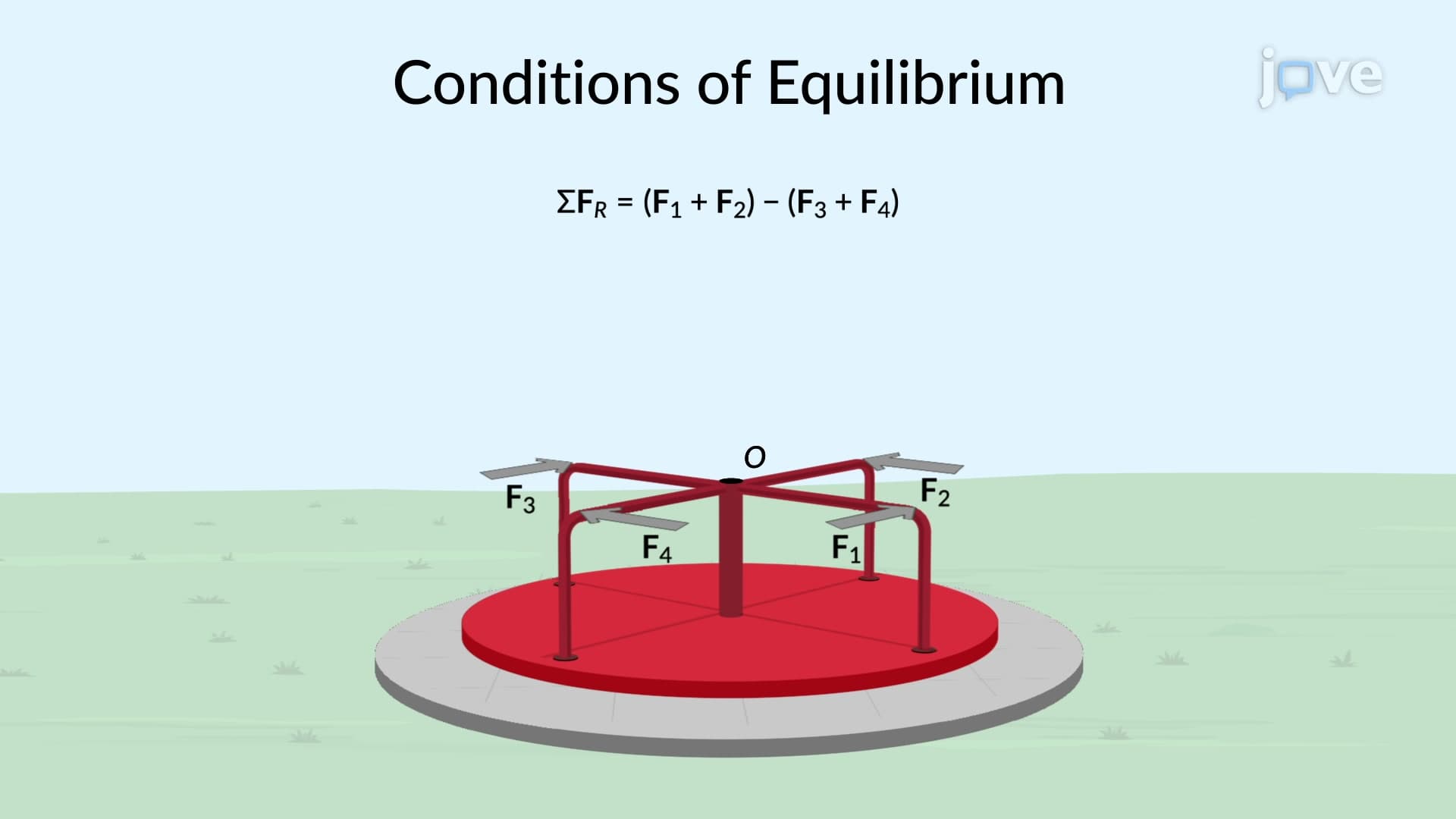




The equilibrium of a rigid body forms the foundation of structural engineering and mechanical design across American industries. This comprehensive course explores how forces and moments balance in stationary systems, from construction cranes to automotive suspension systems. Through JoVE Coach, master the principles that ensure bridges, buildings, and machines maintain stability under various loading conditions.
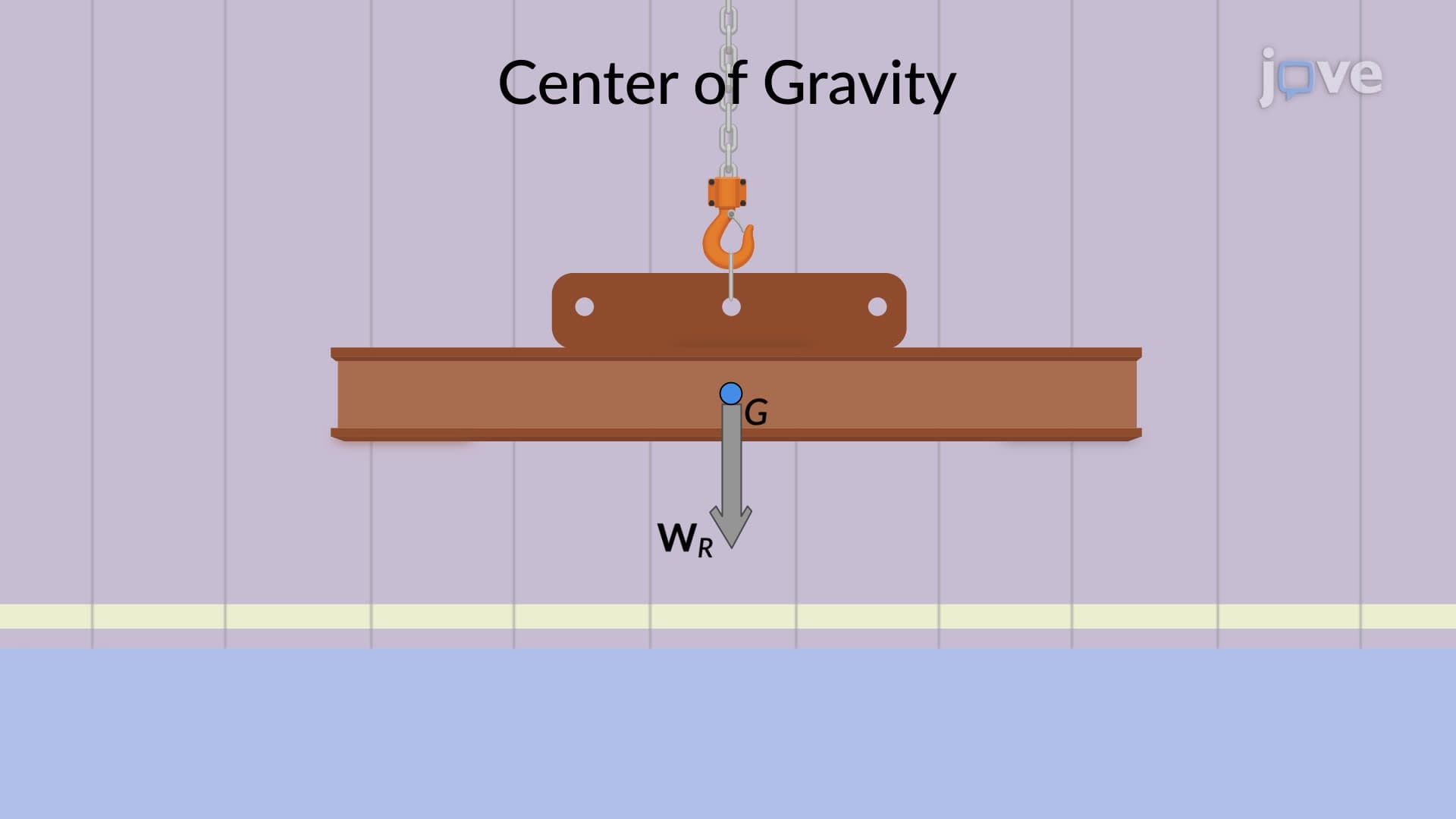
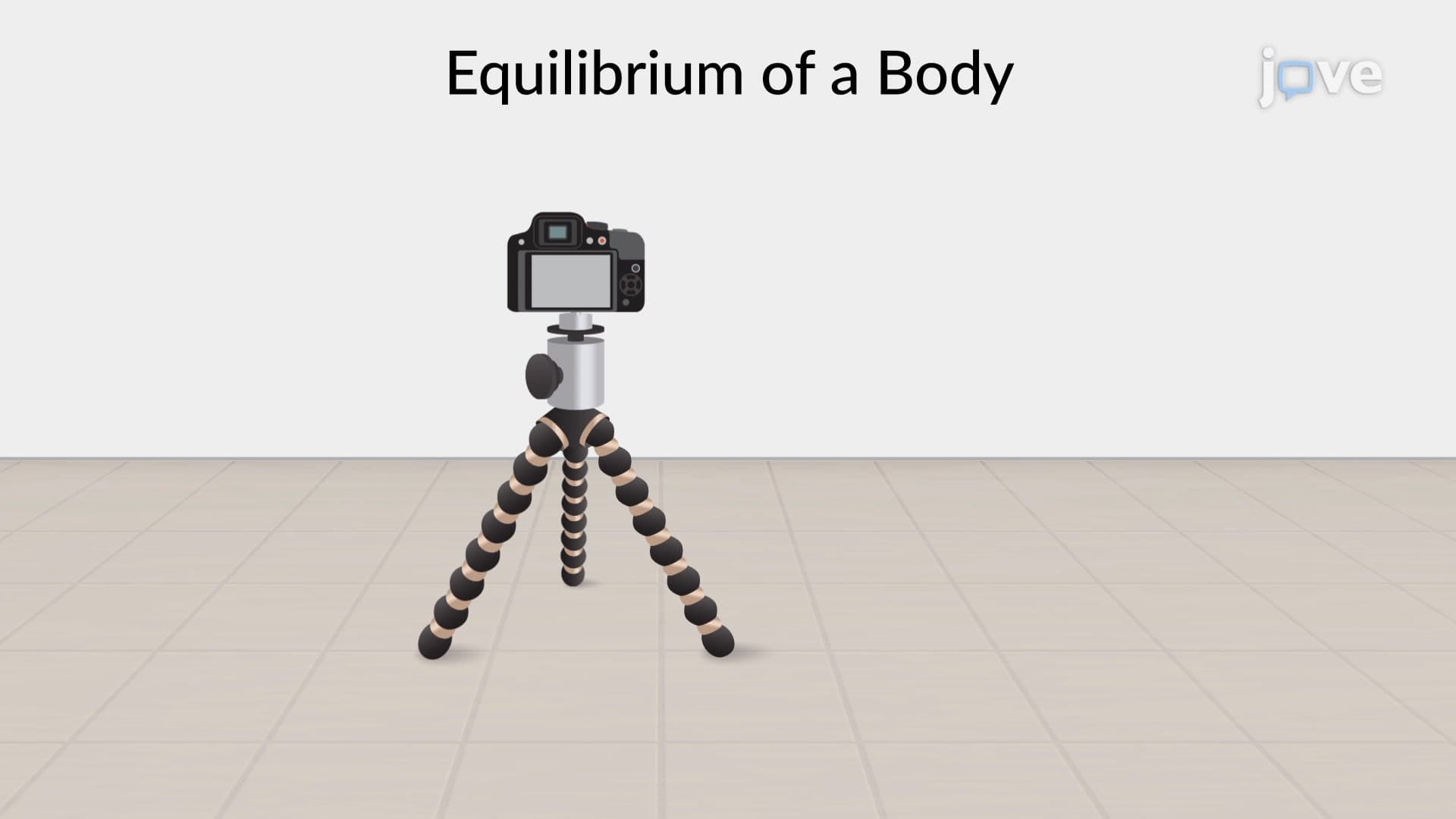
1. Fundamental Equilibrium Conditions The equilibrium of a rigid body requires two essential conditions: the sum of all external forces must equal zero, and the sum of all moments about any point must equal zero. These conditions prevent both translational and rotational motion. Consider a construction crane lifting materials - it remains stable only when forces balance vertically and horizontally, while moments from the load and counterweights cancel out. Internal forces within the rigid body cancel due to Newton's third law, so only external forces affect equilibrium. Understanding these principles helps engineers design everything from highway overpasses to industrial machinery that operates safely under various loading conditions.
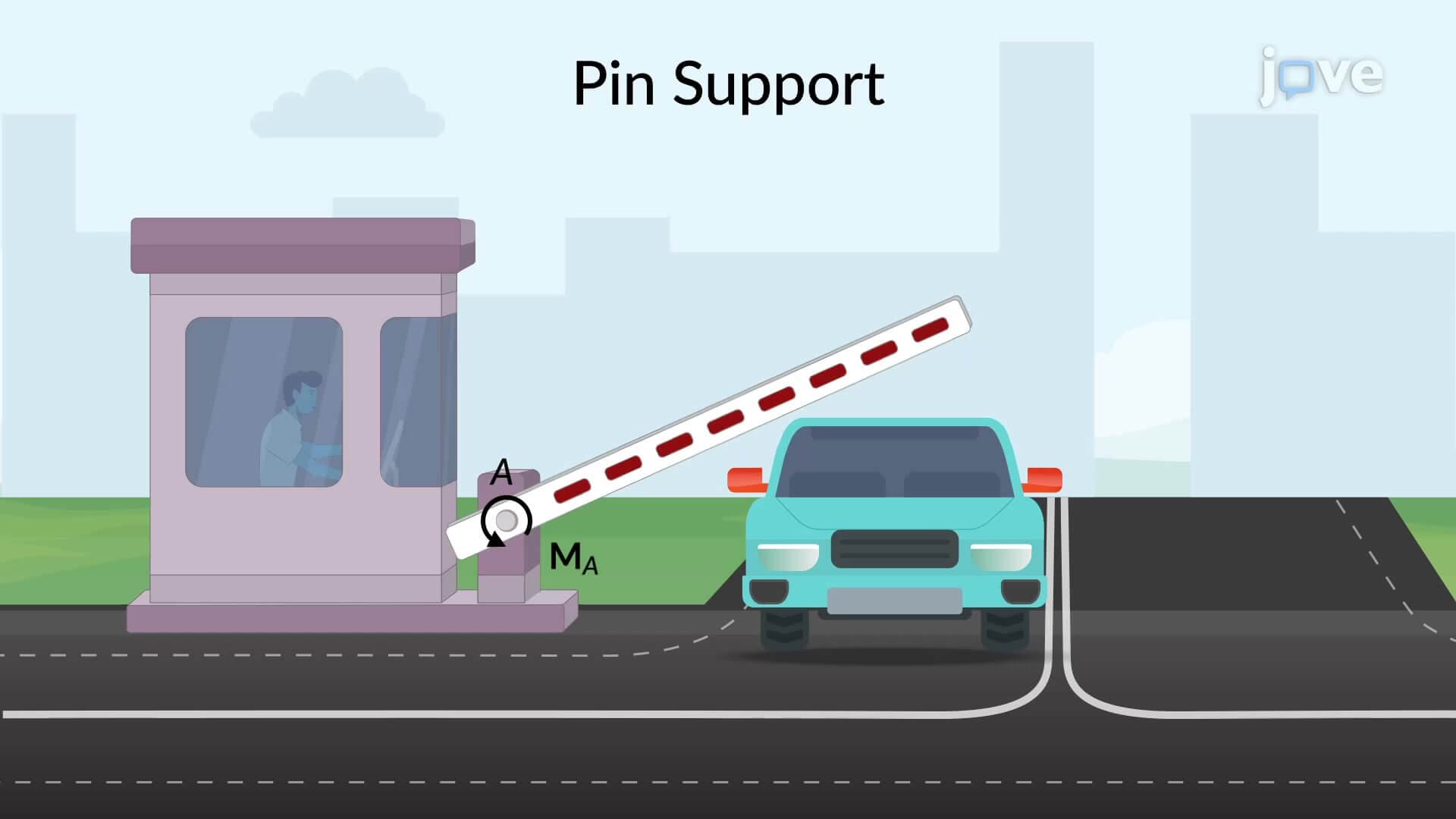
2. Support Reactions and Constraints Different support types provide varying degrees of constraint in rigid body statics reactions. Roller supports, like those under bridge expansion joints, allow movement in one direction while preventing perpendicular motion through a single reaction force. Pin supports, found in door hinges and structural connections, prevent translation but allow rotation, generating two reaction force components. Fixed supports, such as building foundations, completely restrain both translation and rotation through two forces and a moment reaction. Each support type serves specific engineering purposes - roller supports accommodate thermal expansion in bridges, while fixed supports provide maximum stability for skyscrapers and industrial equipment.
3. Two-Force and Three-Force Member Analysis Two-force members, like the hydraulic cylinders in construction equipment or the connecting rods in automotive engines, experience forces at only two points. For equilibrium, these forces must be equal, opposite, and collinear, simplifying analysis significantly. Three-force members, such as crane booms or automobile control arms, require that force lines of action intersect at a common point for equilibrium (except when forces are parallel). This principle helps engineers quickly identify force directions and magnitudes in complex machinery. Understanding these concepts enables efficient analysis of trusses, frames, and mechanical systems throughout American infrastructure and manufacturing.
4. Three-Dimensional Equilibrium and Spatial Analysis Real-world structures like radio towers, offshore drilling platforms, and aircraft operate in three-dimensional space, requiring expanded equilibrium conditions for rigid bodies. Six scalar equations govern 3D equilibrium: three force summations (ΣFx = 0, ΣFy = 0, ΣFz = 0) and three moment summations about perpendicular axes. Ball-and-socket joints in robotic arms provide three reaction forces while allowing rotational freedom. Hinge supports in warehouse doors generate three forces and two moments. Understanding 3D equilibrium analysis is crucial for aerospace engineers designing aircraft landing gear, civil engineers planning skyscrapers, and mechanical engineers developing complex manufacturing equipment used throughout American industry.
5. Constraints and Statical Determinacy Determining whether structures are statically determinate or indeterminate affects design approaches in American construction and manufacturing. Statically determinate systems have just enough constraints to maintain equilibrium, allowing engineers to solve for all reaction forces using equilibrium equations alone. Examples include simply supported beams in warehouse construction or basic truss configurations in residential roofing. Statically indeterminate systems have redundant supports, like continuous beams in modern office buildings, requiring advanced analysis methods. Improperly constrained systems, such as inadequately braced construction scaffolding, can lead to instability. Understanding these concepts helps engineers choose appropriate support configurations for everything from automotive chassis to building frameworks.