Loading subject page…

- Mechanical Engineering
- Kinetics of a Particle: Impulse and Momentum
- Impact: Problem Solving
Micro-course: Kinetics of a Particle: Impulse and Momentum
7,241 views
Learn key concepts and earn your certificate.



Impact: Problem Solving


00:00
01:26
Video Summary: What Is Impact Problem Solving
Ever wondered how NASA engineers calculate whether a Mars rover will survive landing on the Red Planet's surface? Impact problem solving is the physics concept that makes these calculations possible. This fundamental approach analyzes collisions between objects using principles like the coefficient of restitution and kinematic equations. From car crash testing at Ford's Dearborn facility to basketball physics at Duke University, impact problem solving helps predict post-collision motion in countless scenarios. Watch the full video on JoVE Coach to master this concept with expert-led visuals and step-by-step explanations.
- Understand what is impact problem solving and its fundamental role in analyzing collision mechanics
- Identify the key variables in impact scenarios: coefficient of restitution, initial velocities, and gravitational acceleration
- Analyze vertical and horizontal velocity components separately during collision events
- Apply kinematic equations to determine maximum heights and distances after impact
- Evaluate the effects of different surface properties using restitution coefficients
- Recognize how energy conservation principles relate to collision outcomes
- Explore real-world applications from automotive safety testing to sports equipment design
- Compare elastic and inelastic collisions using mathematical models
Understanding Impact Problem Solving Fundamentals
Impact problem solving is a systematic approach to analyzing collisions between objects, combining principles of momentum conservation, energy transfer, and kinematic motion. This concept forms the backbone of collision analysis in physics, from simple ball drops to complex spacecraft landings. Students encounter this topic extensively in AP Physics courses and introductory college mechanics classes.
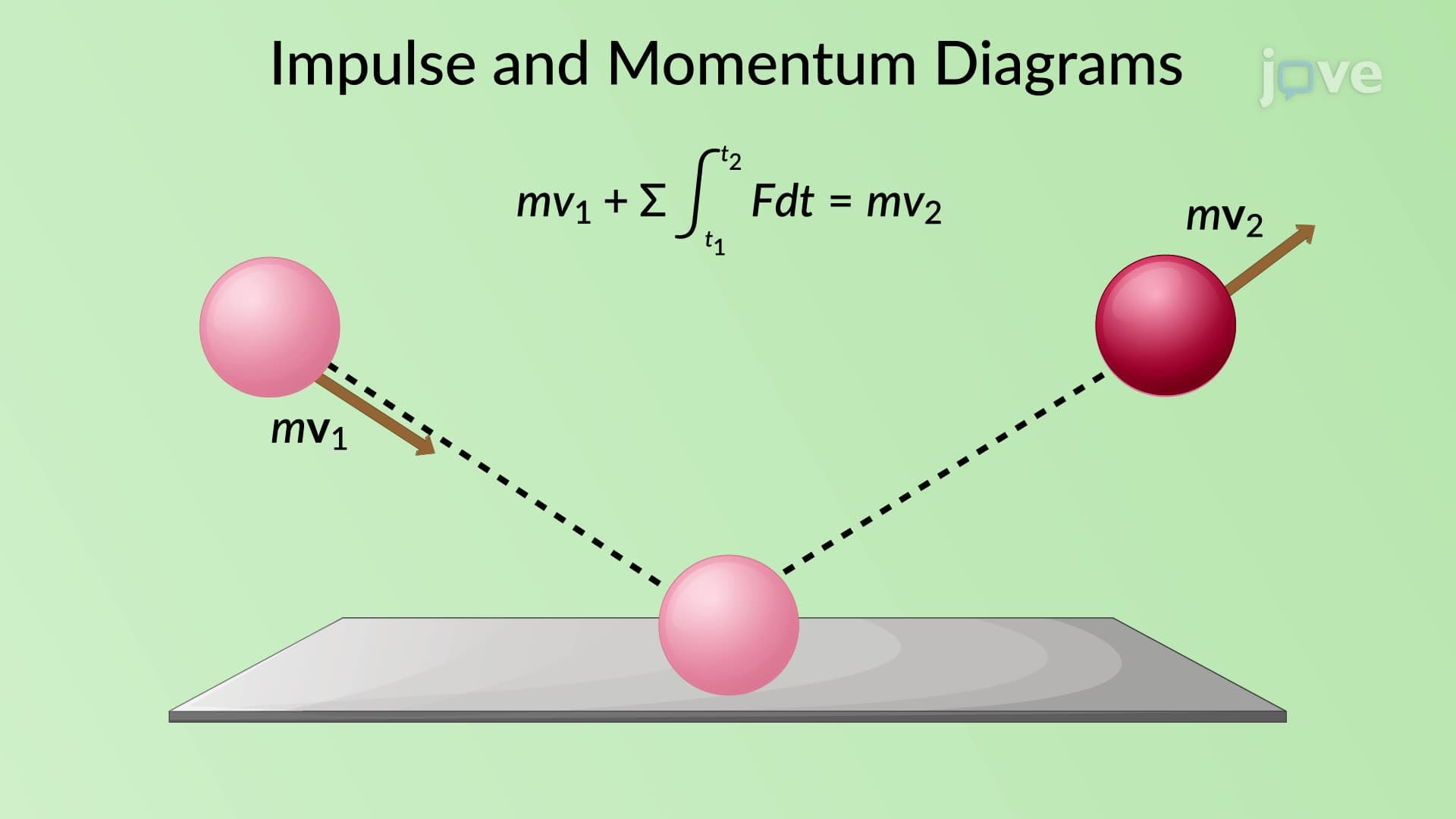
The foundation of impact problem solving lies in understanding that collisions involve two distinct phases: the approach phase and the separation phase. During impact, objects exchange momentum and energy according to well-established physical laws. The coefficient of restitution (e) serves as a crucial parameter, ranging from 0 for perfectly inelastic collisions to 1 for perfectly elastic ones.
Applying Kinematic Equations in Impact Scenarios
The mathematical framework for impact problem solving relies heavily on kinematic equations, particularly when analyzing projectile motion after collision. The equation v² = u² + 2as becomes essential for calculating maximum heights and distances. In the Mars rover example, this equation helps determine how high the projectile bounces after hitting the Martian surface.
Students must master the technique of separating horizontal and vertical motion components. While horizontal velocity typically remains constant during vertical impacts, the vertical component undergoes dramatic changes governed by the restitution coefficient. This separation principle appears frequently on SAT Subject Tests and college physics exams.
Real-World Applications in Engineering and Sports
Impact problem solving finds extensive application in automotive crash testing facilities like those operated by General Motors in Michigan. Engineers use these principles to design safer vehicles by predicting how different materials and structures behave during collisions. The National Highway Traffic Safety Administration (NHTSA) relies on impact analysis for vehicle safety ratings.
Sports applications abound in American athletics. Golf ball manufacturers like Titleist use impact problem solving to optimize ball design for maximum distance. Basketball shot analysis at NCAA tournaments involves understanding how the ball's collision with the rim affects shooting percentages. Tennis racquet companies apply these principles to enhance ball control and power.
Problem-Solving Strategies and Exam Preparation
Successful impact problem solving requires a systematic approach: identify the collision type, determine relevant coefficients, apply conservation laws, and use kinematic equations for post-collision motion. Students preparing for AP Physics exams should focus on coefficient of restitution calculations and energy considerations. College-level courses typically emphasize more complex scenarios involving oblique impacts and multiple objects.
Frequently Asked Questions
Impact problem solving is a systematic method for analyzing collisions between objects using physics principles. It involves calculating post-collision velocities, heights, and distances by applying conservation laws, restitution coefficients, and kinematic equations to predict how objects behave after impact.
AP Physics exams frequently test impact problem solving through collision scenarios involving balls, projectiles, and vehicles. Students must calculate coefficients of restitution, apply momentum conservation, and use kinematic equations. These problems typically appear in both multiple-choice and free-response sections.
College-level impact problems often involve multiple objects, oblique collisions, and varying surface properties. Students must simultaneously apply conservation of momentum, energy considerations, and complex kinematic analysis. MCAT physics sections also test these concepts in biological contexts.
Automotive engineers at companies like Ford and Tesla use impact problem solving to predict crash outcomes and design safer vehicles. They analyze how different materials absorb energy, calculate passenger deceleration forces, and optimize airbag deployment timing based on collision physics principles.
No, basic impact problem solving relies primarily on algebra and trigonometry rather than calculus. High school students can master these concepts using kinematic equations, conservation laws, and coefficient calculations. Calculus becomes relevant only in advanced engineering applications.
Practice identifying collision types (elastic vs. inelastic), memorize the coefficient of restitution formula, and work through numerous projectile motion problems. Focus on separating horizontal and vertical components, and always check your answers using energy conservation principles.
Impact problem solving explains countless sports phenomena, from baseball bat-ball collisions to tennis racquet performance. Professional sports teams use these principles to optimize equipment design, improve player technique, and analyze game statistics for competitive advantages.
Consider exploring rotational collisions, fluid impact dynamics, and finite element analysis methods. Engineering students often progress to studying impact in materials science, while physics majors might investigate quantum collision theory or plasma physics applications.
Related Micro-courses

13 Concepts

10 Concepts

8 Concepts