Loading subject page…


1,807 views

Video Summary: Unsymmetric Loading of Thin Walled Explained
Ever wondered why airplane wings don't twist apart despite carrying massive loads off-center? Unsymmetric loading of thin walled structures creates complex stress patterns that engineers must carefully analyze to prevent catastrophic failures. Consider Boeing's 787 Dreamliner wings, which experience significant off-axis forces during turbulence yet maintain structural integrity through precise shear center calculations. Understanding Unsymmetric Loading of Thin Walled Explained concepts is crucial for analyzing how thin-walled structural members like channel sections respond to loads applied away from their geometric centers. Watch the full video on JoVE Coach to master this concept with expert-led visuals and step-by-step explanations.
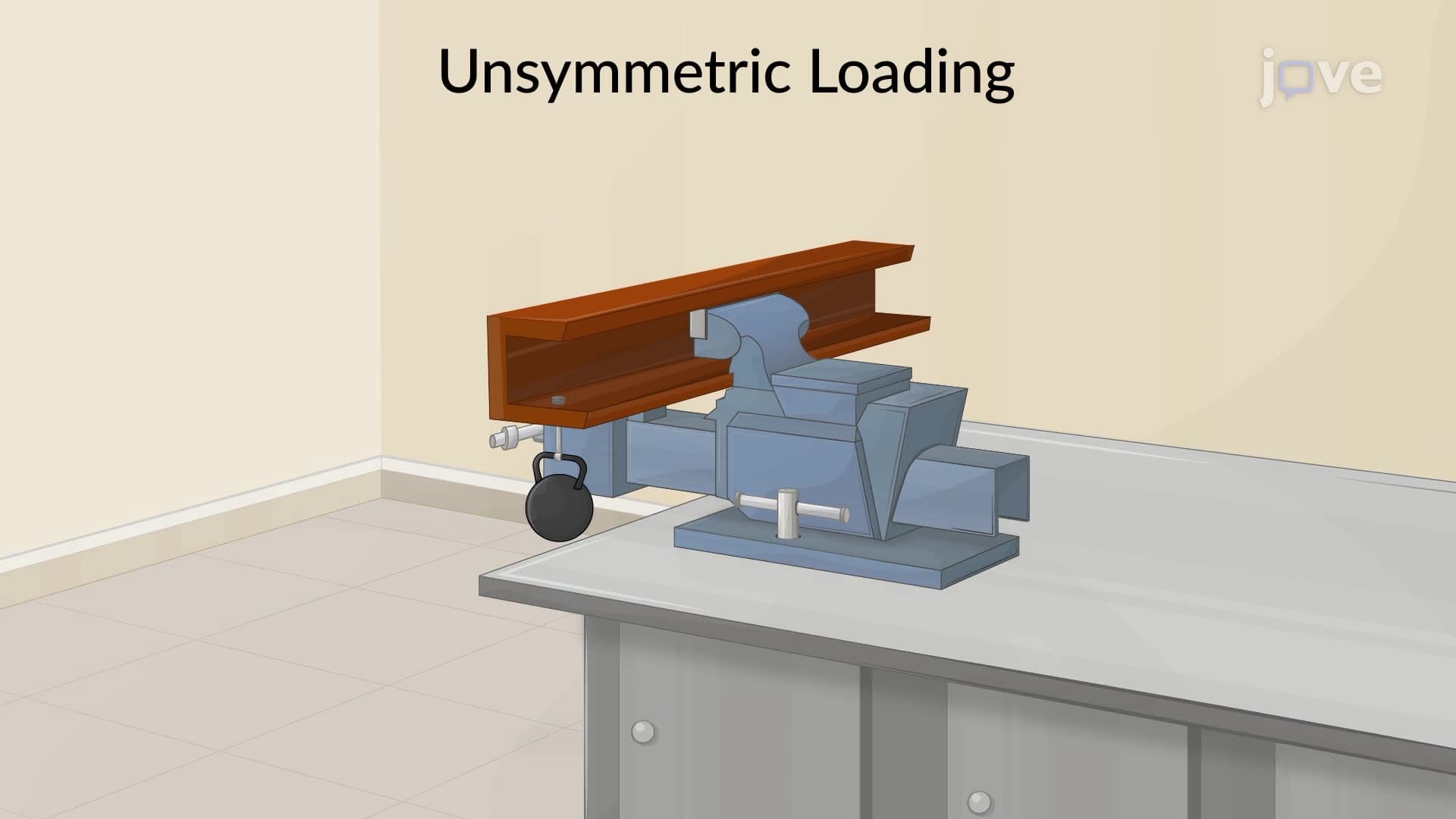
Unsymmetric loading of thin walled members represents a fundamental challenge in structural engineering where applied forces don't align with a cross-section's principal axes. Unlike symmetric loading scenarios taught in introductory mechanics courses, unsymmetric conditions create complex stress distributions that combine bending, shear, and often torsional effects. This phenomenon commonly occurs in real structures like aircraft wing spars, bridge girders, and building frame members where loads rarely apply perfectly centered.
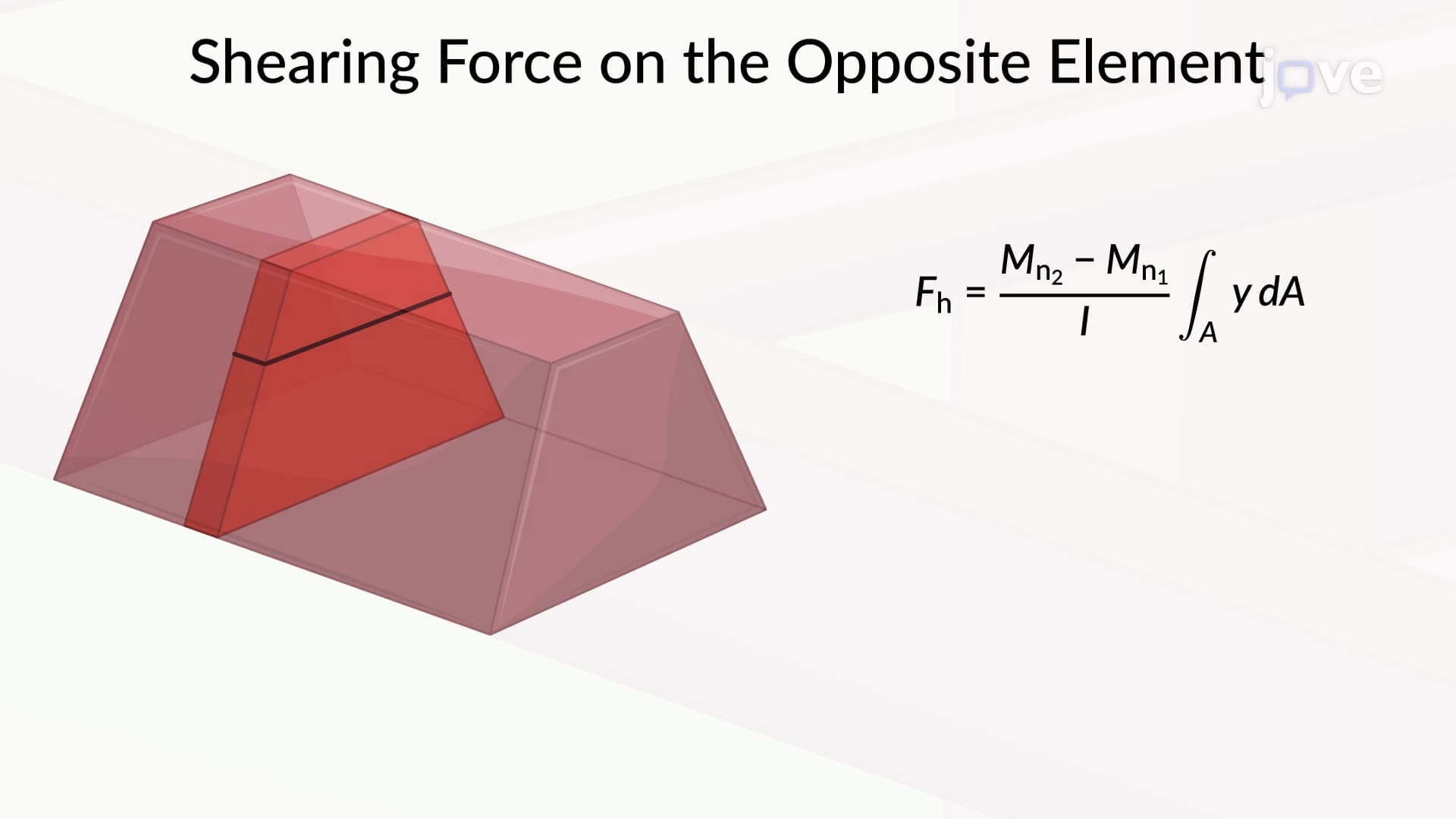
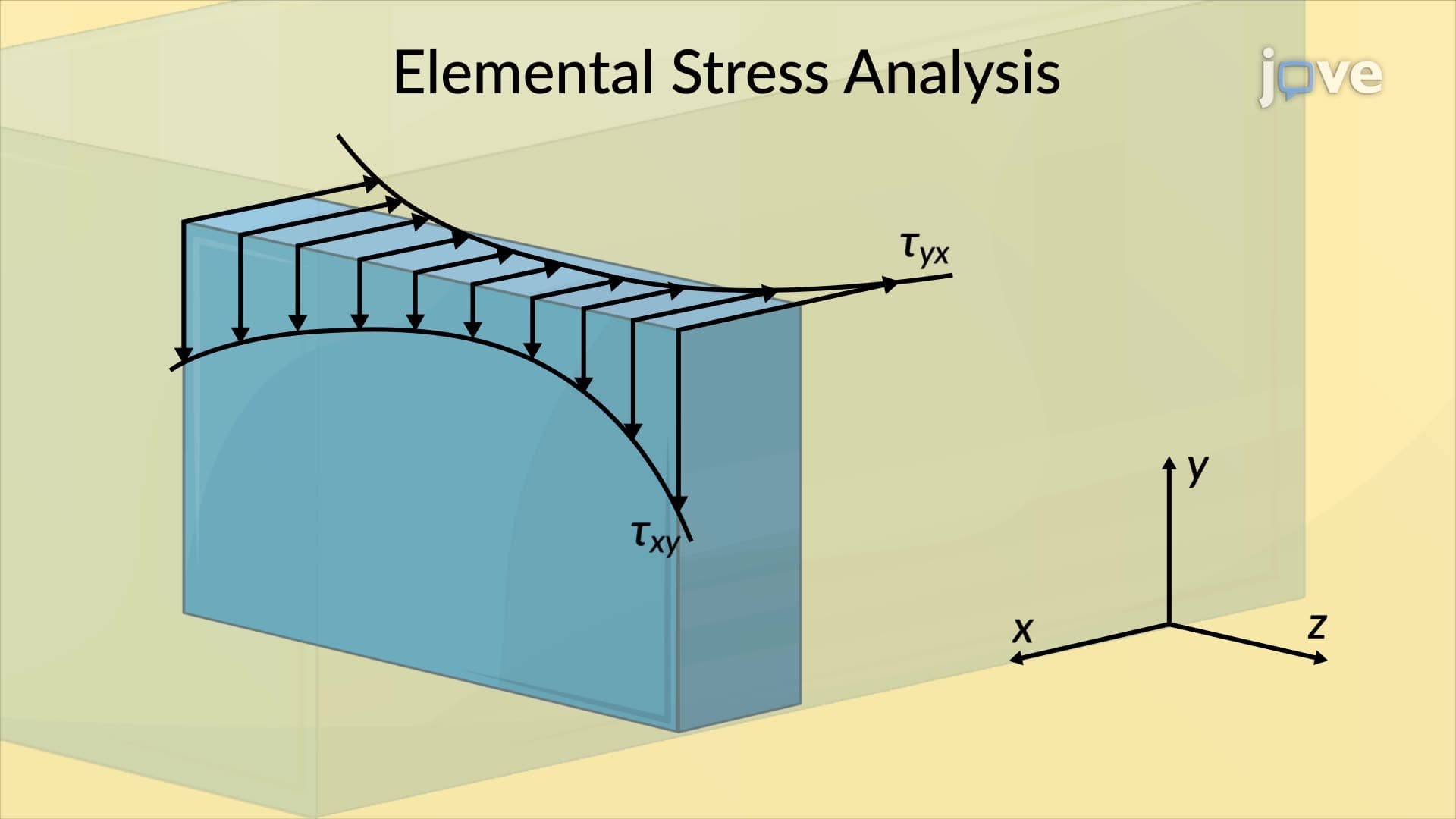
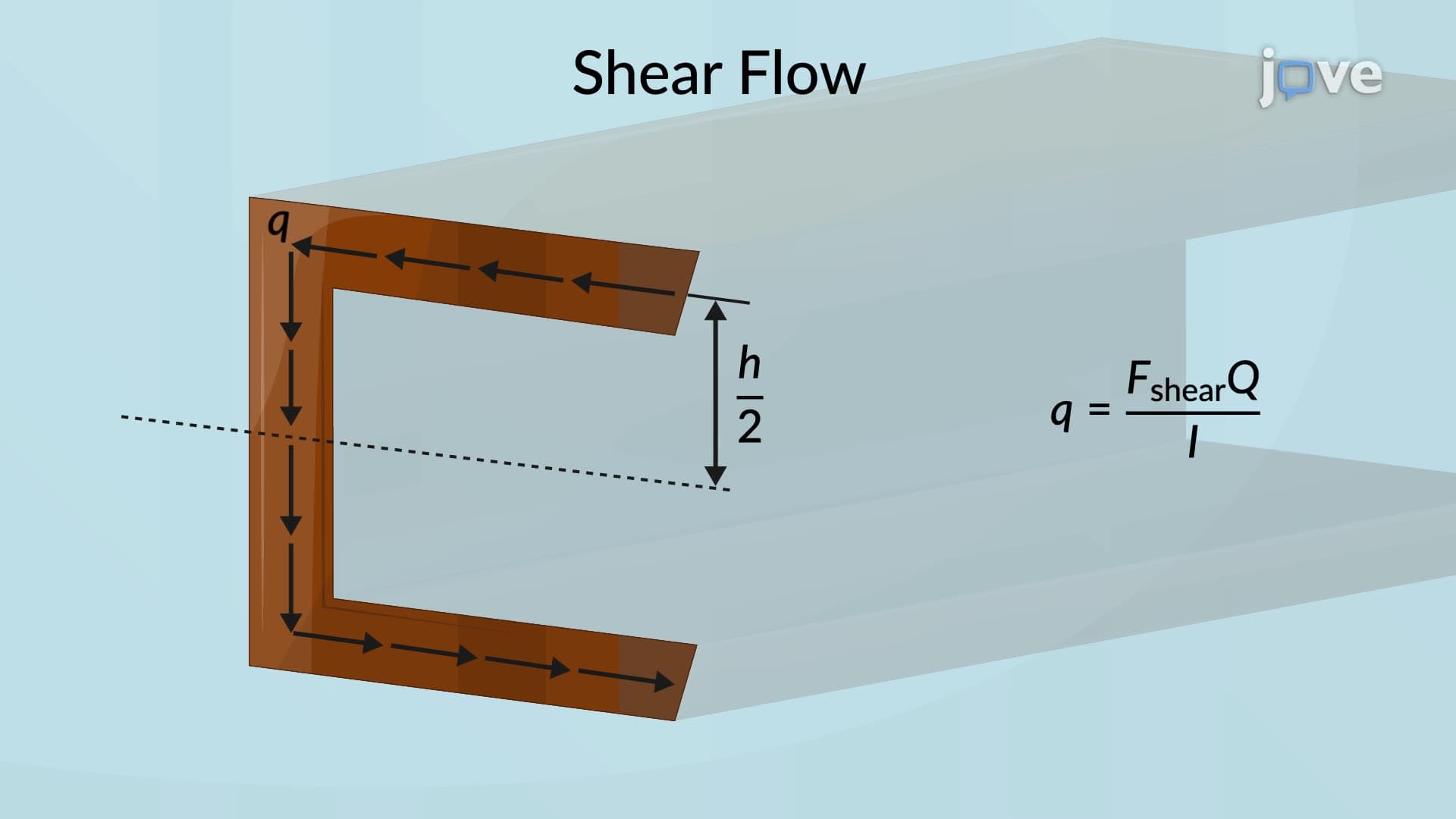
The shear center serves as the critical point where transverse loads must be applied to prevent twisting in thin-walled sections. For channel sections commonly used in construction-like those found in steel building frames across the United States-determining this location requires systematic analysis of shear flow patterns. Engineers calculate shear flow using the relationship q = VQ/I, where V represents applied shear force, Q equals the first moment of area, and I denotes the section's moment of inertia about the bending axis.
The calculation process involves integrating shear flow distributions along the section perimeter, starting from free edges where shear flow equals zero. This integration technique, frequently tested on AP Physics C exams and college-level structural analysis courses, reveals how internal forces redistribute throughout the cross-section under loading.
Computing accurate moment of inertia values for thin-walled channels requires careful consideration of both web and flange contributions. The parallel axis theorem becomes essential when dealing with composite sections, as each element contributes based on both its individual moment of inertia and the square of its distance from the neutral axis. Engineering students preparing for the Fundamentals of Engineering (FE) exam encounter similar problems requiring systematic application of these principles.
Real-world applications of unsymmetric loading analysis appear throughout American infrastructure. Consider the Tacoma Narrows Bridge's original design failure-inadequate consideration of unsymmetric wind loading contributed to the catastrophic torsional oscillations that led to collapse. Modern bridge engineers now routinely perform detailed shear center analyses to ensure structural stability under various loading scenarios, including wind, traffic, and seismic forces that rarely align perfectly with structural axes.
Related Micro-courses