Loading subject page…

- Mechanical Engineering
- Shearing Stresses in Beams and Thin Walled Members
- Shearing Stresses in a Beam: Problem Solving
Micro-course: Shearing Stresses in Beams and Thin-Walled Members
1,807 views
Learn key concepts and earn your certificate.

Shearing Stresses in a Beam: Problem Solving

00:00
01:14
Video Summary: What are Shearing Stresses
Ever wonder why scissors cut paper so effortlessly? Shearing stresses are the hidden forces that make this possible, occurring when forces act parallel to a surface rather than perpendicular to it. In structural engineering, understanding what are shearing stresses is crucial for designing safe buildings and bridges across America, from the Golden Gate Bridge to skyscrapers in Manhattan. These stresses develop in beams when loads create internal forces that try to "slide" one part of the material past another. Watch the full video on JoVE Coach to master this concept with expert-led visuals and step-by-step explanations.
- Understand what are shearing stresses and how they differ from normal stresses in structural materials
- Identify the key components needed to calculate shearing stress: shear force, first moment of area, and moment of inertia
- Analyze cantilever beam problems by determining reaction forces and creating shear force diagrams
- Apply equilibrium equations to calculate vertical reactions and moment reactions at fixed supports
- Evaluate shearing stress distribution along beam cross-sections using the standard shear stress formula
- Compare calculated maximum shearing stresses with allowable material limits for safety assessment
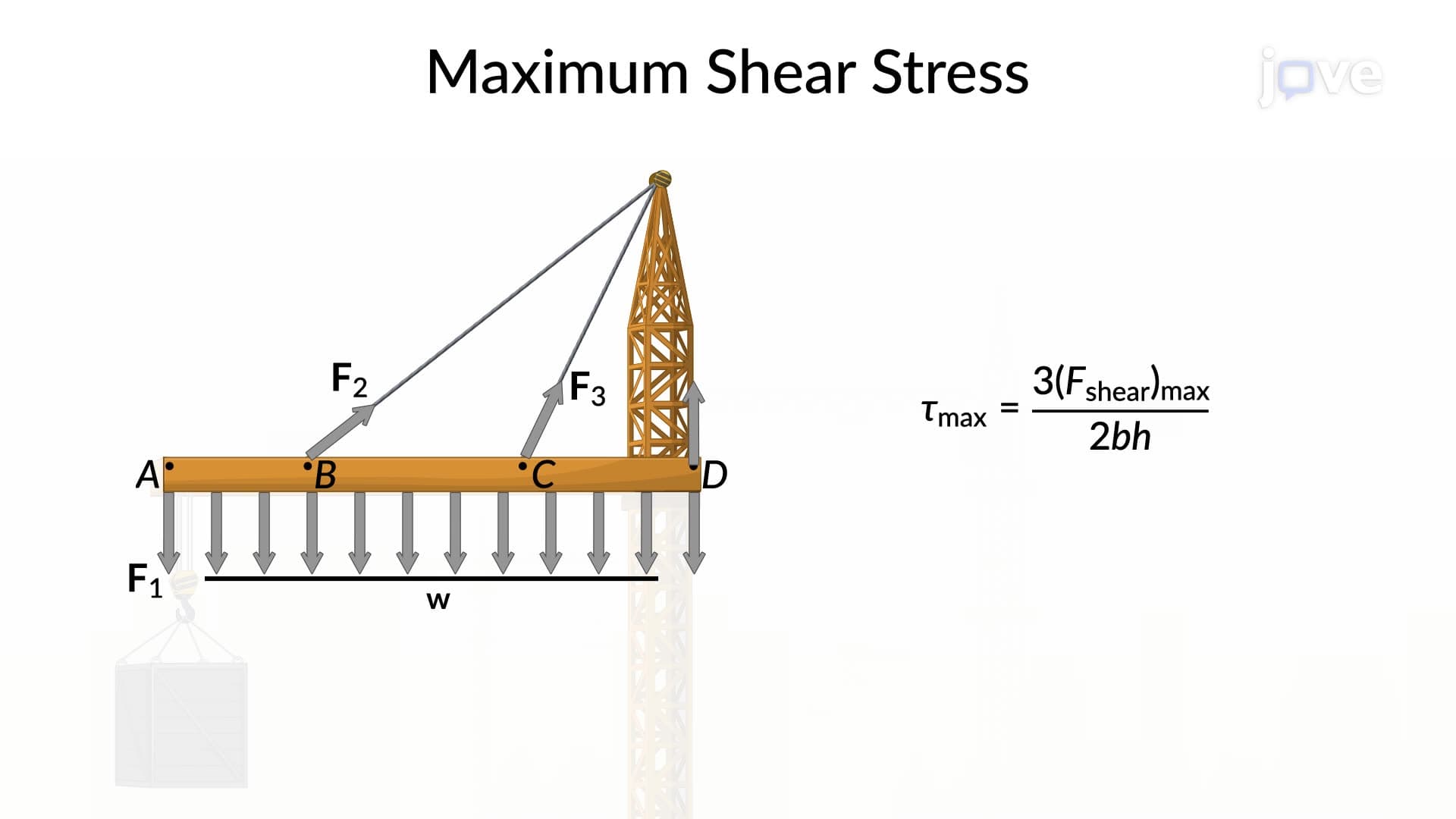
- Recognize critical points where maximum shearing stresses occur, typically near supports and concentrated loads
- Explore real-world applications of shearing stress analysis in building design and mechanical engineering
Understanding What are Shearing Stresses
Shearing stresses represent one of the fundamental types of internal forces that materials experience when subjected to external loads. Unlike normal stresses that act perpendicular to a surface, shearing stresses act parallel to the surface, creating a "sliding" effect between adjacent layers of material. This concept is essential for students preparing for AP Physics, college-level statics courses, and engineering mechanics examinations.
Types of Shearing Stresses in Engineering Applications
The types of shearing stresses vary depending on the loading conditions and structural configuration. In beams, transverse shearing stresses develop due to bending loads, while torsional shearing stresses occur in shafts under twisting moments. For cantilever beams-commonly found in building overhangs and diving boards across American pools-the shearing stress distribution follows a parabolic pattern across the cross-section, with maximum values typically occurring at the neutral axis.
Shearing Stresses Calculation and Analysis
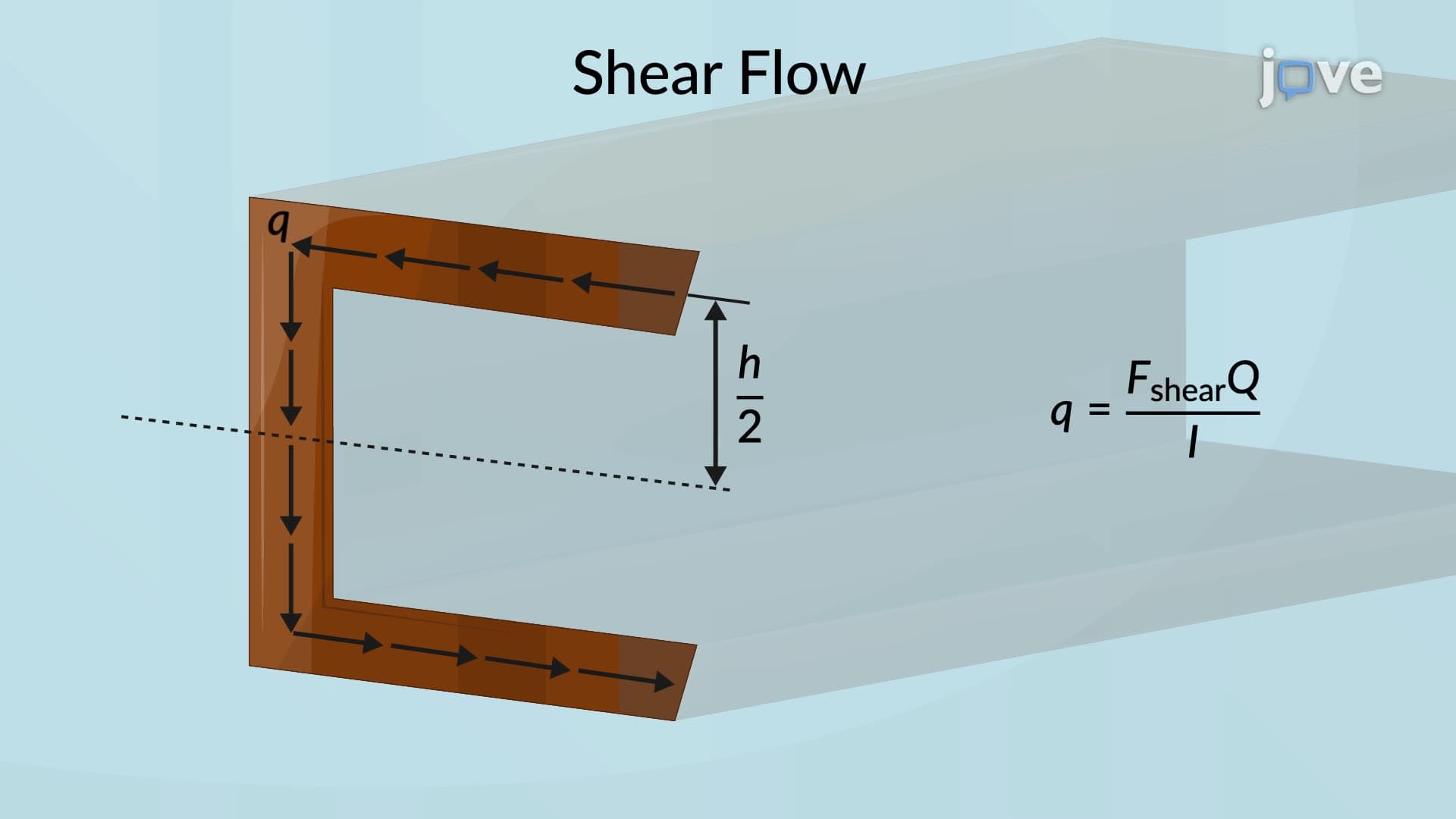
The fundamental formula for calculating shearing stresses in beams is: τ = VQ/(It), where V represents the shear force, Q is the first moment of the cross-sectional area about the neutral axis, I is the moment of inertia, and t is the width of the cross-section. This shearing stresses concept requires students to master several prerequisite skills, including creating shear force diagrams and calculating geometric properties of cross-sections.
Real-World Applications and Safety Considerations
Understanding shearing stresses basics is crucial for structural safety in American construction projects. Engineers must ensure that calculated maximum shearing stresses remain below allowable limits specified by building codes such as the International Building Code (IBC). For example, when designing floor joists in residential construction, engineers analyze shearing stresses to prevent catastrophic failures that could endanger occupants. This shearing stresses study guide approach emphasizes both theoretical understanding and practical application, preparing students for careers in civil and mechanical engineering fields.
Frequently Asked Questions
Shearing stress is the internal force per unit area that acts parallel to a surface, causing adjacent layers of material to slide past each other. Unlike normal stress which acts perpendicular to surfaces (tension or compression), shearing stress creates a "cutting" or "sliding" action, similar to how scissors work.
The primary types include transverse shearing stress in beams (from bending loads), torsional shearing stress in shafts (from twisting), and direct shearing stress in connections like bolts and welds. Each type requires different calculation methods and appears frequently in college statics and mechanics of materials courses.
AP Physics C and college exams typically test shearing stress through beam analysis problems, requiring students to draw shear force diagrams and calculate maximum stresses using standard formulas. Common exam scenarios include cantilever beams, simply supported beams, and connection design problems that mirror real structural engineering challenges.
Most introductory shearing stress problems use algebraic methods and standard formulas, making them accessible to students with solid algebra and trigonometry skills. While advanced applications involve calculus for variable loading, the fundamental concepts rely more on understanding equilibrium principles and geometric relationships.
Focus on systematic problem-solving: always start by identifying loads and reactions, draw clear shear force diagrams, then apply the standard formula methodically. Practice with various beam configurations and loading patterns, since recognizing problem types quickly improves exam performance significantly.
Structural engineers analyze shearing stresses when designing building floor systems, bridge girders, and aircraft wings. For example, the floor joists in your home were designed considering shearing stresses to ensure they can safely carry furniture loads and prevent catastrophic failure.
Shearing stress analysis builds directly into advanced topics like beam deflection, composite material behavior, and failure analysis. It also connects to design courses where you'll apply these principles to create safe, efficient structures in civil, mechanical, and aerospace engineering applications.
Related Micro-courses
10 Concepts

4 Concepts

9 Concepts