Loading subject page…


1,807 views

Video Summary: What Is Distribution of Stresses
Ever wondered why a diving board can support a 200-pound athlete at its tip without snapping? The distribution of stresses explains how forces spread throughout structural materials like the aluminum beams in San Francisco's Bay Bridge. This fundamental engineering concept reveals that stress isn't uniform across a beam's cross-section-it varies in predictable patterns that engineers must understand to design safe structures. Watch the full video on JoVE Coach to master this concept with expert-led visuals and step-by-step explanations.
The distribution of stresses describes how internal forces spread throughout a structural element when external loads are applied. Unlike the simplified assumption that stress remains constant across a cross-section, real materials experience varying stress levels that follow predictable mathematical patterns. This concept forms the foundation of structural analysis taught in college-level mechanics of materials courses and appears frequently on the Fundamentals of Engineering (FE) exam.
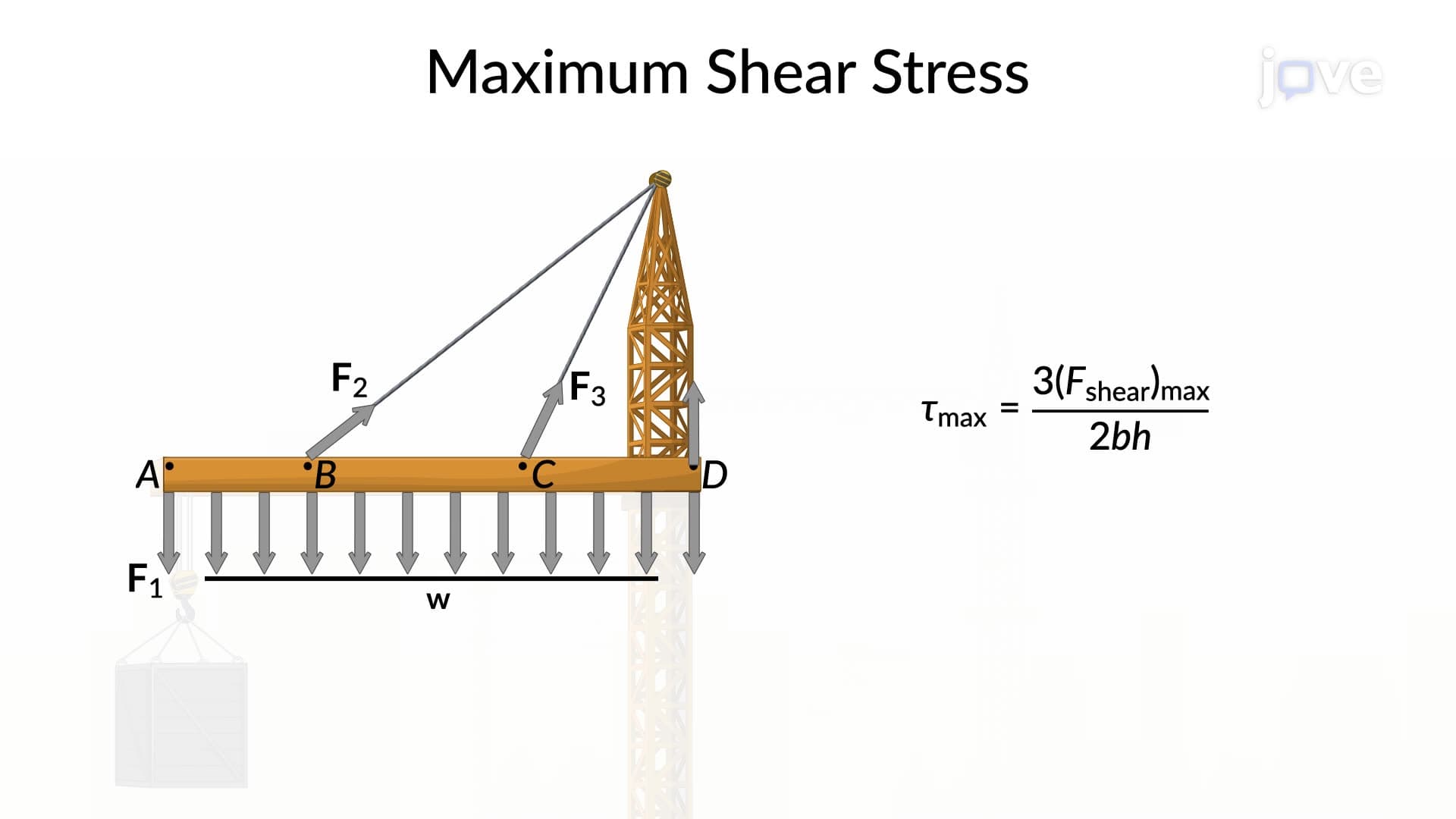
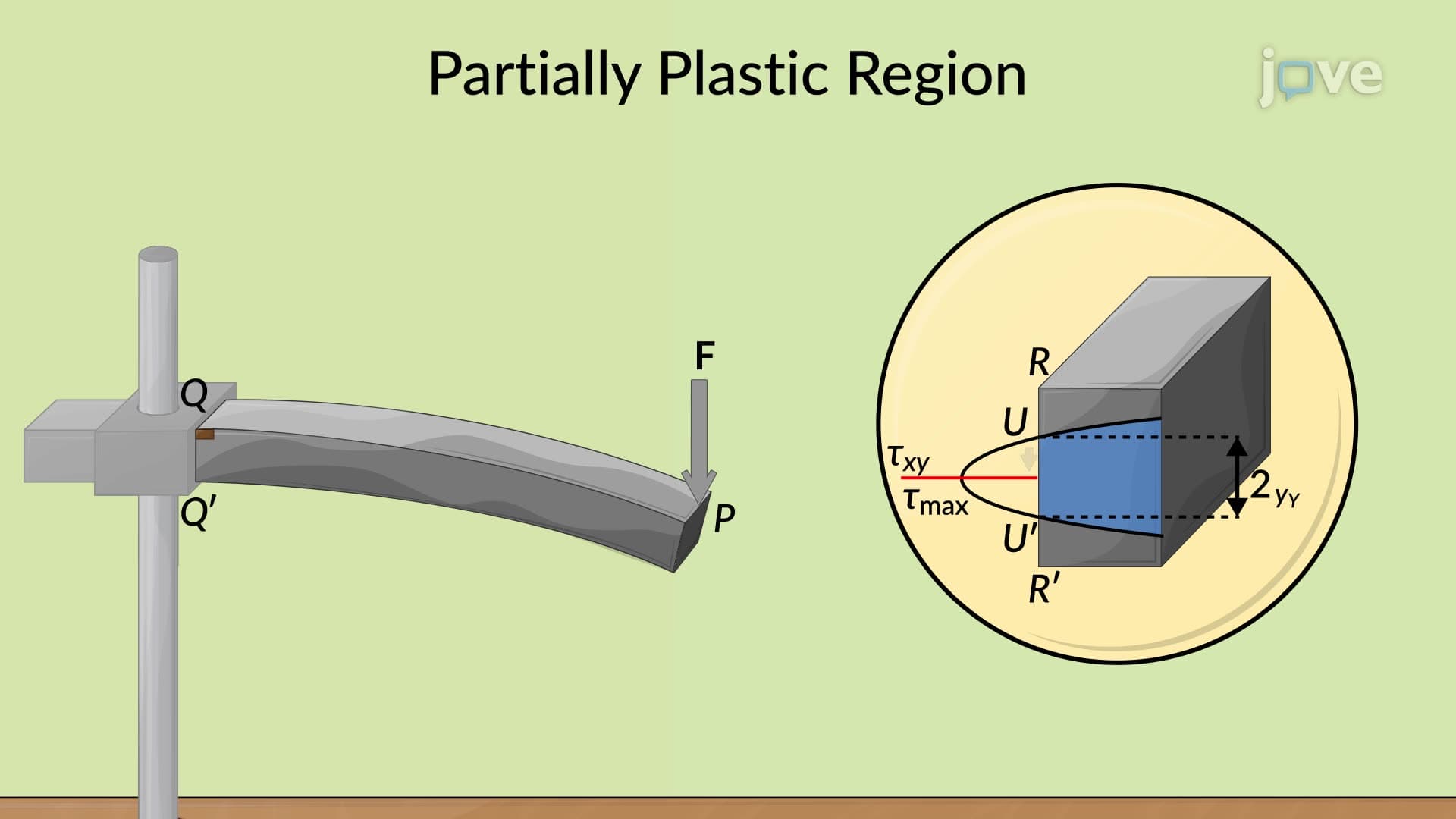
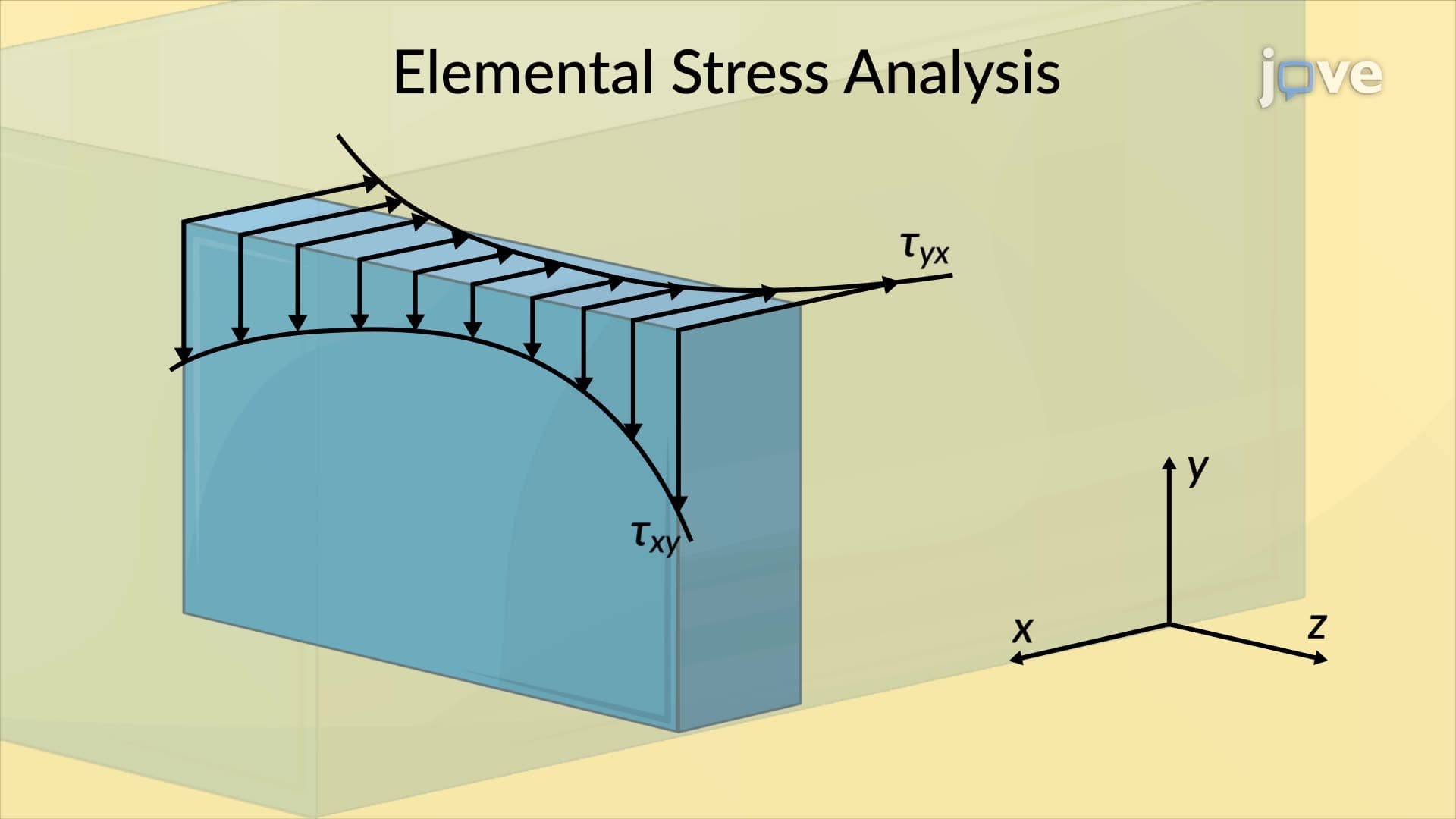
In rectangular beams, shear stresses create a distinctive parabolic distribution pattern across the cross-section height. The maximum shear stress occurs at the neutral axis (centerline), while stress drops to zero at the top and bottom surfaces. This happens because no external forces act parallel to these free surfaces, making it impossible for shear stresses to exist there. Engineers designing everything from wooden floor joists in residential construction to steel I-beams in skyscrapers must account for this non-uniform distribution.
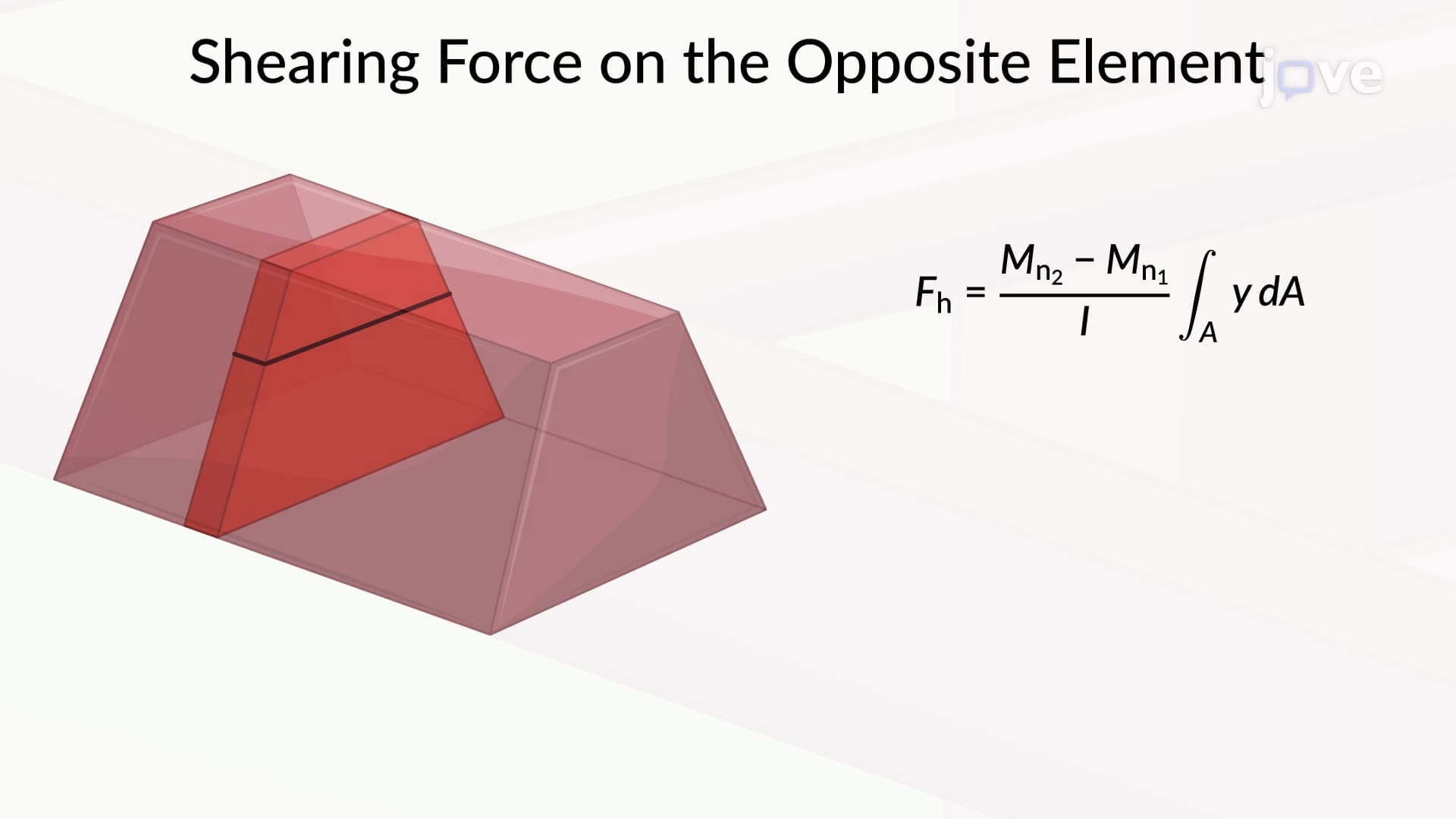
A critical principle in stress distribution involves the equality of shear stresses on perpendicular planes. When analyzing an elemental cube within a beam, the horizontal shear stress equals the transverse shear stress at any given point. This relationship, known as the reciprocity of shear stresses, prevents the element from rotating under load. Understanding this principle helps students solve complex problems on AP Physics C: Mechanics exams and college statics courses.
For narrow rectangular beams where the width is less than one-quarter of the depth, engineers can use simplified average stress calculations with less than 0.8% error. This approximation proves invaluable in real-world scenarios like designing wooden studs in residential framing or analyzing failures in aircraft wing structures. The Federal Aviation Administration (FAA) relies on these stress distribution principles when certifying new aircraft designs, demonstrating the concept's critical importance in ensuring public safety.
Related Micro-courses