Loading subject page…


3,573 views
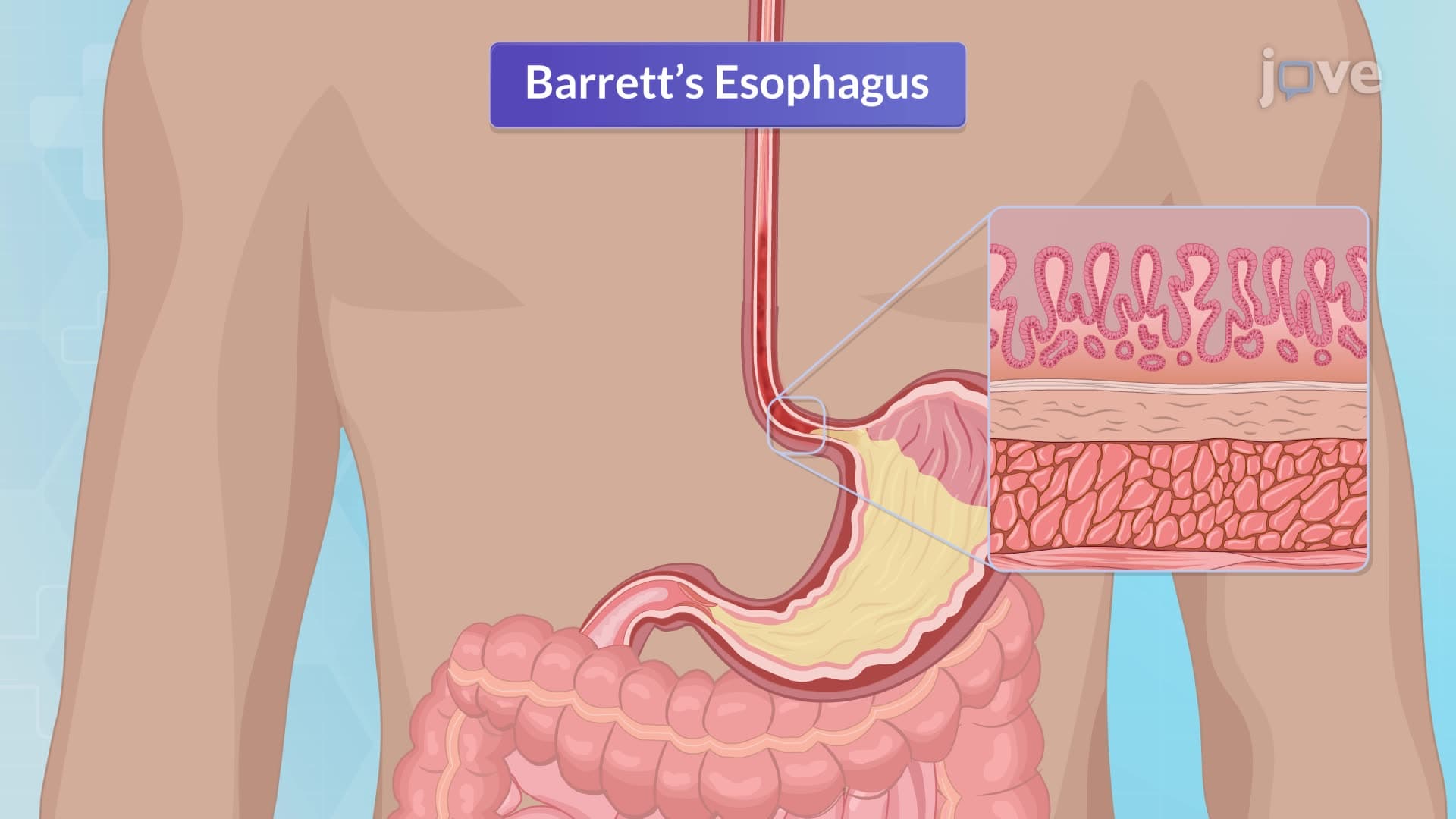

Video Summary: What Is Barrett Esophagus I Introduction
Did you know that severe heartburn can permanently change the cells lining your esophagus? Barrett esophagus I introduction reveals how chronic acid reflux transforms normal esophageal tissue into intestine-like cells through a process called metaplasia. At Johns Hopkins Hospital, gastroenterologists diagnose over 3,000 Barrett's esophagus cases annually, making this condition a critical concern for understanding what is Barrett esophagus I introduction and its progression from reflux to potential cancer. Watch the full video on JoVE Coach to master this concept with expert-led visuals and step-by-step explanations.
Barrett esophagus I introduction begins with understanding how chronic acid exposure fundamentally alters esophageal tissue architecture. The normal esophagus features a protective stratified squamous epithelium designed to withstand mechanical stress from swallowing. However, when stomach acid repeatedly contacts this tissue due to GERD, the cellular response involves metaplasia-a adaptive but potentially dangerous transformation where squamous cells are replaced by columnar epithelium resembling intestinal lining.
The barrett esophagus I introduction definition centers on the failure of the lower esophageal sphincter (LES), a critical muscular valve maintaining pressure gradients between the stomach and esophagus. When LES pressure decreases below 10-15 mmHg (normal range: 15-25 mmHg), gastric contents reflux upward. The resulting pH changes (from neutral 7.0 to acidic 1.5-2.0) trigger inflammatory cascades leading to epithelial damage and subsequent metaplastic repair processes.
What is Barrett esophagus I introduction in detail encompasses the dysplasia-carcinoma sequence. This progression follows a predictable pattern: initial metaplasia develops into low-grade dysplasia (characterized by mild nuclear atypia and architectural distortion), then advances to high-grade dysplasia (severe cellular abnormalities with loss of polarity), and potentially culminates in invasive adenocarcinoma. Cleveland Clinic studies demonstrate that high-grade dysplasia progresses to cancer at rates of 6-8% annually, making surveillance endoscopy crucial.
The barrett esophagus I introduction overview reveals significant demographic patterns. Middle-aged Caucasian males represent the highest-risk population, particularly those with central obesity (waist circumference >40 inches in men, >35 inches in women). The American College of Gastroenterology identifies additional risk factors including family history, smoking history exceeding 20 pack-years, and chronic alcohol consumption. These concepts frequently appear on MCAT passages and AP Biology exams focusing on cellular biology and disease progression mechanisms.
Related Micro-courses