Loading video…


 22 Concepts
 4.3K views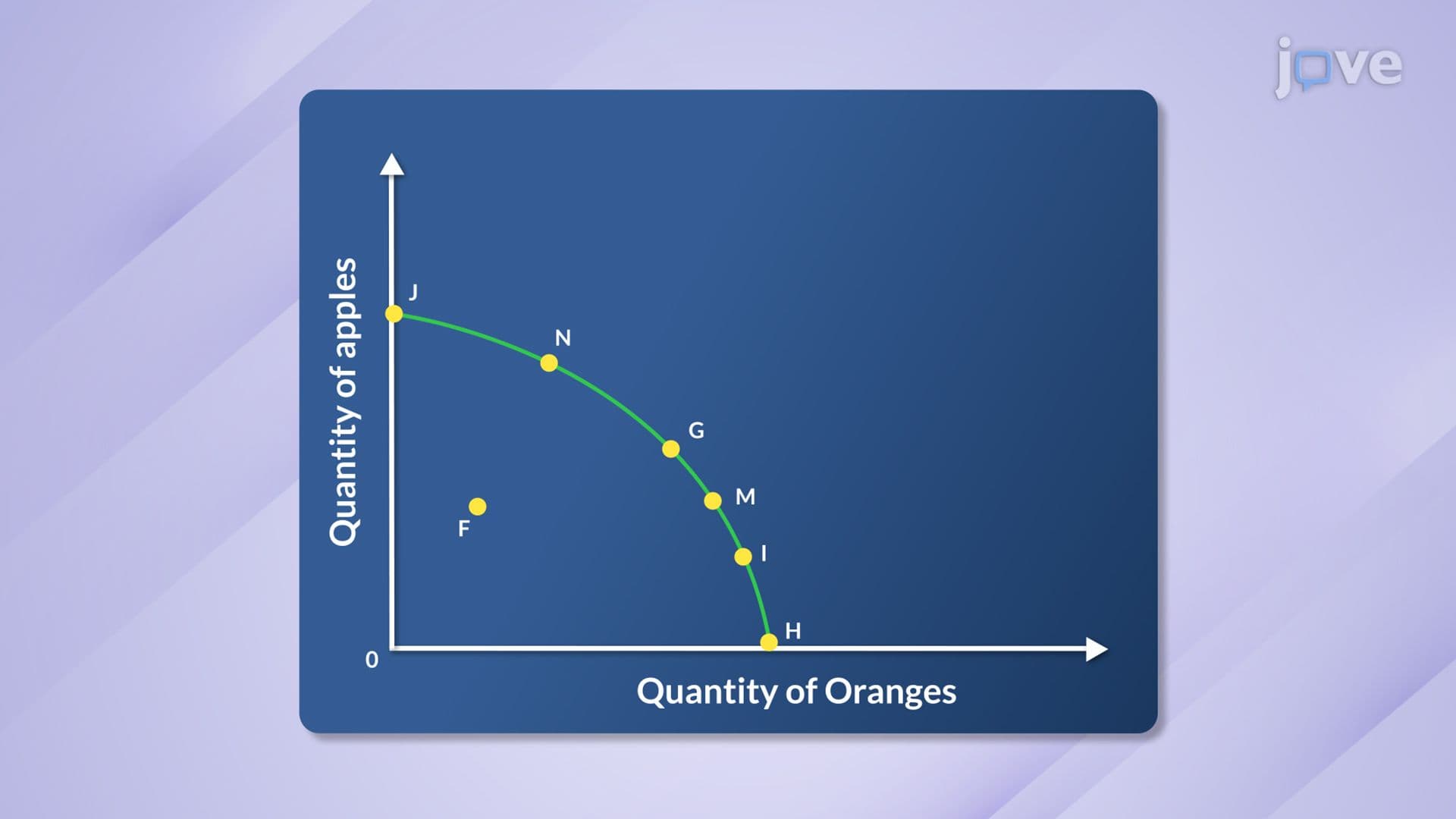

Video Summary: Derivation of Production Possibility Frontier Explained
Why does the U.S. trade wheat for Japanese electronics instead of producing both domestically? The derivation production possibility frontier reveals how economies make these crucial allocation decisions. By connecting efficient resource combinations in an Edgeworth Box to actual output possibilities, we can map every feasible production scenario for any two goods-like how California farmers might allocate land between almonds and grapes. This Derivation of Production Possibility Frontier Explained demonstrates the mathematical foundation behind economic trade-offs. Watch the full video on JoVE Coach to master this concept with expert-led visuals and step-by-step explanations.
The derivation production possibility frontier represents one of economics' most elegant mathematical relationships-connecting abstract resource allocation theory to concrete production realities. Unlike simply memorizing the PPF's downward slope, understanding its derivation reveals why economies face fundamental trade-offs and how mathematical models predict real-world production patterns.
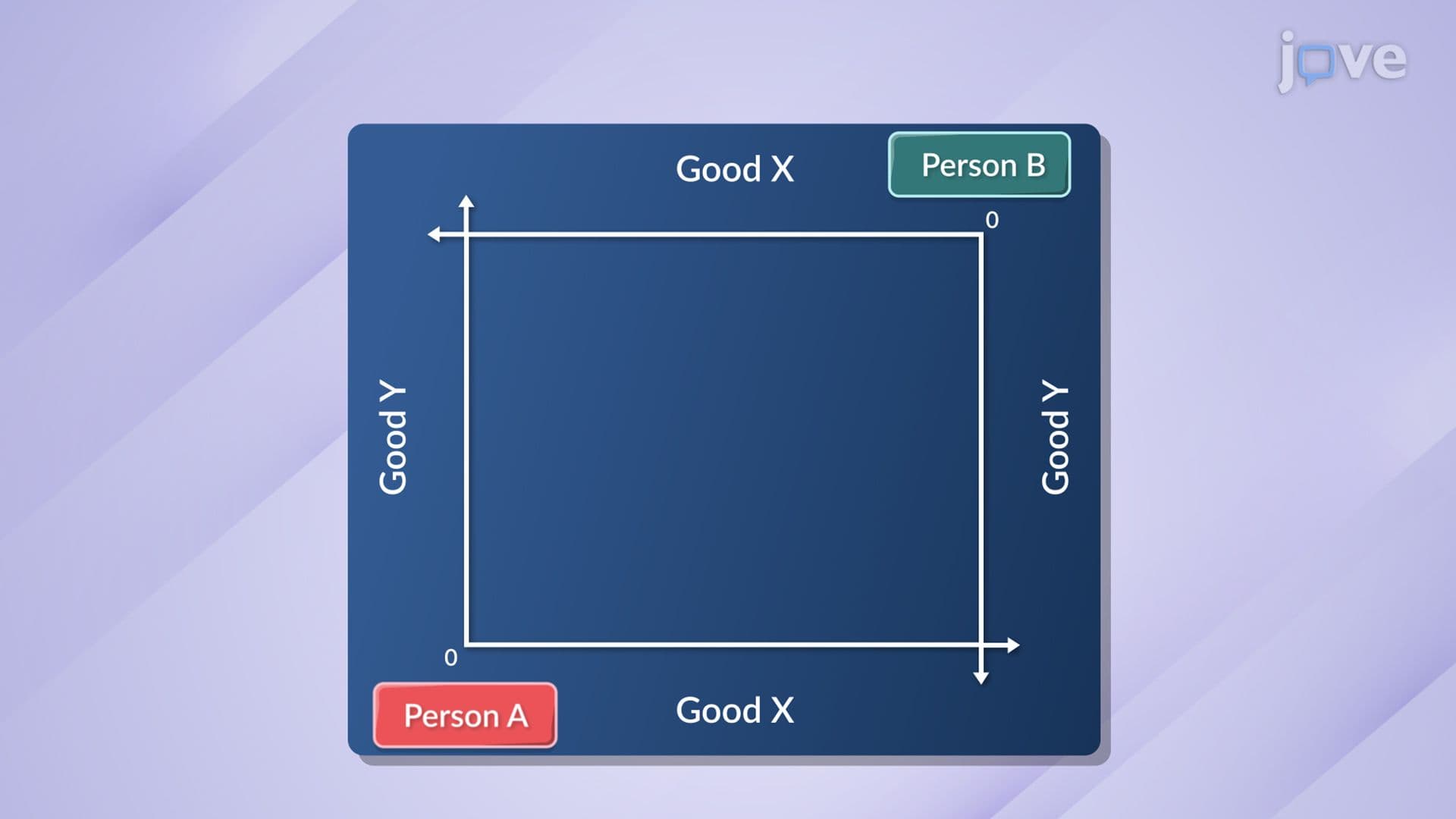
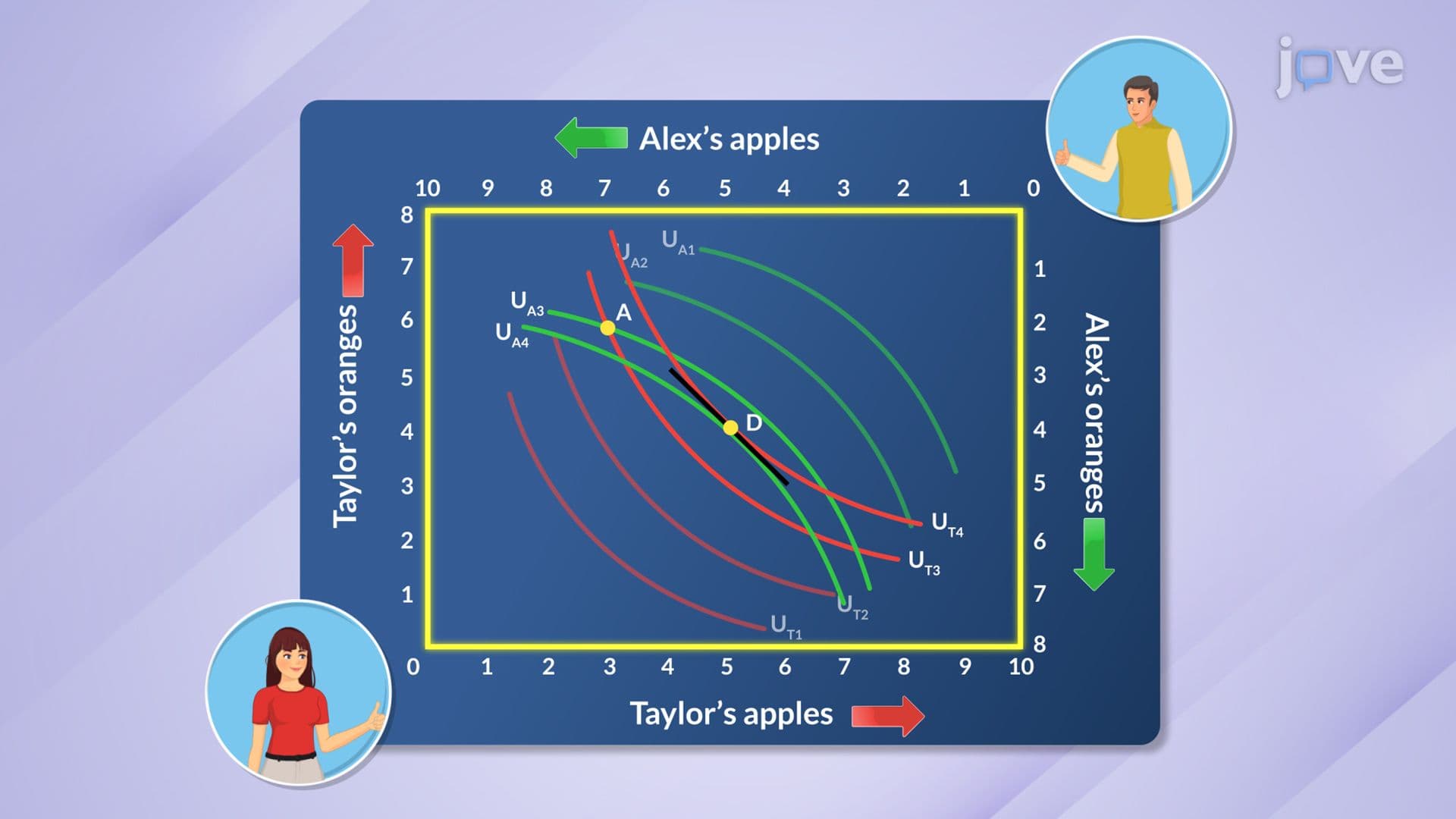
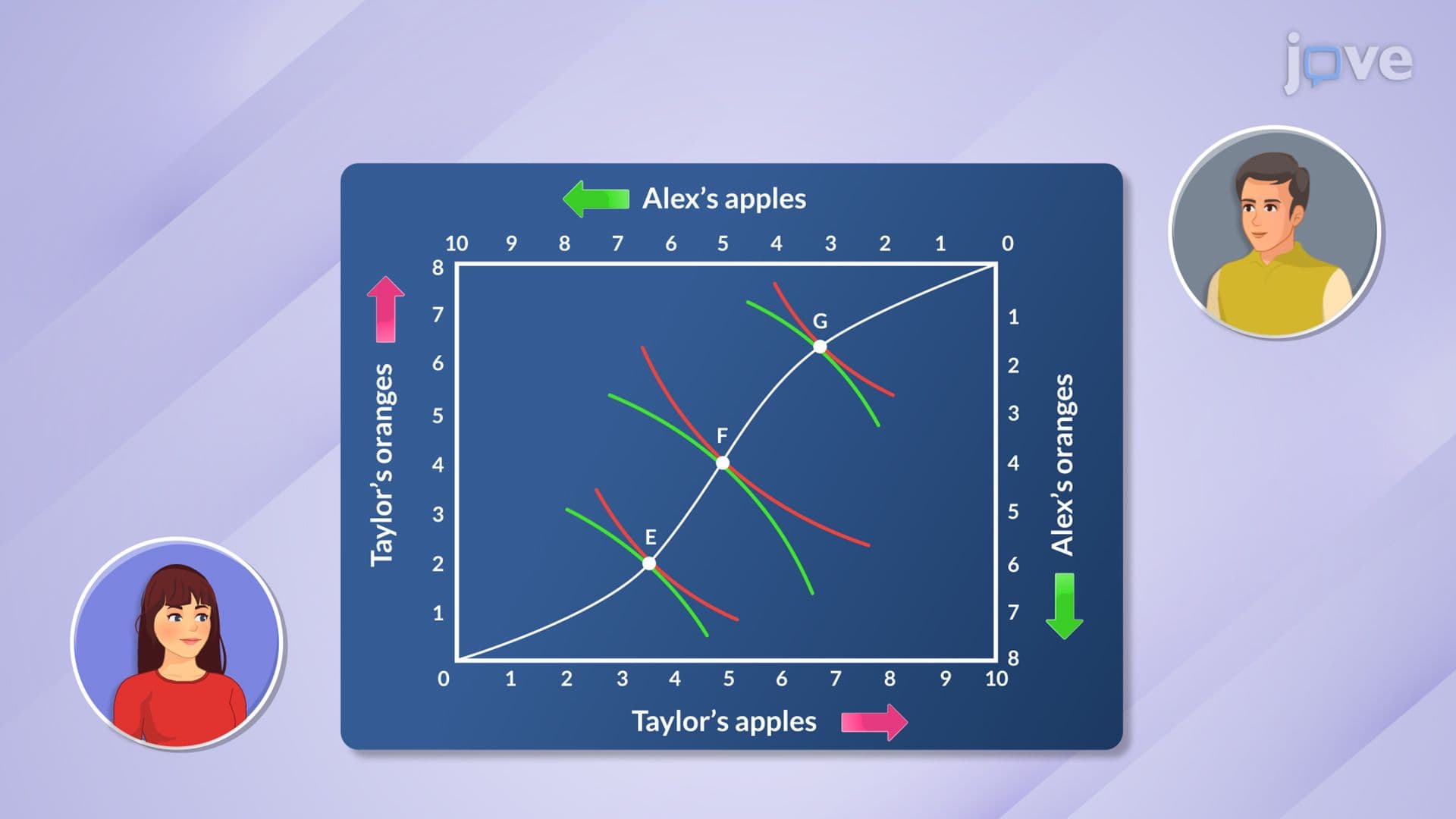
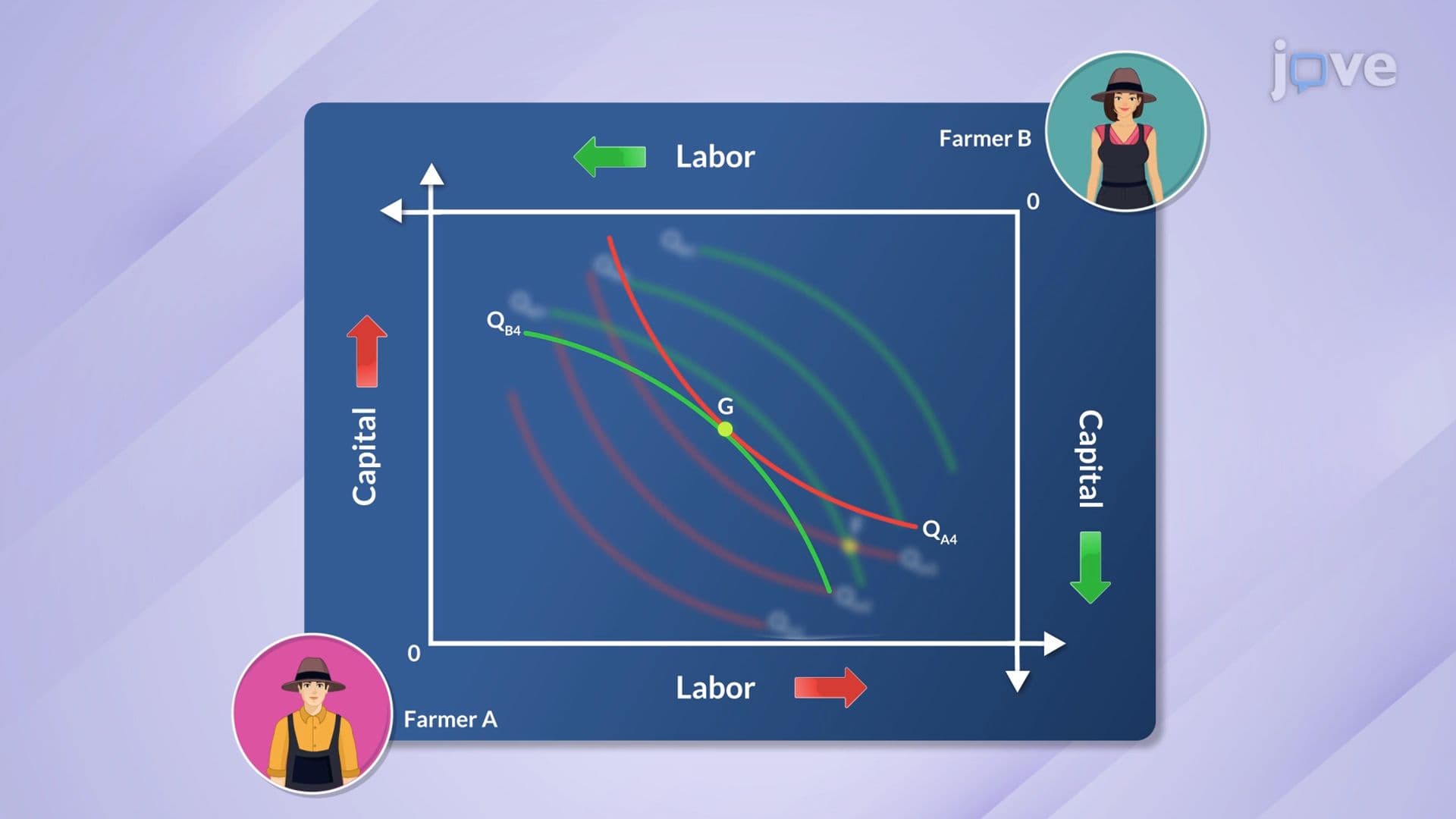
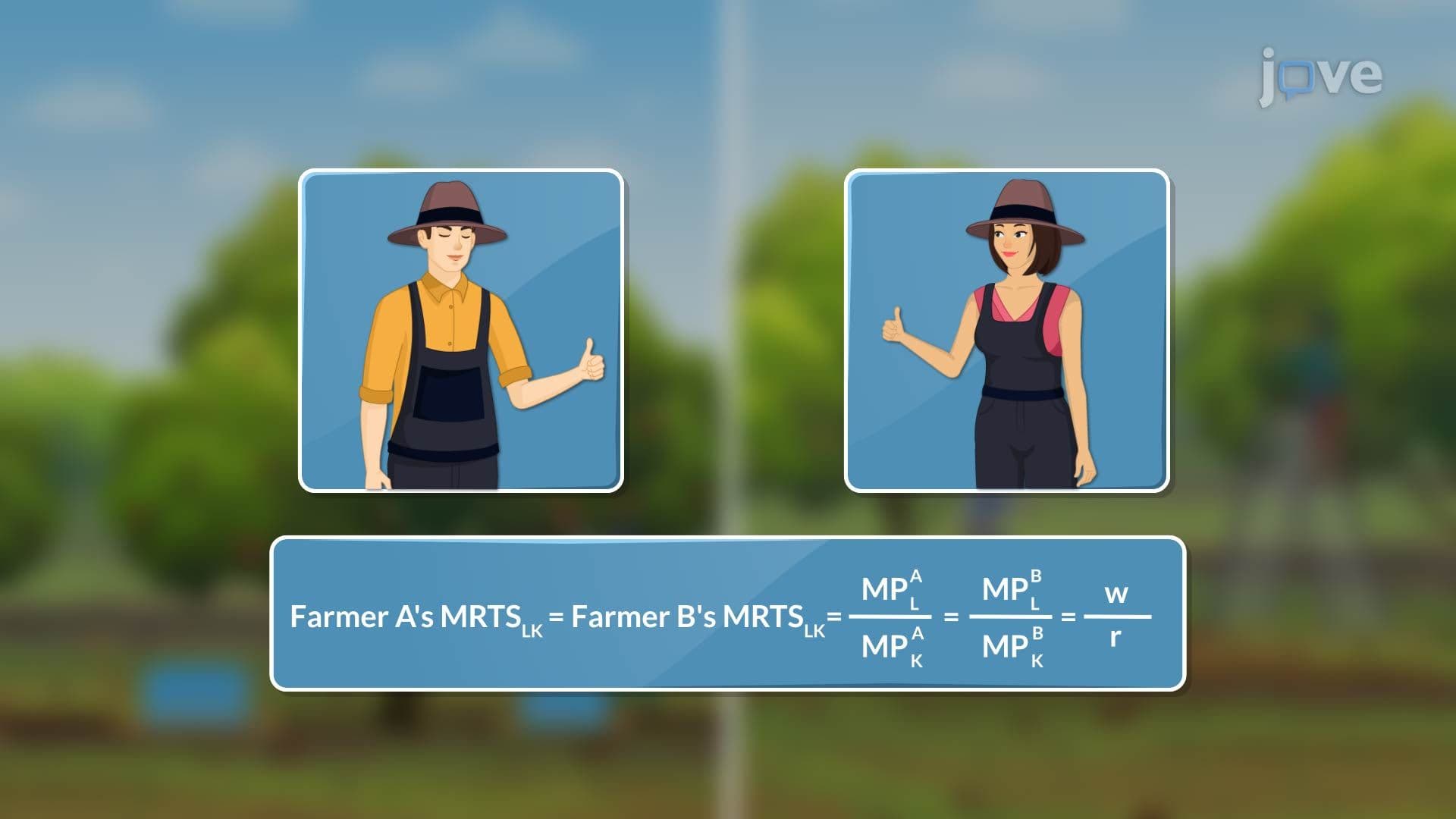
The derivation process begins with the Edgeworth Box, a graphical tool showing how two producers can efficiently allocate shared inputs like labor and capital. Each point on the contract curve represents a Pareto-efficient allocation-no producer can improve their situation without harming the other. When we translate these efficient input combinations into actual output levels, we discover something remarkable: every efficient input allocation corresponds to a specific, achievable combination of final goods.
Consider two Texas ranchers sharing 1,000 acres and 50 workers between cattle and cotton production. The Edgeworth Box maps every possible way to divide these resources, while the contract curve identifies only the efficient divisions. Each efficient point-say, 600 acres and 30 workers for cattle, 400 acres and 20 workers for cotton-generates a specific output combination that becomes one point on the production possibility frontier.
The derivation of production possibility frontier concept explained involves mapping these input-output relationships systematically. As we move along the Edgeworth Box contract curve, we trace corresponding movements along the PPF. This mathematical relationship explains why the PPF has its characteristic concave shape-marginal productivity typically decreases as resources shift between uses.
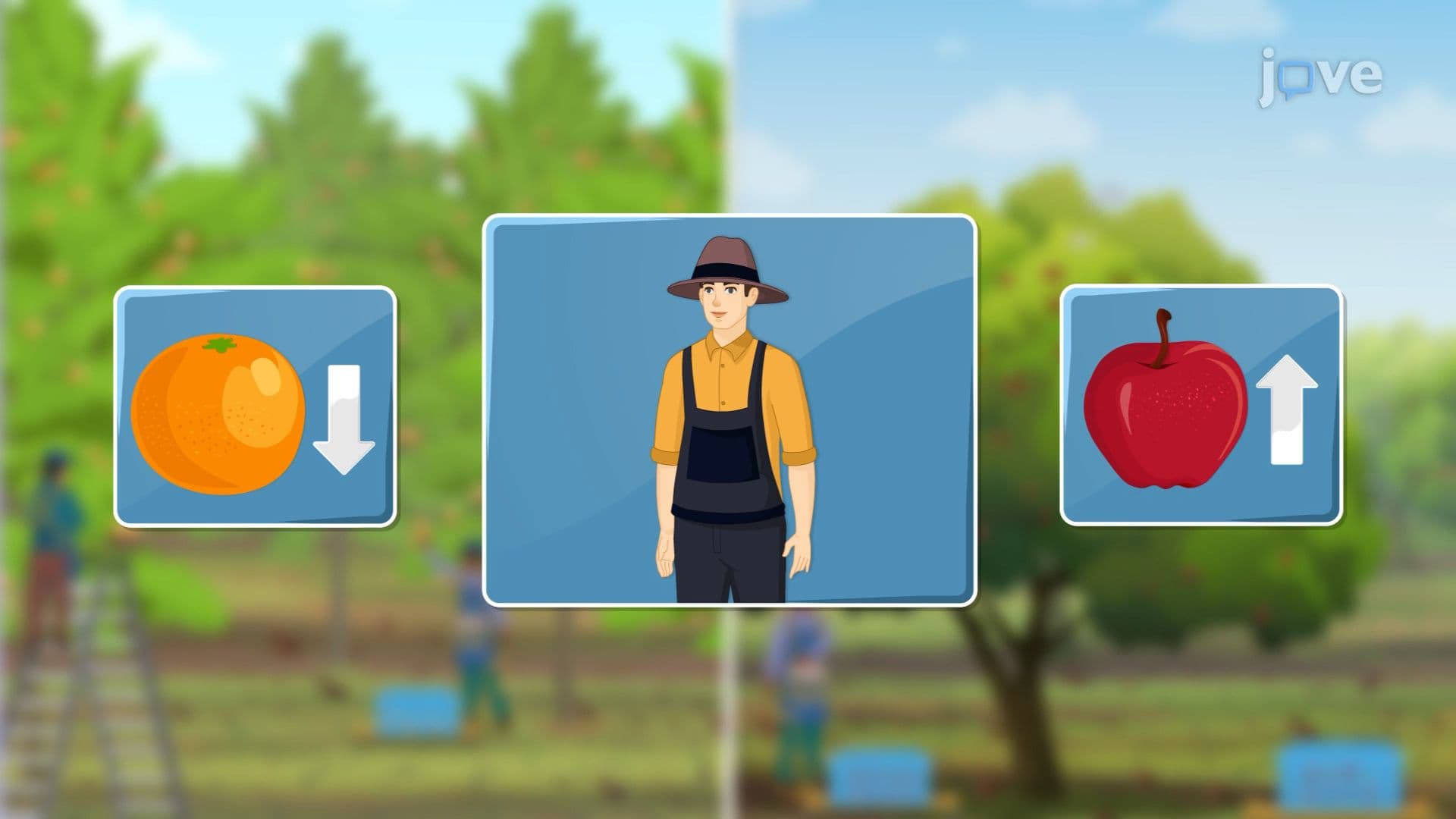
The PPF's slope, called the Marginal Rate of Transformation (MRT), quantifies opportunity cost precisely. If the MRT equals -2 at a particular point, society must sacrifice 2 units of Good A to gain 1 unit of Good B. This mathematical precision helps policymakers evaluate trade-offs in resource allocation, from federal budget decisions to state agricultural policies.
Students encounter PPF derivation in AP Economics, college microeconomics courses, and graduate-level economic modeling. The concept appears frequently on standardized tests, where students must interpret PPF shifts, calculate opportunity costs, and analyze efficiency implications. Professional economists use PPF derivation principles when modeling industry competitiveness, regional development strategies, and international trade patterns.
Understanding this derivation proves essential for advanced economic analysis, including general equilibrium modeling and welfare economics-foundational concepts for careers in economic consulting, policy analysis, and business strategy development.
Related Micro-courses