Loading video…


 22 Concepts
 4.3K views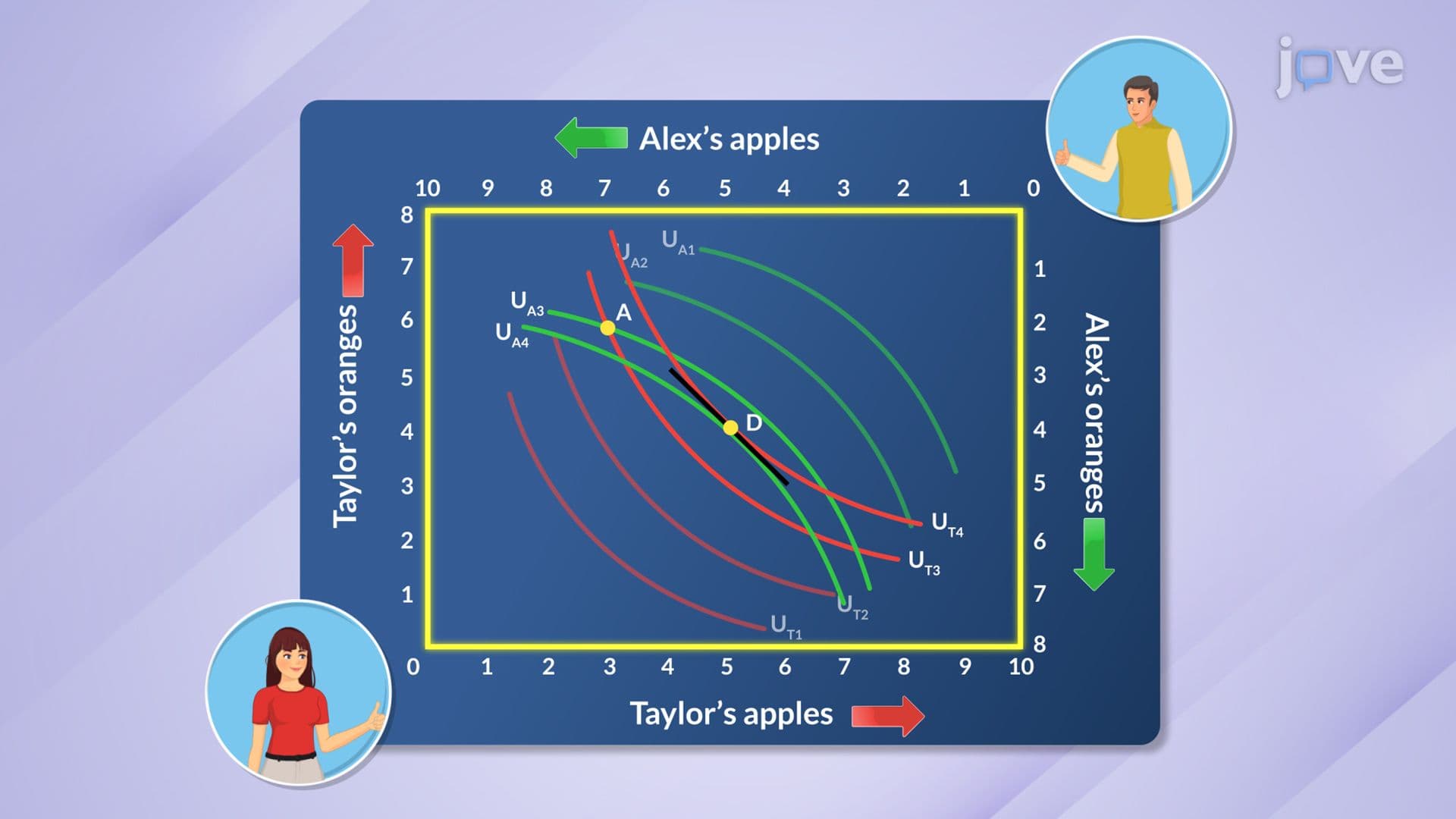

Video Summary: Exchange Efficiency and Gains From Trade Ii
Ever wondered why two college roommates might trade textbooks even when both originally chose their books carefully? Exchange efficiency gains from trade explain this everyday phenomenon through economic principles that govern everything from dormitory swaps to major US stock exchanges like NASDAQ. When students at University of California schools participate in textbook exchange programs, they demonstrate the same Pareto-efficient allocation principles that maximize utility for all parties involved. Exchange Efficiency and Gains from Trade II reveals how individuals reach optimal trading points when their marginal rates of substitution equalize. Watch the full video on JoVE Coach to master this concept with expert-led visuals and step-by-step explanations.
Exchange efficiency represents a cornerstone concept in microeconomic theory, describing situations where resources are allocated such that no further trades can improve one person's welfare without making another person worse off. This principle extends far beyond theoretical models-it explains why platforms like eBay, Facebook Marketplace, and college textbook exchanges create value for millions of Americans daily.
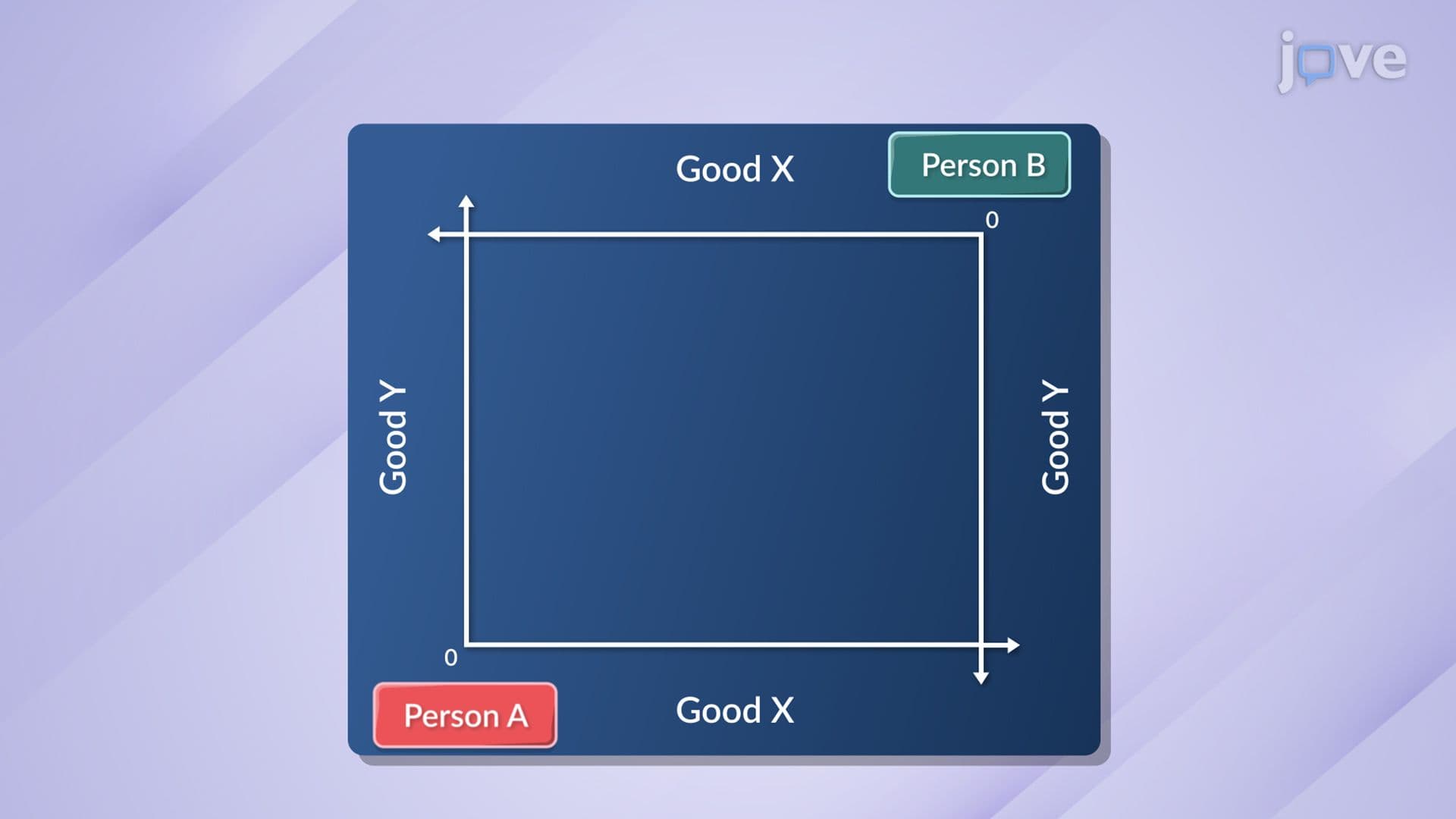
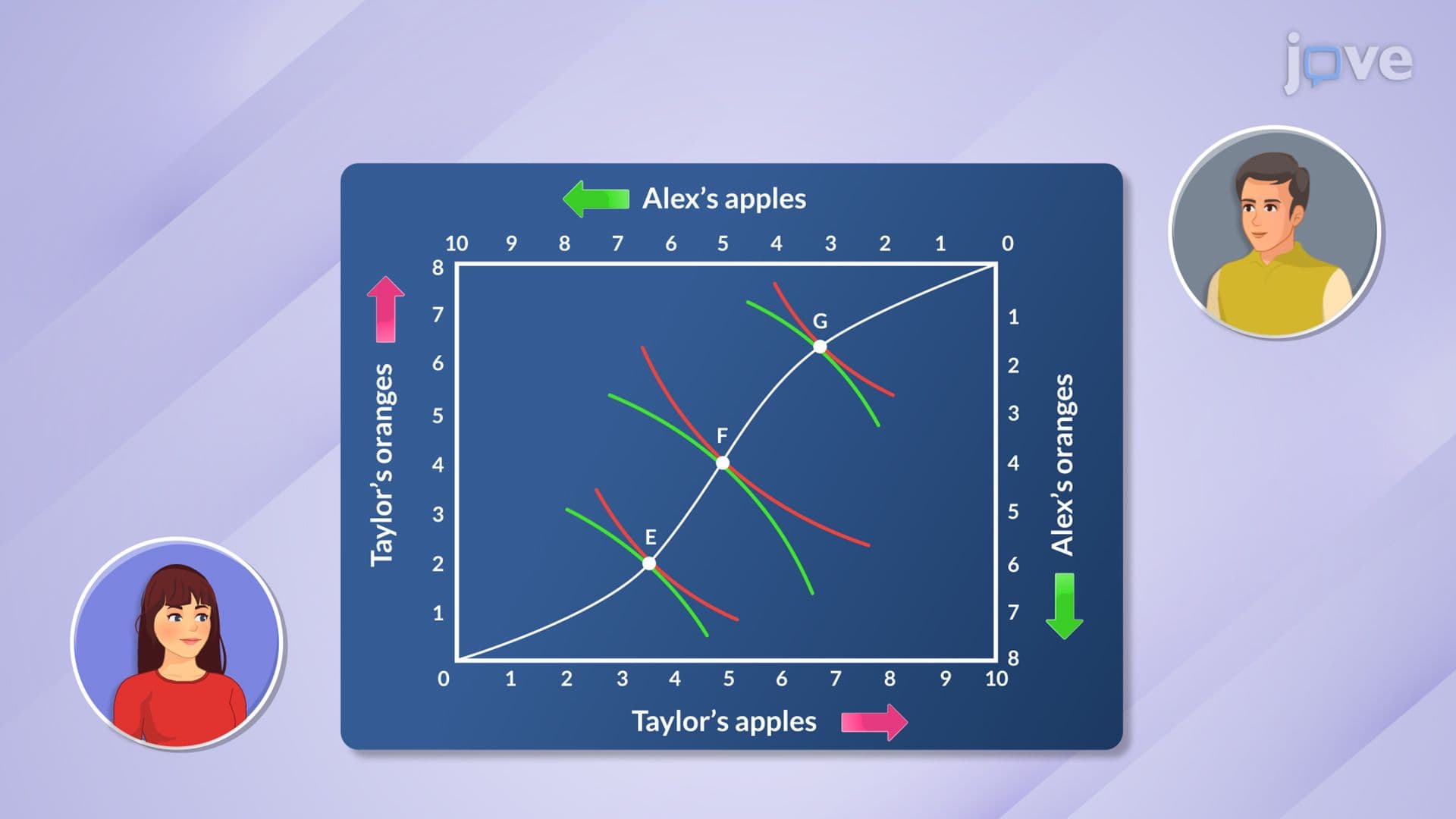
The Edgeworth Box diagram serves as the primary analytical tool for visualizing these concepts. Named after economist Francis Edgeworth, this graphical representation shows how two individuals can trade two goods to reach mutually beneficial outcomes. Students preparing for AP Economics or college microeconomics courses frequently encounter these diagrams in problem sets and exams.
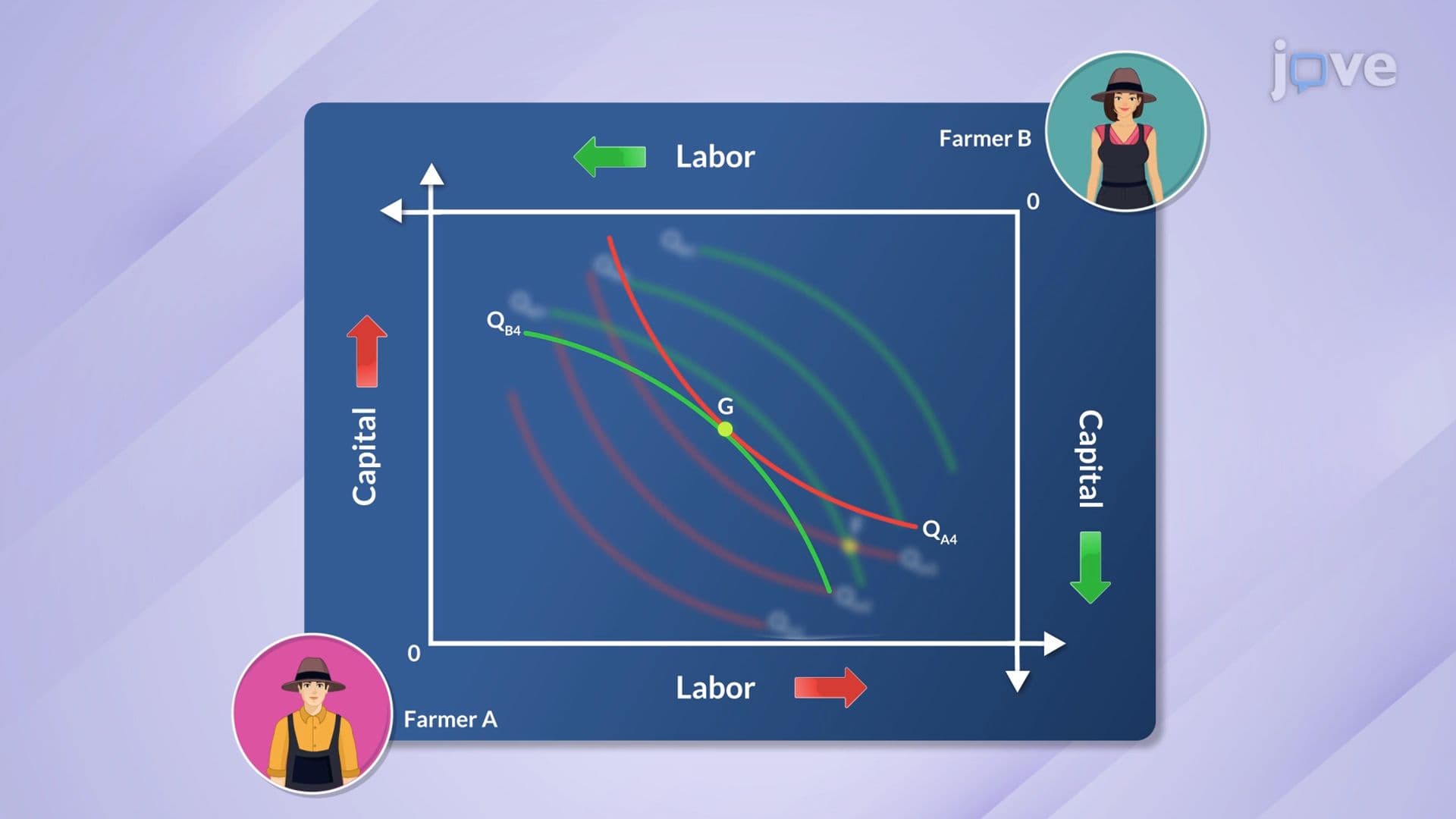
At the heart of exchange efficiency and gains from trade explained lies the concept of Pareto efficiency, named after Italian economist Vilfredo Pareto. A Pareto-efficient allocation occurs when indifference curves are tangent-meaning they touch at exactly one point without crossing. This tangency condition ensures that both traders' marginal rates of substitution are equal.
Consider two Stanford University students, Sarah and Mike, trading coffee pods and energy bars. When their indifference curves are tangent, Sarah's willingness to trade coffee for energy bars exactly matches Mike's willingness to make the opposite trade. Neither can improve their satisfaction without making the other worse off.
The mathematical condition for exchange efficiency requires that MRS(coffee, energy bars) for Sarah equals MRS(coffee, energy bars) for Mike. When these rates differ, profitable trading opportunities still exist. If Sarah's MRS equals 3 (she'll give up 3 coffee pods for 1 energy bar) while Mike's MRS equals 1.5, Sarah values energy bars more highly relative to coffee than Mike does.
This difference creates the foundation for mutually beneficial exchange. Sarah will trade some coffee pods to Mike in exchange for energy bars until their marginal rates of substitution converge. US business schools regularly test students' understanding of this convergence process in case studies involving everything from commodity trading to corporate mergers.
What is exchange efficiency and gains from trade becomes clearer when applied to familiar scenarios. Amazon's trade-in programs, where customers exchange old electronics for store credit, demonstrate these principles in action. The company and customers continue trading until both parties maximize their respective utilities.
For students taking the AP Microeconomics exam or college intermediate microeconomics courses, understanding when trades stop is crucial. Trading ceases precisely when marginal rates of substitution equalize-not before, not after. This timing represents the equilibrium condition that appears frequently in multiple-choice questions and free-response sections.
Related Micro-courses