Loading subject page…


4,328 views

Video Summary: Exchange Efficiency Consumption Contract Curve Explained
Ever wonder why Netflix and Spotify can coexist when they compete for your entertainment budget? The exchange efficiency consumption contract reveals how two parties can trade goods to reach mutually beneficial outcomes. In the U.S. housing market, when buyers and sellers negotiate, they're essentially moving along points that represent different distributions of value-similar to how the Exchange Efficiency Consumption Contract Curve Explained demonstrates all possible efficient allocations between two consumers in economic theory. Watch the full video on JoVE Coach to master this concept with expert-led visuals and step-by-step explanations.
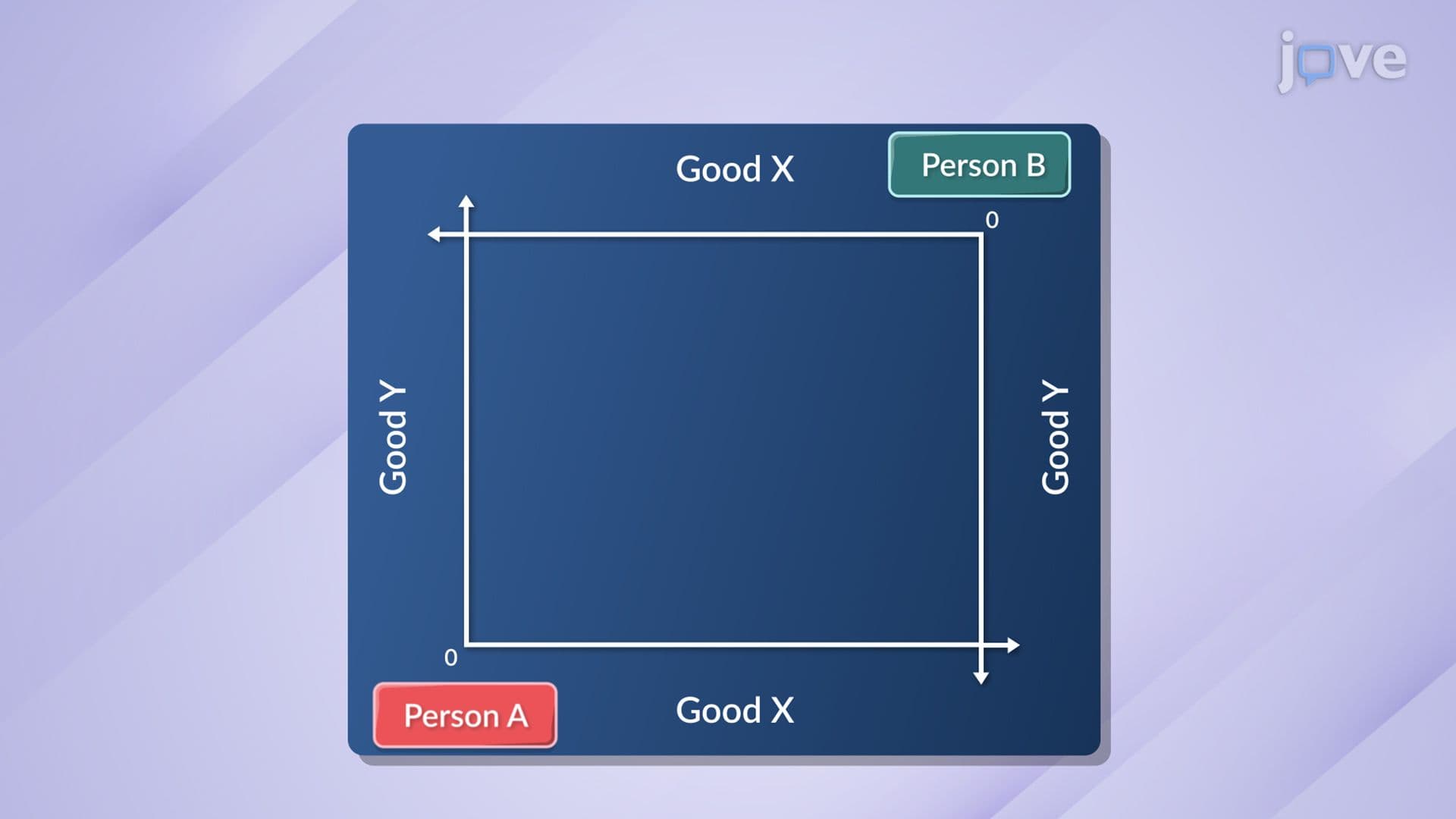
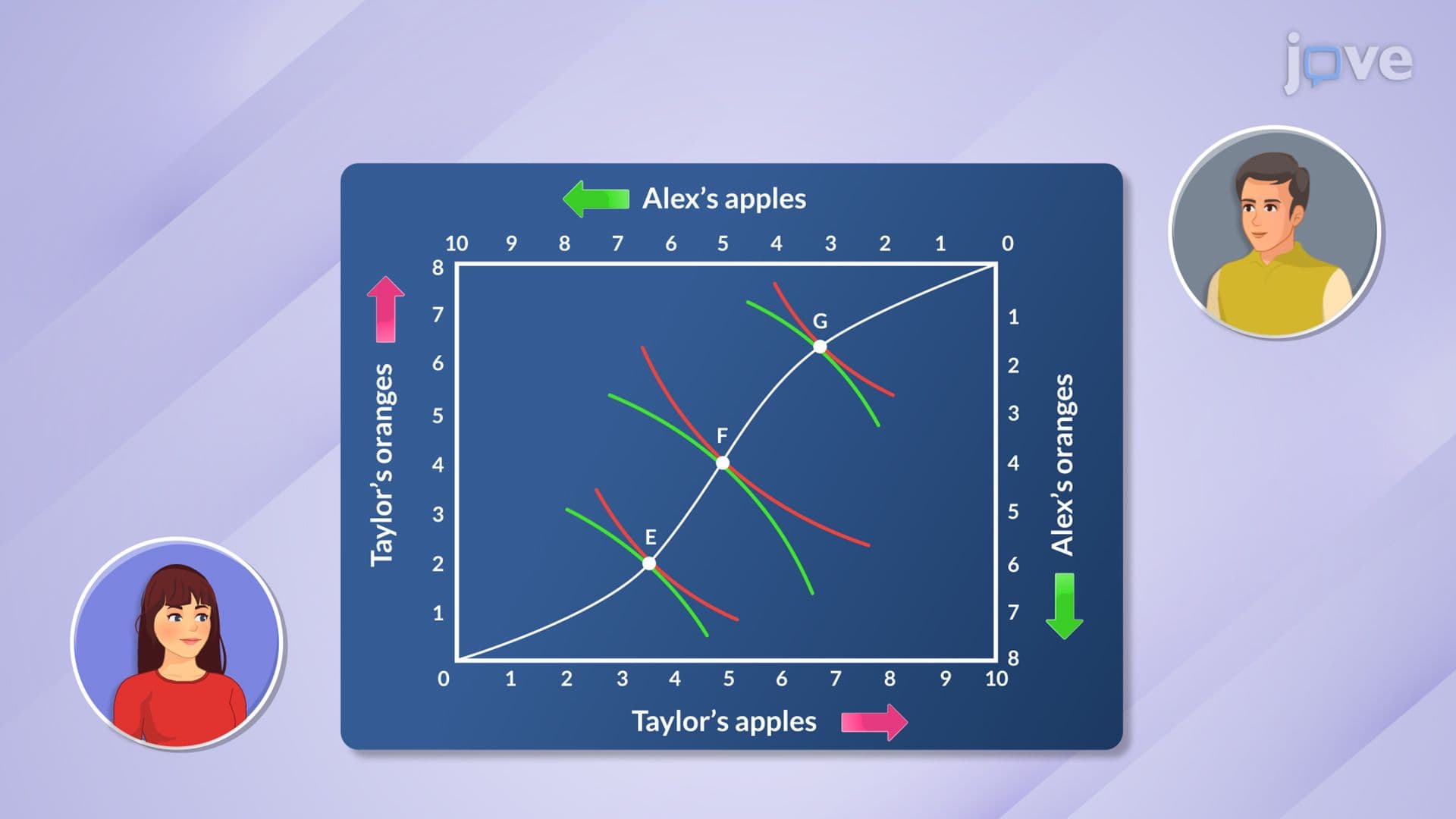
The exchange efficiency consumption contract curve represents one of economics' most elegant solutions to the allocation problem. When two consumers possess different bundles of goods and have varying preferences, this curve maps every possible efficient way they can trade with each other. Unlike a simple supply-and-demand graph, the contract curve operates within an Edgeworth box-a rectangular diagram that shows all possible ways to distribute fixed quantities of two goods between two people.
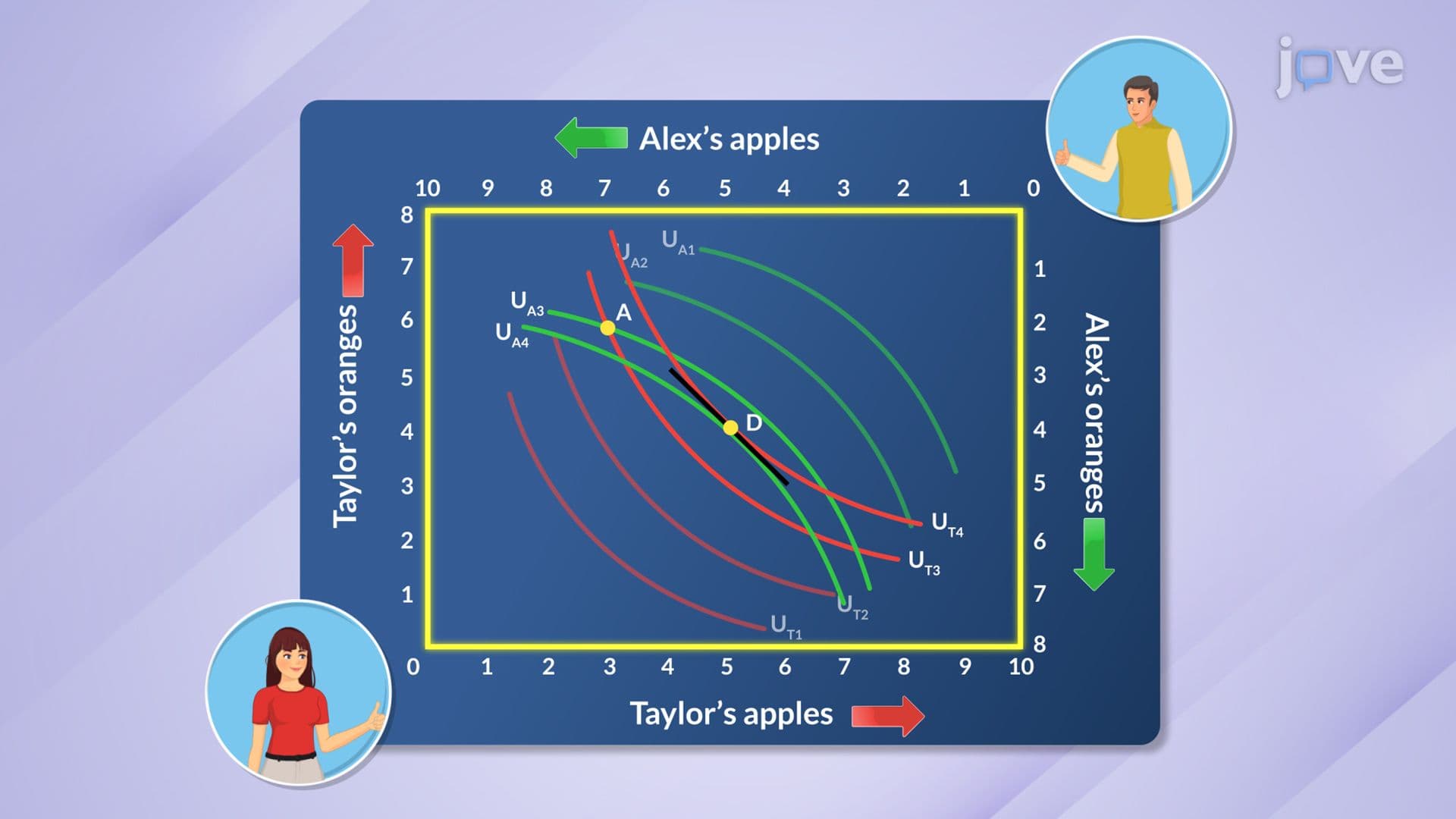
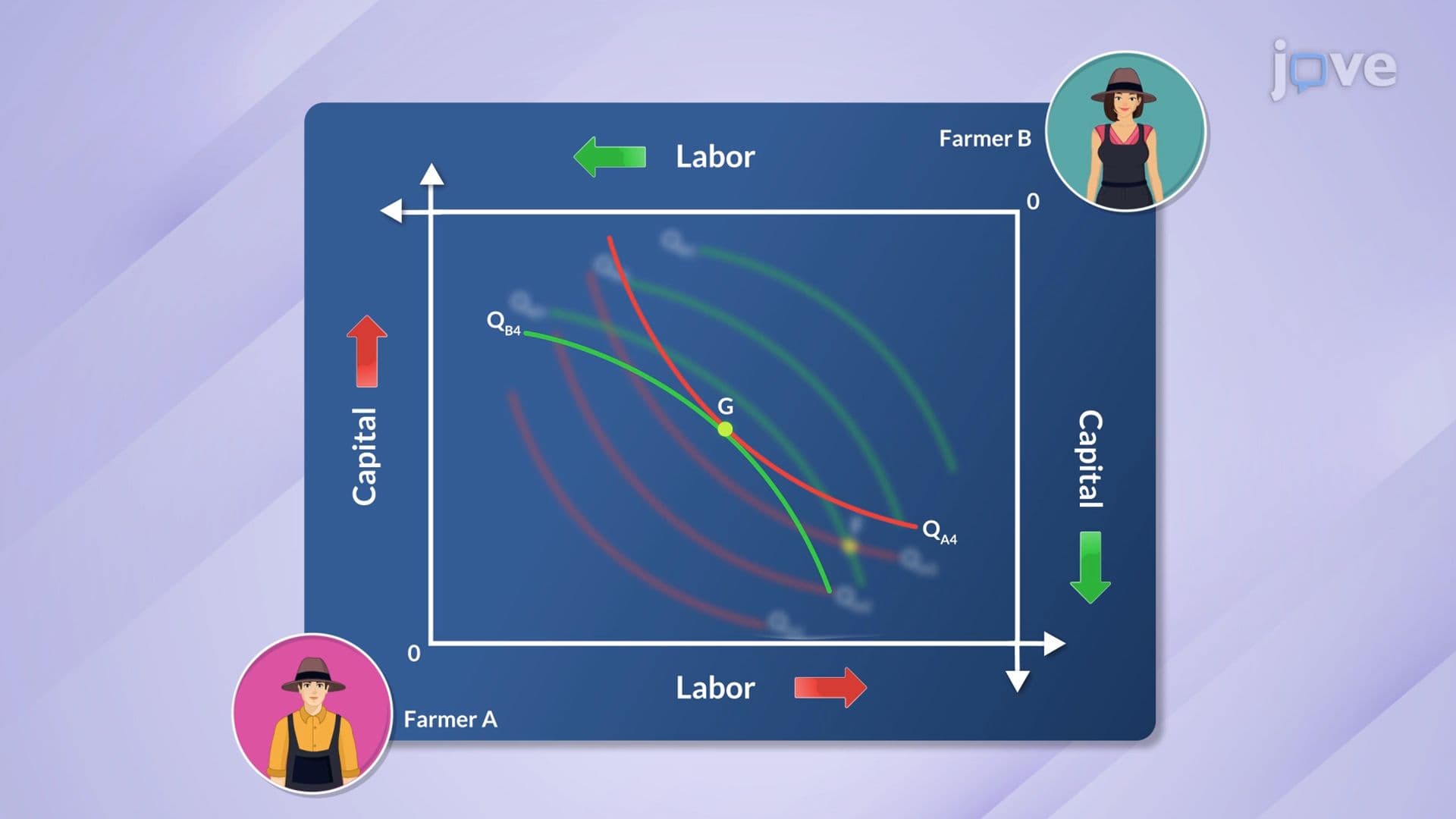
The curve emerges from a precise mathematical relationship. At each point along the exchange efficiency consumption contract curve, both consumers' indifference curves are tangent to each other. This tangency condition ensures that their marginal rates of substitution (MRS) are equal. In practical terms, this means both consumers value the trade-off between the two goods identically at that point. For example, if Consumer A is willing to give up 2 units of good X for 1 unit of good Y, Consumer B must also be willing to make that same trade-off ratio for the allocation to be efficient.
This concept frequently appears on AP Economics exams and college microeconomics courses, where students must identify efficient allocations and explain why certain points represent optimal outcomes. Understanding the exchange efficiency consumption definition helps students recognize that efficiency doesn't mean equality-it means no waste.
While every point on the contract curve guarantees efficiency, the distribution of benefits varies dramatically. Points near one corner of the Edgeworth box favor one consumer heavily, while points near the opposite corner benefit the other consumer. This creates what economists call the equity-efficiency trade-off. The U.S. tax system exemplifies this concept-different tax structures can be equally efficient but distribute the burden very differently across income groups.
Consider how streaming services negotiate content licensing deals. When Netflix negotiates with Disney for movie rights, they're essentially finding a point on their contract curve where both companies maximize value from their exchange. The final agreement represents an efficient allocation, but the specific terms determine how the benefits are distributed between the companies. Similarly, in labor negotiations between unions and management, collective bargaining seeks points on the contract curve that both parties can accept, even though different points favor different sides.
Related Micro-courses