Loading subject page…

- Microeconomics
- General Equilibrium Theory and Welfare Economics
- Output Efficiency: Achieving Output Efficiency
Micro-course: General Equilibrium Theory and Welfare Economics
4,327 views
Learn key concepts and earn your certificate.
















Output Efficiency: Achieving Output Efficiency


00:00
01:26
Video Summary: Output Efficiency Achieving Output Efficiency Explained
Why do Apple iPhones cost more than oranges at your local grocery store, yet both seem to satisfy different consumer needs perfectly? Output efficiency achieving output occurs when an economy produces the optimal mix of goods that maximizes consumer satisfaction. Consider the US smartphone market: when consumer willingness to trade laptops for phones (MRS) equals producers' ability to shift resources between these products (MRT), we achieve Output Efficiency Achieving Output Efficiency Explained. This balance ensures resources aren't wasted producing too many laptops when consumers actually prefer smartphones. Watch the full video on JoVE Coach to master this concept with expert-led visuals and step-by-step explanations.
- Understand how Output Efficiency Achieving Output Efficiency Explained represents the optimal allocation of resources in a two-good economy
- Identify when MRS (Marginal Rate of Substitution) equals MRT (Marginal Rate of Transformation) to signal efficient production
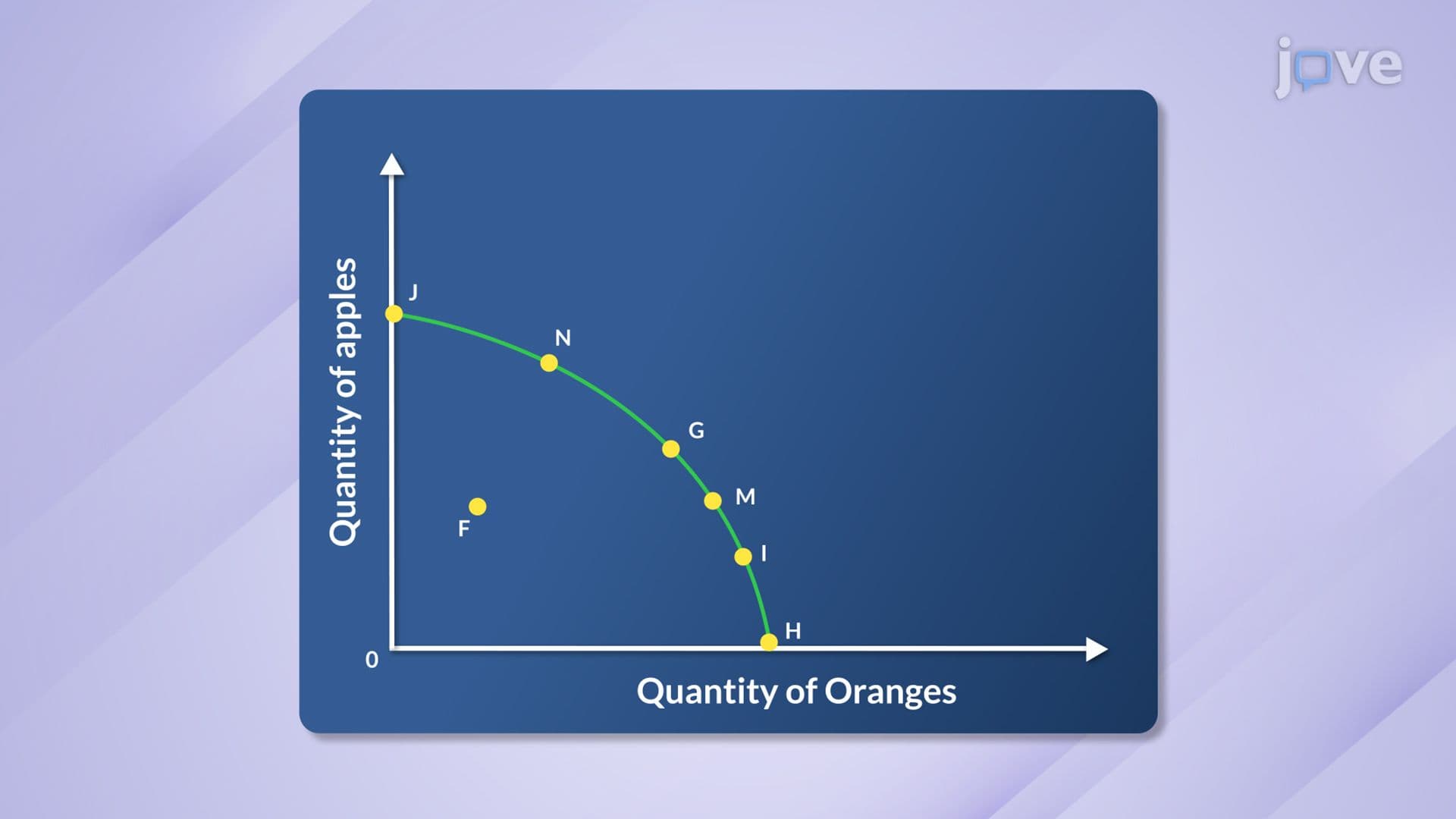
- Analyze production possibility frontier (PPF) graphs to locate points of output efficiency
- Compare inefficient resource allocation scenarios with efficient equilibrium outcomes
- Evaluate real-world market conditions using MRS and MRT calculations
- Apply output efficiency concepts to solve AP Economics and college microeconomics problems
- Recognize the graphical relationship between indifference curves and PPF slopes at efficiency points
- Explore how resource reallocation moves economies from inefficient to efficient production levels
Understanding Output Efficiency Achieving Output Efficiency Explained
Output efficiency achieving output represents a fundamental economic principle where society produces the perfect combination of goods to maximize overall welfare. This occurs when the marginal rate of substitution (MRS) equals the marginal rate of transformation (MRT), ensuring that consumer preferences align perfectly with production capabilities.
The MRS and MRT Relationship
The marginal rate of substitution measures how much of one good consumers willingly give up to obtain one additional unit of another good. For instance, if American consumers are willing to trade 1.5 hamburgers for 1 pizza, the MRS equals 1.5. Meanwhile, the marginal rate of transformation shows the production trade-off-how many hamburgers must be sacrificed to produce one additional pizza.
When MRS exceeds MRT, consumers value the second good more highly than production costs suggest, indicating underproduction. US agricultural markets demonstrate this principle: when consumers highly value organic vegetables (high MRS) but farmers can easily shift from conventional to organic production (low MRT), market forces encourage increased organic production until equilibrium emerges.
Graphical Representation and PPF Analysis
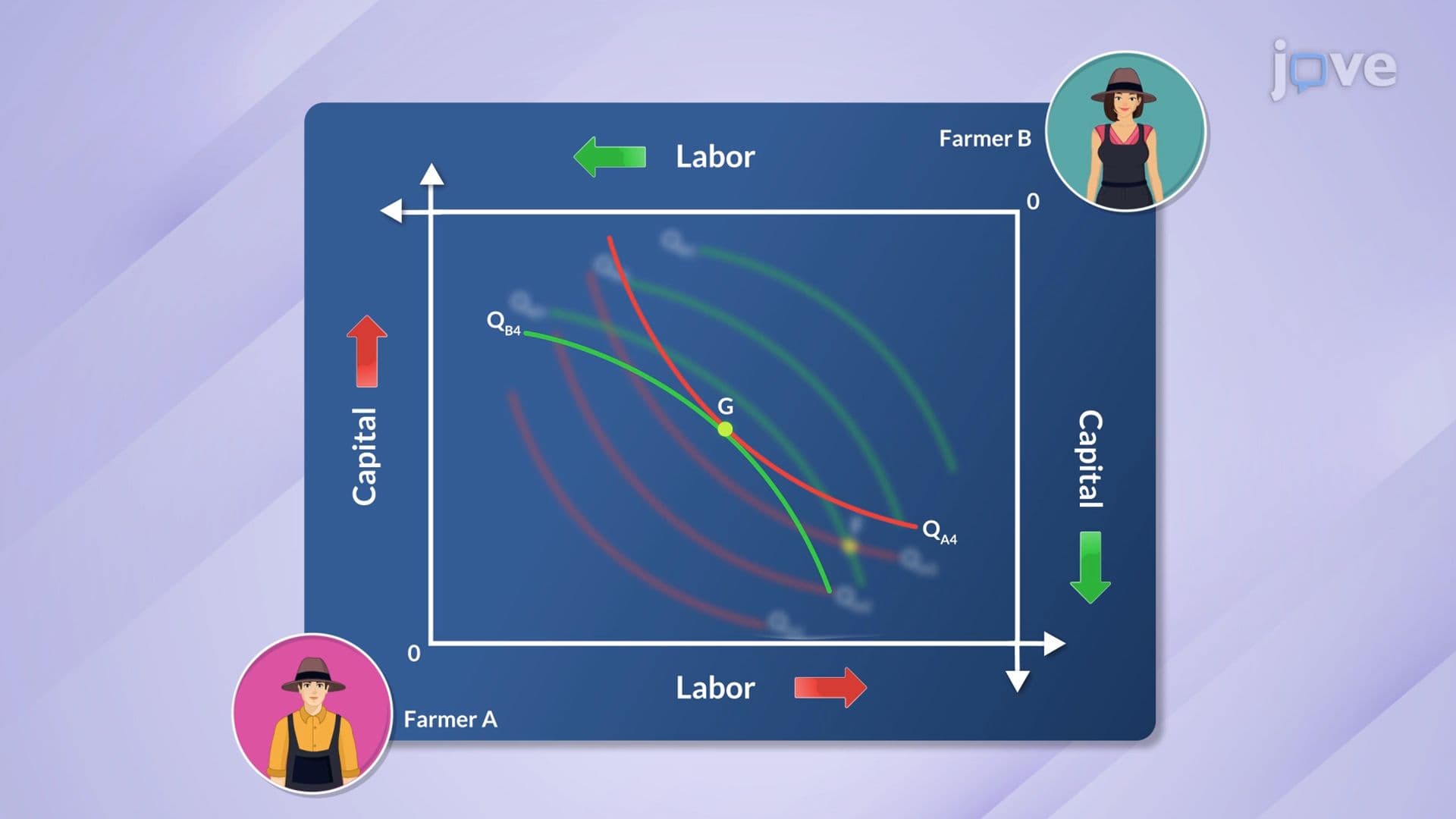
On a production possibility frontier, output efficiency occurs where an indifference curve touches the PPF tangentially-not merely intersecting it. This tangency point represents the optimal production mix. Students preparing for AP Economics exams frequently encounter problems requiring identification of these efficiency points on PPF diagrams.
Consider Tesla's production decisions between Model 3 and Model Y vehicles. If consumer preferences (MRS = 1.25) align with Tesla's production flexibility (MRT = 1.25), the company achieves output efficiency. Any deviation suggests either overproduction of one model or missed opportunities to better satisfy consumer demands.
Real-World Applications and Policy Implications
Output efficiency concepts guide crucial policy decisions in the United States. Federal budget allocation between defense spending and education programs illustrates this principle. When taxpayer preferences (MRS) for education funding equal the government's ability to reallocate resources from defense to education (MRT), optimal public good provision occurs.
College microeconomics courses emphasize that achieving output efficiency requires perfect information and competitive markets-conditions rarely met in reality. Understanding these limitations helps students critically analyze market outcomes and policy interventions designed to improve allocative efficiency.
Frequently Asked Questions
Output efficiency occurs when an economy produces the exact combination of goods that maximizes consumer satisfaction, achieved when MRS equals MRT. This means consumers' willingness to trade between goods perfectly matches producers' ability to shift resources between those same goods. It represents the most efficient possible allocation of scarce resources.
AP Microeconomics frequently tests this concept through PPF and indifference curve analysis questions. Students must identify tangency points, calculate MRS and MRT values, and explain why certain production combinations are efficient or inefficient. Practice graphing exercises and numerical problem-solving to master these exam formats.
Yes, introductory microeconomics courses at universities nationwide include output efficiency in their core curriculum. Expect both graphical analysis and mathematical calculations involving utility functions and production possibilities. Many professors use real-world examples like technology company product mix decisions to illustrate these concepts.
Netflix's content strategy demonstrates output efficiency principles when their programming mix perfectly matches subscriber preferences. If viewers are willing to trade 2 comedy shows for 1 drama series (MRS = 2), and Netflix can reallocate production budgets at the same 2:1 ratio (MRT = 2), they achieve optimal content allocation.
Not at all! While the mathematical notation may seem intimidating initially, the core concept is intuitive: producing what people actually want in the right proportions. Start with simple two-good examples like pizza versus hamburgers, then gradually work toward more complex scenarios. Most high school students grasp this concept within a few practice sessions.
Practice drawing PPF diagrams with indifference curves, focusing on identifying tangency points. Create flashcards for MRS and MRT definitions, work through numerical examples, and solve past exam problems. Form study groups to explain concepts aloud-teaching others significantly improves retention and understanding.
Production efficiency means producing goods at the lowest possible cost (operating on the PPF), while output efficiency means producing the right combination of goods that consumers actually want most. An economy can be production efficient but output inefficient if it produces goods people don't value highly relative to alternatives.
Explore market failures, externalities, and public goods theory to understand why real economies rarely achieve perfect output efficiency. Study consumer and producer surplus, deadweight loss, and welfare economics to deepen your understanding of economic efficiency concepts.
Related Micro-courses

21 Concepts

21 Concepts

15 Concepts