Loading subject page…


4,330 views

Video Summary: What Is Edgeworth Box
Did you know that economists use a simple box diagram to solve complex resource allocation problems that affect everything from healthcare distribution to trade negotiations? The Edgeworth box is a powerful graphical tool that shows how two parties can efficiently share limited resources, like when the Federal Reserve and Treasury must allocate budget resources between different economic priorities. This fundamental concept in microeconomics helps visualize all possible ways to distribute fixed quantities of goods between two individuals or entities. Watch the full video on JoVE Coach to master this concept with expert-led visuals and step-by-step explanations.
The Edgeworth box serves as a cornerstone concept in microeconomic theory, providing students with a visual framework to understand how scarce resources can be allocated between two parties. Named after British economist Francis Ysidro Edgeworth, this analytical tool transforms complex allocation problems into intuitive graphical representations that appear frequently on AP Economics exams and college microeconomics courses.
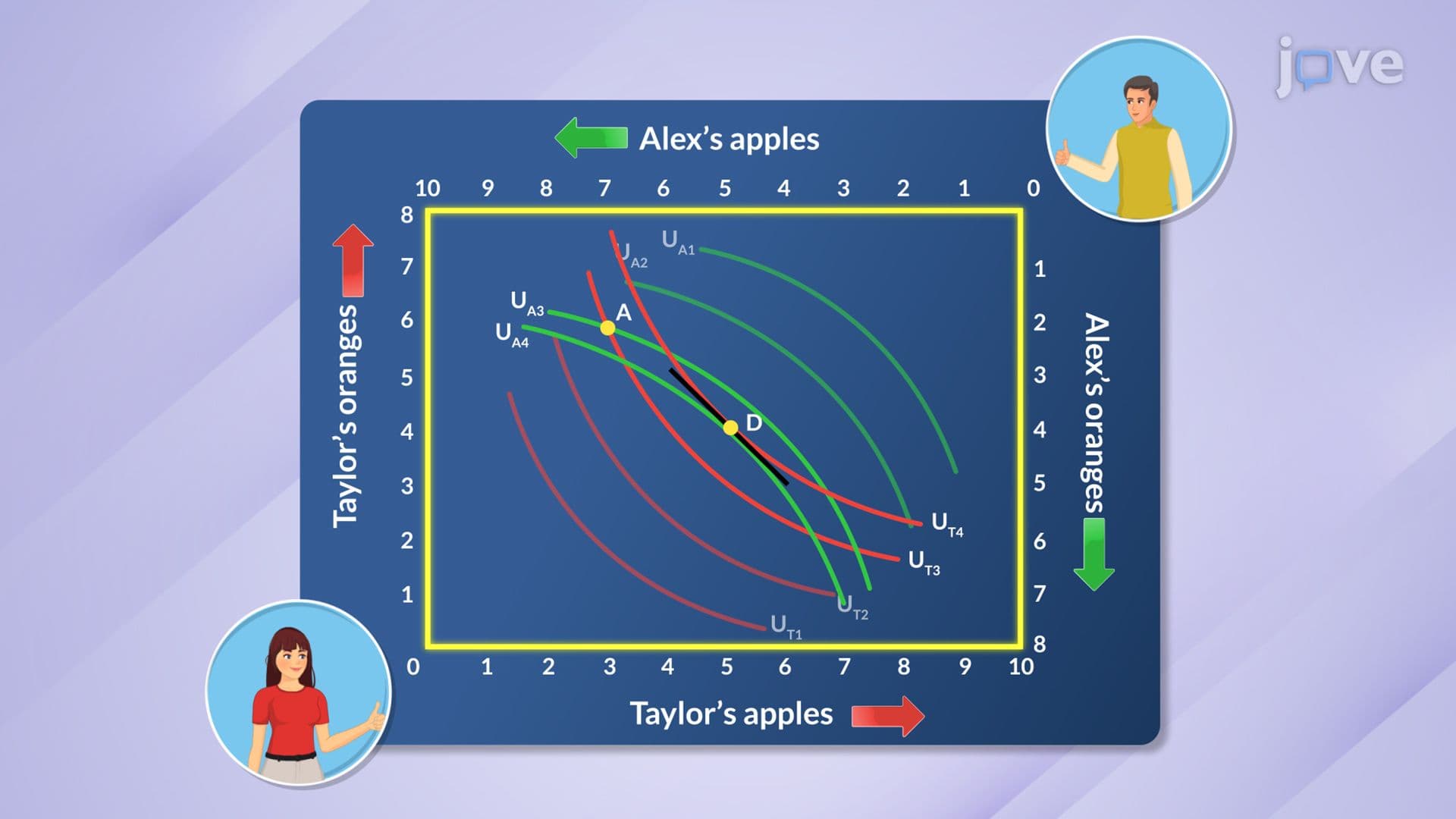
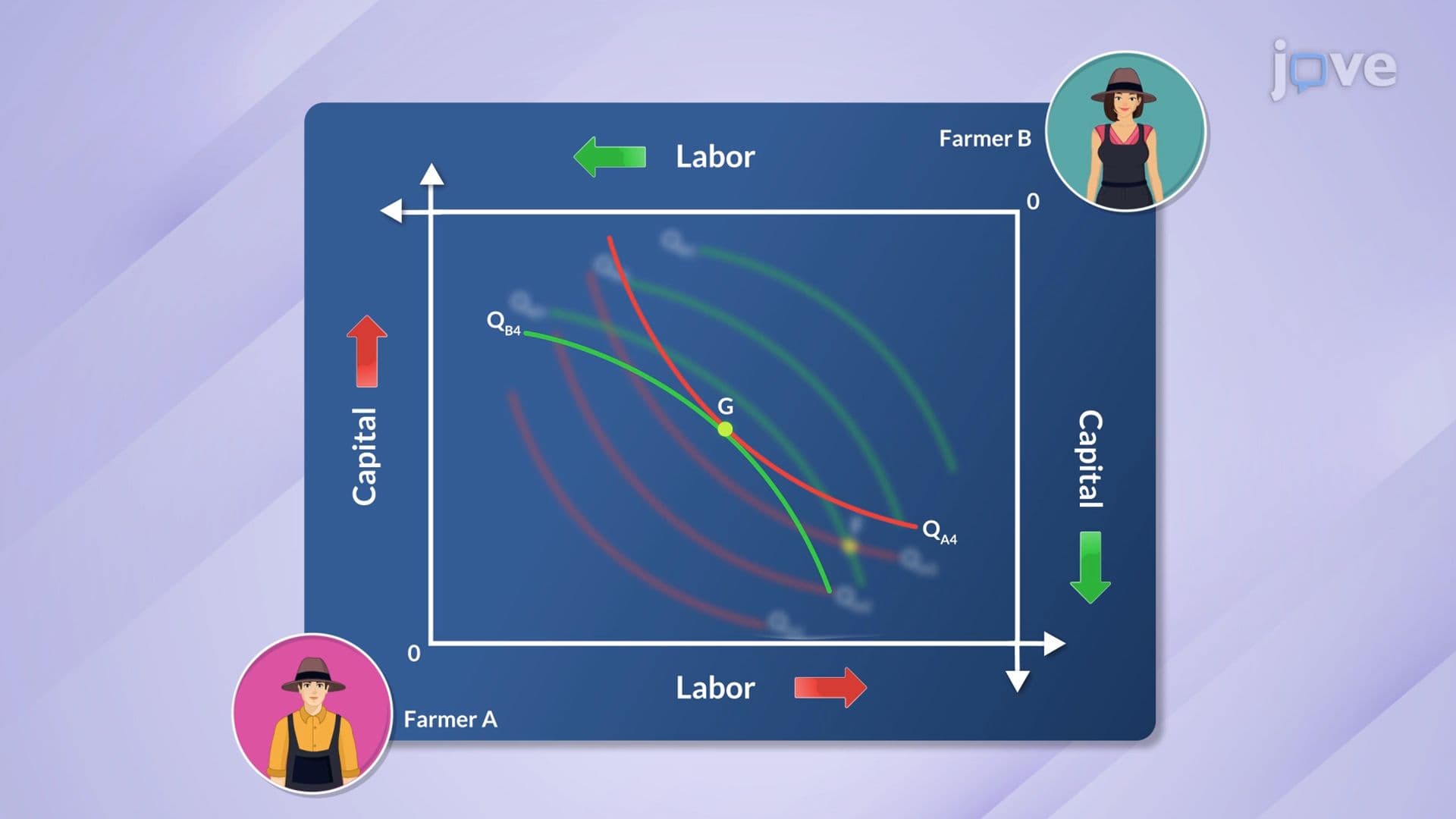
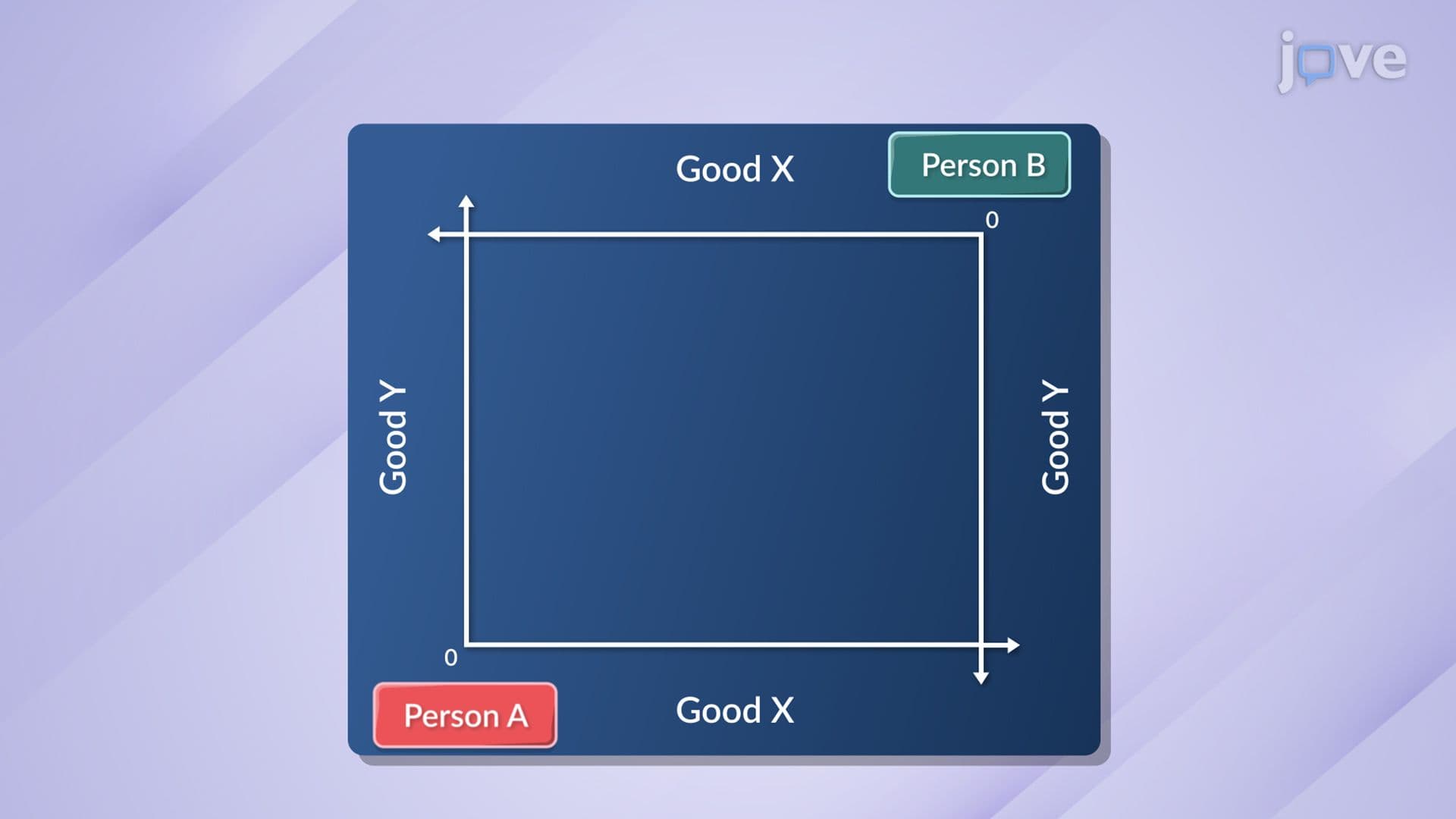
The box's construction involves flipping one standard indifference curve graph and combining it with another, creating a rectangular diagram where total resources remain constant. The horizontal axis typically represents one good (such as bushels of wheat), while the vertical axis represents another (such as gallons of oil). Each corner represents an extreme allocation: one corner shows Person A owning all resources, while the diagonally opposite corner shows Person B controlling everything.
This visual approach helps students preparing for standardized tests like the MCAT economics section understand that every point within or on the box represents a feasible allocation. When studying for AP Microeconomics, students learn that movement within the box illustrates the fundamental economic principle of opportunity cost-giving one party more of a resource necessarily means the other party receives less.
Consider how the Edgeworth box applies to practical scenarios in the US economy. During budget negotiations, Congress must allocate limited federal resources between defense spending and domestic programs. The box helps visualize these trade-offs, showing how increasing funding for one area requires reducing resources for another. Similarly, in corporate settings, companies like Amazon must allocate resources between research and development versus marketing expenditures.
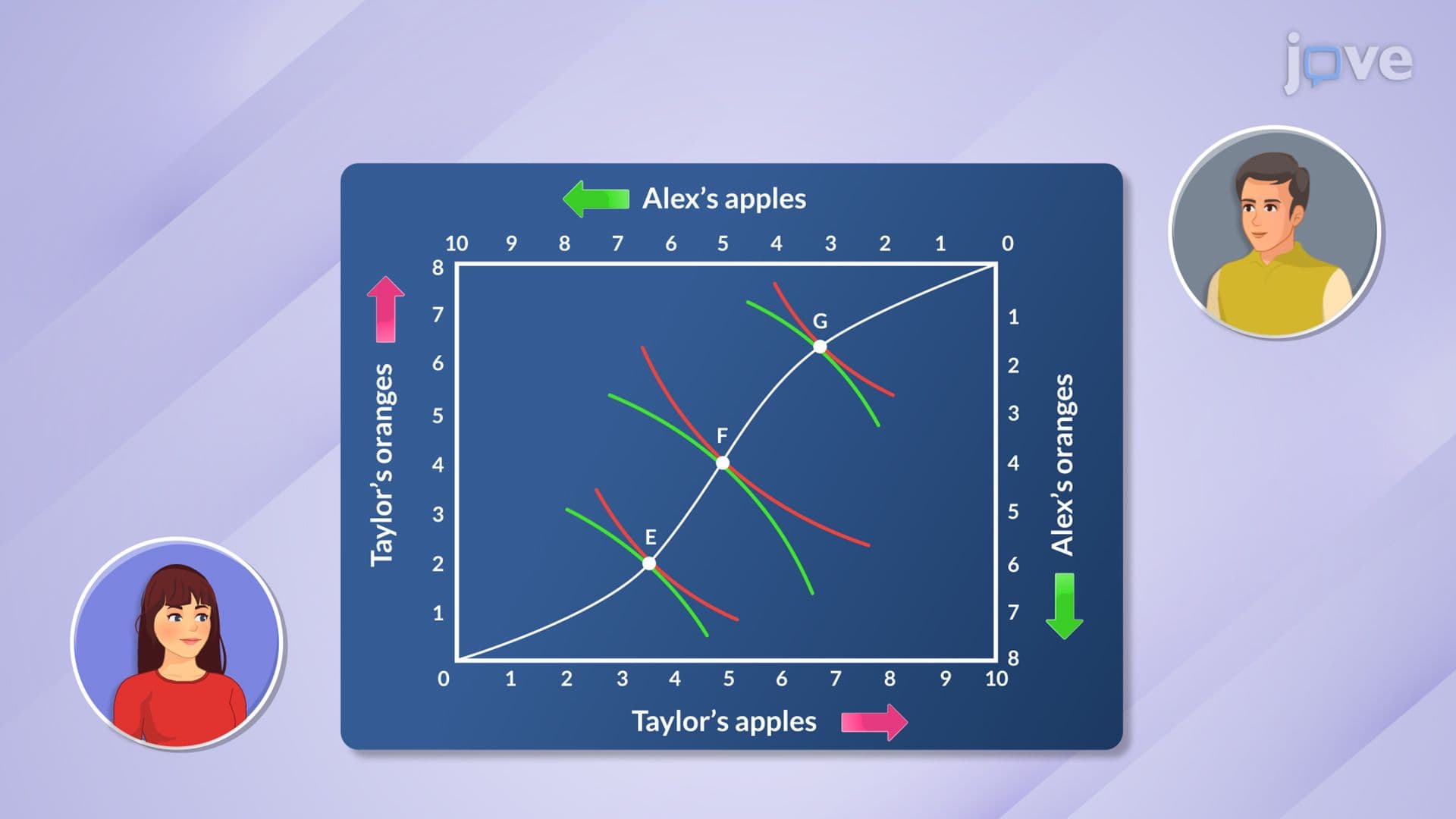
For college students taking intermediate microeconomics or preparing for graduate school economics programs, mastering the Edgeworth box concept proves essential. The tool frequently appears in problem sets requiring students to identify Pareto efficient allocations, calculate marginal rates of substitution, and analyze contract curves. Understanding perfect divisibility-the assumption that goods can be divided into infinitely small units-helps students tackle complex optimization problems that appear on comprehensive exams and standardized tests throughout their academic career.
Related Micro-courses