Loading subject page…


4,328 views


Video Summary: What Is Input Efficiency Ii
How do two competing farmers with identical resources achieve maximum productivity without harming each other's output? Input efficiency determines the optimal allocation of shared resources like labor and capital between producers. Consider Apple Inc. and Microsoft competing for the same pool of skilled software engineers in Silicon Valley-efficient allocation ensures neither company wastes talent while both maximize innovation. What is Input Efficiency II explores this economic principle through Edgeworth box analysis and Pareto-efficient allocations. Watch the full video on JoVE Coach to master this concept with expert-led visuals and step-by-explanations.
Input efficiency represents the optimal allocation of limited resources between competing producers to maximize total economic output. This advanced microeconomic concept builds upon basic production theory by examining how shared inputs like labor, capital, and raw materials should be distributed when multiple firms or individuals compete for the same resources.
The input efficiency definition centers on achieving allocative efficiency-ensuring no reallocation of inputs could increase one producer's output without decreasing another's. This principle directly impacts real-world business decisions, from venture capital firms distributing funds among startups to manufacturing companies allocating skilled workers across product lines.
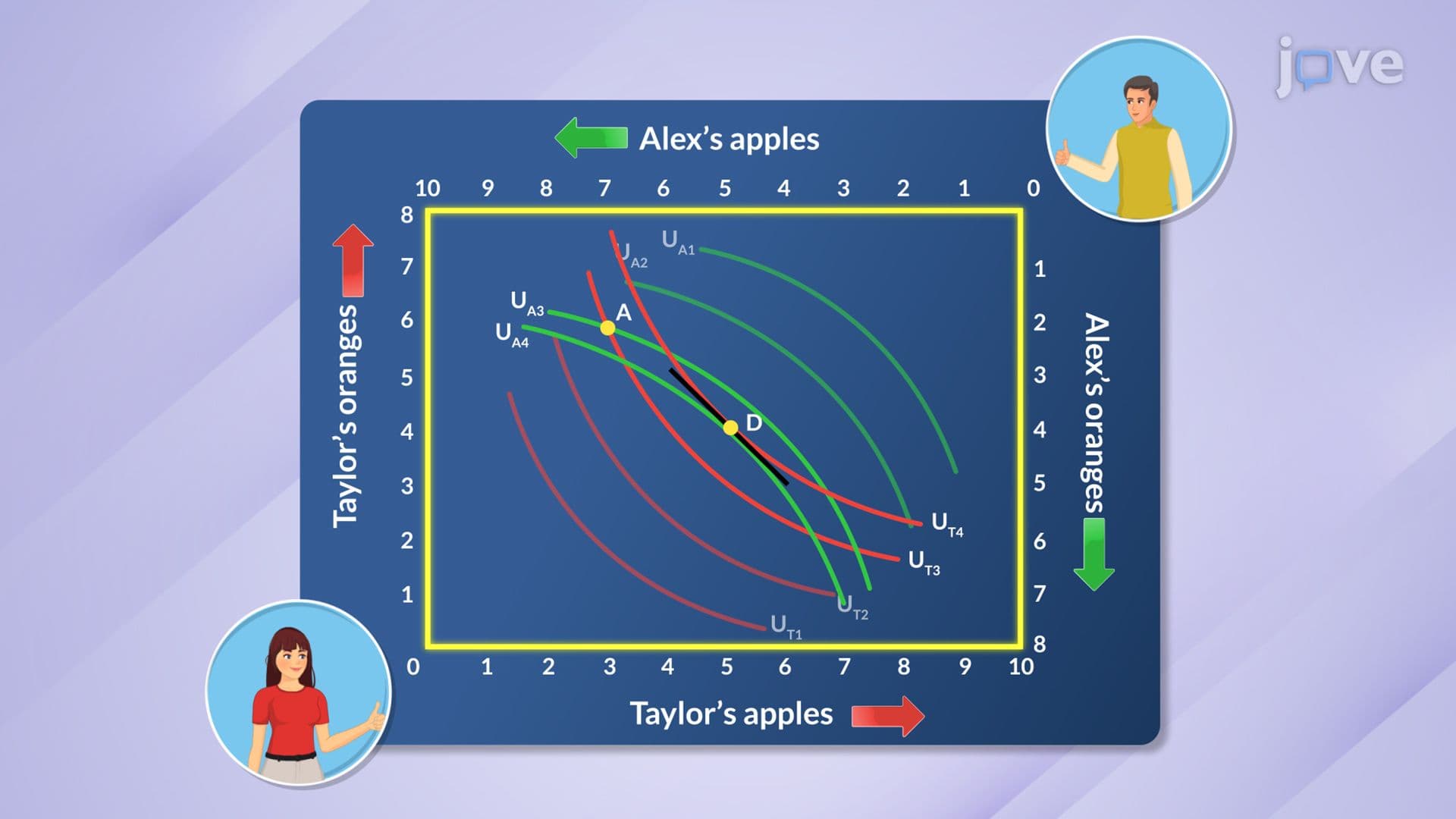
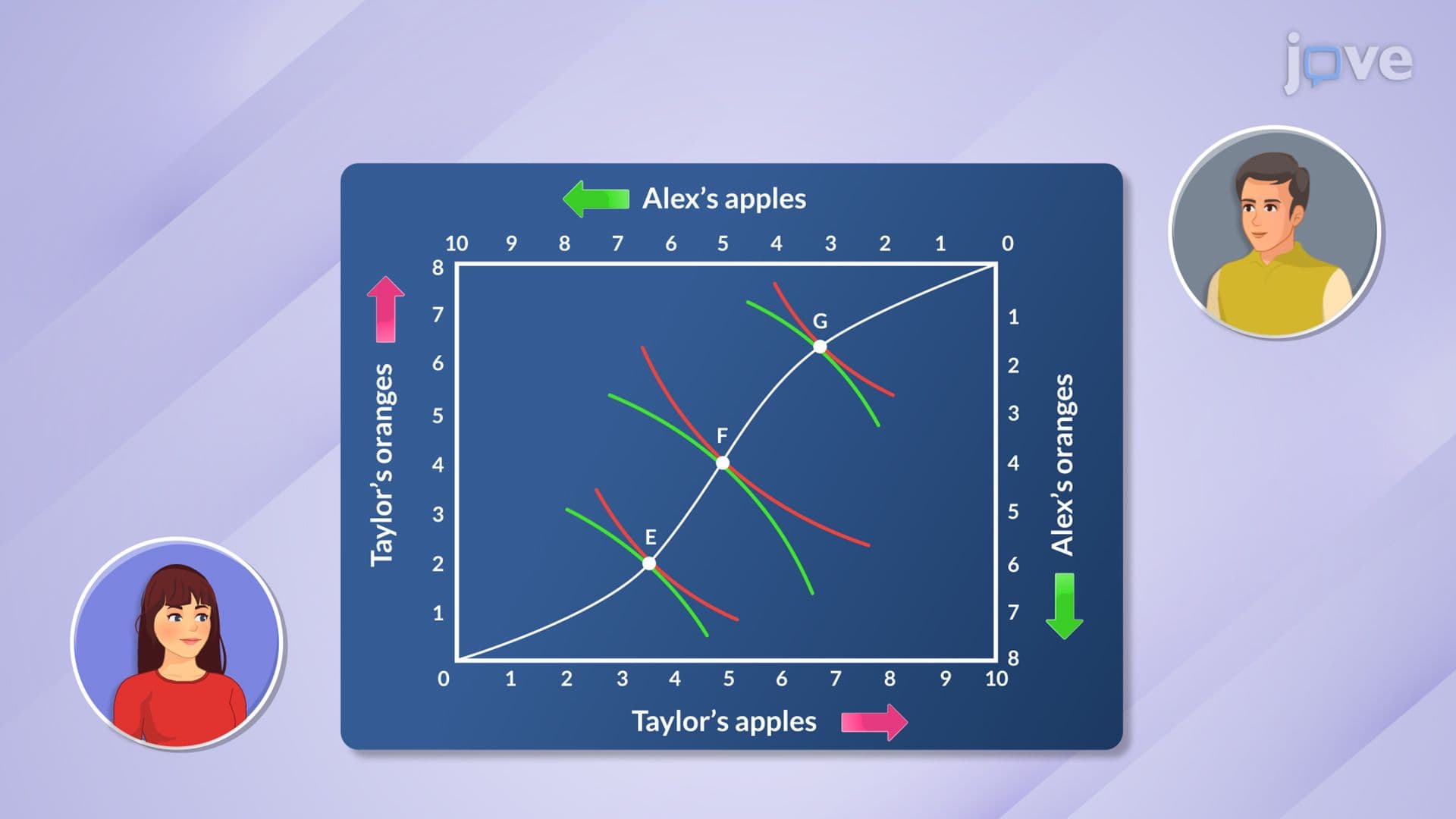
The Edgeworth box provides a powerful visual tool for analyzing input efficiency between two producers. Unlike simple supply-demand graphs, this diagram maps all possible combinations of input allocation, revealing which distributions achieve maximum economic benefit.
Consider two major US airlines-Delta and American-competing for a limited pool of experienced pilots and aircraft mechanics. An inefficient allocation might leave Delta with excess pilots but insufficient mechanics, while American faces the opposite problem. The input efficiency concept explained through Edgeworth analysis shows how reallocating these skilled workers could increase both airlines' operational capacity.
Pareto-efficient points occur where producers' isoquants are tangent, meaning the marginal rate of technical substitution equals between both parties. At these points, no further reallocation can improve one producer's output without harming the other's productivity.
Input efficiency principles appear throughout American business landscapes. Silicon Valley tech companies compete intensely for software engineers, data scientists, and product managers. Companies like Google, Apple, and Meta must efficiently allocate these human resources across different projects and divisions to maximize innovation and market competitiveness.
In agriculture, this concept applies to farmers sharing irrigation water, farm equipment, or seasonal labor. California's Central Valley demonstrates input efficiency challenges as grape, almond, and vegetable farmers compete for limited water resources during drought periods.
Students encounter input efficiency questions on AP Economics exams, particularly in microeconomics sections covering production theory and market efficiency. College-level intermediate microeconomics courses extensively cover Edgeworth box analysis, while MBA programs apply these principles to strategic resource allocation and operational efficiency.
Common exam scenarios include firms sharing production inputs, countries trading goods (extending to international trade theory), and public policy questions about optimal resource distribution. Understanding isoquant tangency conditions and Pareto efficiency proves essential for solving complex allocation problems in academic and professional contexts.
Related Micro-courses