Loading subject page…


41,215 views

Video Summary: What are Respiratory Volumes
Ever wondered why athletes can hold their breath longer than average people? Respiratory volumes measure the different amounts of air your lungs can handle during various breathing activities. For instance, when a swimmer like Katie Ledecky trains for the Olympics, understanding her lung capacity through respiratory volumes helps optimize her performance. These five key measurements-including tidal volume, minute volume, inspiratory reserve volume, expiratory reserve volume, and residual volume-reveal crucial insights about lung function and overall respiratory health. Watch the full video on JoVE Coach to master this concept with expert-led visuals and step-by-step explanations.
Respiratory volumes represent quantifiable measurements of air movement in and out of the lungs during different phases of breathing. These measurements provide healthcare professionals with essential data about respiratory health, athletic performance, and potential lung disorders. In the United States, respiratory volume testing is a standard component of pulmonary function tests administered in hospitals, clinics, and sports medicine facilities.
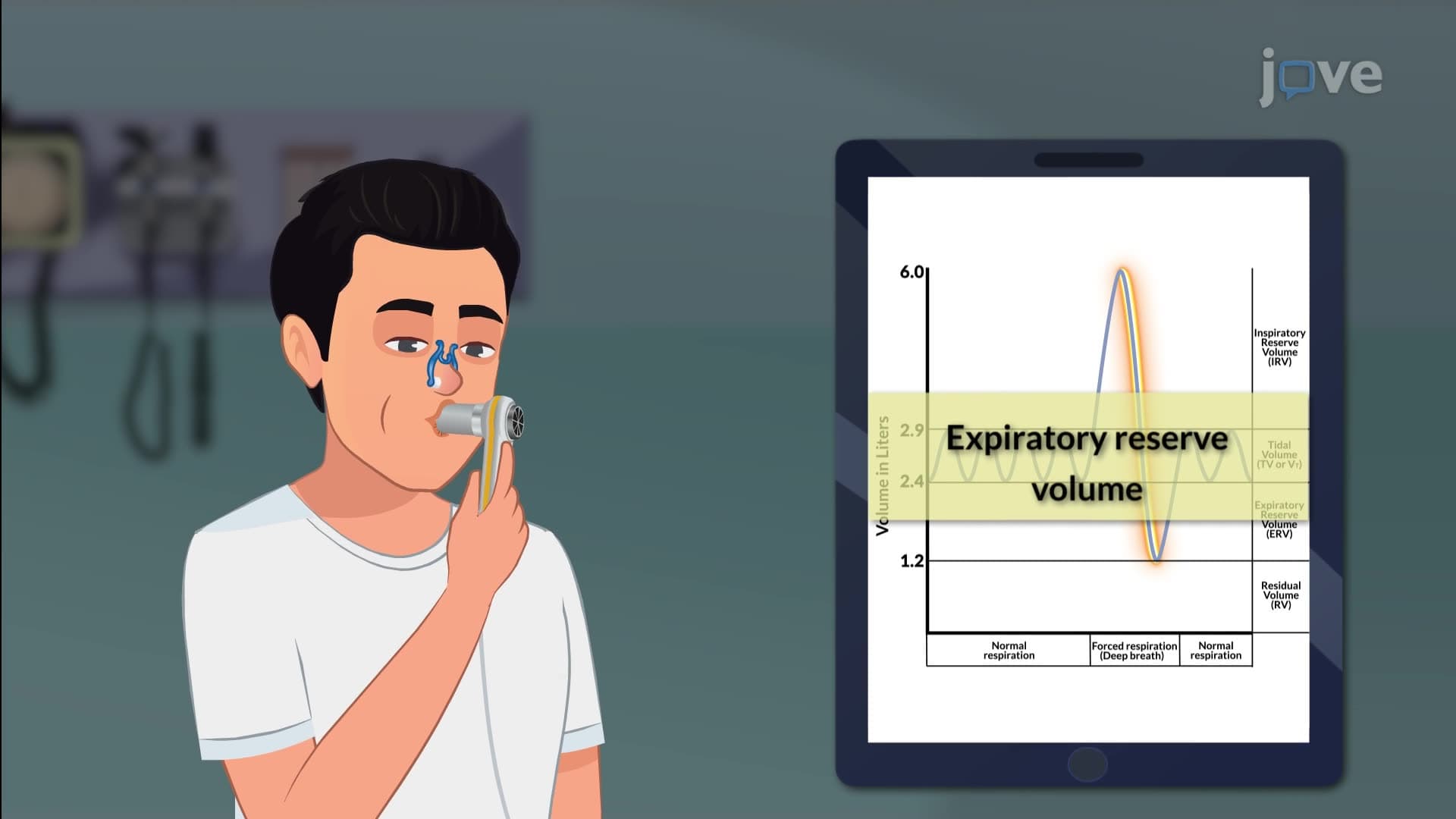
Tidal Volume (TV) serves as the baseline measurement, representing the 500 milliliters of air typically inhaled and exhaled during normal, quiet breathing. This volume remains relatively consistent throughout the day unless affected by exercise, illness, or emotional states. Medical students studying for the MCAT often remember this as "half a liter per breath" during rest.
Minute Volume (MV) calculates total air movement over 60 seconds, typically ranging from 5-8 liters. This measurement proves crucial for anesthesiologists at institutions like Johns Hopkins Hospital when determining ventilator settings for surgical patients. The calculation involves multiplying tidal volume by breathing rate (approximately 12-16 breaths per minute).
Inspiratory Reserve Volume (IRV) measures the maximum additional air intake possible after a normal inhalation, averaging 3000 milliliters. Athletes training at facilities like the U.S. Olympic Training Center in Colorado Springs work to maximize this volume through specialized breathing exercises.
Expiratory Reserve Volume (ERV) and Residual Volume complete the respiratory volume spectrum. ERV (1200-1500 mL) represents the extra air that can be forcefully exhaled after normal expiration, while residual volume (1000-1200 mL) ensures lungs maintain structural integrity by never completely collapsing.
These measurements become particularly important when diagnosing conditions like chronic obstructive pulmonary disease (COPD) or asthma. Pulmonologists at medical centers such as the Cleveland Clinic use spirometry tests to measure these volumes, helping identify restrictive or obstructive lung diseases. For AP Biology students, understanding these volumes provides foundational knowledge for more advanced topics in human physiology and gas exchange mechanisms.
Related Micro-courses