Loading subject page…


41,215 views


Video Summary: What Is Respiratory Capacities
Did you know that your lungs can hold up to 7 liters of air-equivalent to nearly two large soda bottles? Understanding respiratory capacities is crucial for anyone studying human physiology, whether you're preparing for AP Biology or planning a healthcare career. These measurements help doctors diagnose conditions like asthma and COPD, which affect millions of Americans annually. From inspiratory capacity to total lung capacity, each measurement reveals how efficiently your respiratory system functions. Watch the full video on JoVE Coach to master this concept with expert-led visuals and step-by-step explanations.
Respiratory capacities represent the maximum volumes of air your lungs can handle during specific breathing maneuvers. Unlike simple lung volumes that measure single actions, respiratory capacities combine multiple volumes to provide a comprehensive picture of pulmonary function. Healthcare professionals across the United States use these measurements daily-from pulmonologists at Mayo Clinic diagnosing COPD to respiratory therapists at Johns Hopkins monitoring ventilator patients.
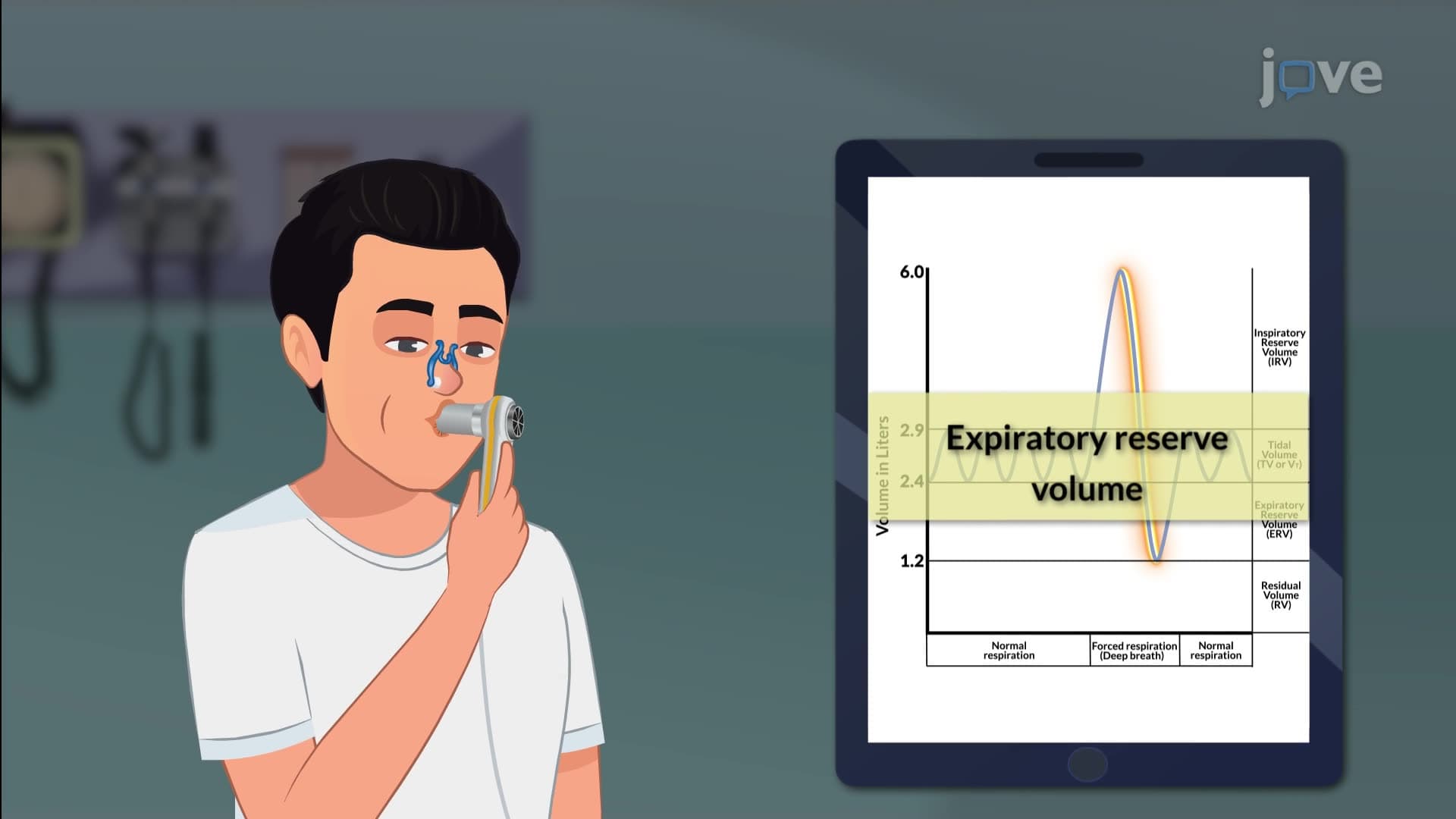
Inspiratory Capacity (IC) measures your maximum inhalation potential, calculated by adding tidal volume (normal breathing) plus inspiratory reserve volume (extra air you can inhale). With normal values ranging 2.4-3.6 liters, IC testing helps identify restrictive lung diseases. College students preparing for the MCAT often struggle with this calculation, but remembering that IC = TV + IRV simplifies the concept significantly.
Functional Residual Capacity (FRC) represents the air remaining after normal expiration, typically 2.6-3.2 liters. This "resting volume" is crucial because it maintains continuous gas exchange between breaths. FRC decreases in conditions like pneumonia-a key concept tested on nursing exams like NCLEX-RN.
Vital Capacity (VC) measures maximum exhalation after deepest inspiration, normally 4-5 liters. Athletes often exceed these values due to conditioning, while smokers typically show reduced VC. This measurement frequently appears on AP Biology exams and college physiology midterms.
Total Lung Capacity (TLC) encompasses all lung volumes combined, ranging 6-7 liters in healthy adults. TLC includes every milliliter of air your lungs can contain, making it the ultimate measure of respiratory potential. American pulmonary function labs use TLC measurements to differentiate between restrictive diseases (like pulmonary fibrosis) and obstructive diseases (like emphysema).
Understanding these capacities proves essential for pre-med students tackling the MCAT's biological sciences section. The USMLE Step 1 exam regularly tests respiratory capacity concepts, particularly their clinical correlations. Students studying for the HESI A2 or TEAS exams will encounter respiratory capacities in anatomy and physiology sections, where understanding normal values and their significance can make the difference between passing and excelling.
Related Micro-courses