Loading video…


 14 Concepts
 235K views

Video Summary: What are Stability of Substituted Cyclohexanes
Ever wonder why cholesterol molecules in your body adopt specific shapes that make them so effective? The stability of substituted cyclohexanes determines molecular conformations in countless biological systems, including steroid hormones produced by pharmaceutical companies like Pfizer and Merck. When substituents replace hydrogen atoms on cyclohexane rings, they create dramatic energy differences between chair conformations-with equatorial positions being up to 7.6 kJ/mol more stable than axial ones due to reduced steric strain. Watch the full video on JoVE Coach to master this concept with expert-led visuals and step-by-step explanations.
The stability of substituted cyclohexanes represents a cornerstone concept in organic chemistry that explains how molecular shape determines function in countless biological and pharmaceutical systems. When hydrogen atoms on cyclohexane rings are replaced with alkyl groups or other substituents, the resulting molecules can adopt different three-dimensional arrangements with dramatically different energy levels. This conformational flexibility directly impacts everything from enzyme active sites to drug effectiveness in medications developed by major US pharmaceutical companies.
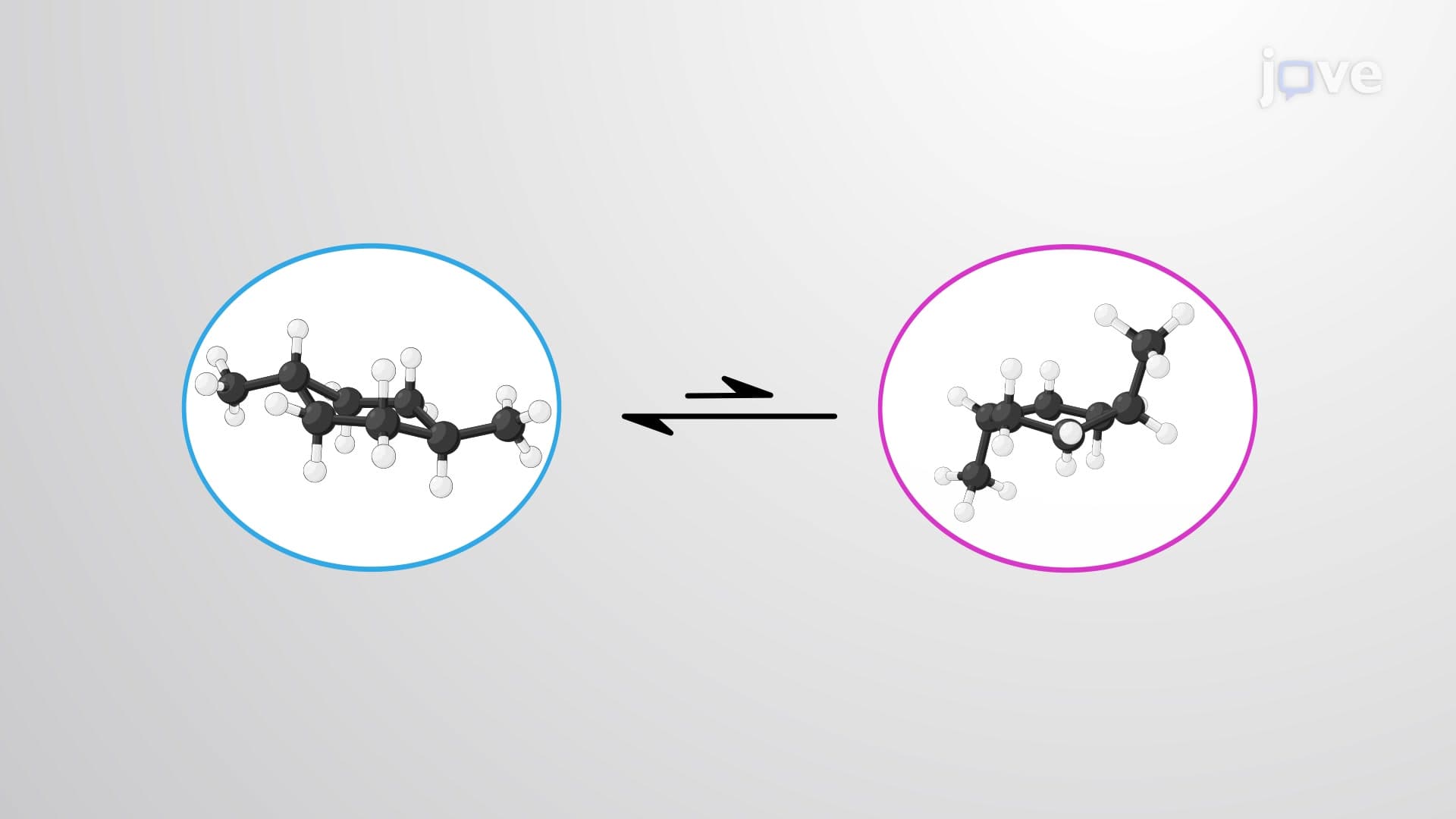
The key to understanding cyclohexane stability lies in recognizing that substituents strongly prefer equatorial positions over axial ones. In methylcyclohexane, for example, the methyl group's equatorial conformation is approximately 7.6 kJ/mol more stable than its axial counterpart. This energy difference translates to a 95% population of the equatorial form at room temperature-a concept frequently tested on AP Chemistry exams and college organic chemistry courses across US universities like Harvard, MIT, and UC Berkeley.
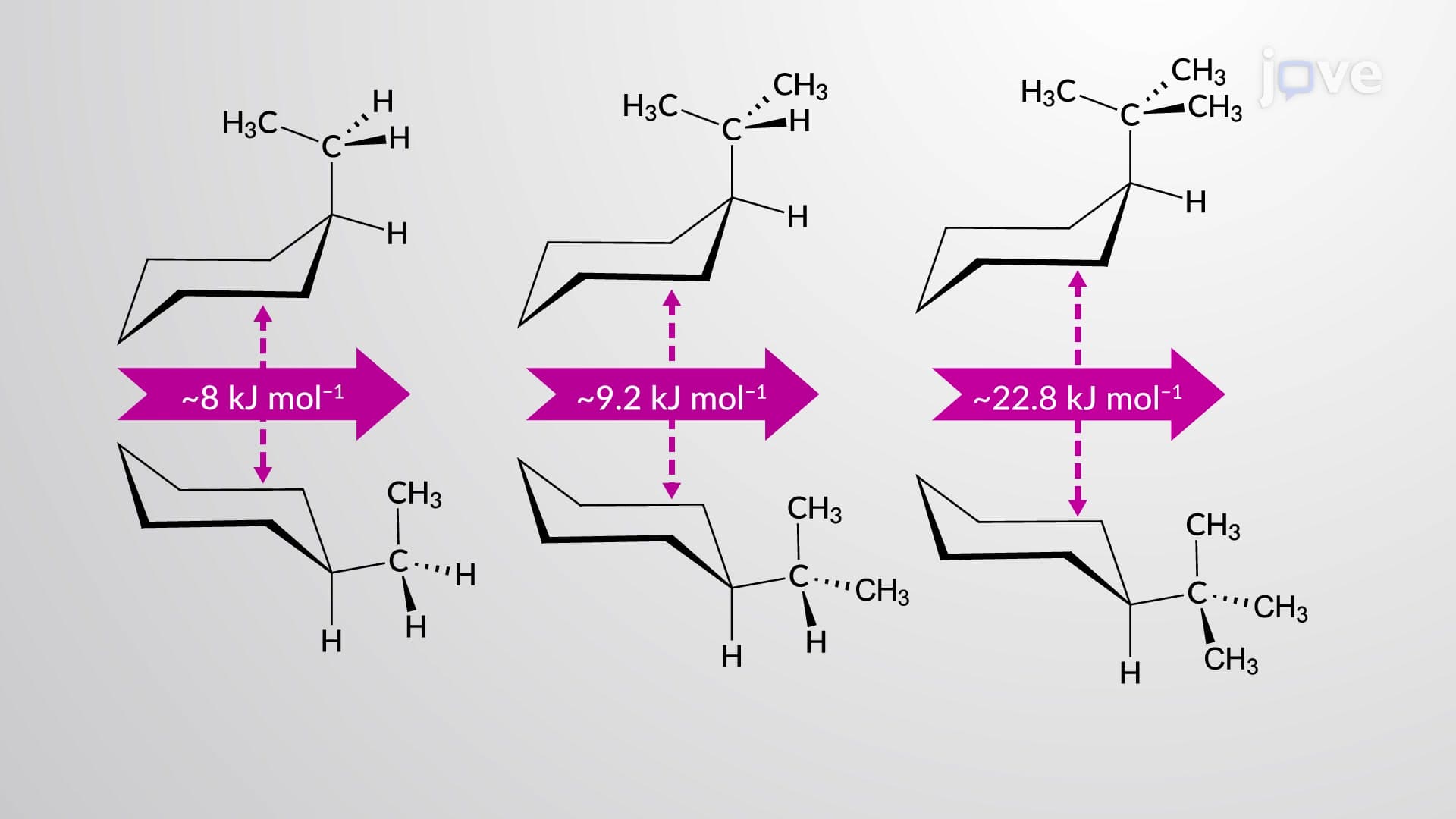
The driving force behind this preference stems from 1,3-diaxial interactions, where axially-positioned substituents experience destabilizing steric repulsion with parallel axial hydrogens on carbons separated by two positions. Each gauche interaction contributes roughly 3.8 kJ/mol of unfavorable energy, making axial conformations significantly less stable than their equatorial alternatives.
Substituent size dramatically amplifies stability differences between conformations. While methyl groups show moderate preferences for equatorial positions, bulky groups like tert-butyl create such severe 1,3-diaxial strain that 99% of molecules adopt equatorial conformations. This principle explains why many natural products and synthetic drugs incorporate specific structural features that minimize steric conflicts-knowledge essential for MCAT preparation and pharmaceutical science programs at institutions like Johns Hopkins and UCSF.
Understanding cyclohexane stability proves crucial for students pursuing careers in pharmaceutical research or biochemistry. Steroid hormones like testosterone and cortisol, produced by companies such as Abbott and Johnson & Johnson, rely on precise conformational control to achieve biological activity. Similarly, many FDA-approved medications incorporate cyclohexane rings whose conformational preferences directly influence drug-target interactions and therapeutic effectiveness.
Related Micro-courses