Loading video…


 14 Concepts
 235K views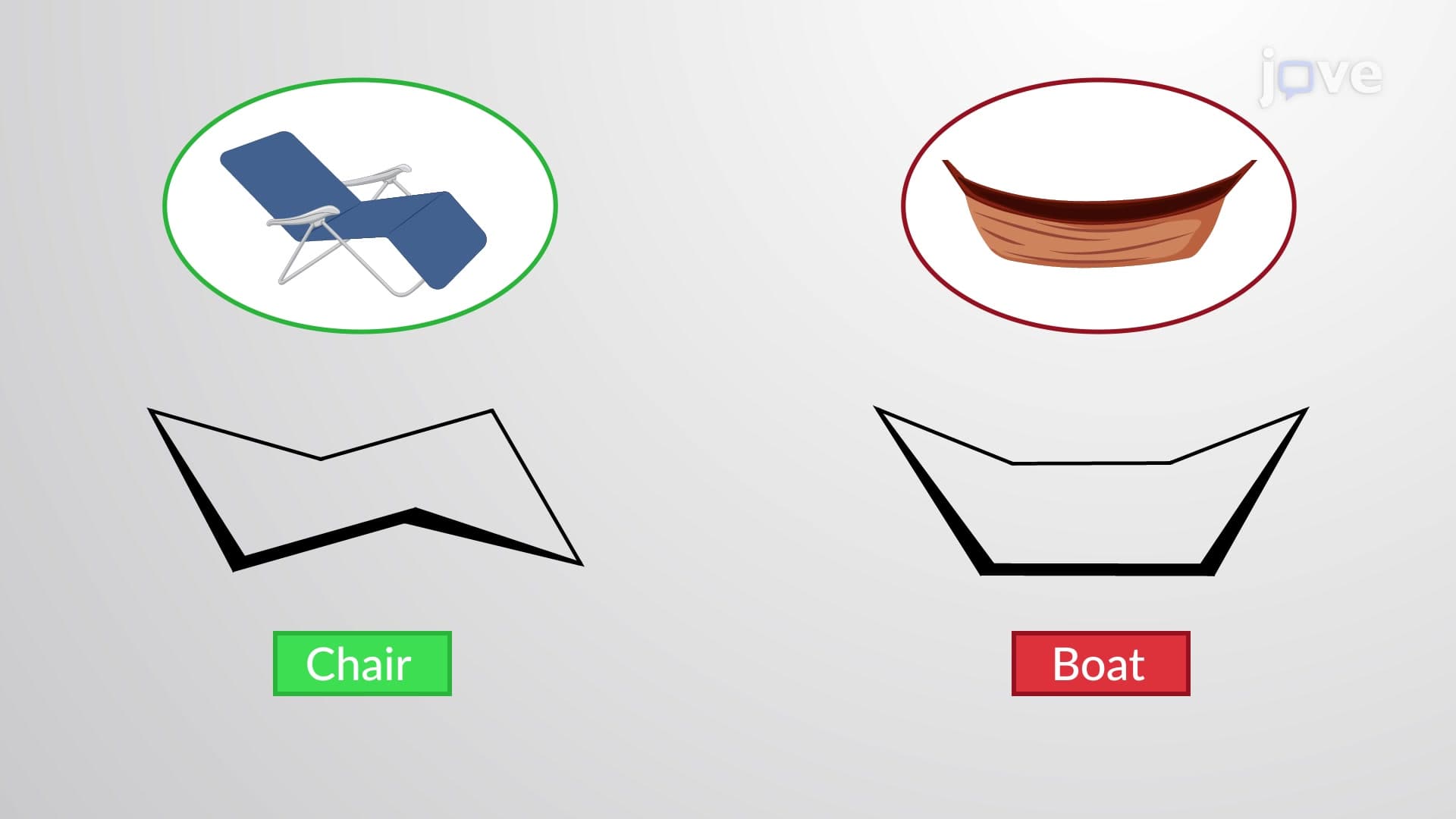

Video Summary: What Is Conformations of Cyclohexane
Why does the simple six-carbon ring cyclohexane twist and bend like a restless chair? Conformations of cyclohexane represent nature's solution to molecular stress, where the ring adopts specific three-dimensional shapes to minimize strain. Consider how pharmaceutical companies like Pfizer must understand these molecular shapes when designing drugs that fit perfectly into biological receptors. What is conformations of cyclohexane reveals the dynamic dance between stability and flexibility in organic molecules. Watch the full video on JoVE Coach to master this concept with expert-led visuals and step-by-step explanations.
Conformations of cyclohexane represent one of organic chemistry's most elegant examples of molecular adaptation. Unlike the rigid geometric shapes students often imagine, cyclohexane exists as a flexible, three-dimensional structure that constantly shifts between different spatial arrangements. This concept challenges the initial assumption that six-membered rings should be flat hexagons, revealing instead a complex interplay of molecular forces.
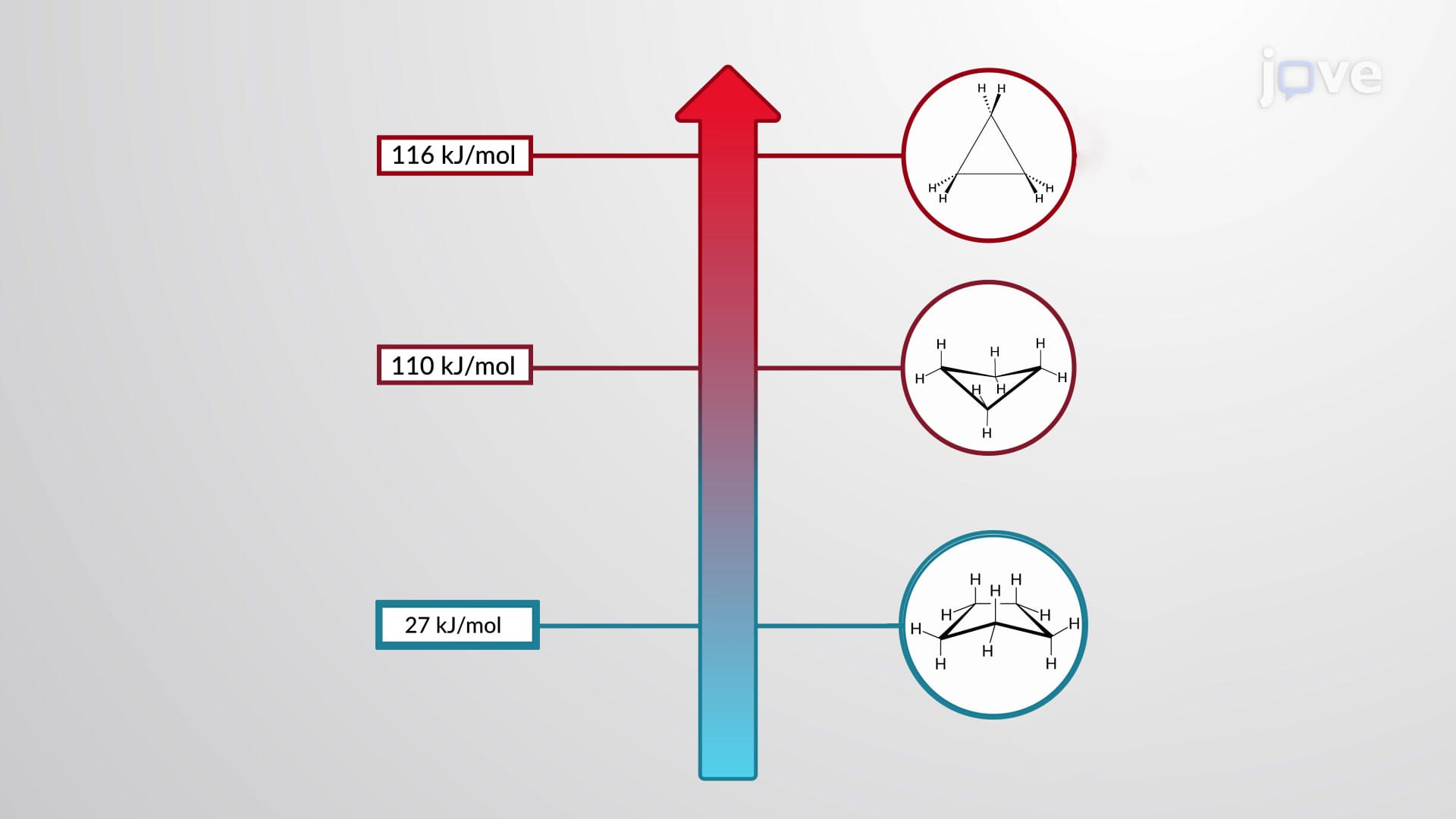
The chair conformation stands as cyclohexane's most stable arrangement, resembling a reclining chair when viewed from the side. This conformation achieves remarkable stability through two key features: bond angles of approximately 109.5° (matching the ideal tetrahedral angle) and perfectly staggered carbon-hydrogen bonds. Students preparing for AP Chemistry or college organic chemistry courses should recognize that this staggered arrangement eliminates torsional strain, the destabilizing force that occurs when bonds eclipse each other.
In pharmaceutical research at companies like Johnson & Johnson, scientists exploit chair conformations when designing drug molecules. The predictable geometry allows researchers to model how medications will interact with target proteins, making conformational analysis crucial for drug discovery.
The boat conformation, while eliminating angle strain, introduces significant instability through two mechanisms. First, torsional strain arises from eclipsing bonds at the "bow" and "stern" of the boat. Second, flagpole interactions occur when hydrogen atoms at opposite ends of the molecule come too close, creating steric hindrance. This combination makes the boat conformation approximately 6.5 kcal/mol higher in energy than the chair form.
The twist-boat conformation partially alleviates these problems by reducing flagpole interactions, though it remains less stable than the chair. Students encountering this concept on the MCAT should understand that energy differences directly impact molecular behavior and reaction pathways.
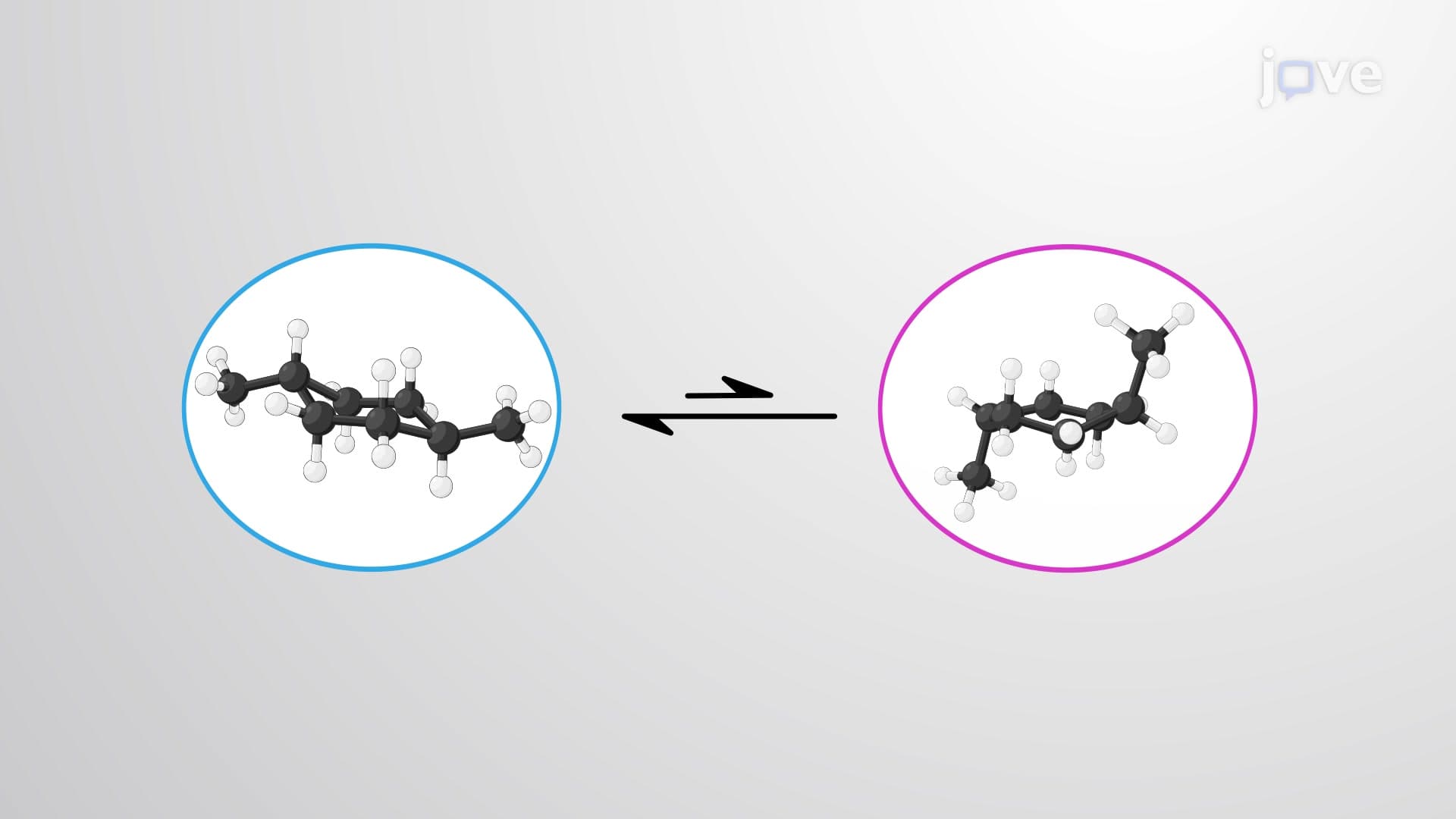
Perhaps most fascinating is cyclohexane's ability to rapidly interconvert between conformations. At room temperature, chair conformations flip through higher-energy intermediates millions of times per second. This process, called ring flipping, allows the molecule to explore different spatial arrangements while predominantly existing in the most stable chair form. Understanding this dynamic behavior proves essential for predicting chemical reactivity and explaining experimental observations in advanced organic chemistry coursework.
Related Micro-courses