Loading subject page…

- Organic Chemistry
- Alkynes
- Electrophilic Addition to Alkynes: Hydrohalogenation
Micro-course: Alkynes
143,300 views
Learn key concepts and earn your certificate.

Electrophilic Addition to Alkynes: Hydrohalogenation

00:00
02:35
Video Summary: Electrophilic Addition to Alkynes Hydrohalogenation Explained
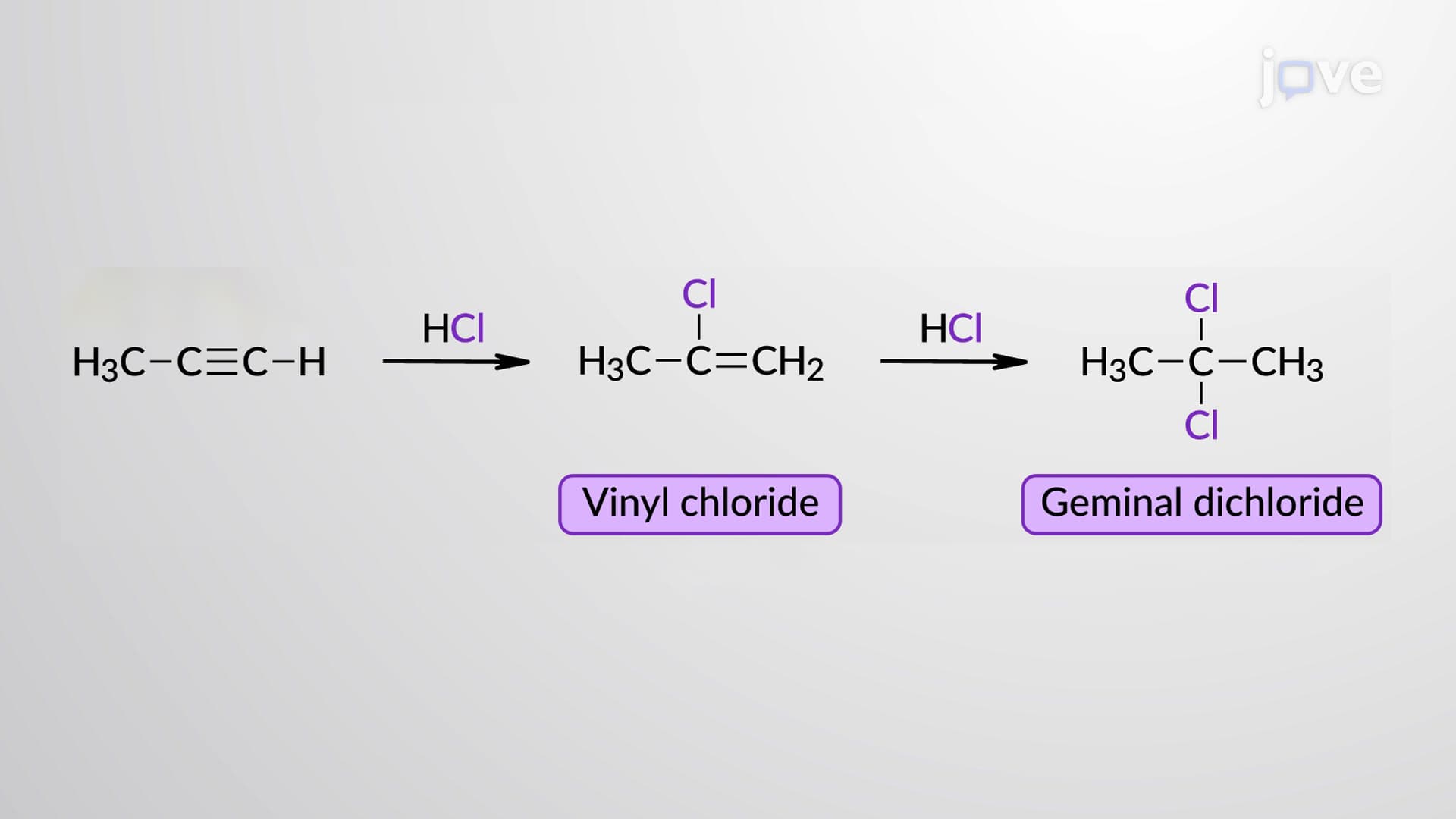
Ever wondered how chemists create the vinyl chloride used in PVC pipes found throughout US homes? Electrophilic addition alkynes hydrohalogenation transforms simple alkynes into complex halogenated compounds through a fascinating two-step process. This reaction adds hydrogen halides like HCl across triple bonds, following Markovnikov's rule to create industrially important compounds like geminal dichlorides. Watch the full video on JoVE Coach to master this concept with expert-led visuals and step-by-step explanations.
- Understand the mechanism of Electrophilic Addition To Alkynes Hydrohalogenation Explained and how two equivalents of hydrogen halide add across triple bonds
- Identify the regioselectivity patterns that determine where halogens attach during each addition step
- Analyze the stability differences between primary and secondary vinylic carbocations formed during the reaction
- Compare the stepwise mechanism versus the termolecular pathway for hydrohalogenation reactions
- Evaluate how resonance stabilization influences carbocation formation in halogenated intermediates
- Apply Markovnikov's rule to predict major products in alkyne hydrohalogenation reactions
- Recognize anti-Markovnikov conditions using peroxides and HBr that reverse normal selectivity patterns
- Explore the formation of E and Z alkene mixtures in terminal alkyne reactions
Understanding Electrophilic Addition To Alkynes Hydrohalogenation
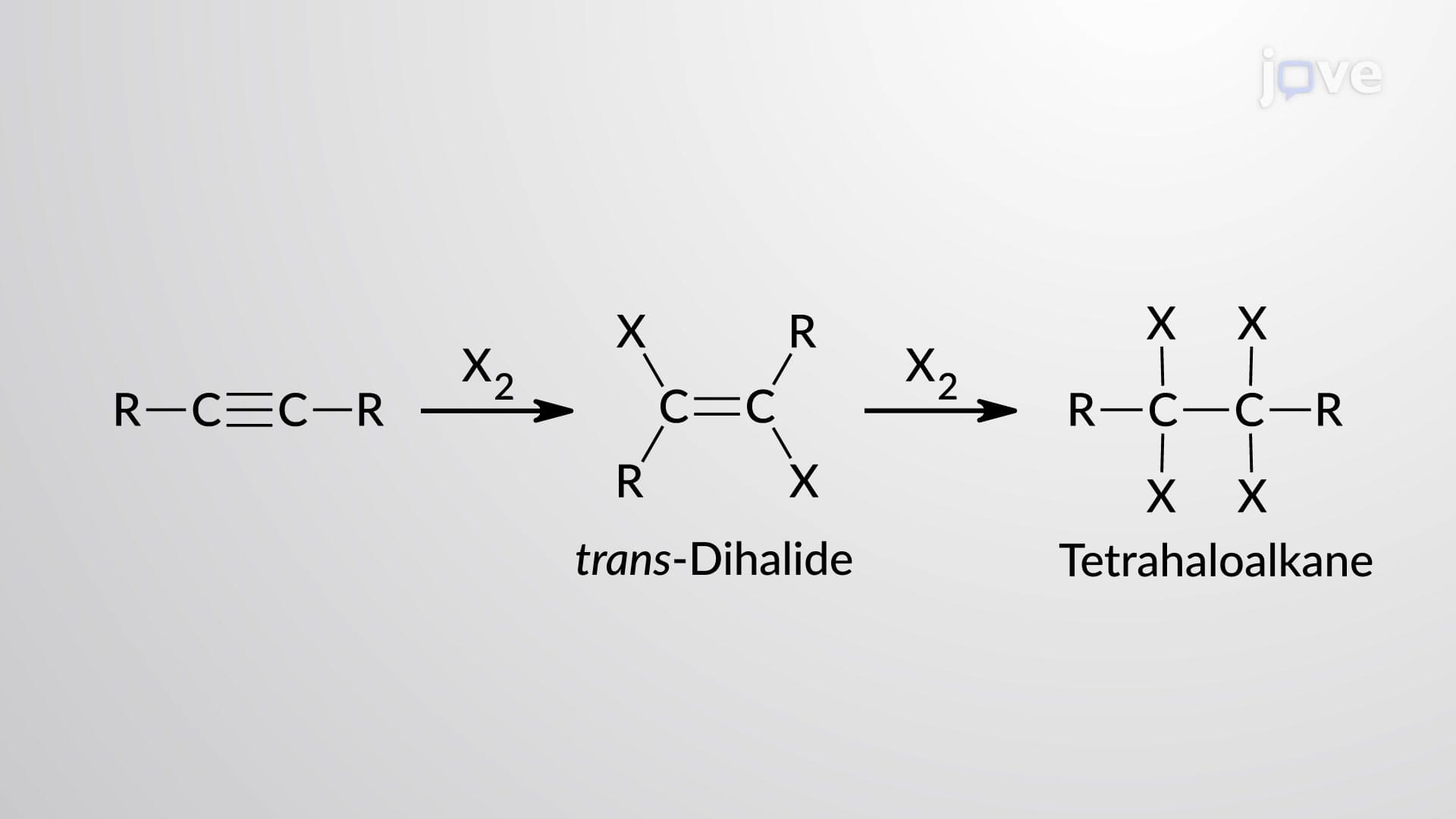
Electrophilic addition to alkynes hydrohalogenation represents a cornerstone reaction in organic chemistry, transforming carbon-carbon triple bonds into valuable halogenated products. Unlike alkene additions that consume one equivalent of reagent, alkyne hydrohalogenation can accommodate two equivalents of hydrogen halides like HCl or HBr, making it exceptionally versatile for synthetic applications.
This reaction proves crucial in pharmaceutical manufacturing and polymer production across the United States. For instance, the conversion of acetylene to vinyl chloride serves as a key step in PVC production, supporting America's $20 billion plastics industry.
Mechanistic Pathways and Regioselectivity
The reaction proceeds through two distinct mechanistic pathways. The stepwise mechanism initiates with proton transfer, where alkyne π-electrons attack the hydrogen halide, generating a vinylic carbocation intermediate. This carbocation formation follows Markovnikov's rule, placing the positive charge on the more substituted carbon atom.
The second equivalent addition creates competing carbocation possibilities. Remarkably, the secondary carbocation remains favored despite bearing positive charge adjacent to an electron-withdrawing halogen. This counterintuitive stability arises from resonance delocalization, where the positive charge spreads across multiple atoms, lowering the intermediate's energy.
Alternative Termolecular Mechanism
A competing termolecular pathway involves simultaneous interaction between one alkyne molecule and two hydrogen halide molecules. This concerted process bypasses high-energy carbocation intermediates, proceeding through a lower-energy transition state. The mechanism produces trans addition products, offering synthetic chemists alternative stereochemical outcomes.
Anti-Markovnikov Conditions and Exam Applications
Peroxide-catalyzed conditions with HBr reverse normal regioselectivity, demonstrating anti-Markovnikov addition. This radical-mediated process proves essential for AP Chemistry students and pre-med students preparing for the MCAT, as it illustrates how reaction conditions control product distribution.
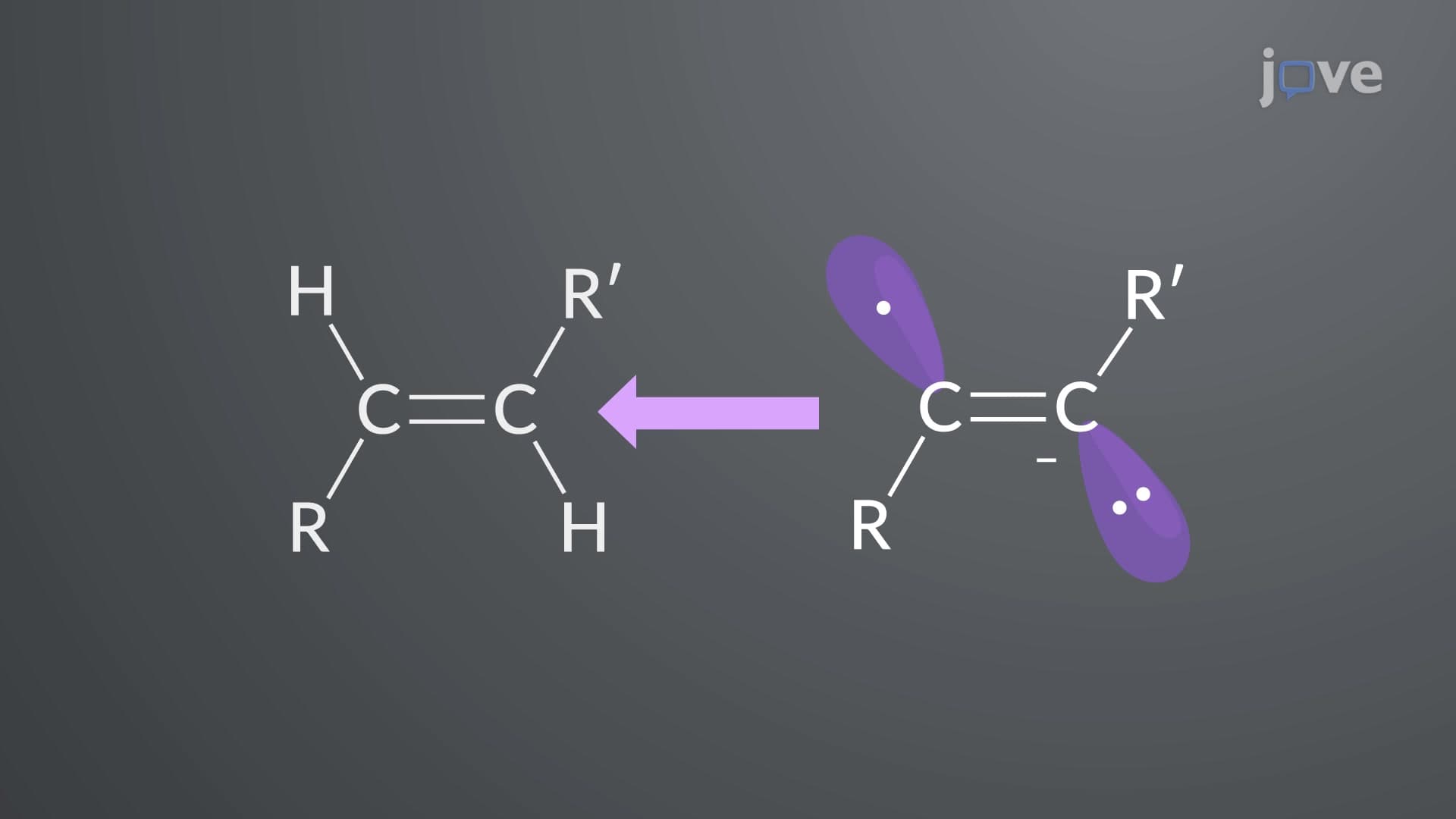
College organic chemistry courses emphasize predicting major products under various conditions. Students must recognize that terminal alkynes under anti-Markovnikov conditions produce mixtures of E and Z alkenes, testing stereochemical understanding crucial for advanced coursework and professional school preparation.
Frequently Asked Questions
Electrophilic addition to alkynes hydrohalogenation is a reaction where hydrogen halides (HCl, HBr) add across carbon-carbon triple bonds in a two-step process. The first addition creates a vinyl halide intermediate, while the second addition forms a geminal dihalide where both halogens attach to the same carbon. Both steps follow Markovnikov's rule, placing halogens on the more substituted carbons.
MCAT questions typically test mechanism understanding and product prediction under different conditions. You'll encounter problems asking to identify major products, explain regioselectivity, or compare Markovnikov versus anti-Markovnikov pathways. AP Chemistry focuses more on basic addition patterns and electron movement in mechanisms.
College exams emphasize multi-step synthesis problems where alkyne hydrohalogenation serves as one transformation step. You'll predict products from various starting materials, propose synthetic routes to target molecules, and explain why certain carbocation intermediates form preferentially. Stereochemistry questions involving E/Z alkenes are also common.
Understanding both mechanisms helps predict different product outcomes and stereochemistry. The stepwise mechanism explains regioselectivity through carbocation stability, while the termolecular pathway accounts for certain experimental observations. Different exam levels emphasize various mechanistic aspects, making comprehensive understanding valuable.
Major US pharmaceutical companies like Pfizer and Merck use alkyne hydrohalogenation to install halogen substituents in drug molecules. These reactions create key intermediates for synthesizing medications, particularly those requiring specific stereochemistry. The process allows precise control over molecular architecture in complex therapeutic compounds.
No advanced mathematics is required for alkyne hydrohalogenation. The concept relies on understanding electron movement, molecular geometry, and basic thermodynamic principles taught in general chemistry. Success depends more on visualizing three-dimensional molecular interactions and recognizing stability patterns than mathematical calculations.
Progress to other alkyne reactions like hydration, reduction, and alkylation reactions. Then explore how these transformations integrate into multi-step synthesis problems. Advanced topics include asymmetric synthesis using chiral catalysts and industrial applications in polymer chemistry, building toward graduate-level organic chemistry concepts.
Practice drawing complete mechanisms with curved arrows showing electron movement. Work through problems predicting major products under various conditions, especially comparing Markovnikov and anti-Markovnikov scenarios. Create summary sheets organizing different alkyne reactions by product types and required conditions for quick exam reference.
Related Micro-courses
12 Concepts
15 Concepts
25 Concepts