Loading video…


 12 Concepts
 143.3K views

Video Summary: Hydroboration Oxidation of Alkynes to Aldehydes and Ketones
Ever wonder how pharmaceutical companies create precise molecular structures for life-saving medications? Hydroboration-oxidation alkynes aldehydes ketones reactions enable chemists to selectively transform triple bonds into exactly the carbonyl compounds needed. For instance, Bristol Myers Squibb uses these anti-Markovnikov reactions to synthesize aldehyde intermediates for cancer drugs. This hydroboration-oxidation of alkynes to aldehydes and ketones process offers remarkable control over product formation. Watch the full video on JoVE Coach to master this concept with expert-led visuals and step-by-step explanations.
The hydroboration-oxidation of alkynes to aldehydes and ketones represents one of organic chemistry's most elegant synthetic transformations. Unlike acid-catalyzed hydration, which follows Markovnikov's rule, this reaction proceeds with anti-Markovnikov regioselectivity, making it invaluable for accessing aldehydes from terminal alkynes. Students preparing for the AP Chemistry exam or college organic chemistry courses must master this concept as it frequently appears in synthesis problems and mechanism questions.
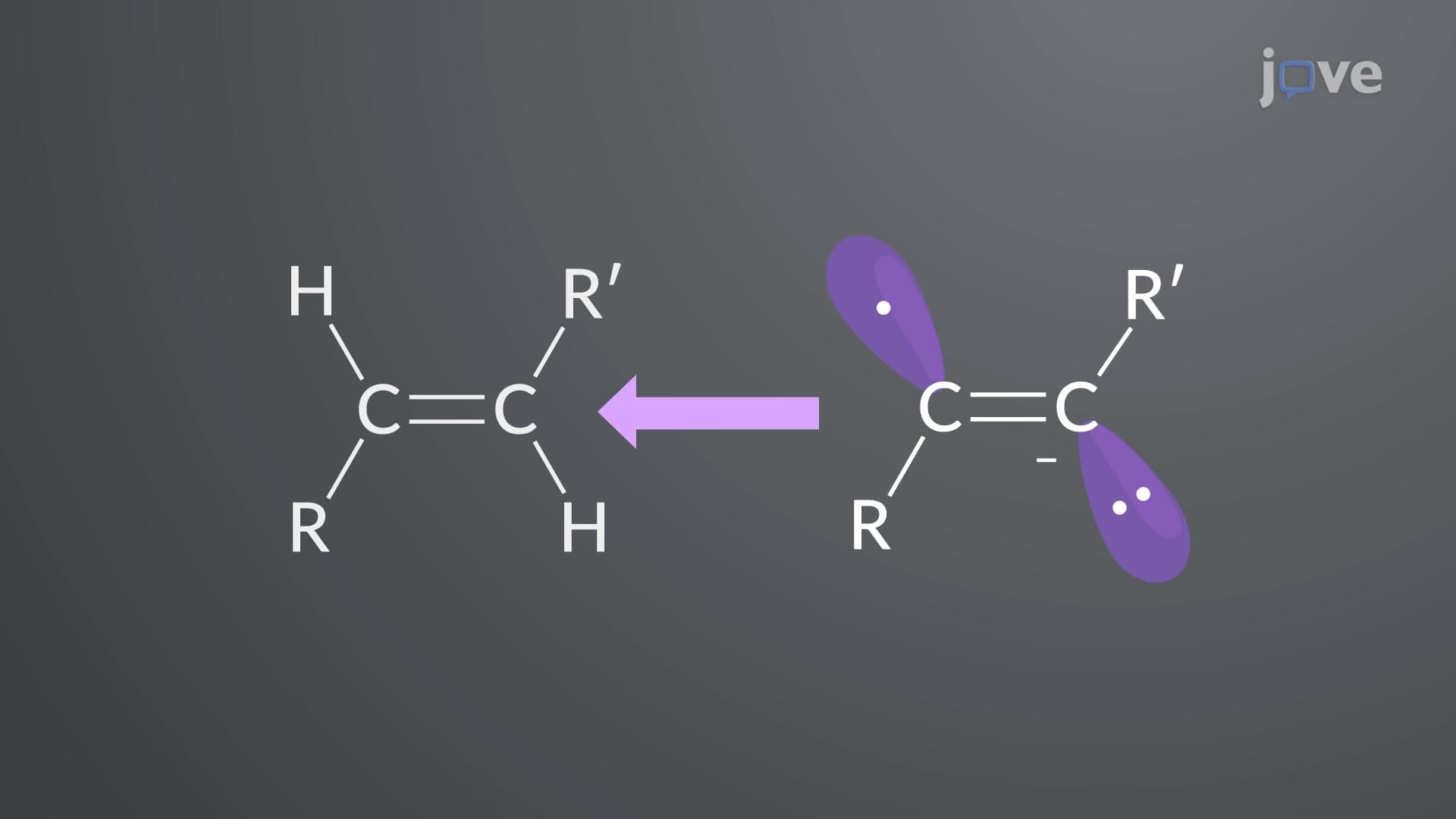
The reaction begins with borane (BH₃) undergoing concerted syn addition across the carbon-carbon triple bond. This creates an alkenylborane intermediate where boron attaches to the less substituted carbon atom. The regioselectivity arises from electronic factors-boron prefers the electron-rich terminal carbon over the more substituted internal carbon. Three successive hydroboration steps ultimately produce a trialkenylborane species.
Students often struggle with understanding why this reaction gives anti-Markovnikov products while acid-catalyzed hydration follows Markovnikov's rule. The key difference lies in the mechanism: hydroboration involves direct addition without carbocation intermediates, while acid catalysis proceeds through more stable carbocation formation.
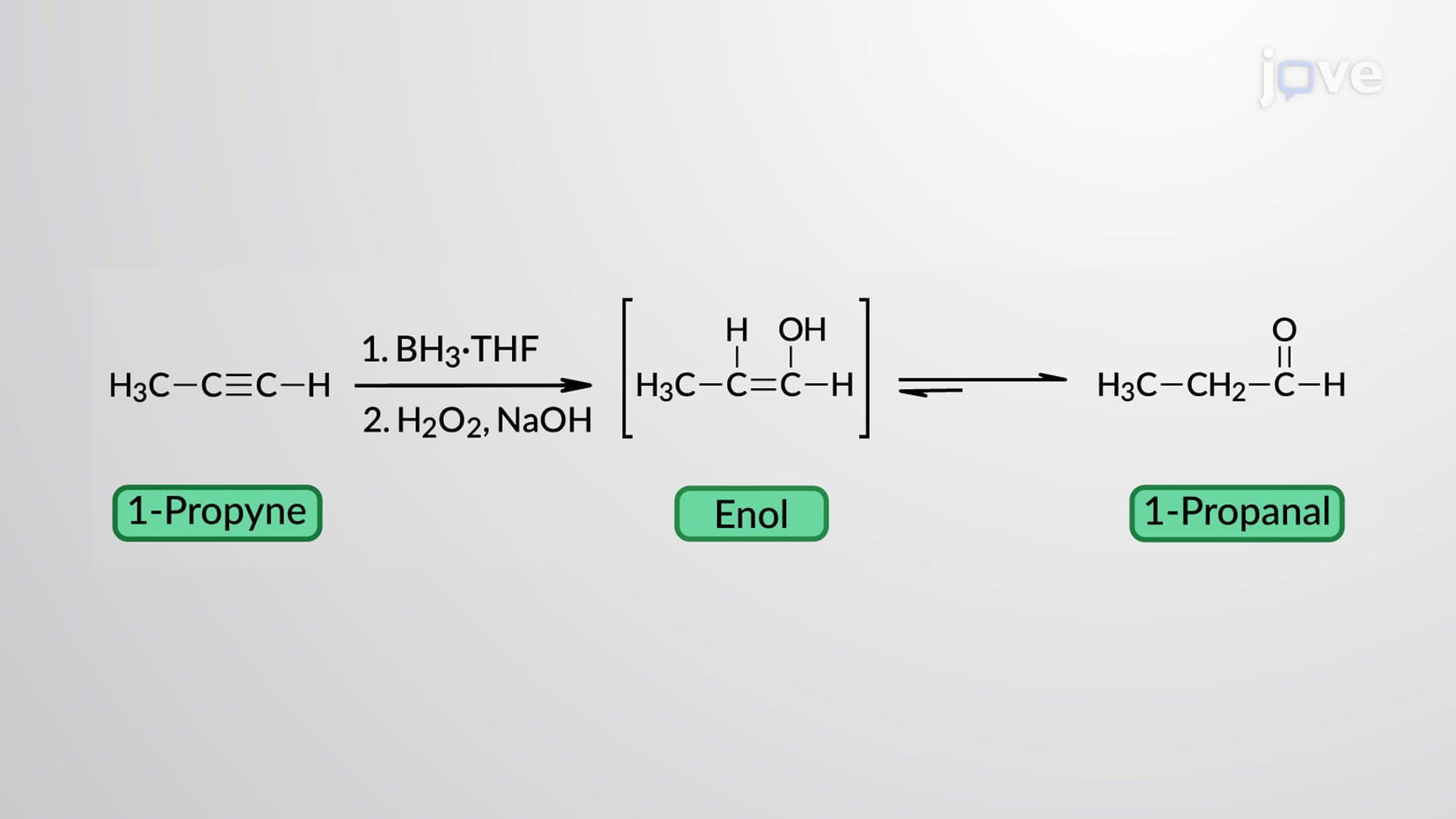
The alkaline hydrogen peroxide oxidation step converts the carbon-boron bond into a carbon-oxygen bond while retaining the stereochemistry established during hydroboration. This forms an unstable enol intermediate that rapidly tautomerizes to the thermodynamically favored keto form. For terminal alkynes, this yields aldehydes; for internal alkynes, ketones result.
Real-world applications include pharmaceutical synthesis at companies like Merck and Pfizer, where precise control over carbonyl placement enables drug development. The anti-Markovnikov selectivity allows chemists to access aldehyde building blocks that would be difficult to obtain through other methods.
Terminal alkynes can undergo over-addition because the initial alkenylborane product retains reactivity toward additional BH₃ molecules. This creates unwanted ketone byproducts instead of the desired aldehydes. Chemists solve this problem using sterically hindered boranes like di-sec-isoamylborane (disiamylborane), where bulky alkyl groups prevent secondary additions.
This concept frequently appears on MCAT practice tests and college organic chemistry exams, particularly in questions asking students to predict products or explain why certain reagents are chosen for specific transformations.
Related Micro-courses