Loading subject page…


143,300 views

Video Summary: Reduction of Alkynes to Cis Explained
Why do pharmaceutical companies at major US drug manufacturers like Pfizer need to create specific molecular shapes when synthesizing medications? The reduction alkynes cis process allows chemists to precisely control the three-dimensional structure of molecules by converting triple-bonded carbon compounds into double-bonded ones with hydrogen atoms on the same side. This Reduction of Alkynes To Cis Explained technique is crucial for creating stereospecific compounds used in everything from heart medications to cancer treatments. Watch the full video on JoVE Coach to master this concept with expert-led visuals and step-by-step explanations.
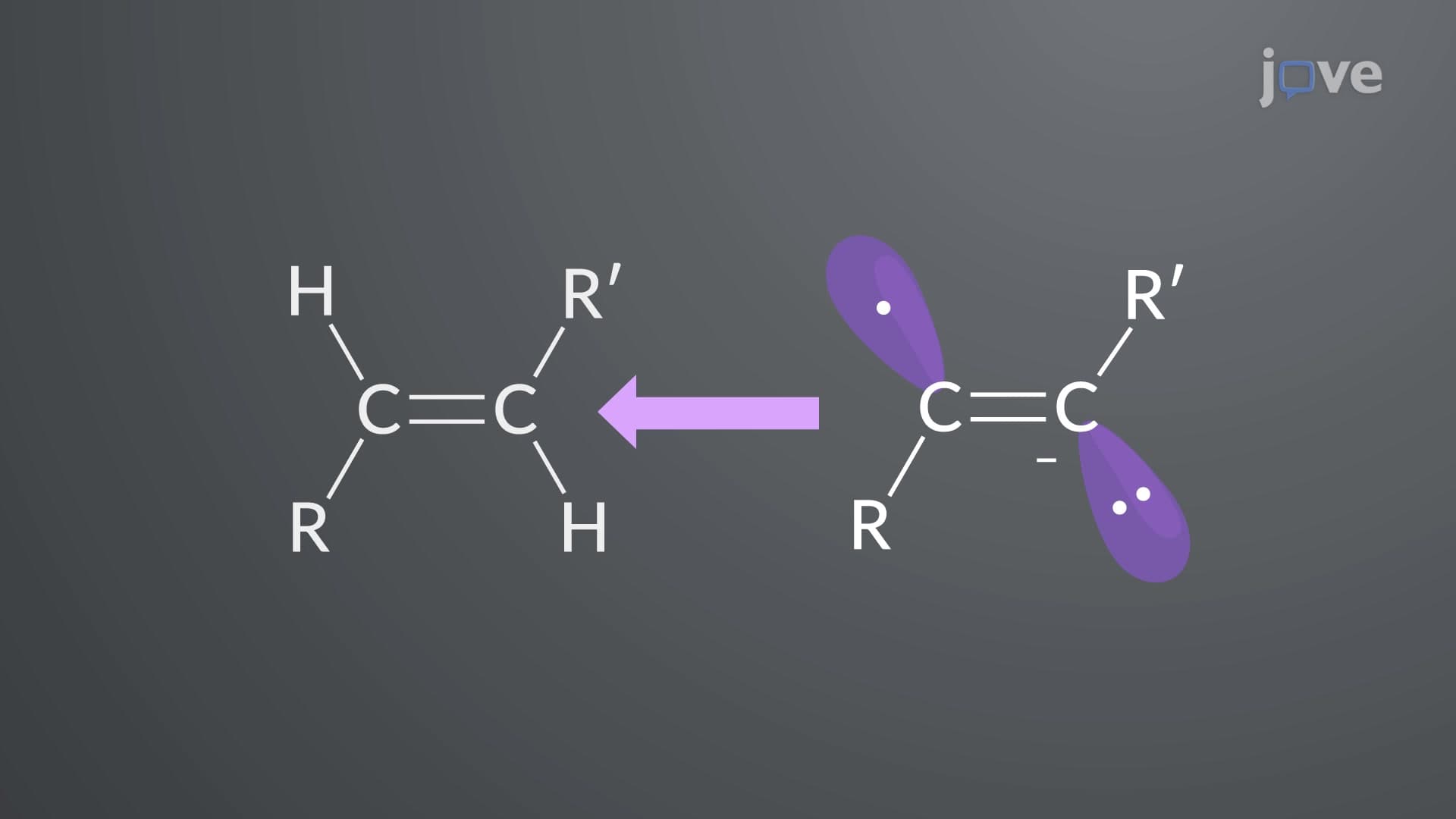
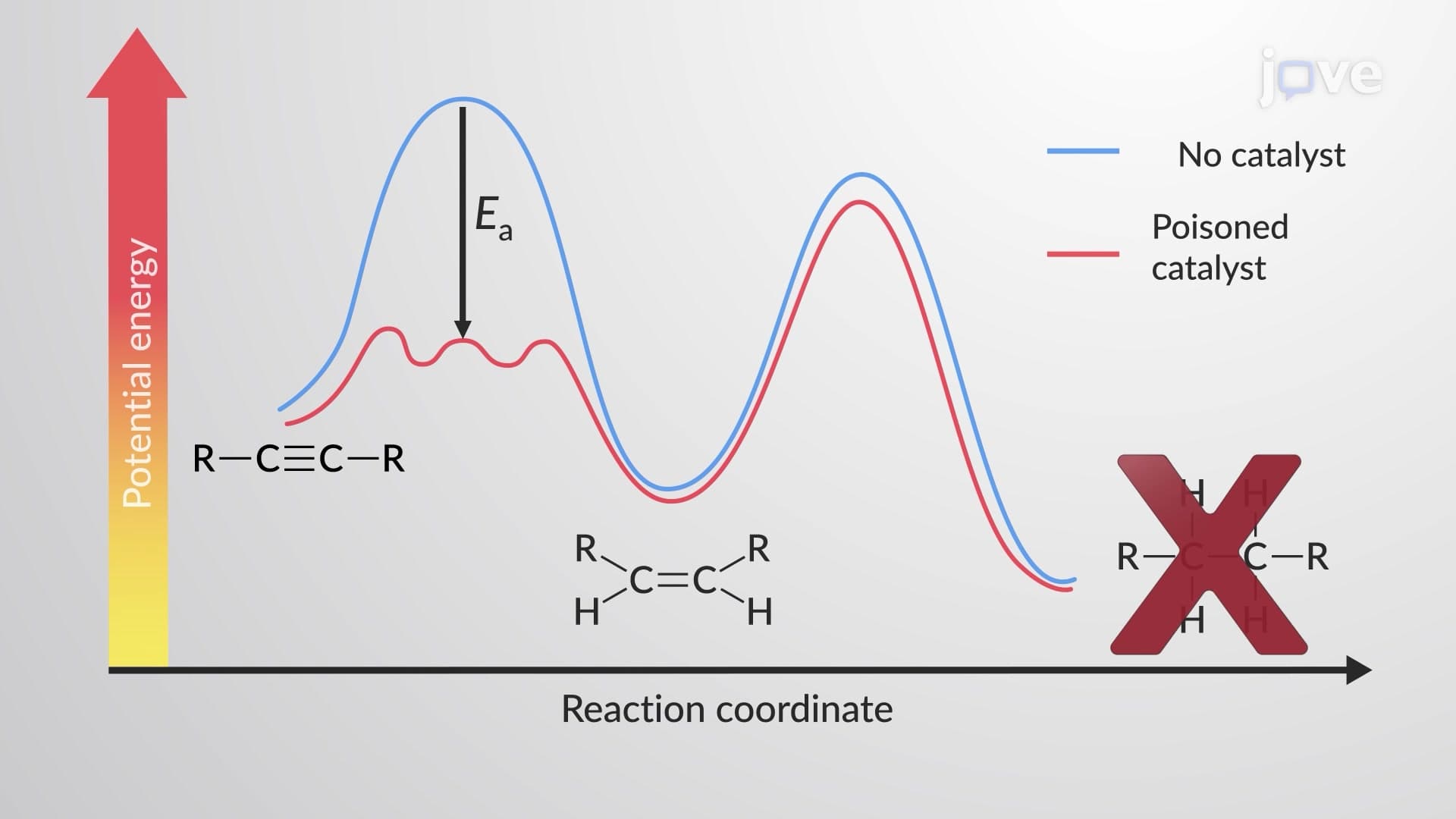
The reduction of alkynes to cis represents one of organic chemistry's most elegant examples of stereoselective synthesis. Unlike simple hydrogenation that produces alkanes, this process requires precise catalyst control to stop at the alkene stage while ensuring the hydrogen atoms add to the same face of the molecule. This stereocontrol is essential in pharmaceutical manufacturing, where companies like Johnson & Johnson rely on such reactions to synthesize drugs with specific three-dimensional structures required for biological activity.
Lindlar's catalyst exemplifies brilliant chemical engineering-palladium deposited on calcium carbonate, then "poisoned" with lead salts and quinoline to reduce its activity. This poisoning prevents the catalyst from being too reactive, stopping the reduction at the desired cis-alkene stage rather than proceeding to the fully saturated alkane. The P-2 catalyst (nickel-boron complex) achieves similar selectivity through different deactivation principles.
The mechanism involves hydrogen molecule activation on the metal surface, breaking the H-H bond to form metal-hydrogen bonds. When the alkyne approaches the catalyst surface, both hydrogen atoms transfer sequentially to the same face of the triple bond, ensuring syn addition and producing the cis geometric isomer.
Students preparing for the MCAT encounter this concept in organic chemistry sections, particularly when analyzing stereochemical outcomes. AP Chemistry students studying reaction mechanisms must understand how catalyst modification affects reaction selectivity. The concept appears frequently in college organic chemistry courses at institutions like UCLA and University of Michigan, where students learn to predict products based on reaction conditions.
In industrial settings, companies like Merck use controlled alkyne reduction to synthesize intermediates for cholesterol-lowering medications. The ability to selectively produce cis-alkenes versus trans-alkenes can determine whether a drug candidate will be effective or potentially harmful, highlighting the critical importance of understanding these stereoselective processes.
Hydroboration-protonolysis offers a non-catalytic route to cis-alkenes from internal alkynes. This method involves borane addition followed by acetic acid treatment, providing another tool for achieving the same stereochemical outcome through different mechanistic pathways. Understanding both approaches gives chemists flexibility in synthetic planning.
Related Micro-courses