Loading subject page…


143,300 views

Video Summary: Reduction of Alkynes to Trans Explained
Ever wondered how pharmaceutical companies create specific drug molecules with precise shapes? The reduction of alkynes to trans alkenes using dissolving-metal reduction is crucial for synthesizing many medications, including cholesterol-lowering statins produced by major US pharmaceutical companies like Pfizer. This stereospecific reaction employs alkali metals in liquid ammonia to consistently produce trans alkenes through anti addition. Understanding reduction of alkynes to trans explained helps predict molecular geometry in organic synthesis. Watch the full video on JoVE Coach to master this concept with expert-led visuals and step-by-step explanations.
The reduction of alkynes to trans alkenes represents a fundamental transformation in organic chemistry that demonstrates precise stereochemical control. This reaction occurs through dissolving-metal reduction, where alkali metals like sodium or lithium dissolve in liquid ammonia at extremely low temperatures (typically -78°C). The distinctive blue color that emerges signals the presence of solvated electrons-highly reactive species that drive this transformation.
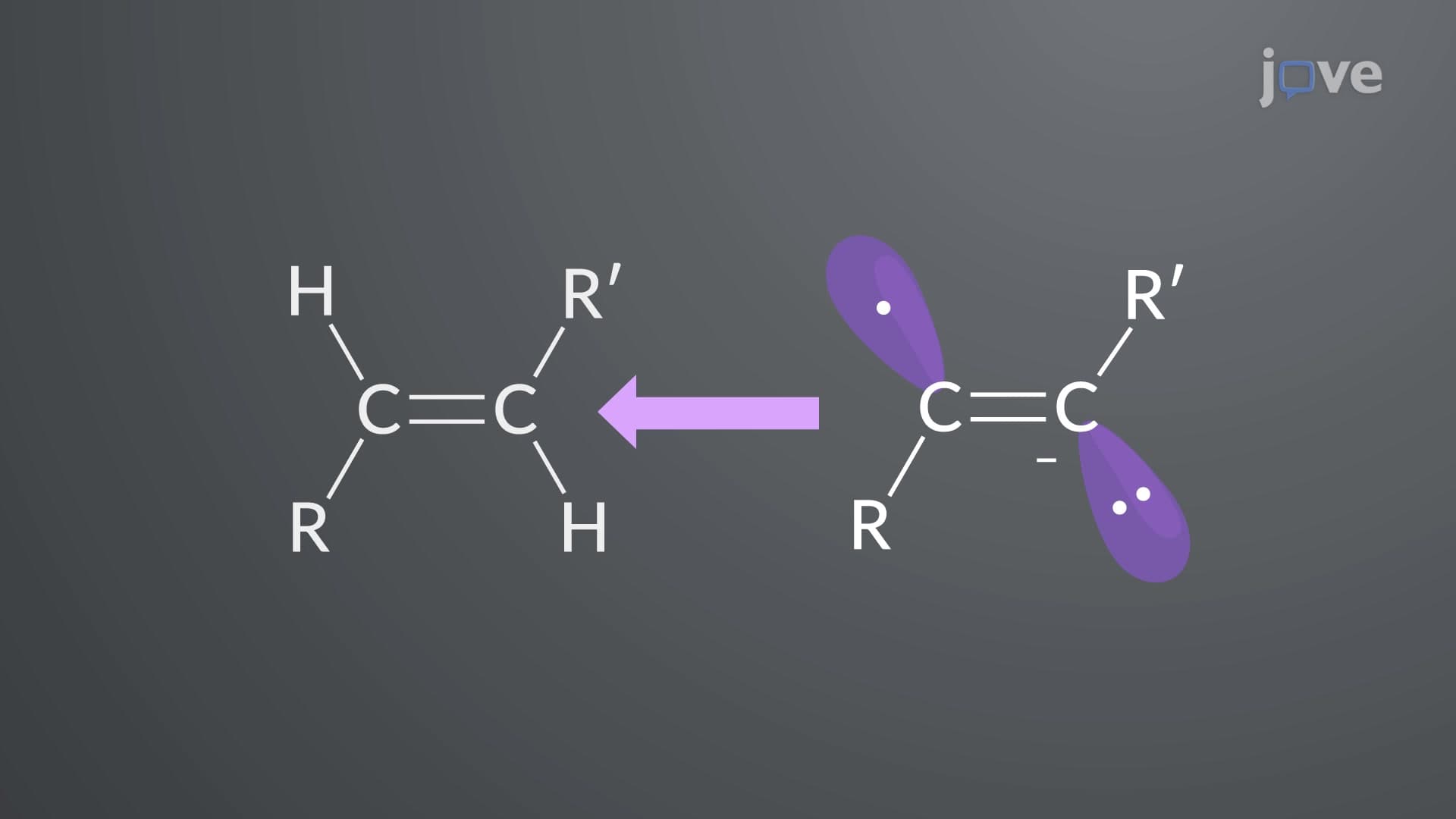
The dissolving-metal reduction mechanism proceeds through four distinct steps, each involving careful electron management. Initially, a solvated electron adds to the alkyne's triple bond, creating a vinylic radical anion intermediate. This species contains both an unpaired electron (radical character) and a negative charge (anion character), making it highly reactive. Students preparing for the AP Chemistry exam or MCAT should note that single-electron movement uses fishhook arrows, distinguishing it from the curved arrows representing two-electron movement in polar mechanisms.
The radical anion can adopt two configurations: cis or trans. The trans arrangement minimizes electronic repulsion between the paired and unpaired electrons, making it thermodynamically favored. This preference directly influences the final product's stereochemistry, ensuring consistent trans alkene formation.
The reaction's stereospecificity stems from its anti addition pattern-hydrogen atoms add to opposite sides of the original triple bond. This occurs because the second protonation step maintains the trans geometry established in the radical anion intermediate. College organic chemistry students encounter this concept extensively in courses like CHEM 241/242, where understanding stereochemical outcomes proves crucial for synthesis planning.
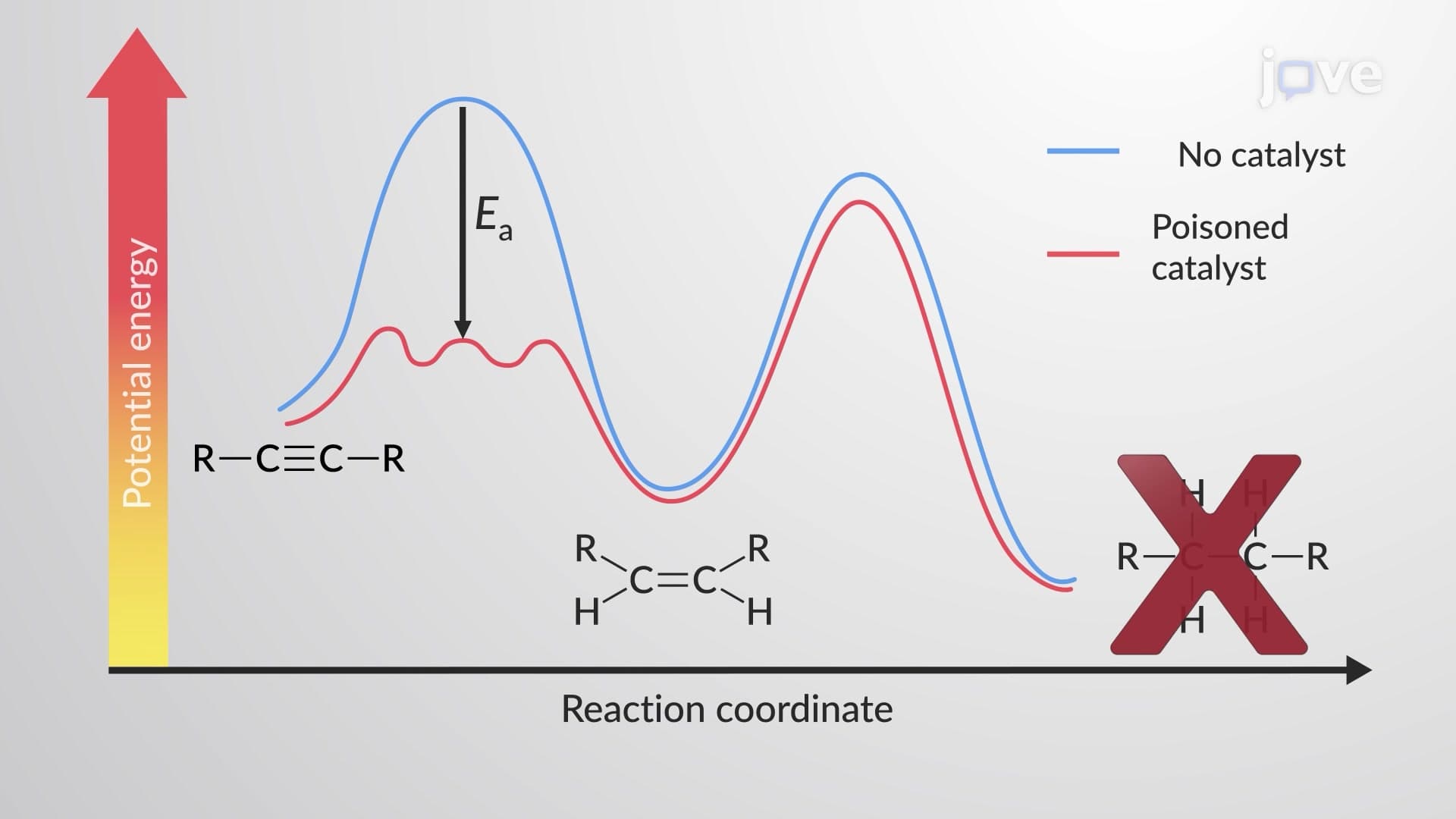
In pharmaceutical manufacturing, companies like Johnson & Johnson utilize dissolving-metal reduction to synthesize specific drug intermediates requiring trans alkene geometry. This method contrasts sharply with Lindlar's catalyst reduction, which produces cis alkenes through syn addition. Understanding both pathways allows chemists to selectively access either stereoisomer depending on synthetic needs.
Students preparing for standardized tests should recognize that dissolving-metal reduction consistently produces trans products, while Lindlar's catalyst yields cis products-a distinction frequently tested on the MCAT and advanced placement exams. This stereocontrol proves essential in drug development, where molecular shape directly affects biological activity.
Related Micro-courses