Loading subject page…

- Organic Chemistry
- Stereoisomerism
- Prochirality
Micro-course: Stereoisomerism
195,005 views
Learn key concepts and earn your certificate.
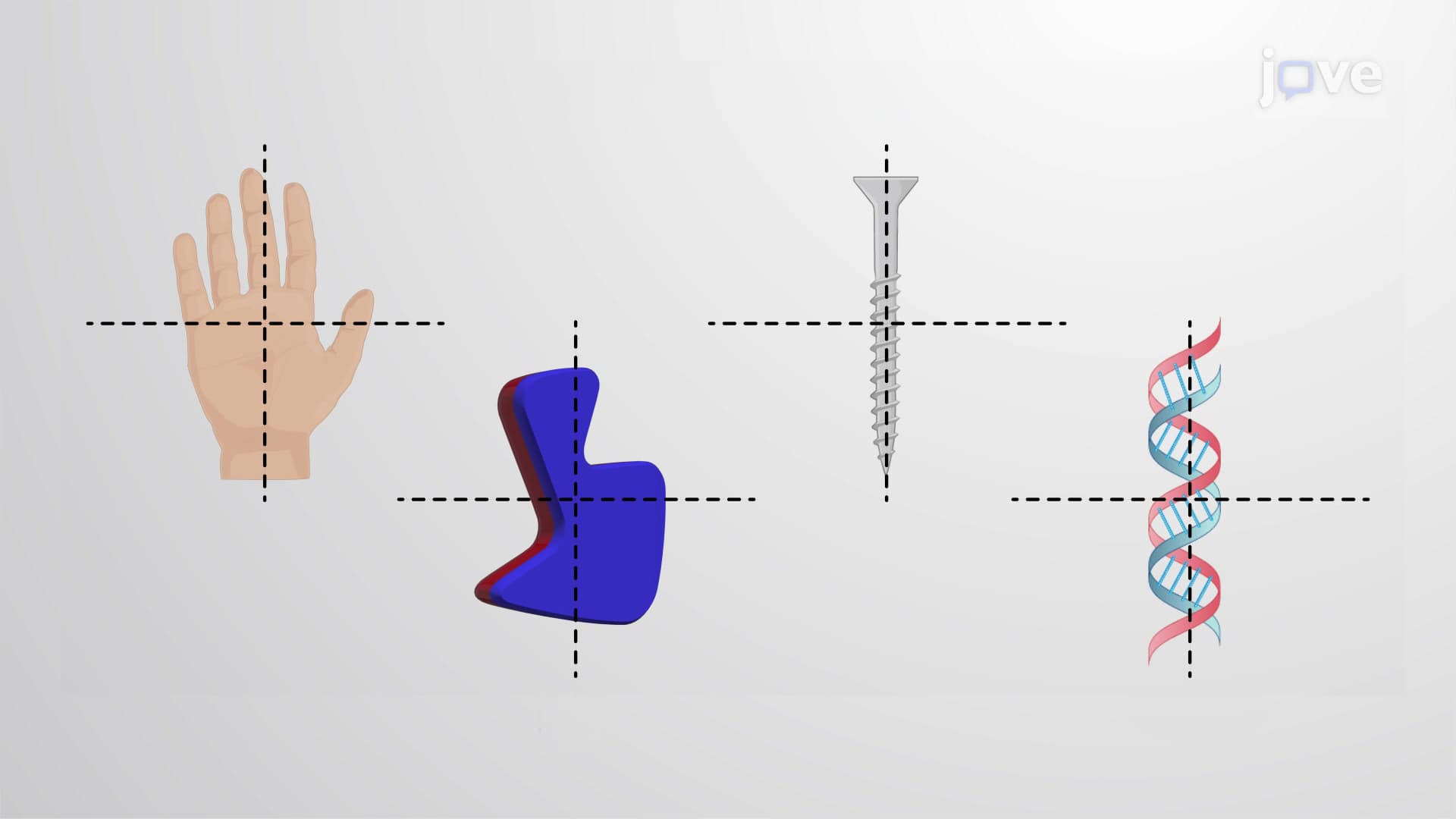

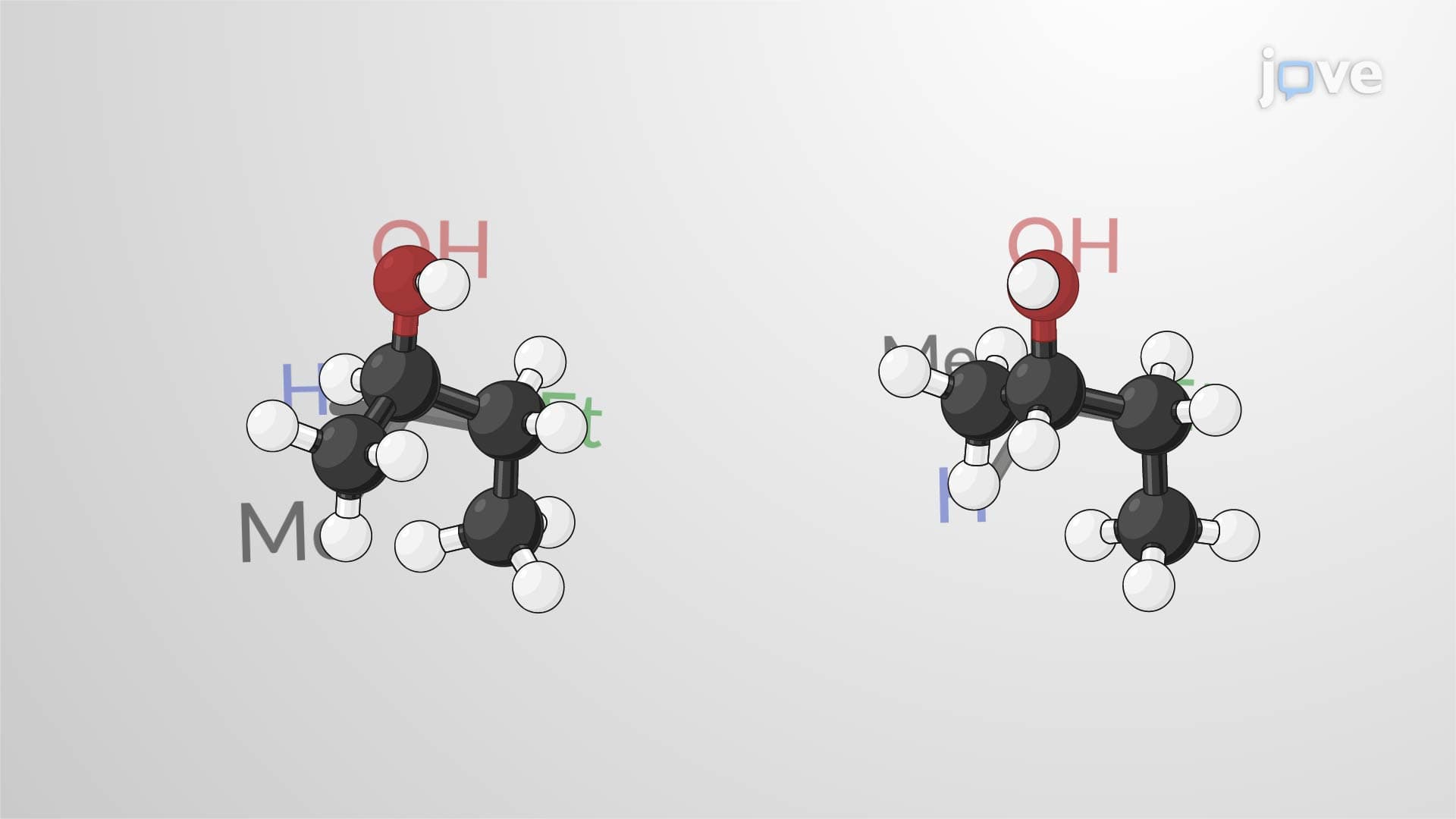
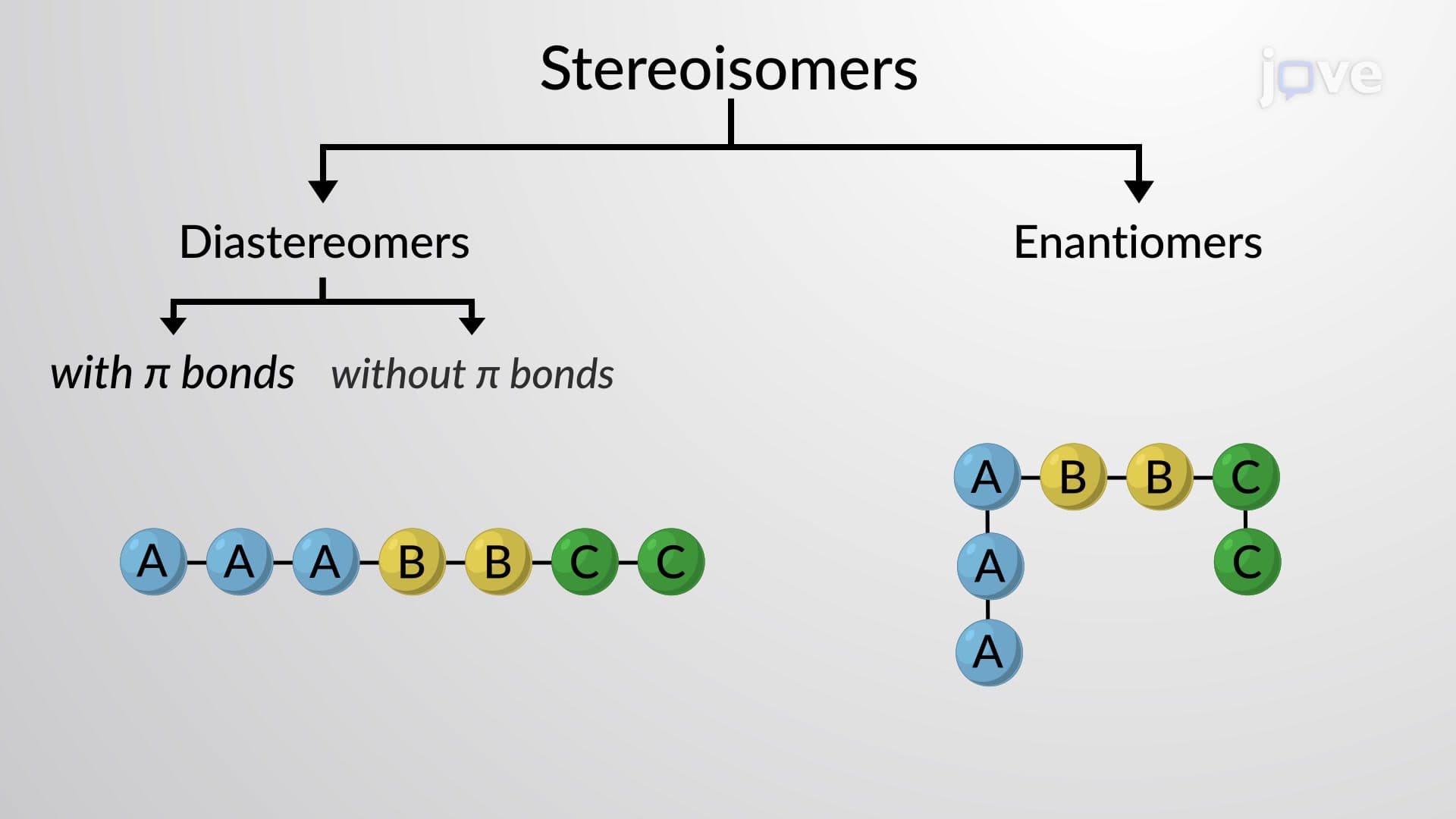
Prochirality

00:00
02:05
Video Summary: What Is Prochirality
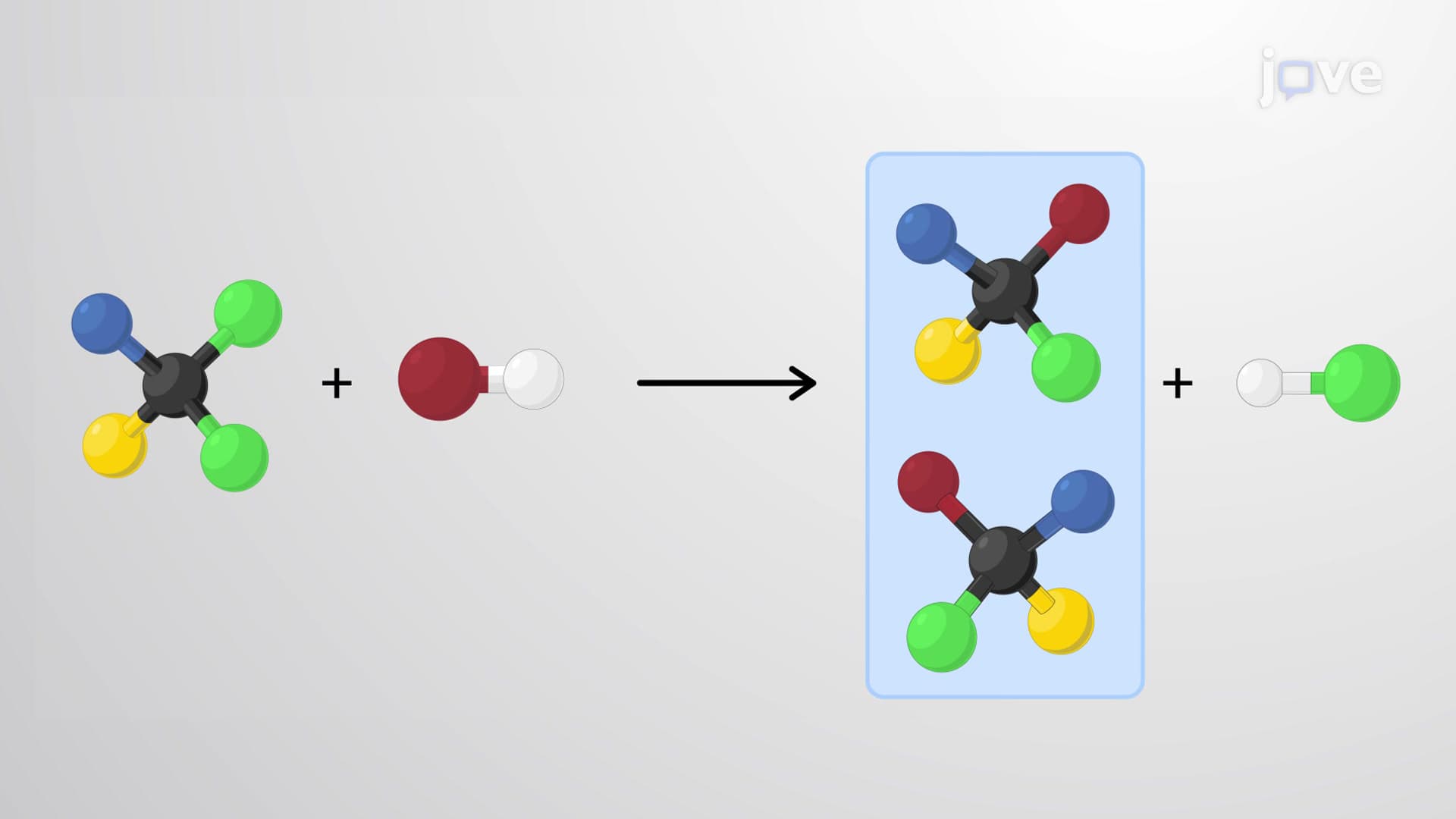
Did you know that mixing two perfectly symmetrical molecules can create products with distinct "handedness"? Prochirality explains how achiral molecules like 2-butanone can react to form chiral products, similar to how pharmaceutical companies use this principle to synthesize specific drug enantiomers with different biological activities. This fascinating concept bridges the gap between symmetric starting materials and asymmetric products in organic chemistry. Watch the full video on JoVE Coach to master this concept with expert-led visuals and step-by-step explanations.
- Understand what is prochirality and how achiral molecules can generate chiral products through chemical reactions
- Identify prochiral centers in trigonal molecules and predict the stereochemical outcome of reactions
- Analyze the re and si face nomenclature system using Cahn-Ingold-Prelog priority rules
- Compare the formation of different enantiomers based on which molecular face receives the attacking reagent
- Evaluate how chiral catalysts and enzymes can create enantioselective reactions from prochiral substrates
- Apply prochirality concepts to predict racemic mixture formation in the absence of chiral influences
- Recognize the relationship between molecular geometry and stereochemical outcomes in organic reactions
- Explore real-world applications of prochirality in pharmaceutical synthesis and biochemical processes
Understanding What is Prochirality in Organic Chemistry
Prochirality represents a fundamental concept in stereochemistry where achiral (non-chiral) molecules possess the potential to form chiral products. This occurs when a chemical reaction changes the hybridization state of a carbon atom, typically from sp² to sp³, creating a new stereocenter. The concept is crucial for understanding how symmetric molecules can lead to asymmetric products, a phenomenon observed frequently in both laboratory synthesis and biological systems.
Molecular Recognition: Re and Si Face Designation
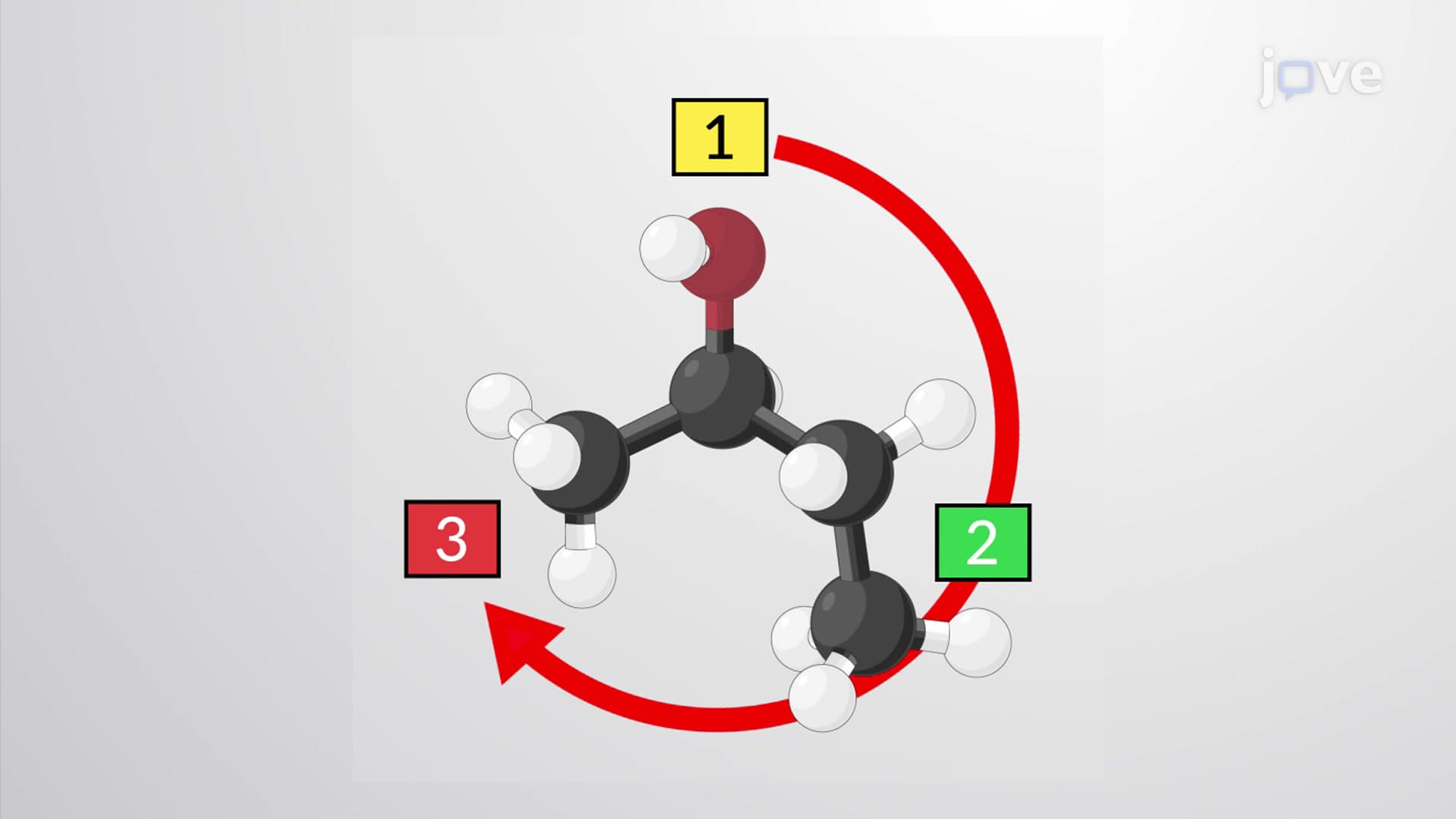
The key to understanding prochirality lies in recognizing that the two faces of a trigonal carbon are distinguishable, even though the molecule itself is achiral. Using the Cahn-Ingold-Prelog priority system, chemists assign re (Latin: rectus, right) and si (Latin: sinister, left) designations to these faces. When viewing the molecule with the lowest priority group pointing away, if the remaining three groups decrease in priority clockwise, the face is re; if counterclockwise, it's si. This systematic approach allows prediction of which enantiomer will form based on the approach direction of the attacking reagent.
Practical Applications in Pharmaceutical Chemistry
Prochirality plays a vital role in drug development and manufacturing. Consider the production of ibuprofen, where pharmaceutical companies must control which enantiomer predominates since only the S-enantiomer provides anti-inflammatory effects. Similarly, in the synthesis of amino acids for medical applications, enzymes exploit prochirality to selectively produce the L-forms needed for protein synthesis. This selectivity is achieved through the enzyme's chiral environment, which distinguishes between the re and si faces of prochiral substrates.
Enantioselective Synthesis and Catalysis
The transition from prochiral substrates to chiral products becomes particularly powerful when combined with chiral catalysts or enzymes. These chiral influences break the inherent symmetry of the reaction, favoring approach from one face over the other. This principle underlies many industrial processes, including the synthesis of pharmaceuticals where specific enantiomers are required for therapeutic activity. Students preparing for the MCAT or advanced organic chemistry courses should understand that enantioselective reactions represent one of the most elegant solutions to the challenge of creating single enantiomers from achiral starting materials.
Frequently Asked Questions
Prochirality describes achiral molecules that can become chiral through a single chemical transformation, while chirality refers to molecules that already possess non-superimposable mirror images. Prochiral molecules have the potential for chirality but aren't currently chiral themselves. This concept is essential for understanding how symmetric starting materials can produce asymmetric products in organic reactions.
MCAT questions often focus on identifying prochiral centers and predicting stereochemical outcomes of reactions. You'll need to assign re/si face designations and explain how different reaction conditions affect enantiomer formation. AP Chemistry typically covers basic stereochemistry concepts, though prochirality appears more frequently in college-level organic chemistry courses and advanced placement programs.
Common exam questions include identifying prochiral carbons in complex molecules, assigning re and si face labels, predicting reaction products, and explaining why racemic mixtures form. Students are often asked to draw stereoisomers formed from prochiral substrates and determine how chiral catalysts influence product distribution. Practice with carbonyl reduction reactions and nucleophilic additions to prepare effectively.
Major pharmaceutical companies like Pfizer and Merck use prochirality principles to synthesize single-enantiomer drugs with improved therapeutic profiles. For example, controlling the stereochemistry of cholesterol-lowering statins ensures maximum efficacy while minimizing side effects. This application demonstrates how fundamental chemistry concepts directly impact drug development and patient care in American healthcare.
Prochirality builds naturally on basic stereochemistry concepts, making it accessible to students who understand chirality fundamentals. The key is visualizing three-dimensional molecular structures and practicing the Cahn-Ingold-Prelog priority system. Most students find success by working through numerous examples and using molecular models to reinforce spatial relationships.
Focus on pattern recognition by practicing re/si assignments until they become automatic. Create concept maps linking prochirality to related topics like enantioselectivity and racemic mixtures. Use active recall by drawing structures from memory and explaining the relationship between molecular face and product stereochemistry. Regular practice with diverse molecular examples builds confidence for exam success.
Explore asymmetric catalysis, including organocatalysis and transition metal catalysis used in pharmaceutical synthesis. Study enzyme mechanisms that exploit prochirality for biological transformations. Advanced topics include dynamic kinetic resolution and the development of new chiral catalysts, which represent cutting-edge research in synthetic organic chemistry.
Enzymes create chiral environments that selectively recognize one face of prochiral substrates, enabling highly enantioselective transformations. This biological selectivity explains why organisms produce predominantly L-amino acids and D-sugars. Understanding enzymatic prochirality helps explain metabolic pathways and provides inspiration for designing synthetic chiral catalysts in pharmaceutical development.
Related Micro-courses
7 Concepts

7 Concepts