Loading video…

 12 Concepts
 109.2K views

Video Summary: What Is Predicting Reaction Outcomes
Ever wonder why gasoline doesn't explode when you fill your tank, but ignites instantly in your car's engine? Predicting reaction outcomes involves understanding how both thermodynamics and kinetics determine which products form when chemicals react. Consider how pharmaceutical companies must predict whether drug synthesis will favor the desired medication or unwanted byproducts. This fundamental chemistry concept explains why temperature, particle size, and activation energy barriers control reaction pathways in everything from industrial manufacturing to biological processes. Watch the full video on JoVE Coach to master this concept with expert-led visuals and step-by-step explanations.
Predicting reaction outcomes represents one of chemistry's most powerful tools, allowing scientists to forecast which products will form when reactants undergo chemical transformation. This concept bridges two fundamental areas: thermodynamics, which tells us what can happen based on energy considerations, and kinetics, which determines what actually happens based on reaction speed and pathway accessibility.
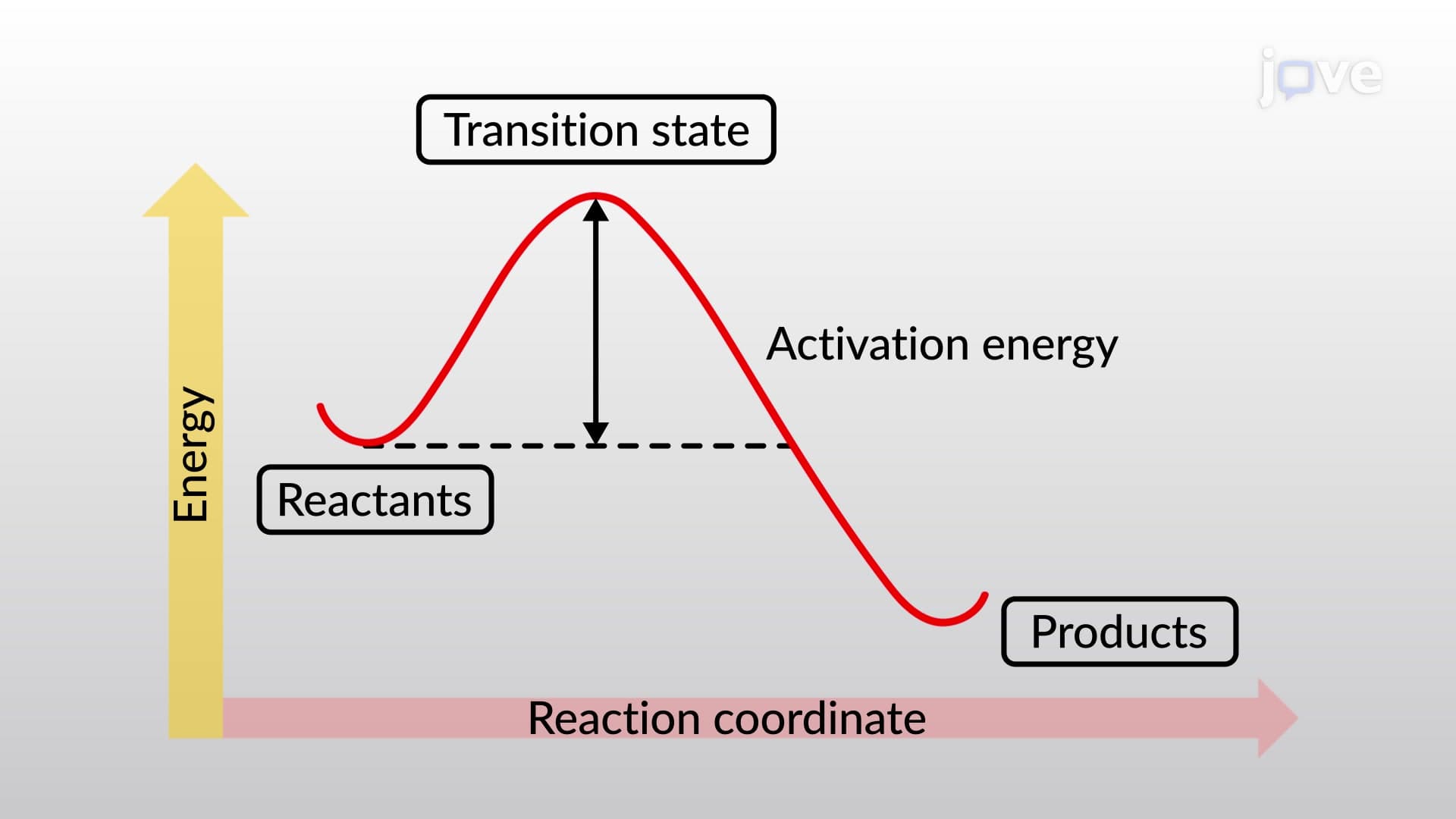
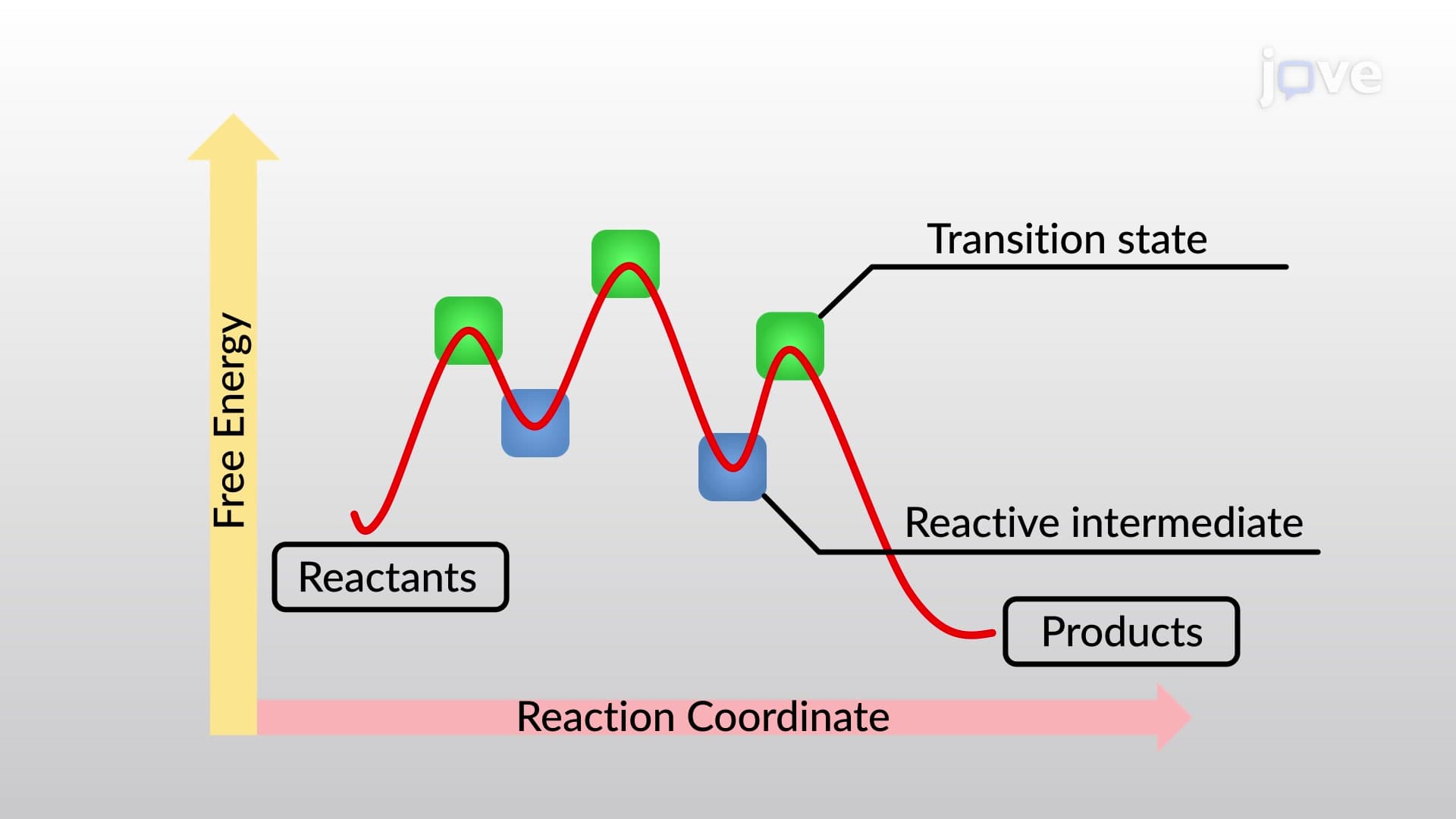
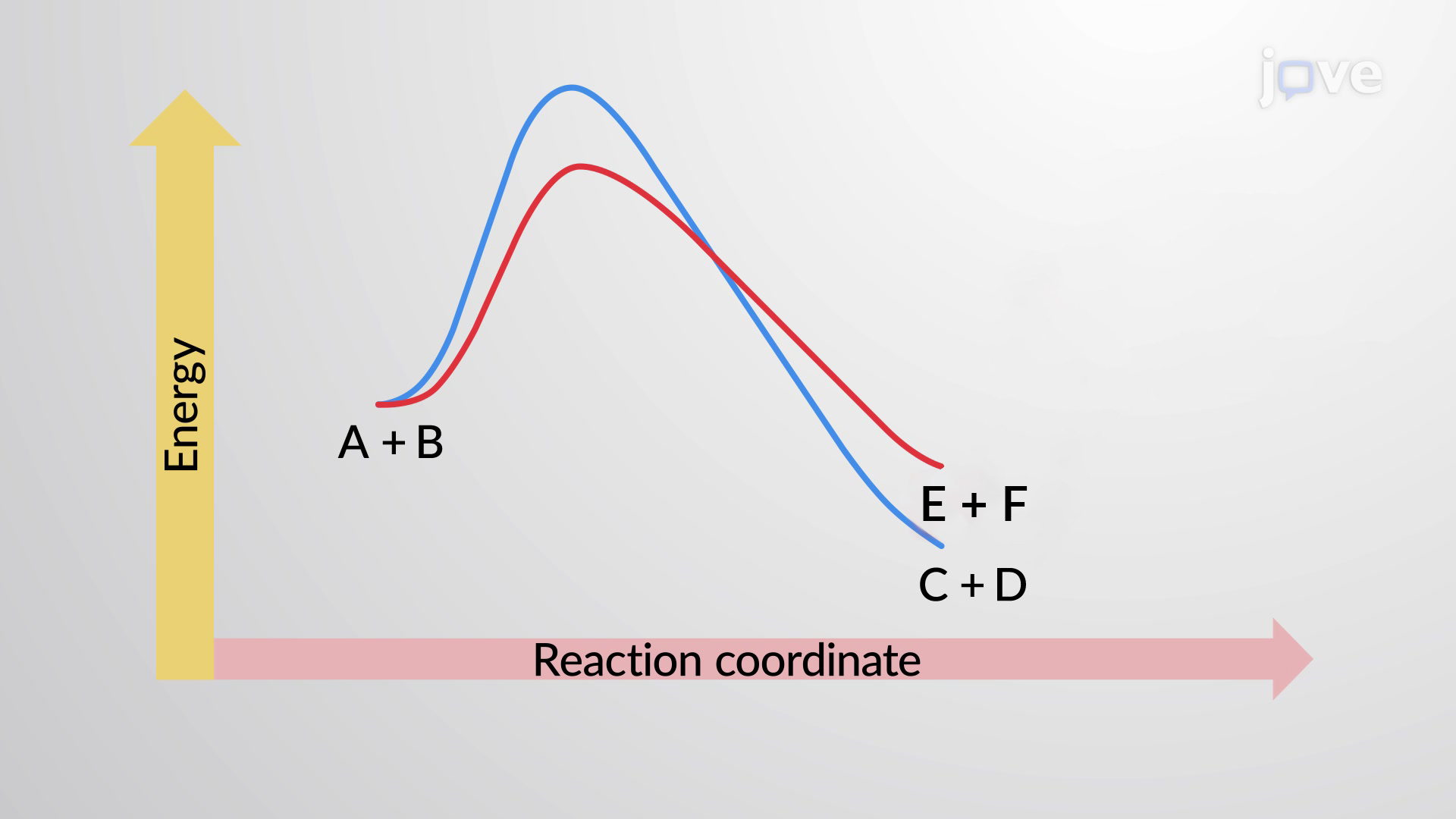
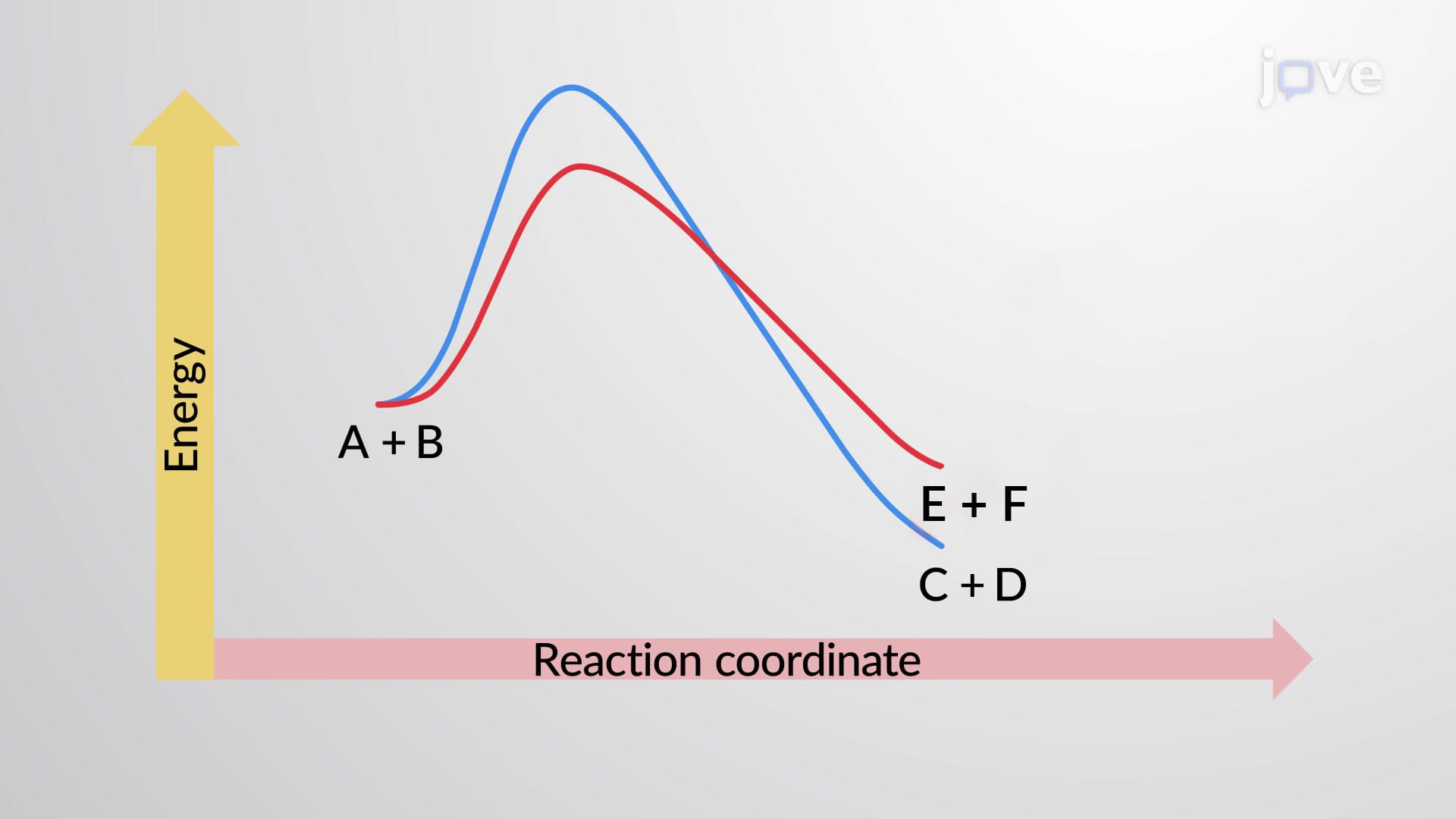
When multiple reaction pathways exist, chemists must consider both the final energy of products (thermodynamics) and the energy barrier to reach those products (kinetics). This dual consideration becomes crucial in pharmaceutical development, where companies like Pfizer and Merck must predict whether their synthetic routes will produce the desired drug molecules efficiently.
The competition between thermodynamic and kinetic factors creates fascinating scenarios in reaction prediction. Thermodynamically favored products possess lower overall energy, making them more stable once formed. However, kinetically favored products form through pathways with lower activation energy barriers, allowing faster formation despite potentially higher final energy.
This principle explains why petroleum refining requires specific temperature controls. At ExxonMobil refineries, lower temperatures favor rapid formation of lighter hydrocarbons (kinetic products), while higher temperatures allow equilibrium to establish, producing more stable, heavier fractions (thermodynamic products). The interplay determines which gasoline components predominate.
Temperature serves as the master switch controlling reaction outcomes. At low temperatures, molecules possess insufficient energy to overcome high activation barriers, so reactions follow pathways with lower energy barriers regardless of final product stability. This kinetic control dominates in many industrial processes where rapid production matters more than thermodynamic optimization.
Conversely, high temperatures provide enough energy for molecules to access all available pathways, allowing thermodynamic factors to determine outcomes. Chemical plants exploit this principle by adjusting reactor temperatures to favor desired products. For instance, ammonia synthesis in agricultural fertilizer production requires careful temperature control to balance reaction speed with equilibrium position.
Physical factors significantly impact reaction outcomes through collision frequency effects. Smaller particles expose greater surface area, increasing molecular collision opportunities and accelerating reactions. This principle drives innovations in catalytic converter design, where automotive manufacturers like General Motors use finely divided platinum to maximize exhaust gas contact with catalytic surfaces.
The relationship between surface area and reaction rate becomes critical in predicting outcomes for heterogeneous reactions. Pharmaceutical companies grinding drug crystals to nanoscale particles can dramatically alter dissolution rates and bioavailability, effectively changing therapeutic outcomes through physical modification rather than chemical changes.
Understanding these principles proves essential for AP Chemistry students tackling reaction prediction problems and college students in organic chemistry courses analyzing synthetic pathways. Mastery enables prediction of major products, optimization of reaction conditions, and troubleshooting unexpected experimental results.
Related Micro-courses