Loading video…


 29 Concepts
 26K views


Video Summary: In Situ Methods for Studying Drug Absorption
Ever wondered how pharmaceutical companies at Pfizer or Johnson & Johnson determine if a new medication will actually be absorbed by your intestines before expensive human trials? In situ methods for studying drug absorption provide researchers with a powerful bridge between simple lab tests and complex animal studies, using live rat intestinal segments to predict drug behavior in humans. These techniques have been instrumental in developing everything from common pain relievers to life-saving cancer treatments. Watch the full video on JoVE Coach to master this concept with expert-led visuals and step-by-step explanations.
In situ methods for studying drug absorption represent a sophisticated experimental approach that bridges the gap between simple laboratory tests and expensive human clinical trials. Unlike in vitro studies using isolated cells, these methods maintain the complex physiological environment of living intestinal tissue while providing researchers with precise control over experimental conditions. This approach has revolutionized how pharmaceutical companies evaluate new medications before advancing to human studies.
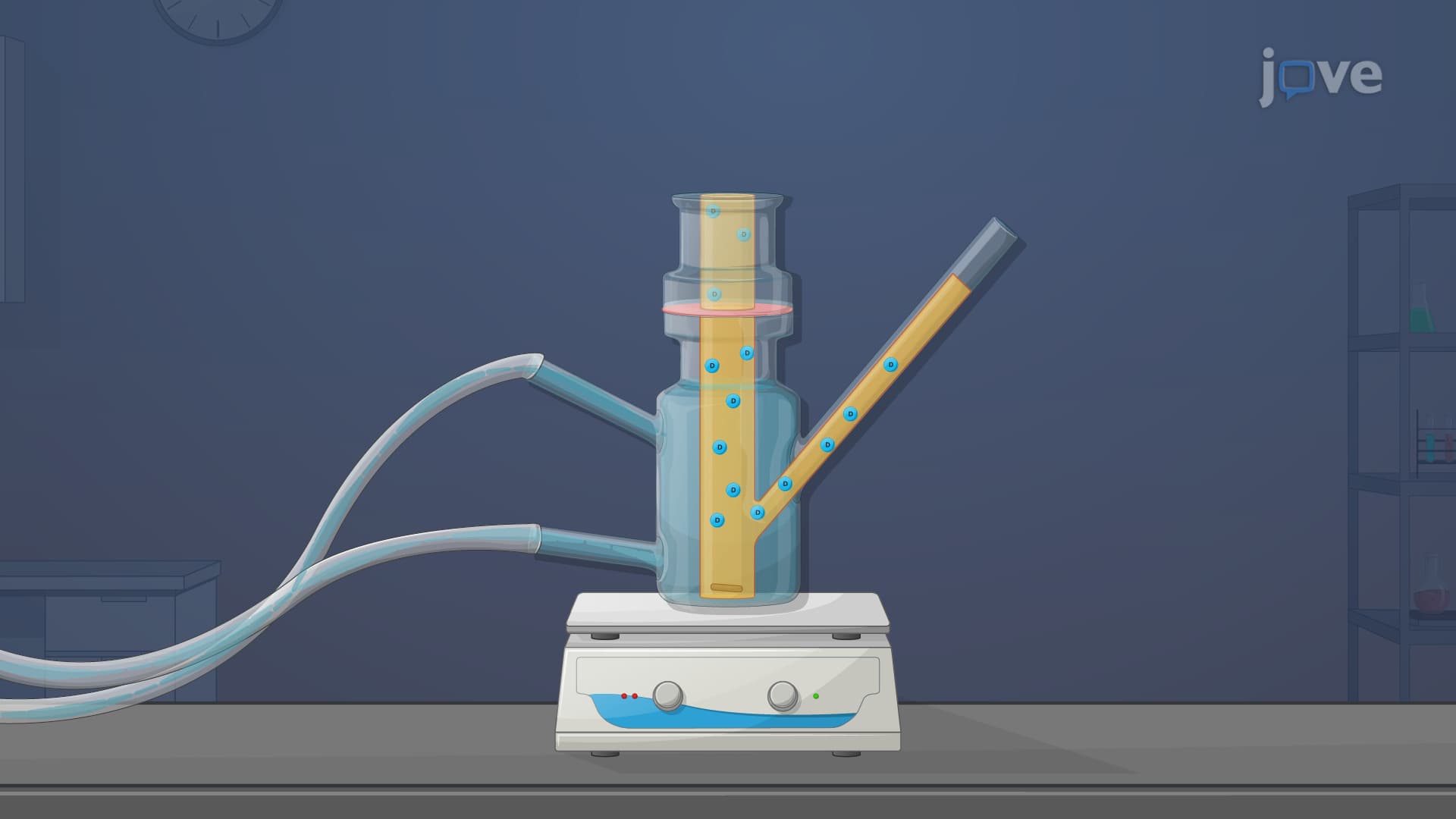
The Doluisio method employs a closed-loop system where both ends of an isolated rat intestinal segment are connected via tubing and syringes. This technique begins with thorough washing of the intestinal segment using normal saline to remove any residual contents. Researchers then introduce a carefully prepared solution containing both the test drug (often radiolabeled for precise tracking) and a non-absorbable marker compound.
The non-absorbable marker serves a critical function: it indicates water reabsorption occurring during the experiment. Since water absorption can concentrate the remaining drug solution, this marker allows researchers to distinguish between actual drug absorption and simple volume changes. Major pharmaceutical companies like Merck and Bristol Myers Squibb routinely use variations of this method during drug development phases.
The single-pass perfusion method offers a different experimental perspective by creating a unidirectional flow system. In this setup, one end of the intestinal segment connects to a syringe containing the drug solution, while the opposite end connects to a collection vessel. The drug solution passes through the intestinal segment once at a predetermined, constant flow rate.
This method provides real-time absorption data as researchers collect samples at regular intervals throughout the experiment. The technique closely mimics natural intestinal transit, making it particularly valuable for studying drugs with time-dependent absorption patterns. Students preparing for the MCAT or advanced placement biology exams often encounter this method in pharmacokinetics questions.
These in situ methods have directly contributed to the development of numerous FDA-approved medications available in US pharmacies today. For example, researchers used similar techniques to optimize the formulation of extended-release medications like OxyContin or determine the optimal pH conditions for acid-sensitive drugs like certain antibiotics. The data generated helps predict human bioavailability with remarkable accuracy, potentially saving millions of dollars in failed clinical trials.
Related Micro-courses