Loading subject page…


8,785 views

Video Summary: Phase I Reactions Hydrolytic Reactions Explained
Ever wondered why aspirin works so effectively in your body? Phase I reactions hydrolytic processes break down this common pain reliever into salicylic acid, making it bioavailable for therapeutic action. These Phase I Reactions Hydrolytic Reactions Explained demonstrate how water-mediated decomposition transforms complex drug molecules into simpler, more water-soluble compounds without changing their oxidation states. From lidocaine used in dental procedures to DDT environmental breakdown, hydrolytic reactions shape both medicine and environmental science. Watch the full video on JoVE Coach to master this concept with expert-led visuals and step-by-step explanations.
Phase I hydrolytic reactions represent a cornerstone of drug metabolism, where water molecules facilitate the breakdown of chemical bonds without altering the compound's oxidation state. Unlike oxidative Phase I reactions that involve cytochrome P450 enzymes, hydrolytic processes rely on specialized hydrolase enzymes including esterases, amidases, and epoxide hydrolases. These reactions serve a critical biological function: converting lipophilic xenobiotics into more water-soluble metabolites that can be readily eliminated from the body.
The mechanism involves nucleophilic attack by water molecules on susceptible chemical bonds, particularly ester linkages, amide bonds, and certain heterocyclic structures. This process occurs predominantly in the liver but also takes place in plasma, kidneys, and other tissues containing appropriate enzyme systems.
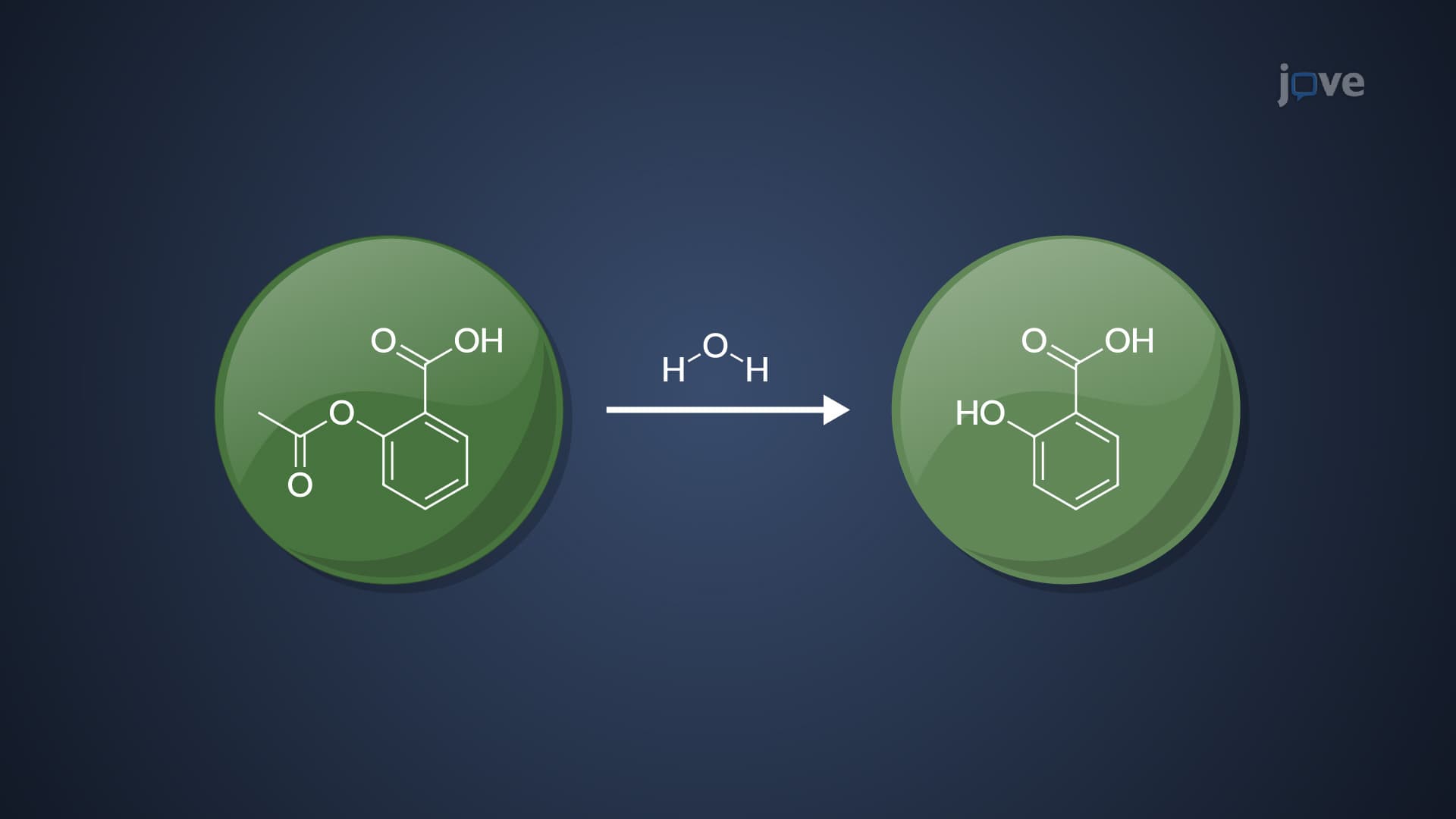
Ester hydrolysis exemplifies the most common hydrolytic reaction in drug metabolism. When you take aspirin (acetylsalicylic acid), plasma esterases rapidly cleave the acetyl ester bond, producing salicylic acid and acetic acid. This transformation is so efficient that aspirin's half-life in plasma is only 15-20 minutes, while salicylic acid persists for hours to provide anti-inflammatory effects.
Local anesthetics like procaine also undergo rapid ester hydrolysis by plasma cholinesterases, which explains their relatively short duration of action compared to amide-type anesthetics. This knowledge proves essential for MCAT preparation and advanced pharmacology courses, where understanding structure-activity relationships drives therapeutic decision-making.
Amide hydrolysis presents greater complexity due to the stronger chemical bonds involved. Lidocaine, a widely-used local anesthetic in dental and medical procedures, undergoes hepatic amide hydrolysis through specialized amidases. This process generates metabolites like monoethylglycinexylidide (MEGX), which serves as a clinical marker for liver function assessment.
The slower hydrolysis of amide bonds compared to esters explains why amide-type local anesthetics like lidocaine and bupivacaine have longer durations of action. This principle appears frequently in USMLE Step 1 questions and nursing pharmacology exams, emphasizing the clinical relevance of understanding metabolic pathways.
Hydrolytic dehalogenation represents an environmental and toxicological application of these principles. DDT (dichlorodiphenyltrichloroethane) undergoes dehalogenation to form DDE (dichlorodiphenyldichloroethylene), a process that affects both environmental persistence and biological activity. This transformation illustrates how hydrolytic reactions influence not only therapeutic drugs but also environmental contaminants.
Ring-opening hydrolysis of heterocyclic compounds like chlordiazepoxide demonstrates another specialized pathway. The benzodiazepine ring system undergoes hydrolytic cleavage under specific conditions, producing open-ring metabolites with altered pharmacological properties. Understanding these transformations becomes crucial for advanced chemistry and biochemistry coursework.
Related Micro-courses