Loading subject page…


8,785 views

Video Summary: What Is Phase Ii Reactions Glucuronidation
When acetaminophen (Tylenol) enters your liver after you take a pain reliever, phase II reactions glucuronidation immediately begins transforming this drug into a water-soluble compound your kidneys can easily eliminate. This critical detoxification process protects Americans from toxic drug buildup by attaching sugar-like molecules called glucuronic acid to medications and other foreign substances. What is Phase II Reactions Glucuronidation becomes essential knowledge for understanding how your body safely processes everything from prescription medications to environmental toxins. Watch the full video on JoVE Coach to master this concept with expert-led visuals and step-by-step explanations.
Phase II reactions glucuronidation represents one of the body's most important detoxification mechanisms, accounting for approximately 40-70% of all drug metabolism in humans. Unlike phase I reactions that often create reactive intermediates, glucuronidation consistently produces stable, water-soluble conjugates that the body can safely eliminate. This process occurs primarily in the liver but also takes place in kidneys, intestines, and other tissues throughout the body.
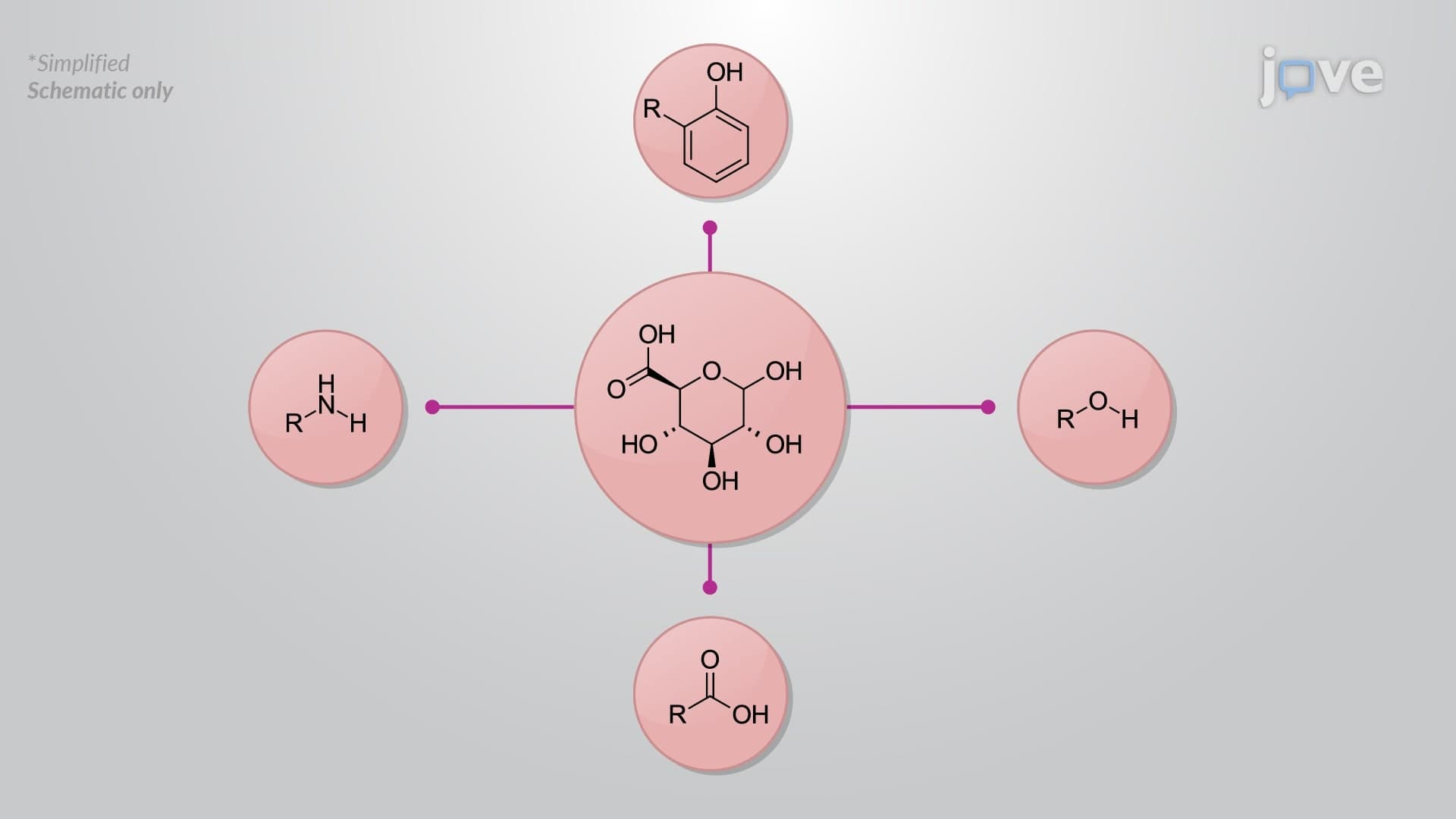
The biochemical foundation involves UDP-glucuronic acid, an activated coenzyme synthesized from glucose through the glucuronic acid pathway. This high-energy donor molecule provides the glucuronic acid moiety that conjugates with target substrates, creating glucuronide metabolites that are 100-1000 times more water-soluble than their parent compounds.
UDP-glucuronosyltransferases (UGTs) constitute a superfamily of membrane-bound enzymes located in the endoplasmic reticulum. These enzymes demonstrate remarkable versatility, conjugating glucuronic acid to oxygen, nitrogen, sulfur, and carbon atoms in substrate molecules. UGT1A1, for example, metabolizes bilirubin and prevents jaundice, while UGT2B7 processes morphine and other opioid medications.
The conjugation process follows a two-step mechanism: first, glucose converts to UDP-glucuronic acid through glucose-6-phosphate dehydrogenase and other enzymes. Second, UGT enzymes transfer the glucuronyl group from UDP-glucuronic acid to the acceptor substrate, forming a covalent glucuronide bond.
Glucuronidation profoundly impacts drug therapy outcomes and toxicity prevention. Acetaminophen glucuronidation produces approximately 60% of the drug's metabolites, preventing toxic accumulation that could cause liver damage. Similarly, morphine undergoes extensive glucuronidation to form morphine-3-glucuronide and morphine-6-glucuronide, with the latter maintaining analgesic activity.
Genetic polymorphisms in UGT genes significantly affect drug responses across different populations. UGT1A1*28 polymorphism, more common in certain ethnic groups, reduces bilirubin conjugation and increases irinotecan (cancer chemotherapy) toxicity risk. Understanding these variations helps clinicians optimize drug dosing and prevent adverse reactions.
Students encounter glucuronidation concepts extensively in AP Biology, college biochemistry, and pre-health professional exams like the MCAT. Key exam topics include enzyme kinetics, metabolic pathways, and pharmacokinetic principles. MCAT questions often test understanding of how glucuronidation affects drug elimination half-lives and clearance rates. College-level pharmacology courses emphasize glucuronidation's role in drug-drug interactions and personalized medicine applications.
Related Micro-courses