Loading video…


 22 Concepts
 80.6K views

Video Summary: Amp Re S Law in Matter Magnetization and Bound Currents
Ever wondered how MRI machines at hospitals like Mayo Clinic create detailed body images using magnetized materials? Ampère's law in matter: magnetization and bound currents explains how magnetic fields behave differently in materials compared to empty space. This fundamental concept shows that materials contain both free currents (from moving electrons) and bound currents (from aligned magnetic dipoles), requiring a modified form of Ampère's law. Understanding these interactions is crucial for designing everything from medical imaging equipment to electric motors. Watch the full video on JoVE Coach to master this concept with expert-led visuals and step-by-step explanations.
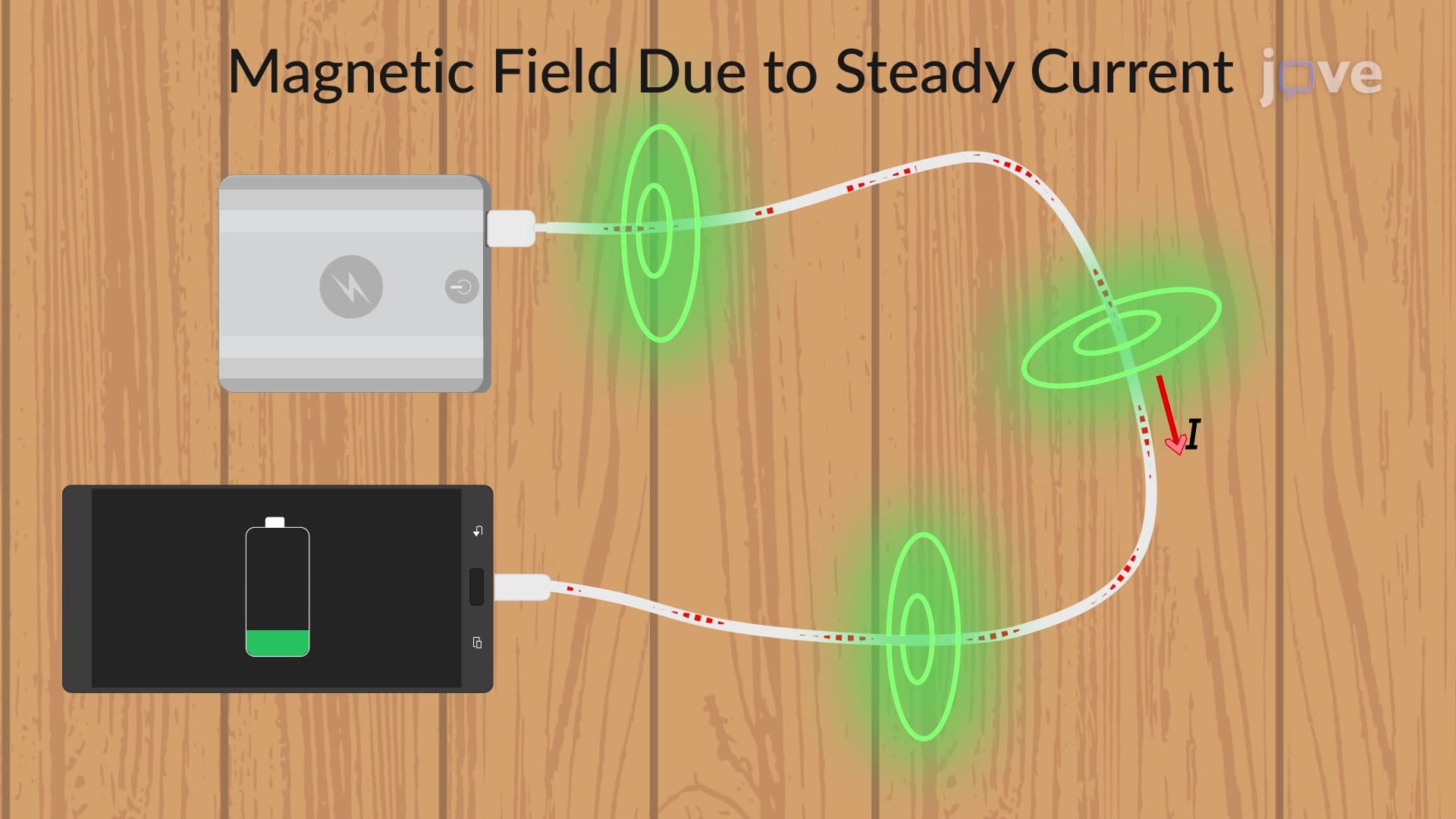
When magnetic fields interact with materials, the familiar vacuum form of Ampère's law requires significant modification. In magnetized materials, we encounter two distinct types of current: free currents from mobile charge carriers and bound currents arising from the collective behavior of atomic magnetic moments.
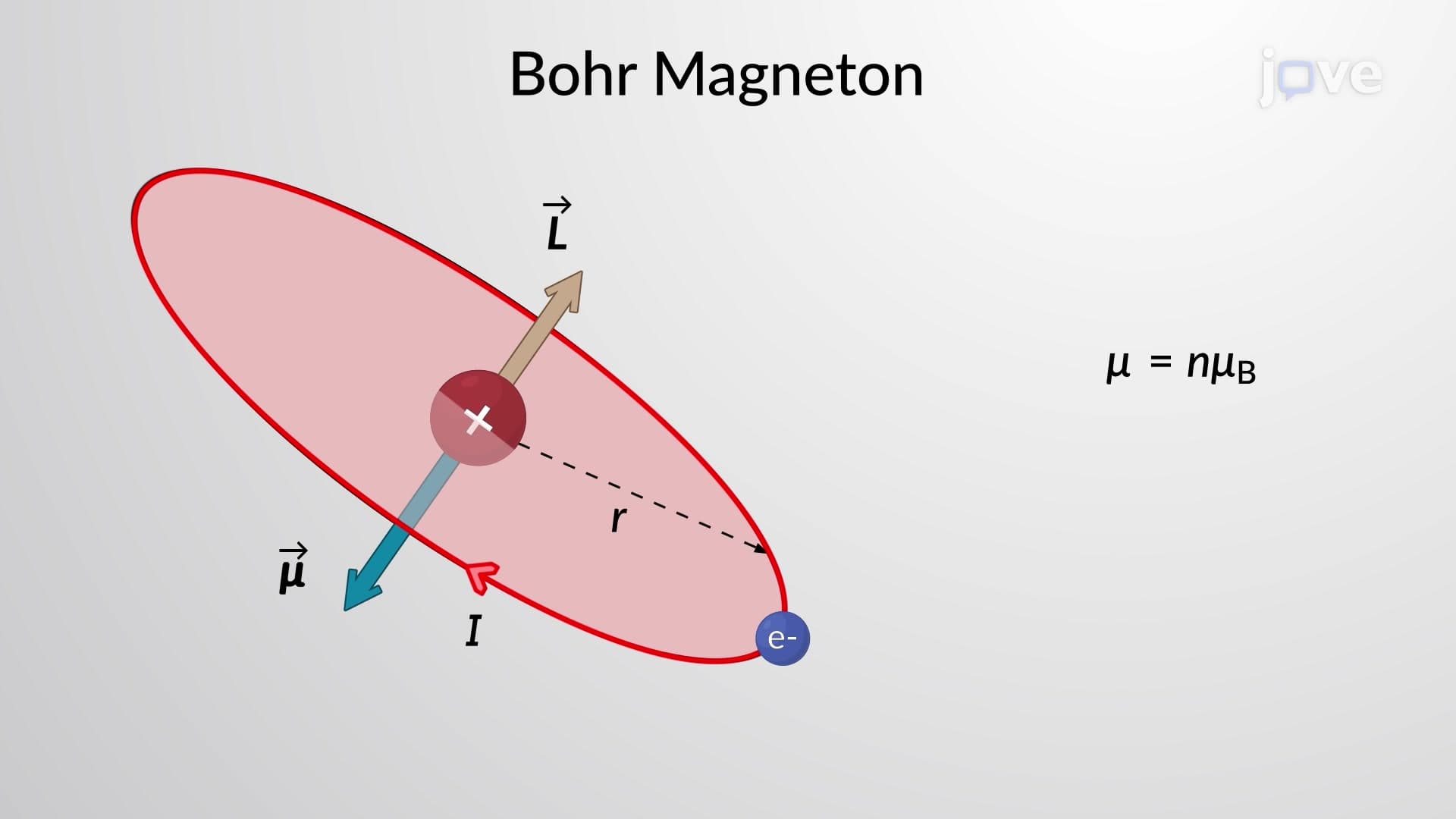
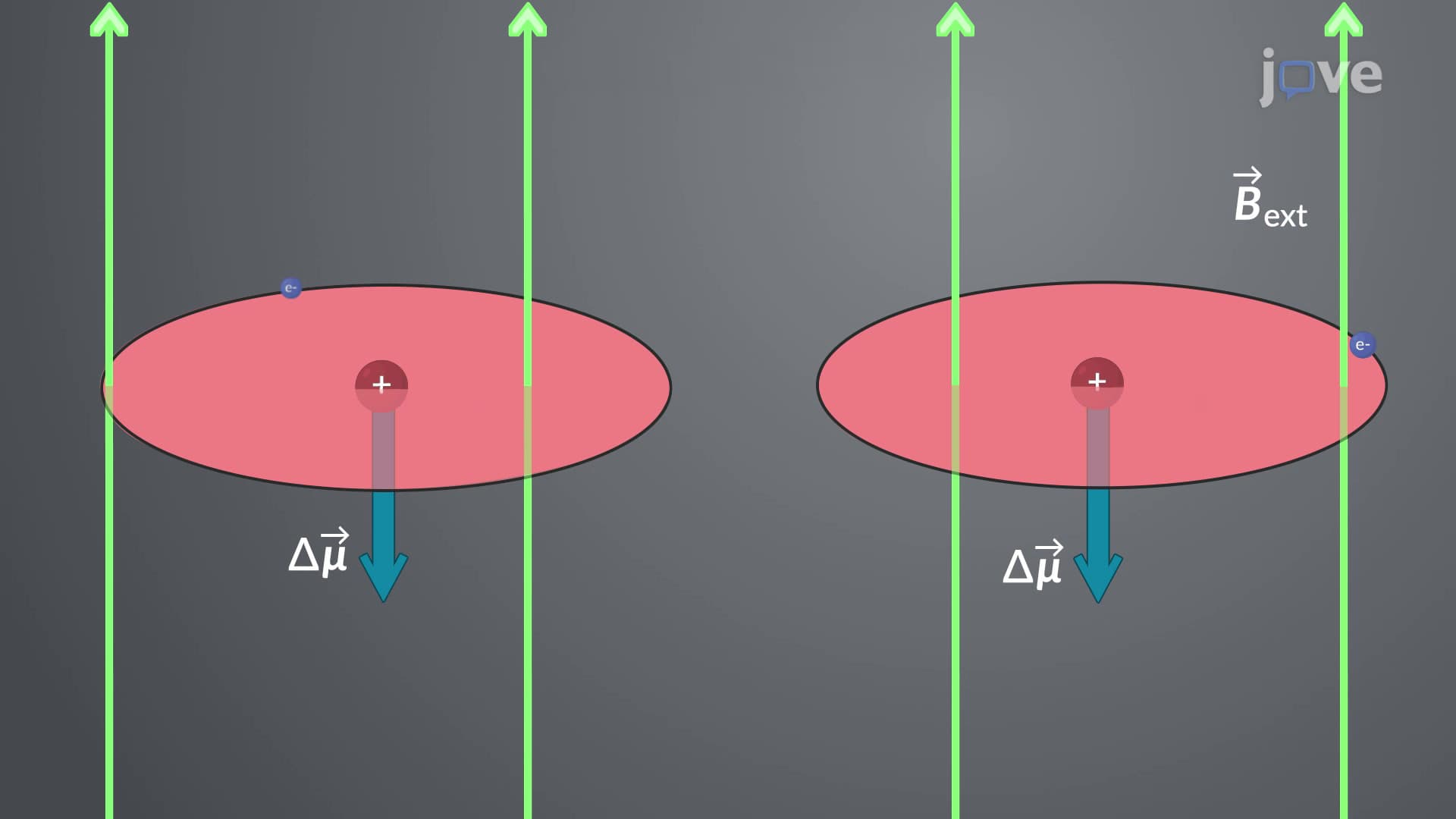
Free currents result from the actual motion of charge carriers-electrons flowing through copper wires or ions moving through electrolytes. These currents are controllable and represent the conventional electric current we manipulate in circuits. Bound currents, however, emerge from the quantum mechanical alignment of atomic magnetic dipoles within the material itself.
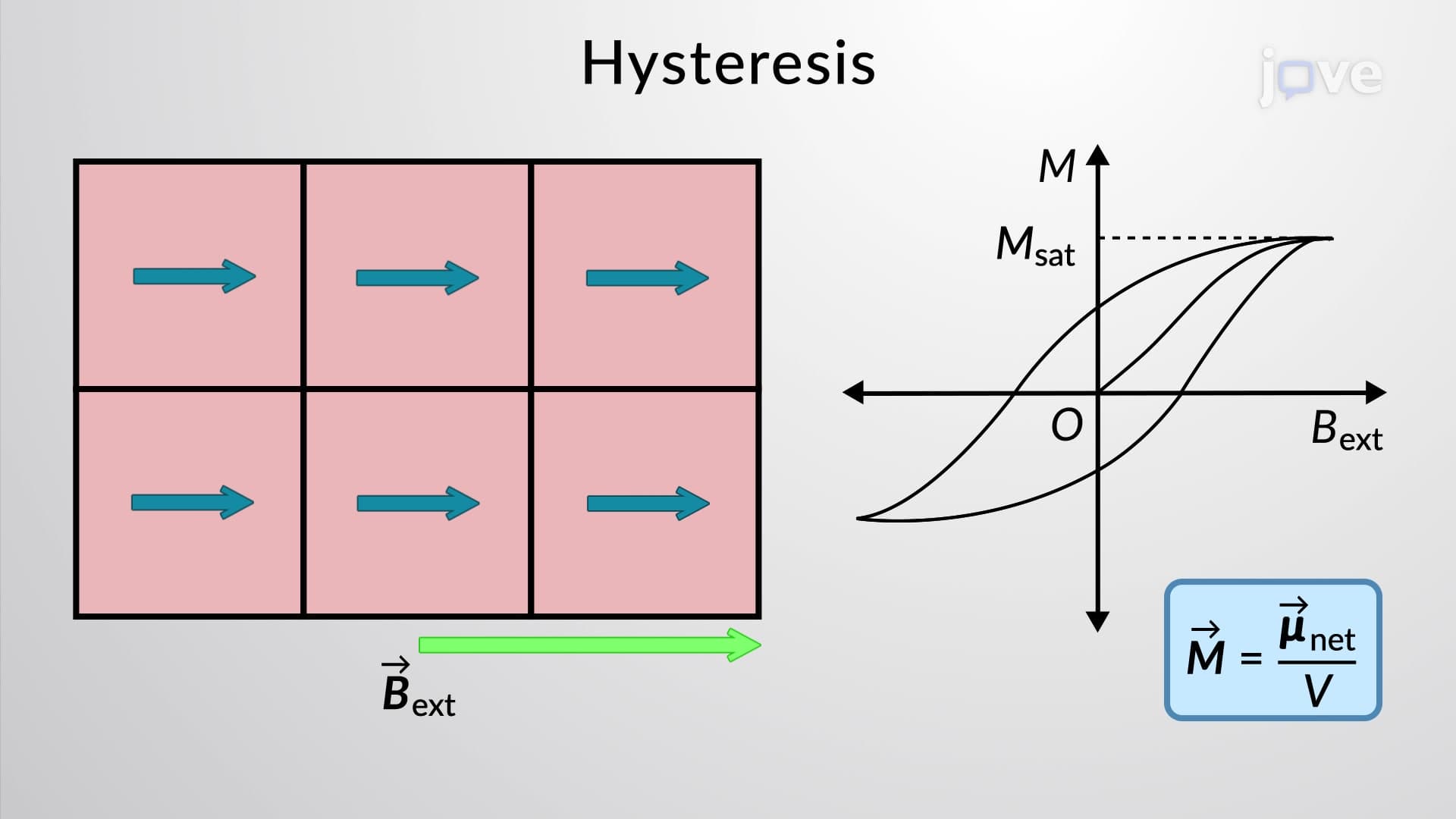
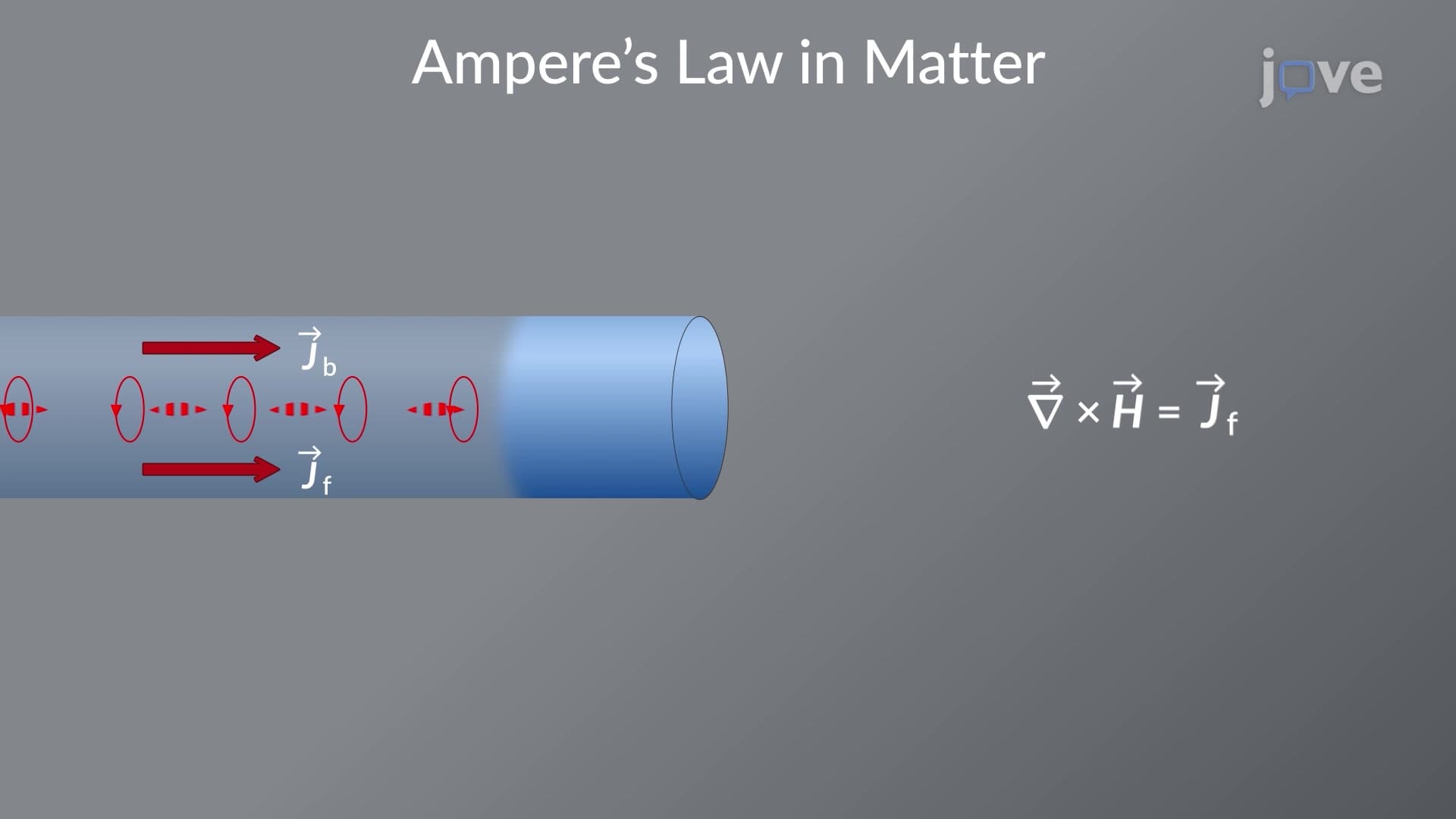
When a material becomes magnetized, its atomic magnetic moments align in preferred directions. This alignment creates microscopic current loops that, while not involving actual charge transport, produce magnetic effects equivalent to real currents. The bound volume current density J(bound) equals the curl of the magnetization vector M, mathematically expressed as J(bound) = curl(M).
The presence of bound currents necessitates rewriting Ampère's law. Instead of simply relating the curl of the magnetic field B to free current density, we must account for both current types: curl(B) = μ₀(J(free) + J(bound)). This creates computational challenges when analyzing practical devices.
To simplify calculations, physicists introduce the magnetic field intensity H, defined as H = B/μ₀ - M. This clever mathematical manipulation isolates the effects of free currents: curl(H) = J(free). The integral form states that the line integral of H around any closed loop equals the net free current passing through that loop.
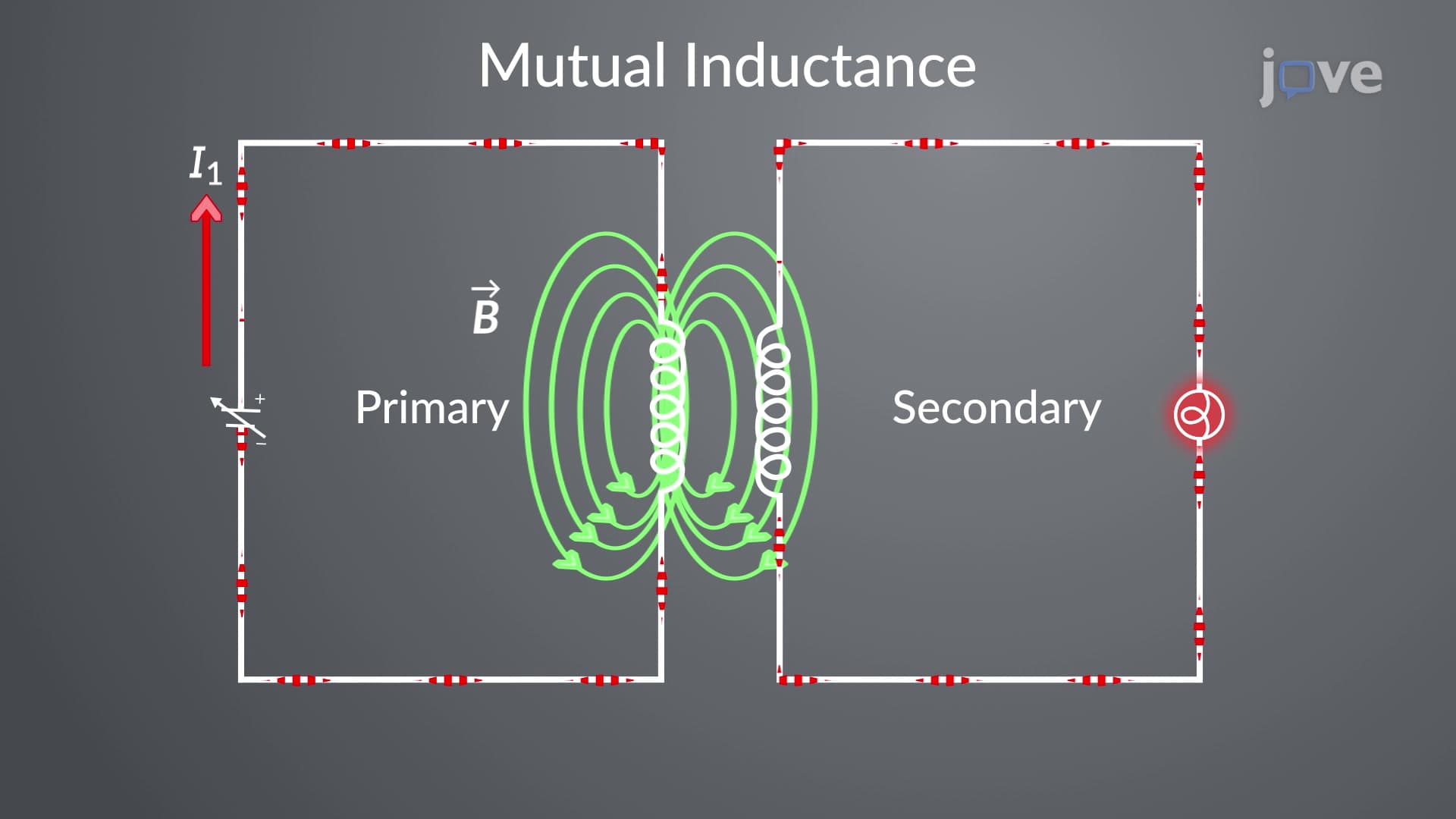
This concept appears frequently on AP Physics C exams and college-level electromagnetism courses at institutions like MIT and Stanford. Students encounter problems involving transformers, where understanding bound currents in iron cores is essential for calculating inductance and efficiency.
In medical technology, MRI machines rely on precisely controlled magnetic fields in tissue, where bound currents in water molecules and organic compounds affect image quality. Engineers at companies like General Electric must account for these effects when designing stronger, more precise imaging systems.
The analogy between H in magnetostatics and displacement field D in electrostatics helps students connect electromagnetic concepts. Just as D isolates free charges from bound charges in dielectrics, H isolates free currents from bound currents in magnetic materials, providing a unified framework for understanding electromagnetic phenomena in matter.
Related Micro-courses