Loading video…


 22 Concepts
 80.6K views

Video Summary: Amp Re S Law Magnetic Fields and Current
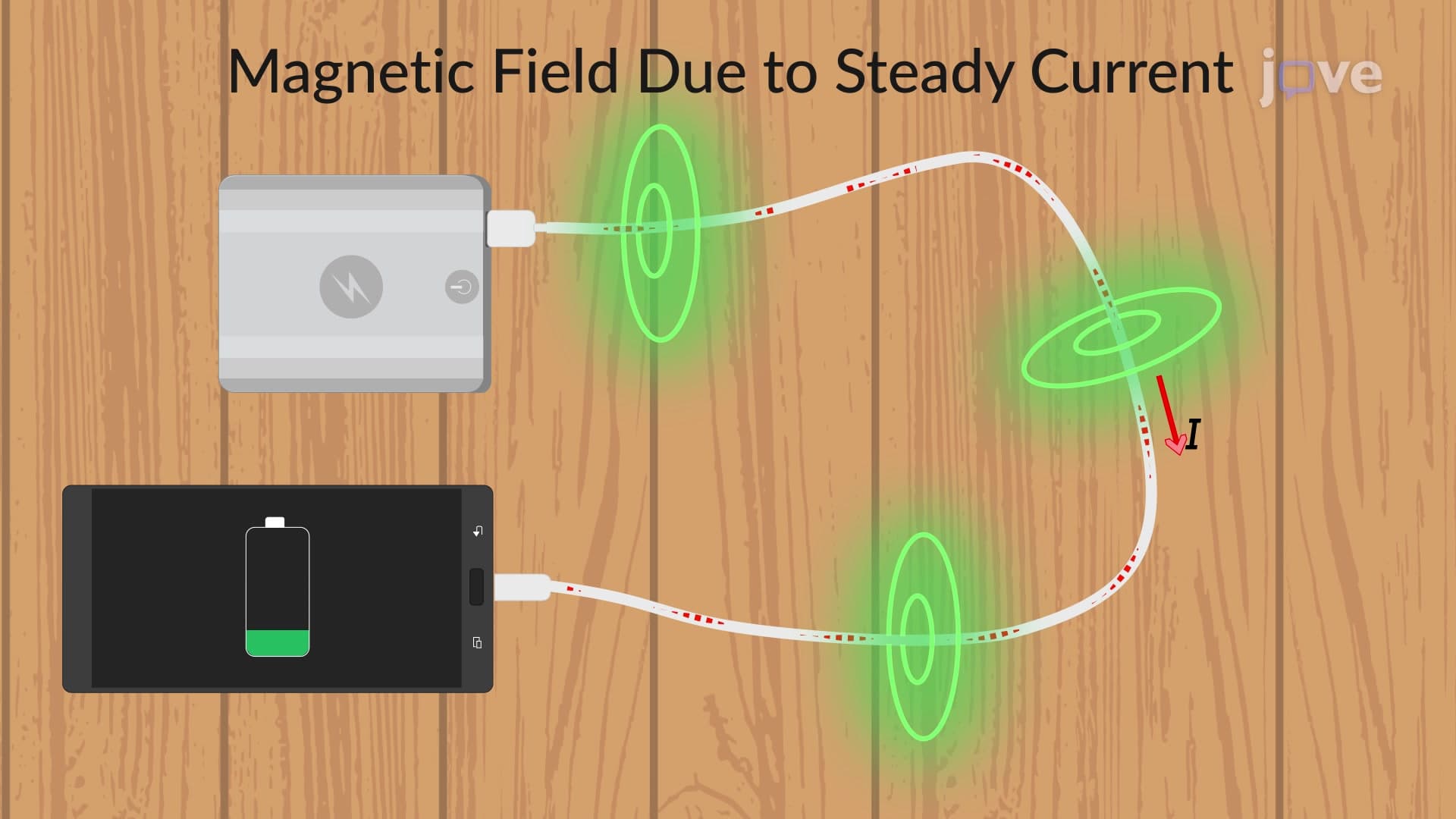
Why do power lines create magnetic fields that can interfere with sensitive medical equipment in hospitals? Ampère's Law: Magnetic Fields and Current explains the fundamental relationship between electric currents and the magnetic fields they generate. This principle governs everything from MRI machines at Johns Hopkins Hospital to the electromagnetic systems in Tesla vehicles. Watch the full video on JoVE Coach to master this concept with expert-led visuals and step-by-step explanations.
Ampère's Law: Magnetic Fields and Current represents one of Maxwell's four fundamental electromagnetic equations, establishing the mathematical relationship between steady electric currents and their associated magnetic fields. Named after French physicist André-Marie Ampère, this law provides a powerful tool for calculating magnetic fields in situations with high symmetry.
The mathematical expression of Ampère's Law states that the line integral of the magnetic field B around any closed path equals μ₀ times the net current enclosed by that path: ∮B·dl = μ₀I(enclosed). Here, μ₀ represents the permeability of free space (4π × 10⁻⁷ T·m/A), a fundamental physical constant that characterizes how magnetic fields propagate through vacuum.
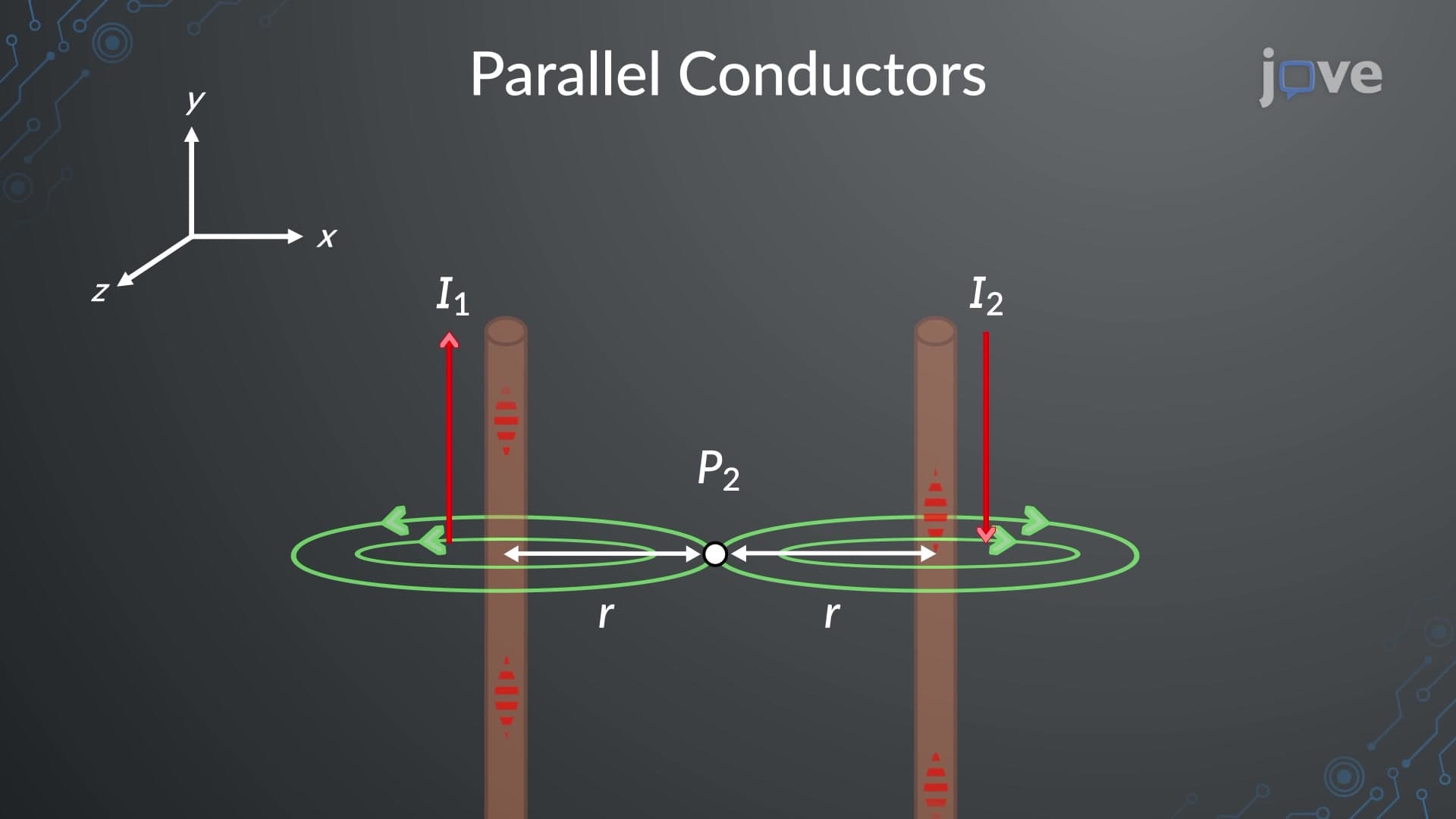
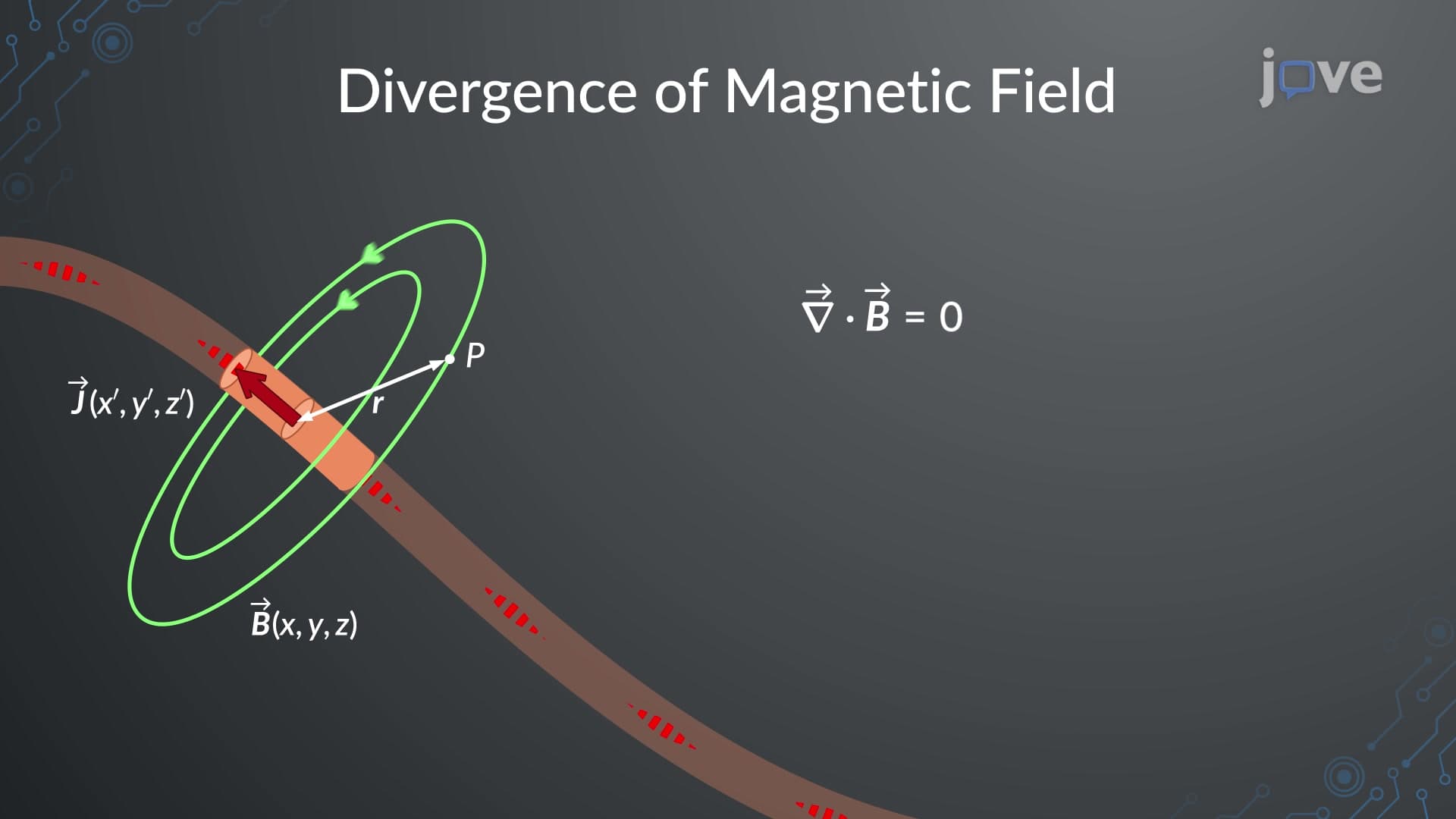
This equation reveals that magnetic fields form closed loops around current sources, unlike electric fields that radiate outward from charges. For AP Physics C students, understanding this distinction proves crucial for electromagnetic field problems on the College Board exam.
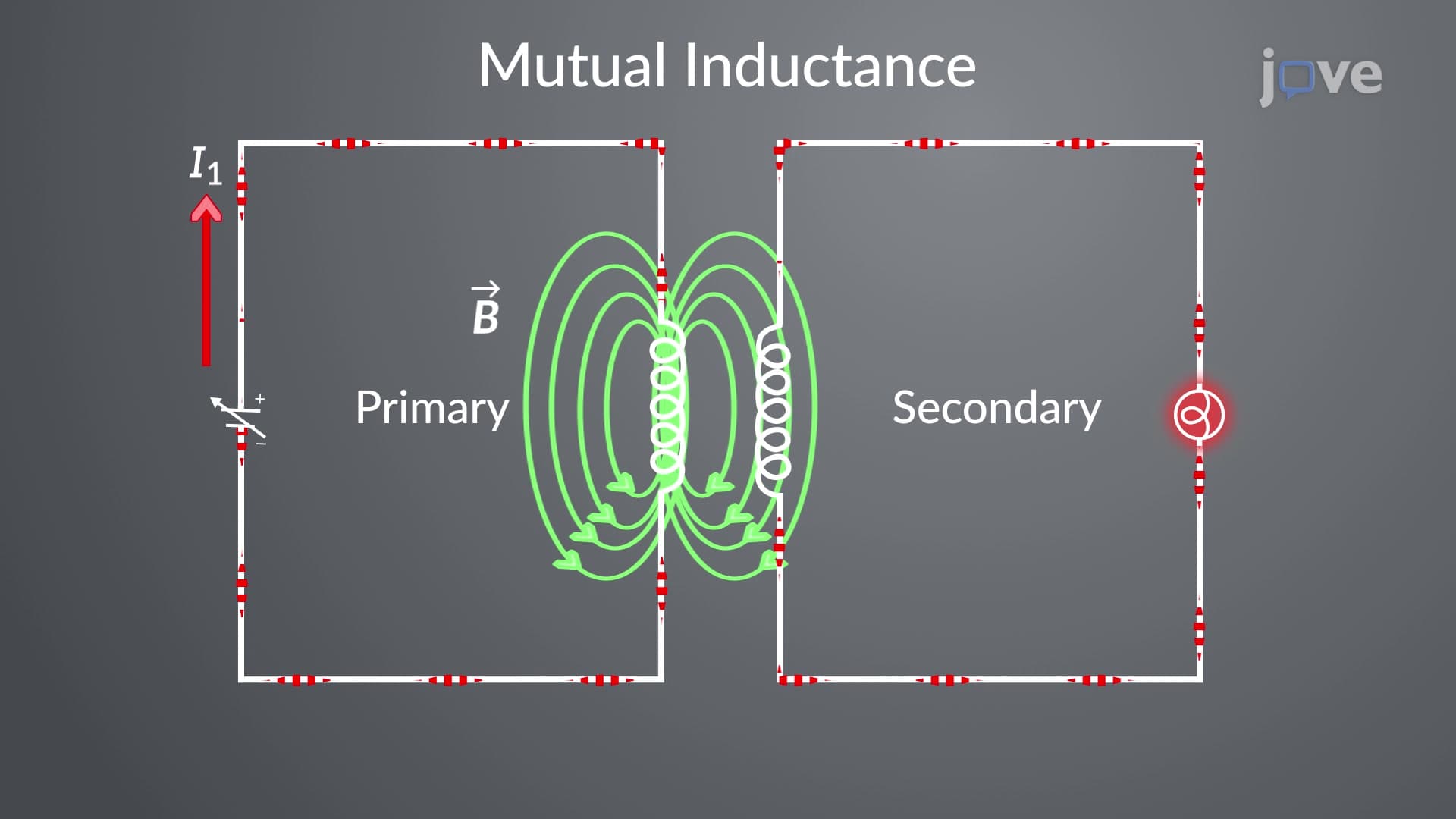
Ampère's Law governs the operation of countless devices in American infrastructure. Electric power transmission lines throughout the US grid create magnetic fields that engineers must consider when designing substations. The principle underlies the function of transformers at electrical utilities like Con Edison in New York, where changing currents in primary coils create magnetic fields that induce voltages in secondary coils.
Medical applications include MRI scanners at major US hospitals, where precisely controlled magnetic fields generated by superconducting coils create the strong, uniform fields necessary for high-resolution imaging. Similarly, particle accelerators at Fermilab near Chicago use Ampère's Law principles to design electromagnets that guide particle beams around circular paths.
When approaching Ampère's Law problems on standardized tests like the MCAT or SAT Physics Subject Test, students should first identify symmetry in the current configuration. For straight wires, cylindrical symmetry suggests using circular Amperian loops. The magnetic field magnitude remains constant along such loops, simplifying the line integral calculation.
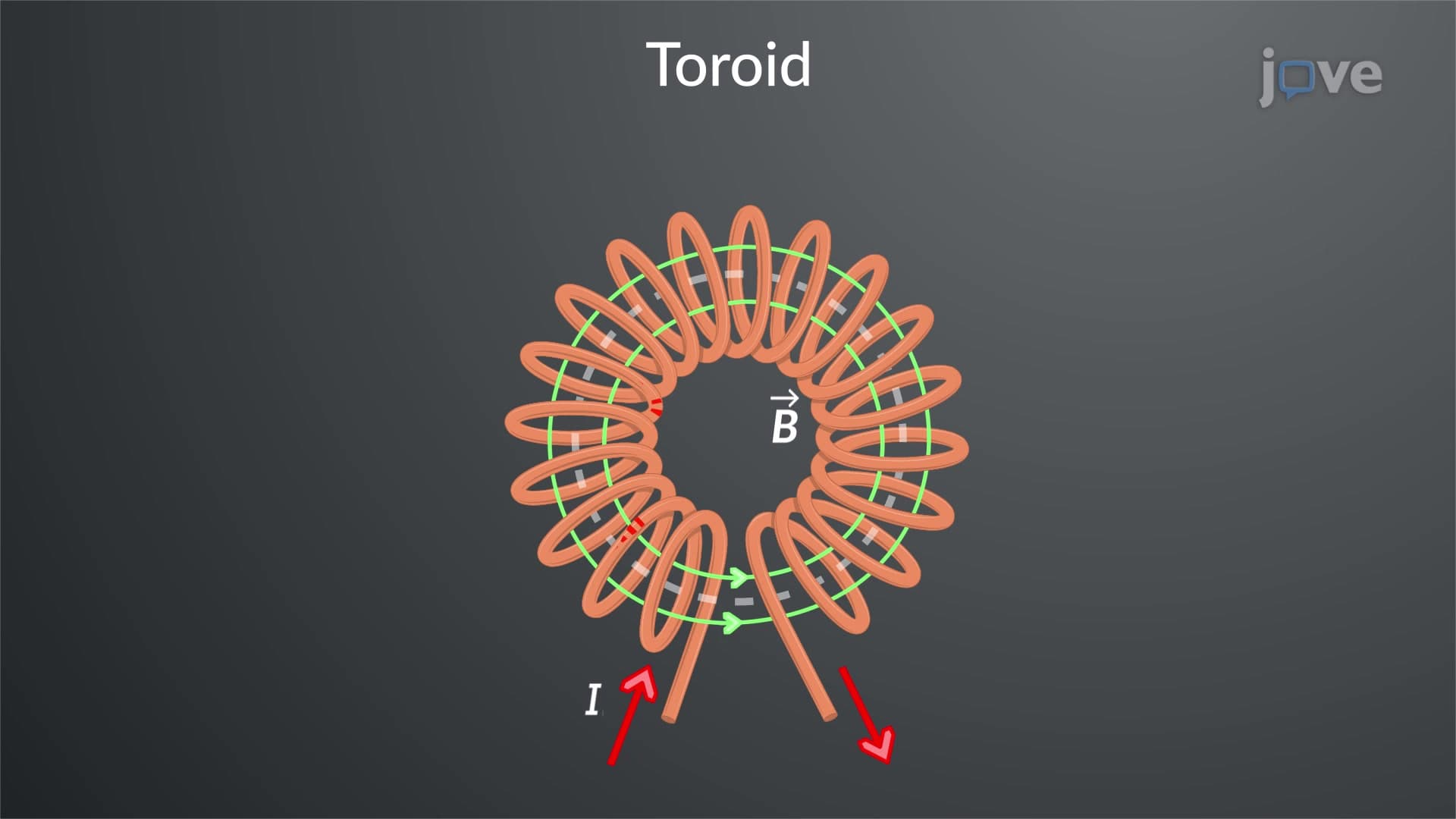
For exam preparation, focus on three key scenarios: infinite straight wires, solenoids, and toroidal coils. These configurations appear frequently in college physics courses and demonstrate Ampère's Law's power when symmetry exists. Remember that the law applies only to steady currents-time-varying currents require Maxwell's more general formulation.
Related Micro-courses