Loading subject page…


80,629 views

Video Summary: Biot Savart Law Problem Solving Explained
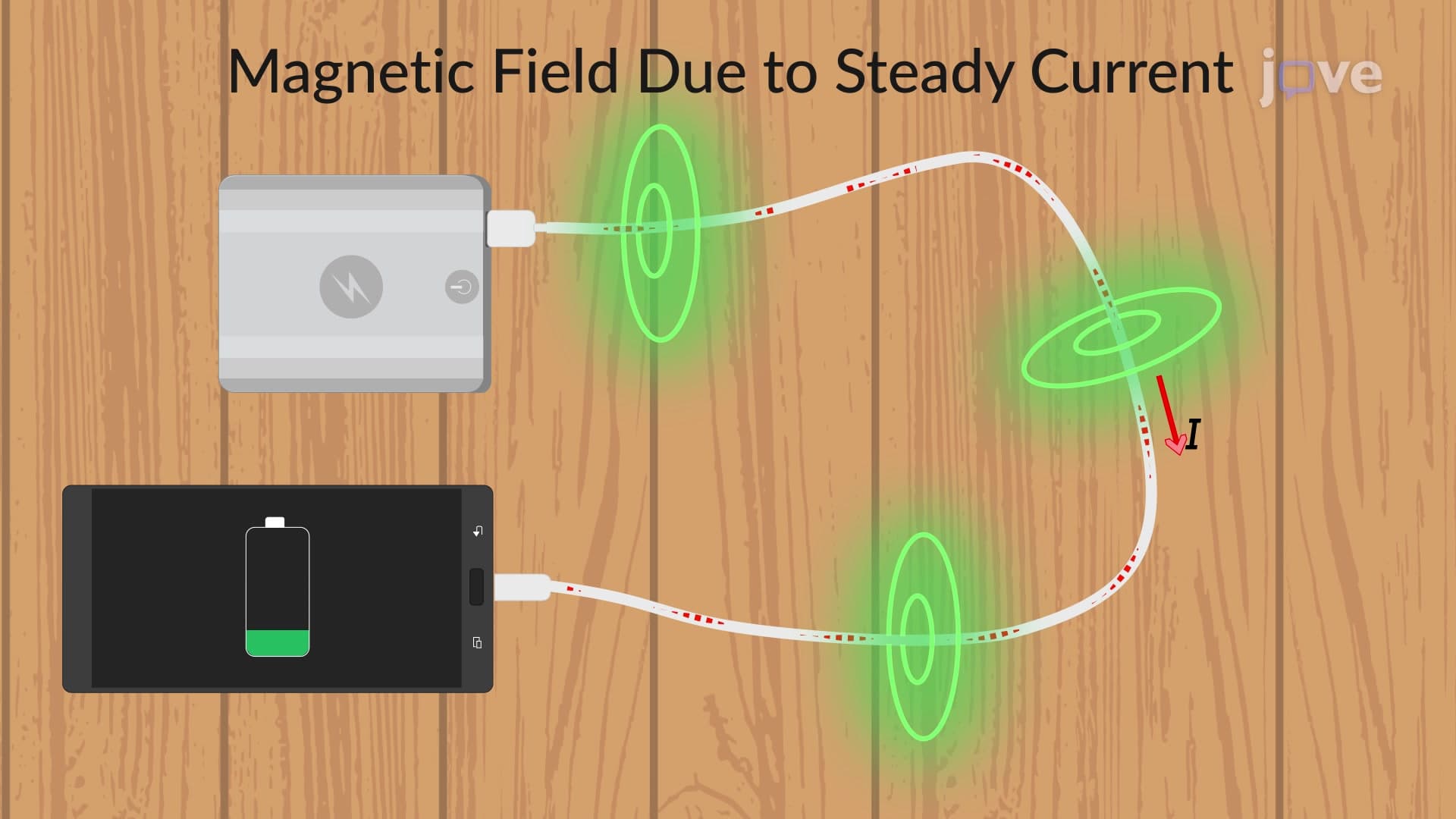
Ever wonder how your phone charger creates invisible magnetic fields around you? Biot Savart law problem solving reveals the precise magnetic field strength generated by current-carrying wires, like the USB cable connecting your power bank to your smartphone. Through a practical example involving a 1-ampere current and calculating the magnetic field at a specific distance and angle, this Biot Savart Law Problem Solving Explained demonstration shows how physicists quantify electromagnetic phenomena in everyday devices. Watch the full video on JoVE Coach to master this concept with expert-led visuals and step-by-step explanations.
Biot Savart Law Problem Solving Explained forms the cornerstone of electromagnetic field theory, providing students with the mathematical tools to calculate magnetic fields generated by current-carrying conductors. Named after French physicists Jean-Baptiste Biot and Félix Savart, this law quantifies the magnetic field contribution from each infinitesimal current element, making it essential for AP Physics C: Electricity and Magnetism and undergraduate physics courses at universities like MIT and Stanford.
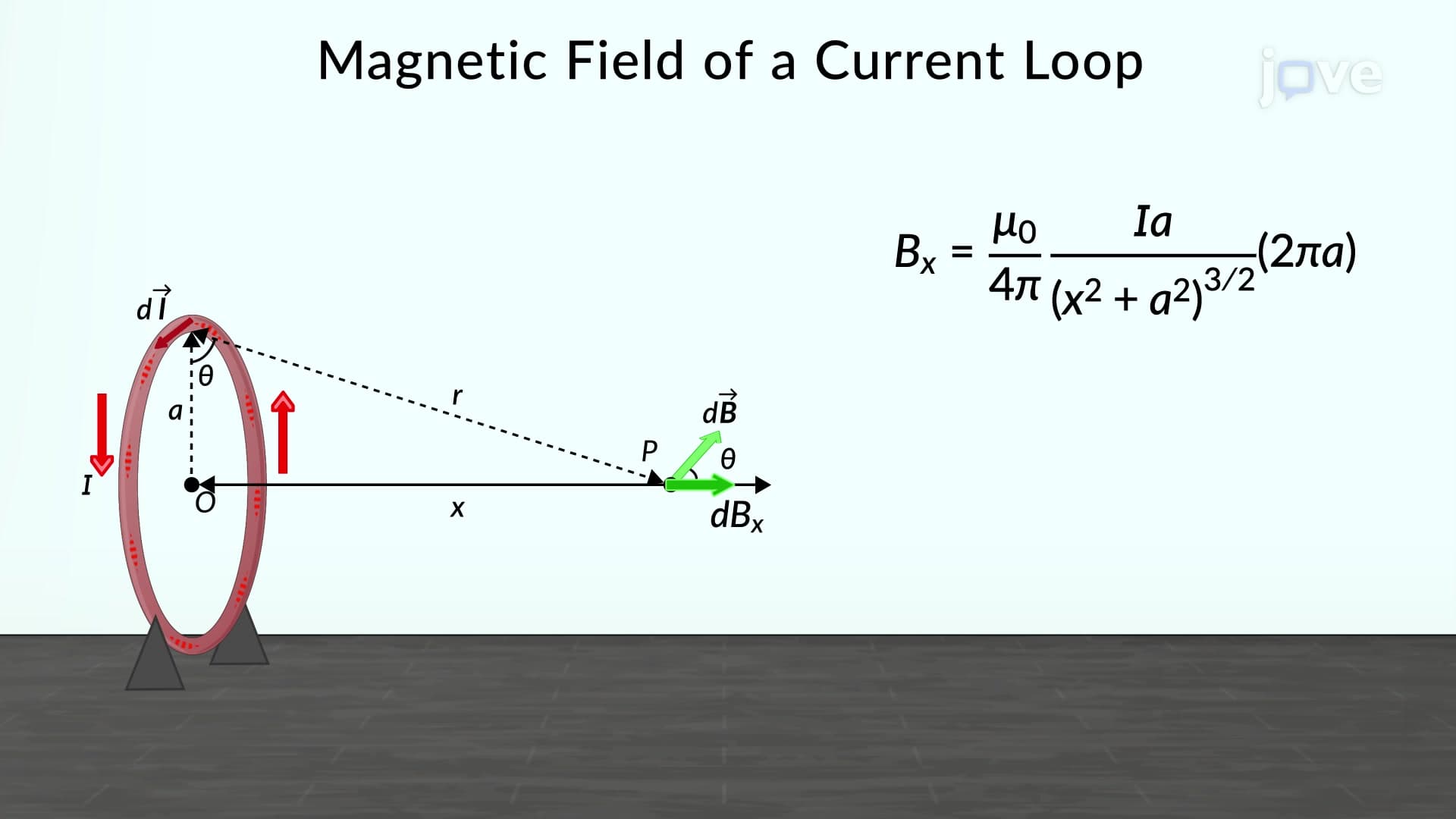
The Biot-Savart law states that the magnetic field dB produced by a current element Idl at a distance r is given by: dB = (μ₀/4π) × (I dl × r̂)/r². Students tackling biot savart law problem solving must master three key components: the permeability of free space (μ₀ = 4π × 10⁻⁷ T·m/A), the current magnitude and direction, and the geometric relationship between the current element and field point.
When solving problems like the power bank example, students learn to substitute known values systematically. With a 1-ampere current flowing through a 1-millimeter element, positioned 20 centimeters from point P at a 45-degree angle, the calculation yields approximately 1.8 nanotesla. This methodical approach mirrors the problem-solving strategies emphasized in MCAT physics sections and college-level electromagnetic theory courses.
How biot savart law problem solving works extends far beyond textbook exercises into practical engineering applications. Electrical engineers at companies like General Electric and Tesla use these principles to design efficient motors, transformers, and wireless charging systems. The magnetic fields calculated through Biot-Savart analysis determine optimal conductor spacing in power transmission lines and help minimize electromagnetic interference in sensitive electronic devices.
Understanding these calculations proves crucial for students pursuing careers in electrical engineering, medical physics, or telecommunications. Graduate programs at institutions like UC Berkeley and Georgia Tech expect incoming students to demonstrate proficiency in electromagnetic field calculations, making biot savart law problem solving tutorial skills essential for academic success and professional development in STEM fields.
Related Micro-courses