Loading video…


 22 Concepts
 80.6K views

Video Summary: Divergence and Curl of Magnetic Field Explained
Ever wondered why you can't isolate a magnetic north pole from its south pole, no matter how many times you break a magnet? The divergence and curl of magnetic field equations reveal this fundamental truth about magnetism. From MRI machines at Johns Hopkins Hospital to particle accelerators at Fermilab, these mathematical principles govern how magnetic fields behave in space. Watch the full video on JoVE Coach to master this concept with expert-led visuals and step-by-step explanations.
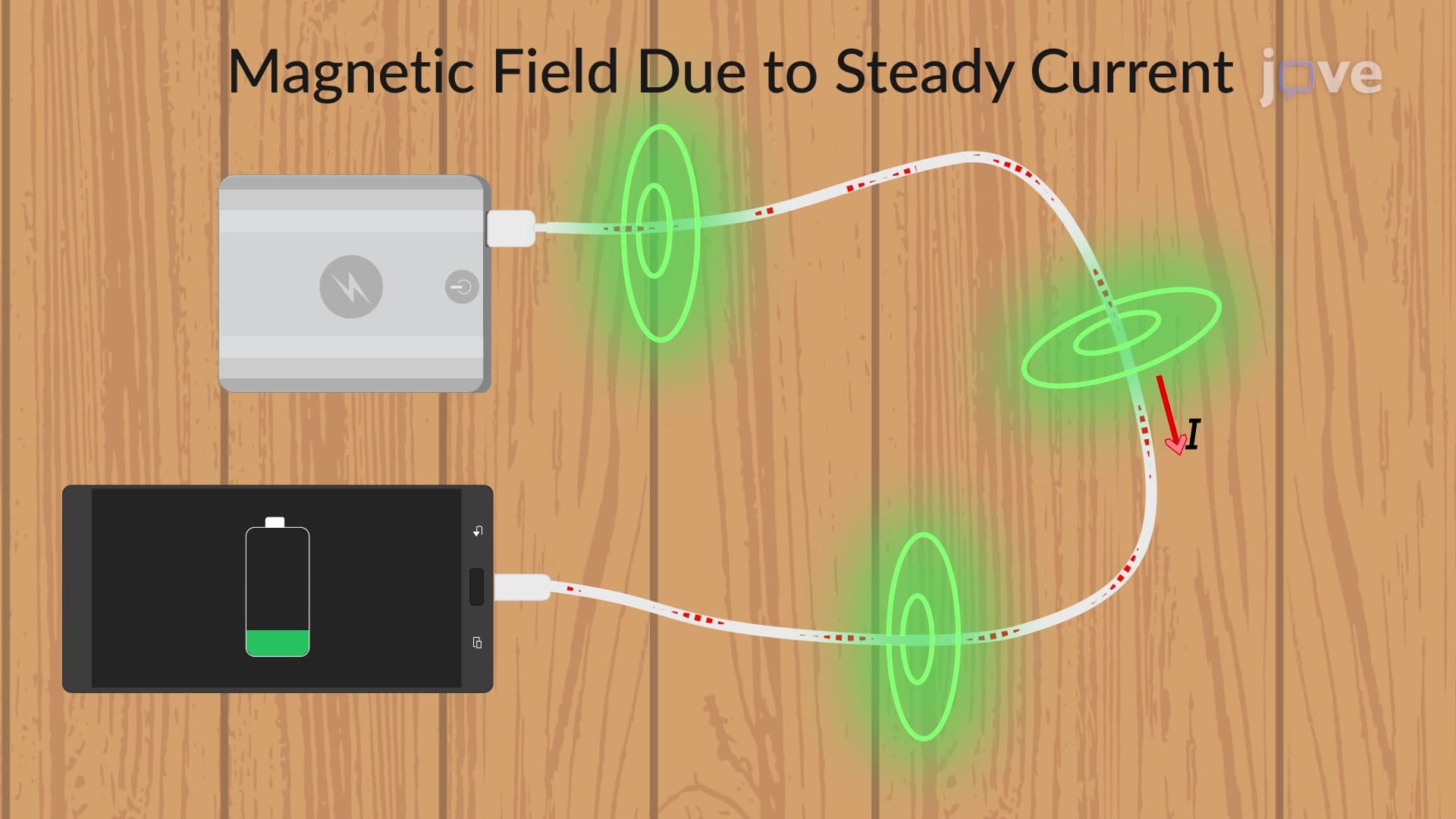
The mathematical description of magnetic fields relies on two fundamental vector operations: divergence and curl. Unlike electric fields, which can originate from isolated charges, magnetic fields exhibit unique properties that distinguish them in electromagnetic theory. The divergence of a magnetic field equals zero everywhere, while its curl relates directly to current density through Ampère's Law.
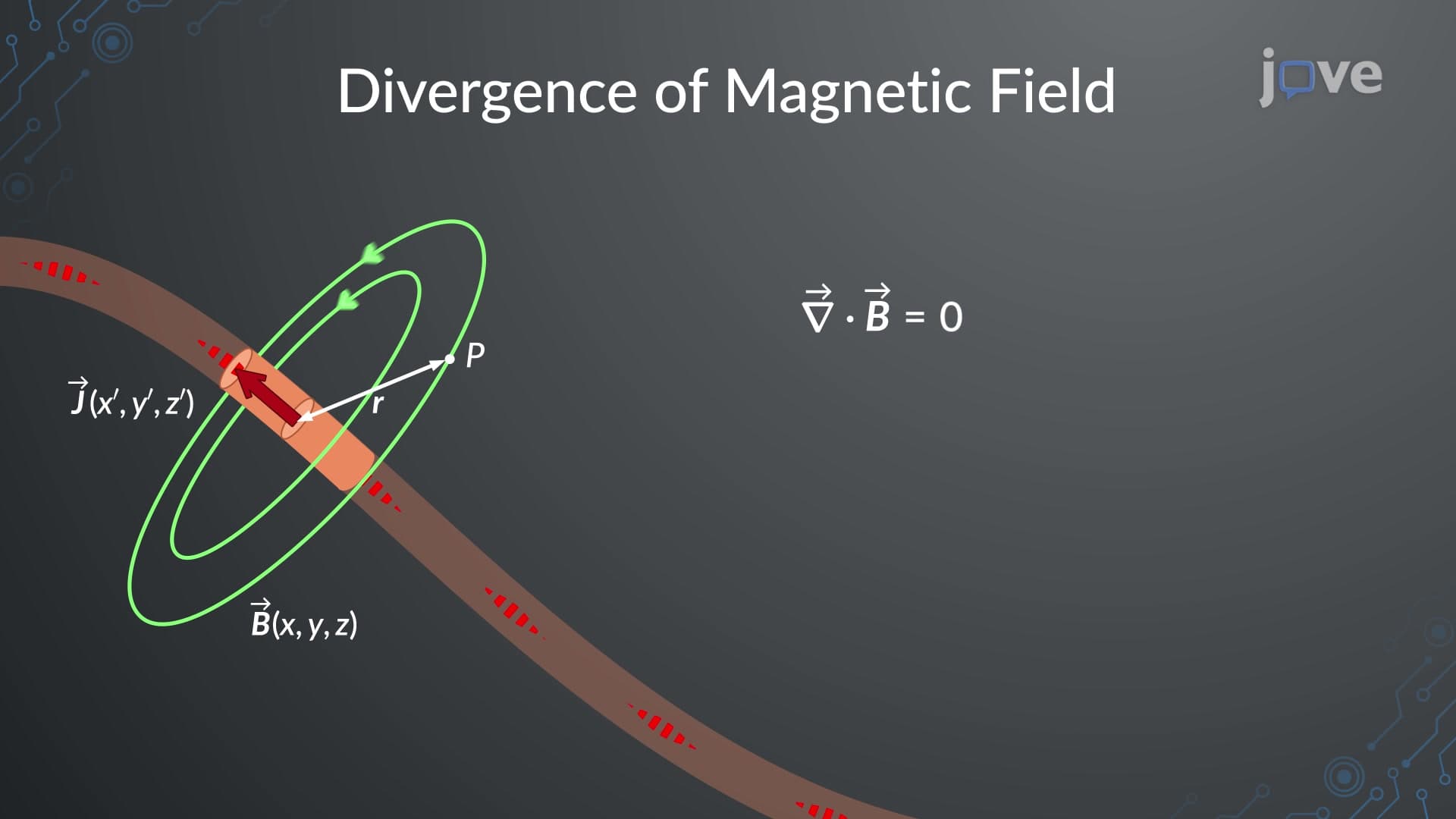
Starting with Biot-Savart's Law, we can mathematically prove that ∇ · B = 0. This law expresses magnetic field B in terms of volume current density J. When applying the divergence operator to both sides, vector calculus identities simplify the expression significantly. The key insight emerges when recognizing that the curl of any gradient equals zero, leading directly to the conclusion that magnetic field divergence vanishes.
This result has profound physical implications. Since ∇ · B = 0 everywhere, magnetic field lines form closed loops-they cannot begin or end at isolated points. This mathematical fact explains why breaking a bar magnet always produces two new magnets, each with both north and south poles. Students preparing for AP Physics C or college electromagnetics courses must understand this concept thoroughly, as it appears frequently in both multiple-choice and free-response questions.
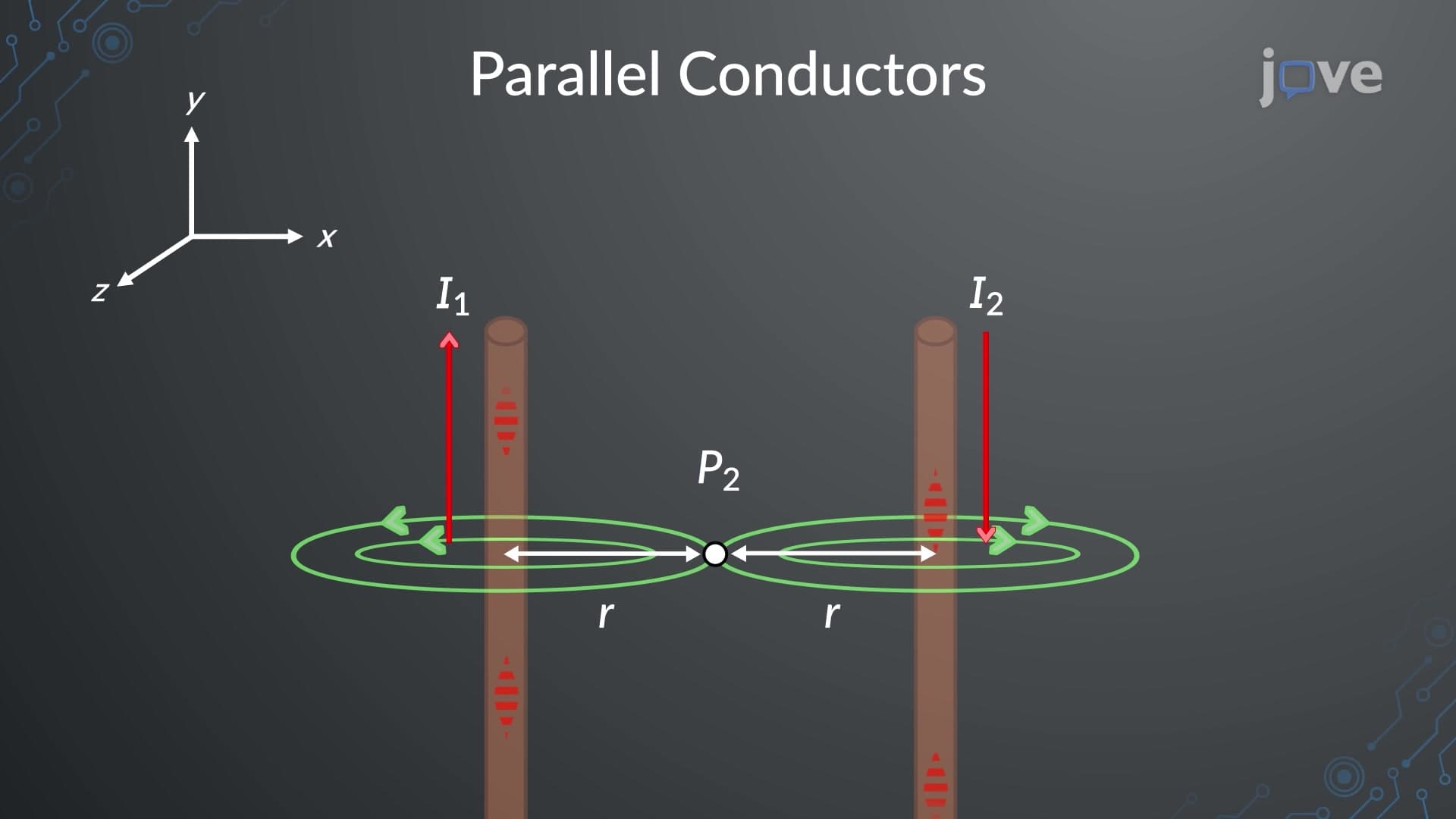
The curl of magnetic fields connects to current density through Ampère's Law. In integral form, this law states that the line integral of B around any closed path equals μ₀ times the enclosed current. Using Stokes' theorem, this integral relationship transforms into the differential form: ∇ × B = μ₀J.
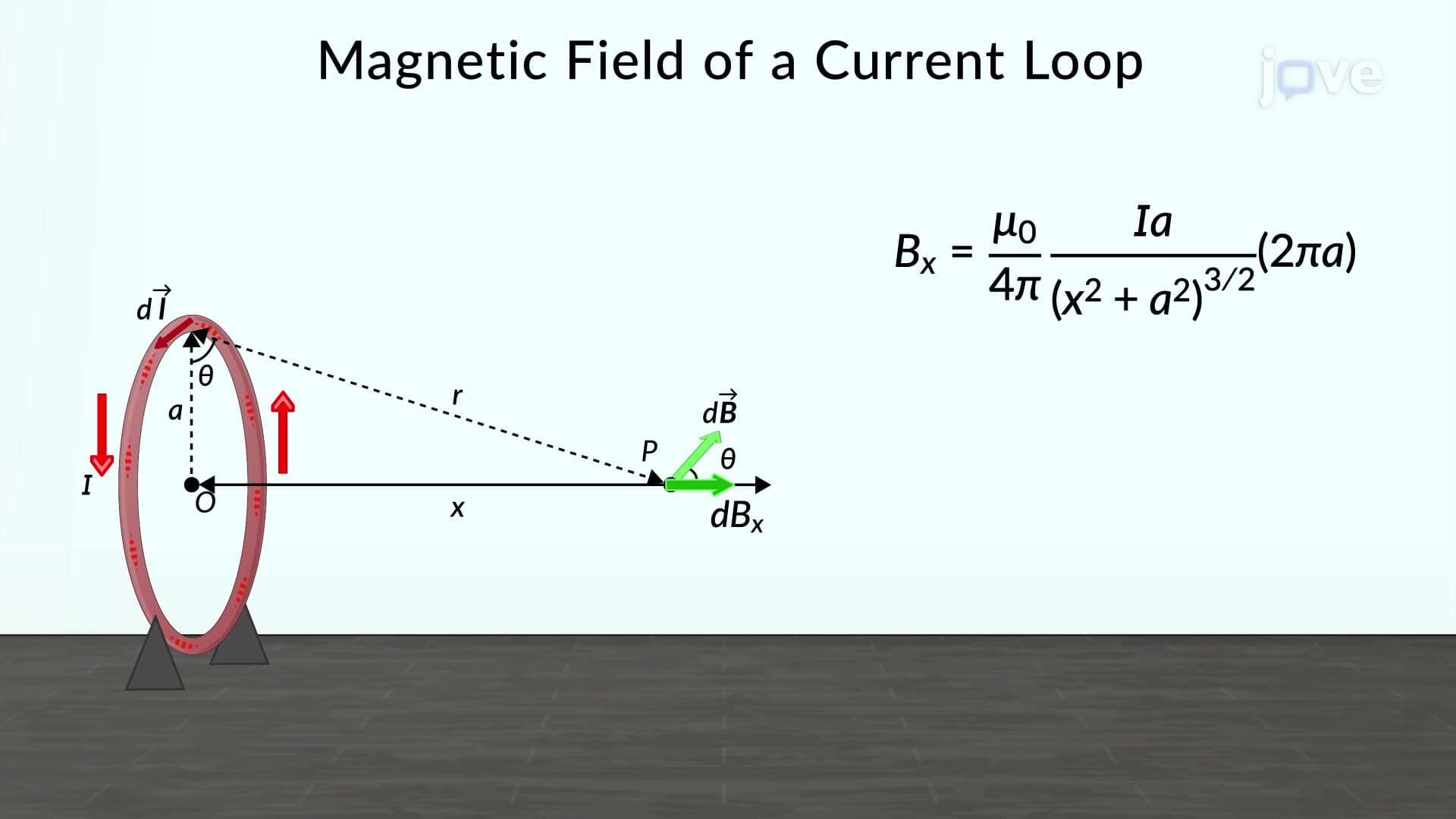
This differential equation governs magnetic field behavior around current-carrying conductors. At Stanford's Linear Accelerator Center, engineers apply these principles when designing magnetic focusing systems for particle beams. The curl equation determines how strong the magnetic fields become near high-current electromagnets and helps predict field patterns in complex geometries.
These mathematical relationships appear throughout modern technology. MRI machines at the Mayo Clinic rely on precisely controlled magnetic field gradients, designed using divergence and curl principles. The superconducting magnets generate uniform fields while gradient coils create spatial variations essential for image formation.
For MCAT preparation, students encounter these concepts in physics passages about electromagnetic devices. College physics midterms typically include problems requiring calculation of magnetic field properties using both divergence and curl operations. Understanding the physical meaning behind the mathematics-not just memorizing formulas-proves crucial for success in advanced electromagnetics courses.
Related Micro-courses