Loading subject page…


80,630 views


Video Summary: Magnetic Field Due to a Explained
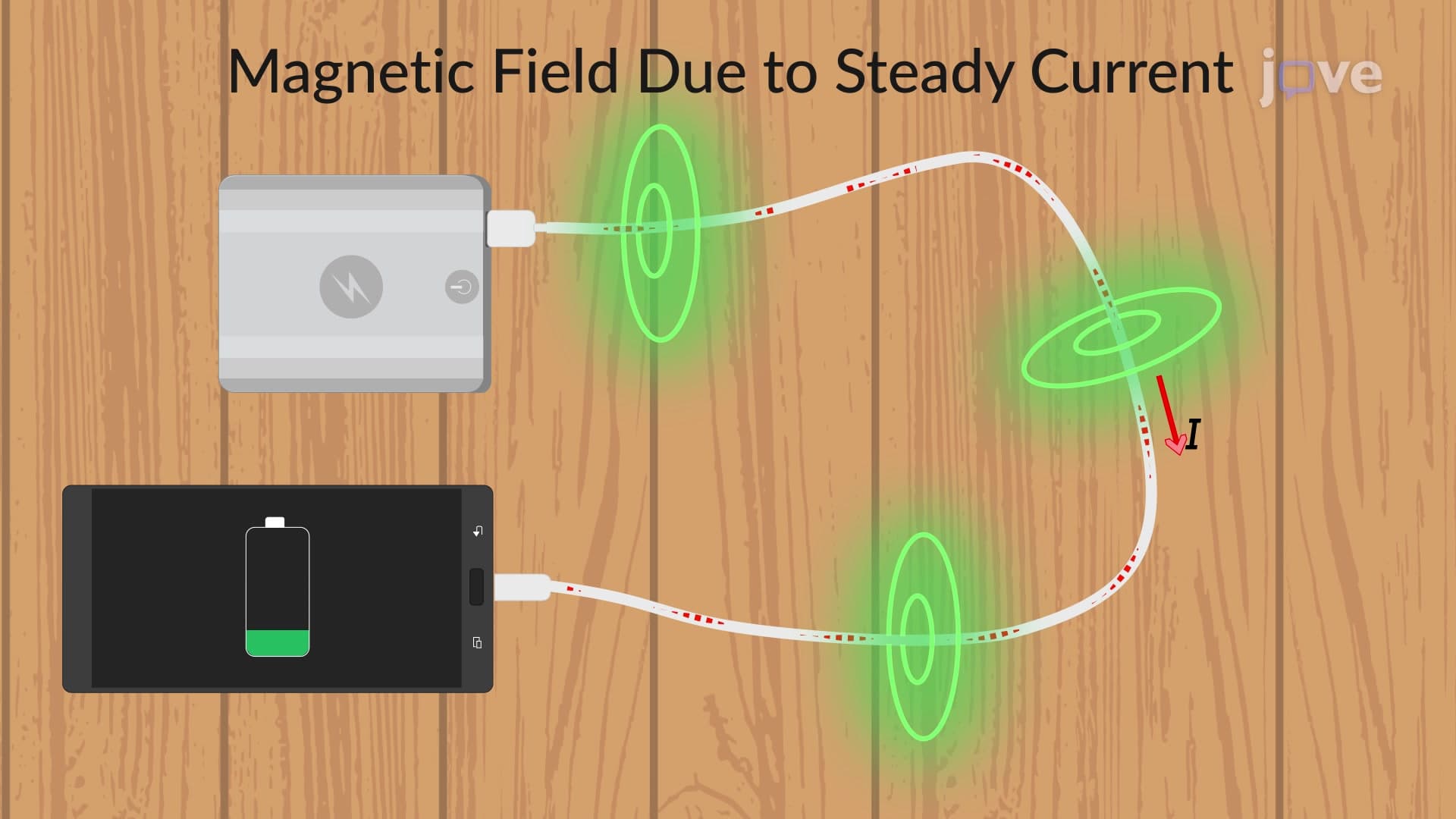
Ever wonder why your compass spins wildly near power lines? The magnetic field due to a straight current-carrying wire creates invisible force loops that extend infinitely outward, following precise mathematical patterns derived from the Biot-Savart law. Just like the magnetic field surrounding high-voltage transmission lines across the US electrical grid, this fundamental electromagnetic phenomenon demonstrates how moving electric charges generate magnetic forces in concentric circles around any current-carrying conductor. Watch the full video on JoVE Coach to master this concept with expert-led visuals and step-by-step explanations.
When electric current flows through a straight wire, it generates a magnetic field due to a moving charge distribution that extends throughout the surrounding space. This fundamental electromagnetic phenomenon underlies countless technologies, from the power grid supplying electricity to American homes to the magnetic resonance imaging (MRI) machines in US hospitals.
The Biot-Savart law provides the mathematical framework for calculating magnetic fields produced by current-carrying conductors. For an infinitely long straight wire, we consider small current elements dx along the wire's length. Each element contributes to the magnetic field at point P according to the relationship dB = (μ₀I dx sin θ)/(4π r²), where μ₀ represents the permeability of free space, I is the current, and r is the distance from the current element to point P.
The geometric relationships become crucial for integration. Using the Pythagorean theorem, the distance from any current element to point P can be expressed in terms of the perpendicular distance and position along the wire. The angle θ between the current element and the line connecting it to point P follows trigonometric relationships that simplify during integration.
Integrating contributions from all current elements along an infinite wire (from zero to infinity) yields the final expression: B = (μ₀I)/(2πr). This elegant result shows that magnetic field strength is directly proportional to current and inversely proportional to distance from the wire. This relationship appears frequently on AP Physics exams and college electromagnetism courses across American universities.
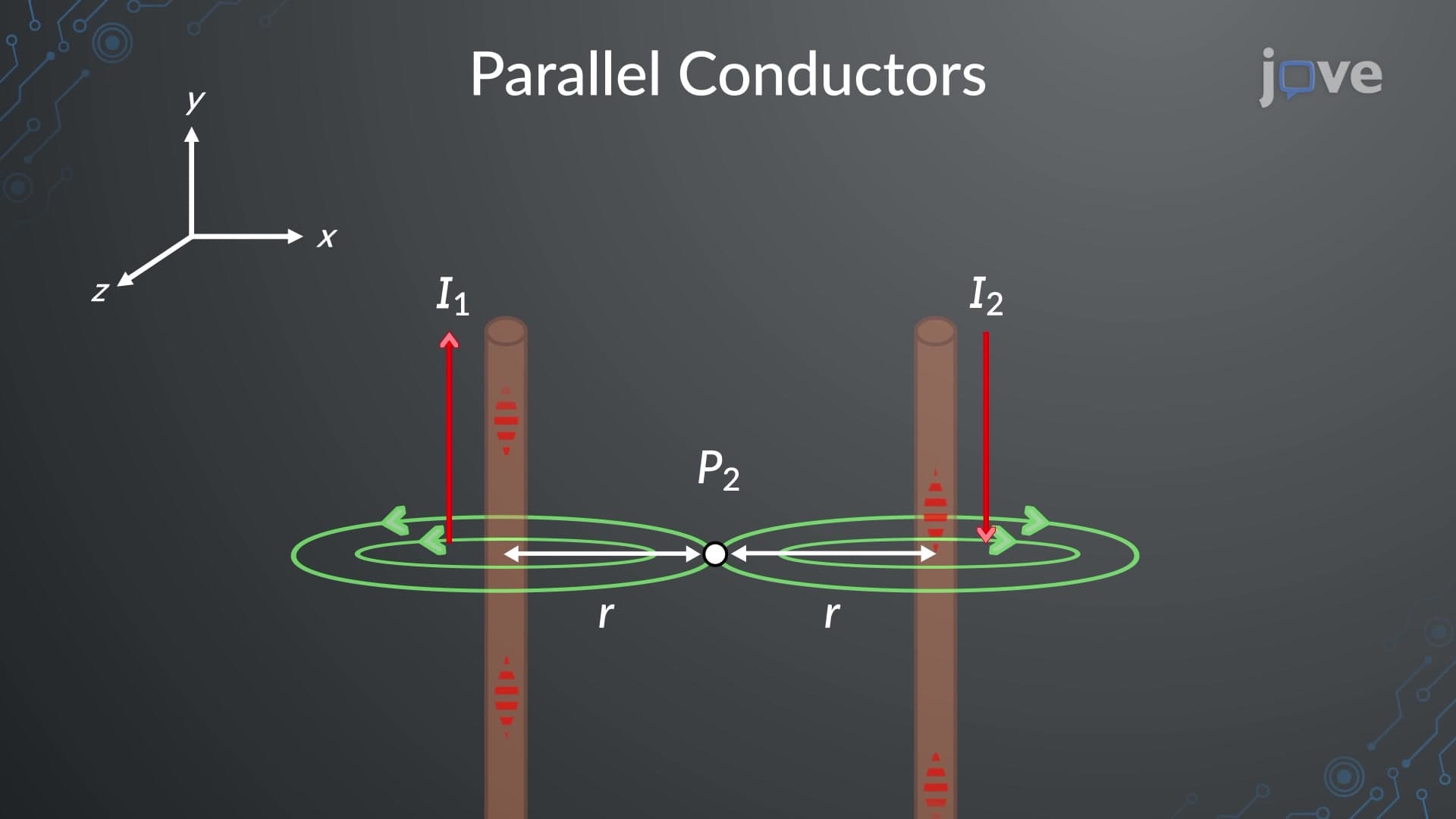
The right-hand rule provides an intuitive method for determining magnetic field direction. Point your thumb along the current direction, and your fingers naturally curl in the direction of the magnetic field lines. These field lines form concentric circles around the wire, with closer spacing indicating stronger field strength near the conductor and wider spacing showing weaker fields at greater distances.
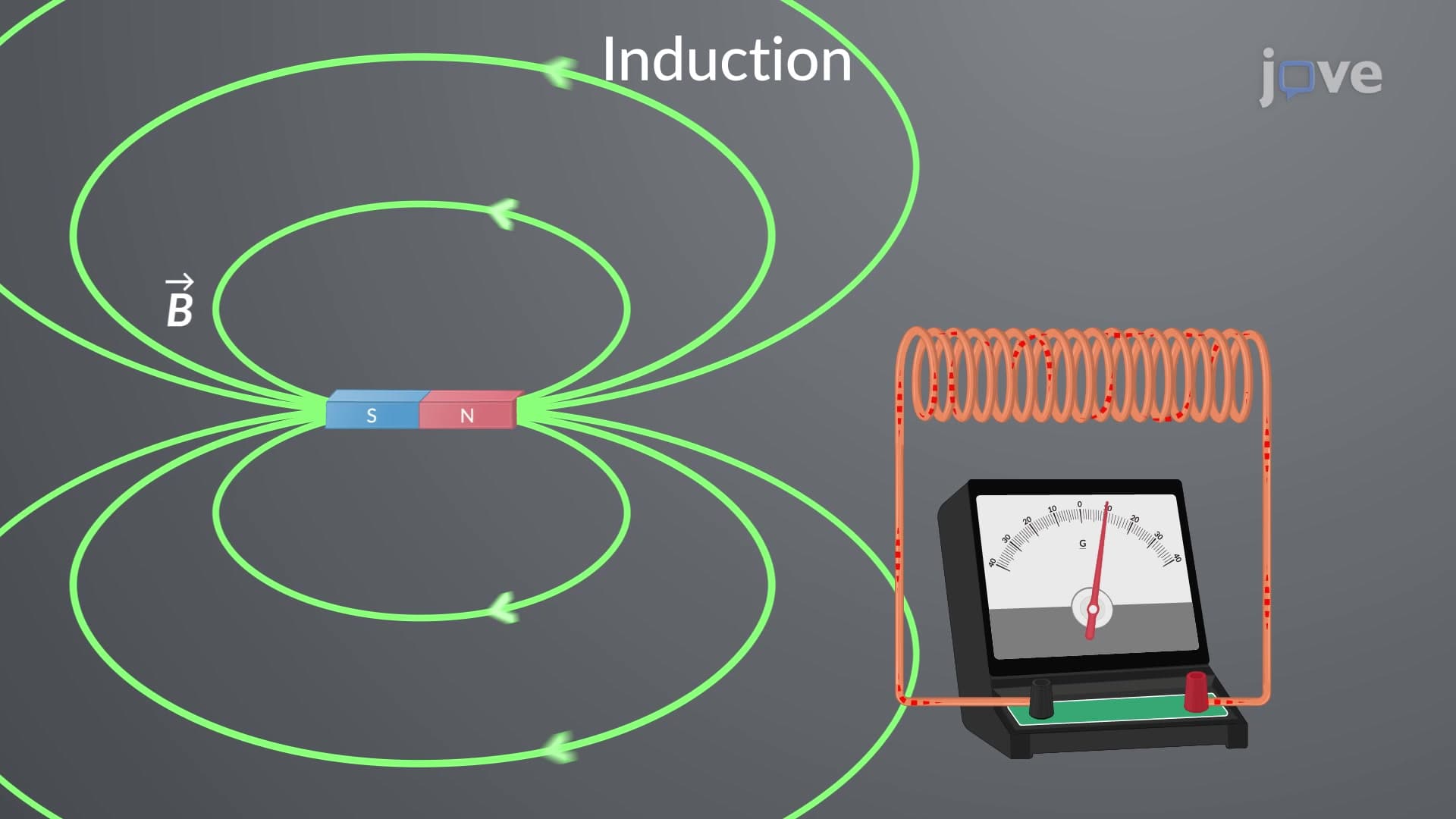
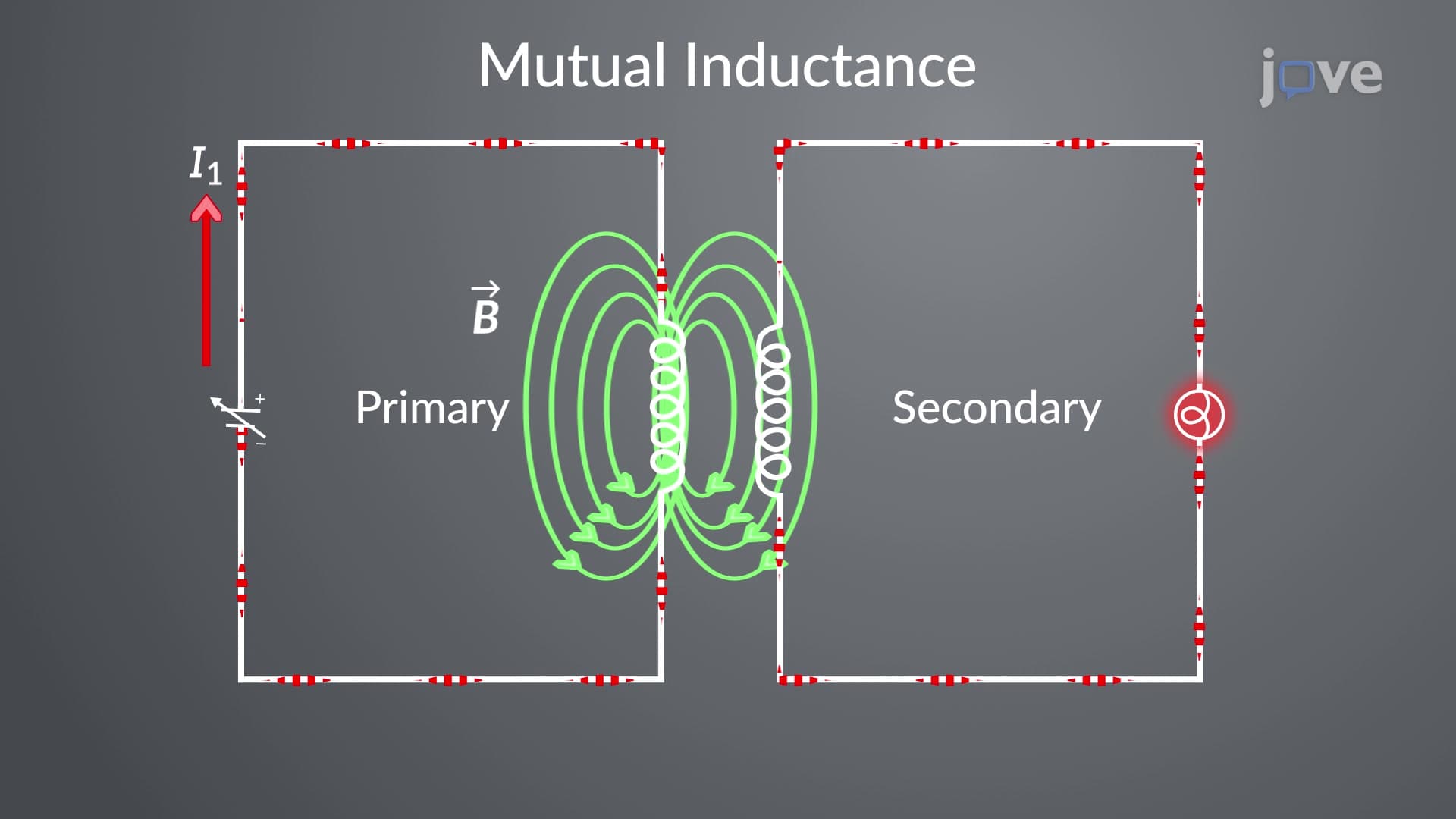
This concept proves essential for understanding electromagnetic induction in power transformers used throughout the US electrical infrastructure, where changing magnetic fields in primary coils induce currents in secondary coils through precisely controlled field geometries.
Related Micro-courses