Loading video…


 22 Concepts
 80.6K views

Video Summary: Magnetic Field Due to Moving Charges Explained
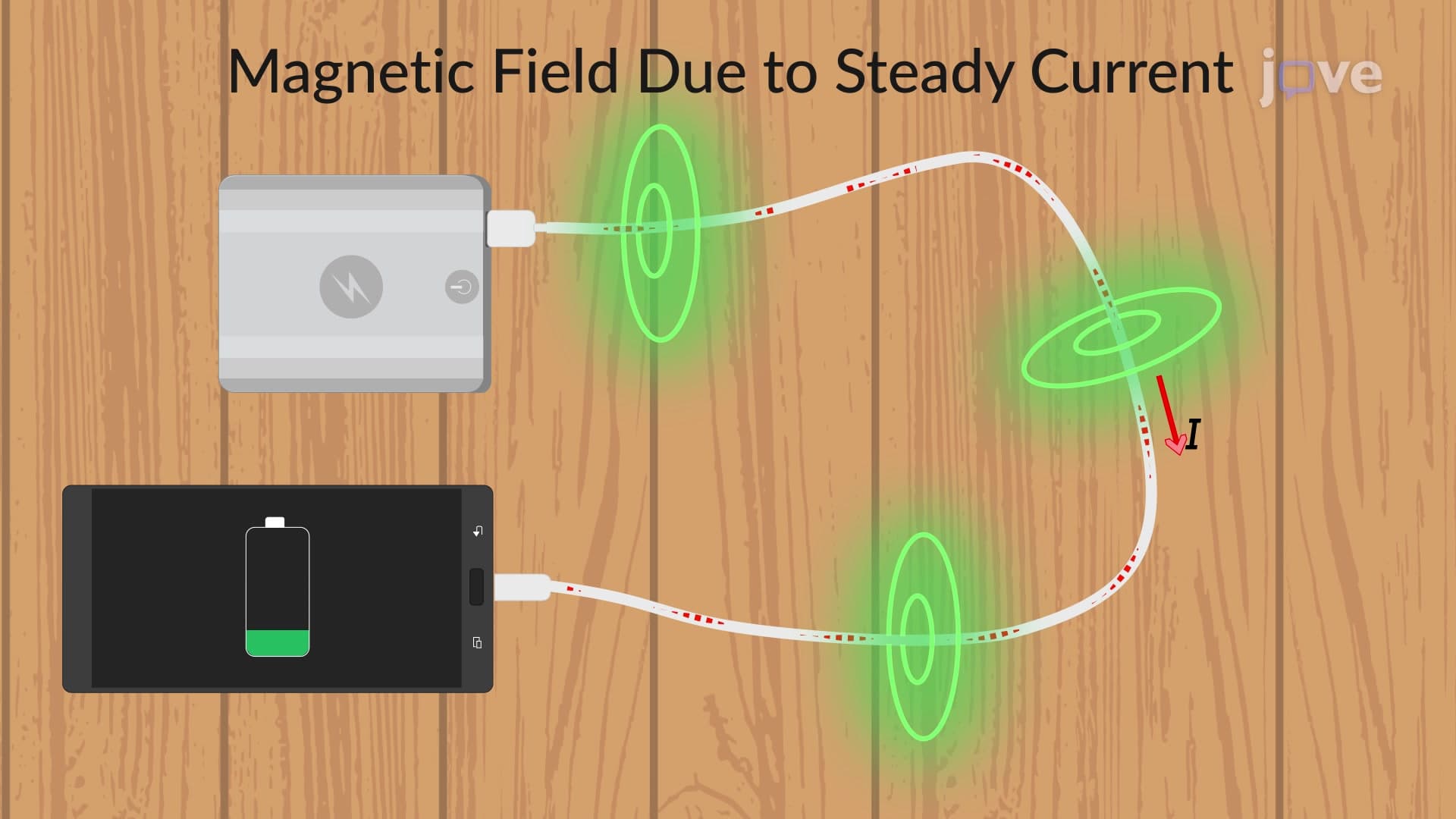
Ever wonder how your smartphone's GPS navigation system pinpoints your exact location while driving? The magnetic field due to moving charges enables satellite communication and countless electronic devices we use daily. This fundamental physics concept explains how electric charges in motion generate magnetic fields that are perpendicular to both the charge's velocity and the line connecting the charge to any observation point. Understanding magnetic field due to moving charges explained helps students grasp electromagnetic phenomena in everything from MRI machines to electric motors. Watch the full video on JoVE Coach to master this concept with expert-led visuals and step-by-step explanations.
The magnetic field due to moving charges represents one of the most elegant connections in physics between electricity and magnetism. When a stationary electric charge creates only an electric field, the moment that charge begins moving, it generates an additional magnetic field component. This phenomenon underlies virtually every electromagnetic device, from the alternators in power plants to the magnetic resonance imaging (MRI) machines in hospitals across the United States.
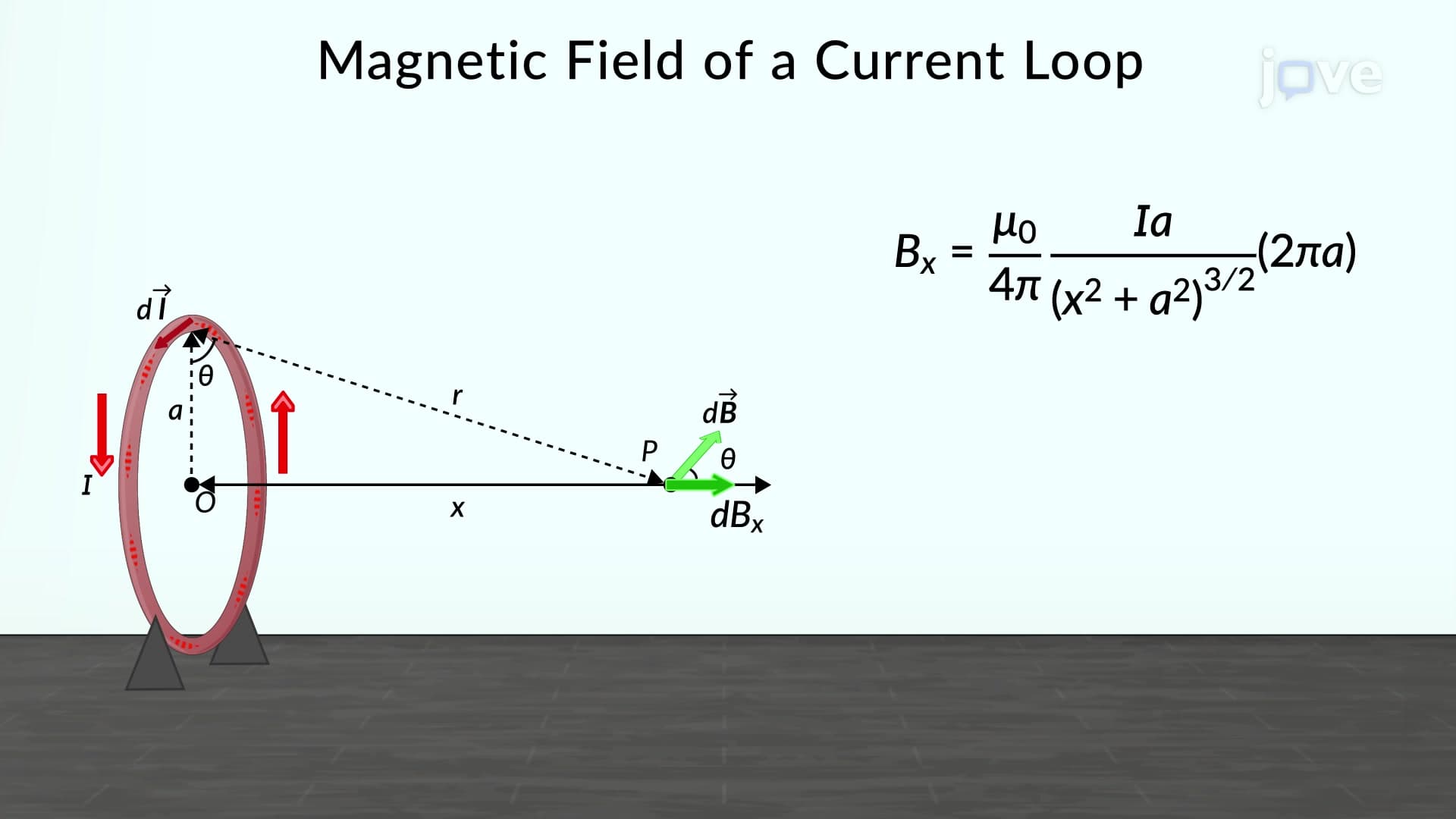
The mathematical description of magnetic fields from moving charges follows the Biot-Savart law: B = (μ₀/4π) × (q × v × r̂)/r². Here, μ₀ represents the permeability of free space (4π × 10⁻⁷ H/m), q is the charge magnitude, v is velocity, r̂ is the unit vector pointing from charge to observation point, and r is the distance. This inverse square relationship mirrors Coulomb's law for electric fields, but the magnetic field's directional complexity requires vector cross products.
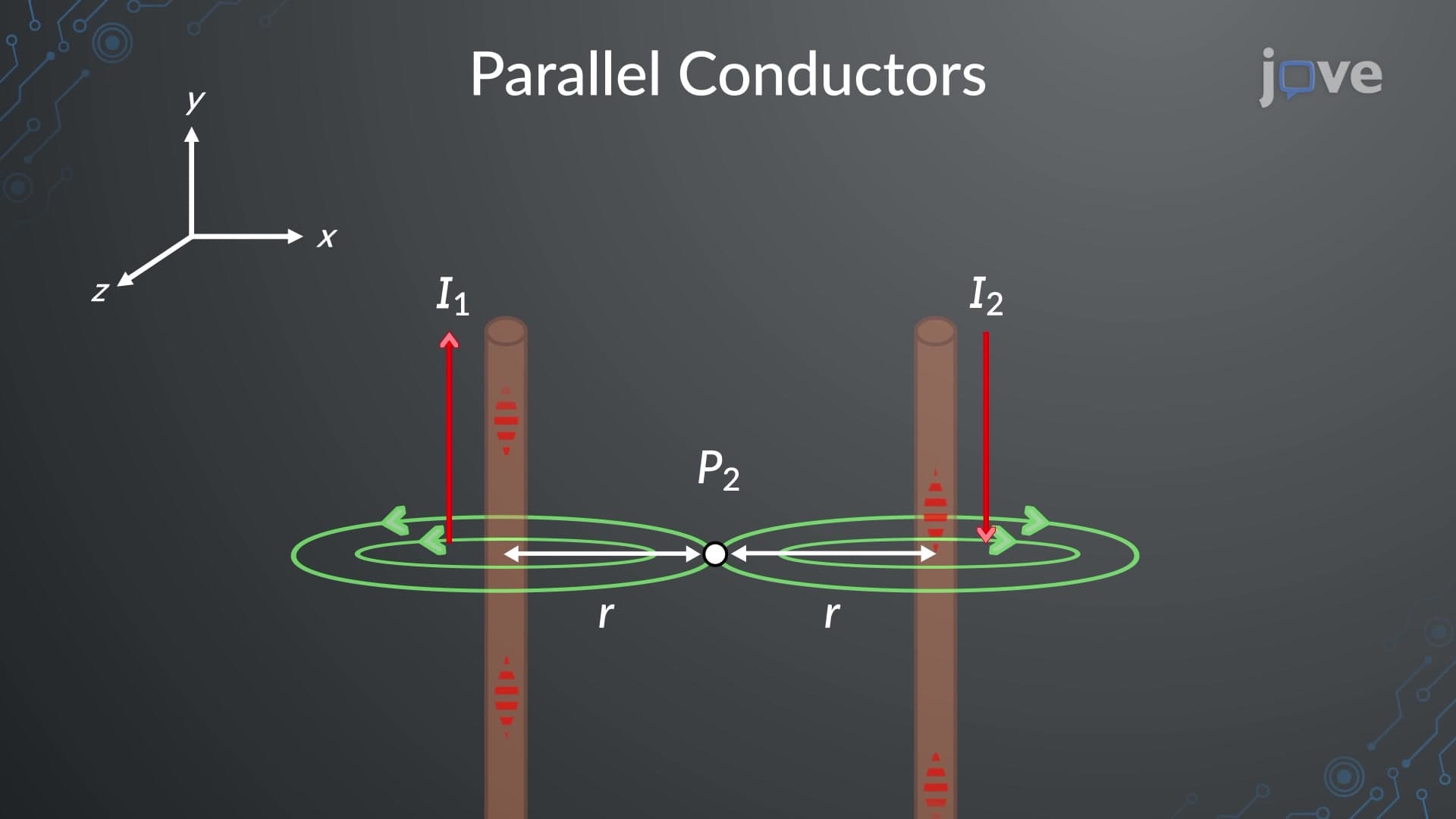
Students preparing for AP Physics C or college-level electromagnetic courses must master this mathematical framework. The cross product (q × v × r̂) ensures the magnetic field is always perpendicular to both the charge's velocity and the line connecting charge to observation point. This perpendicularity creates the characteristic circular field patterns around current-carrying wires.
The right-hand rule provides an intuitive method for determining magnetic field direction. Point your thumb along the positive charge's velocity direction, and your curled fingers indicate the magnetic field's circular pattern. For negative charges, the field direction reverses-a crucial distinction when analyzing electron flow in circuits versus conventional current direction.
This directional relationship becomes essential in understanding electromagnetic induction in generators and transformers powering the US electrical grid. The perpendicular nature of magnetic fields also explains why charged particles follow curved paths in magnetic fields, forming the basis for particle accelerators at national laboratories like Fermilab in Illinois.
The magnetic field strength varies dramatically with position relative to the moving charge. Maximum field strength occurs in the plane perpendicular to the charge's motion, while zero field exists along the velocity direction. This directional dependence explains antenna design principles and electromagnetic wave propagation in cellular networks spanning the United States. Engineering students studying for the Fundamentals of Engineering (FE) exam encounter these concepts in electromagnetic compatibility and signal processing applications.
Related Micro-courses