Loading video…


 22 Concepts
 80.6K views

Video Summary: Magnetic Moment of an Electron Explained
Did you know that every electron spinning around an atom's nucleus acts like a tiny electromagnet, similar to the magnetic field generators used in MRI machines at hospitals across America? The magnetic moment of an electron arises from its orbital motion, creating measurable magnetic effects that power technologies from computer hard drives to medical imaging equipment. This fundamental quantum mechanical property demonstrates how electrons generate magnetic dipole moments through their charge and motion. Watch the full video on JoVE Coach to master this concept with expert-led visuals and step-by-step explanations.
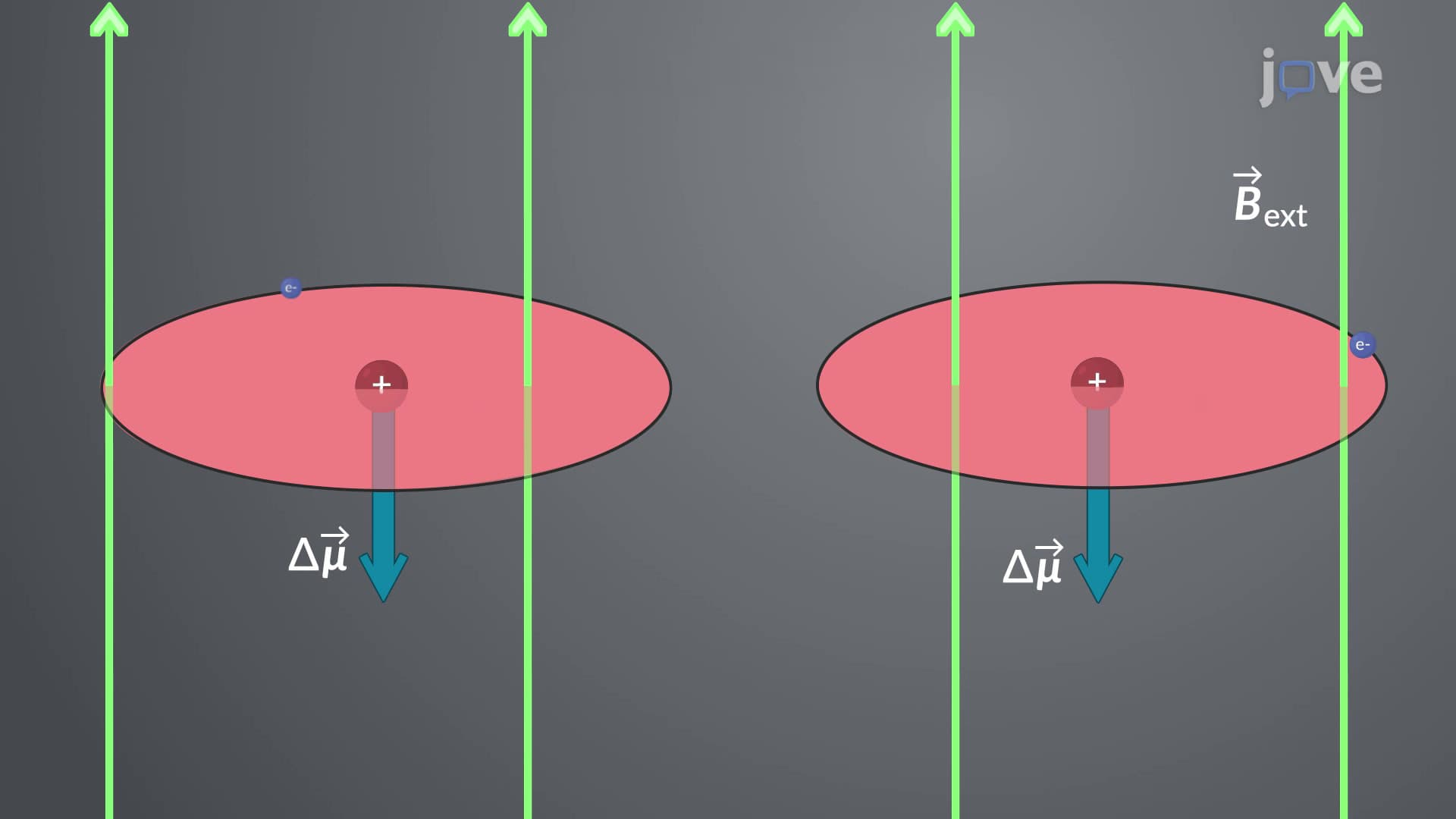
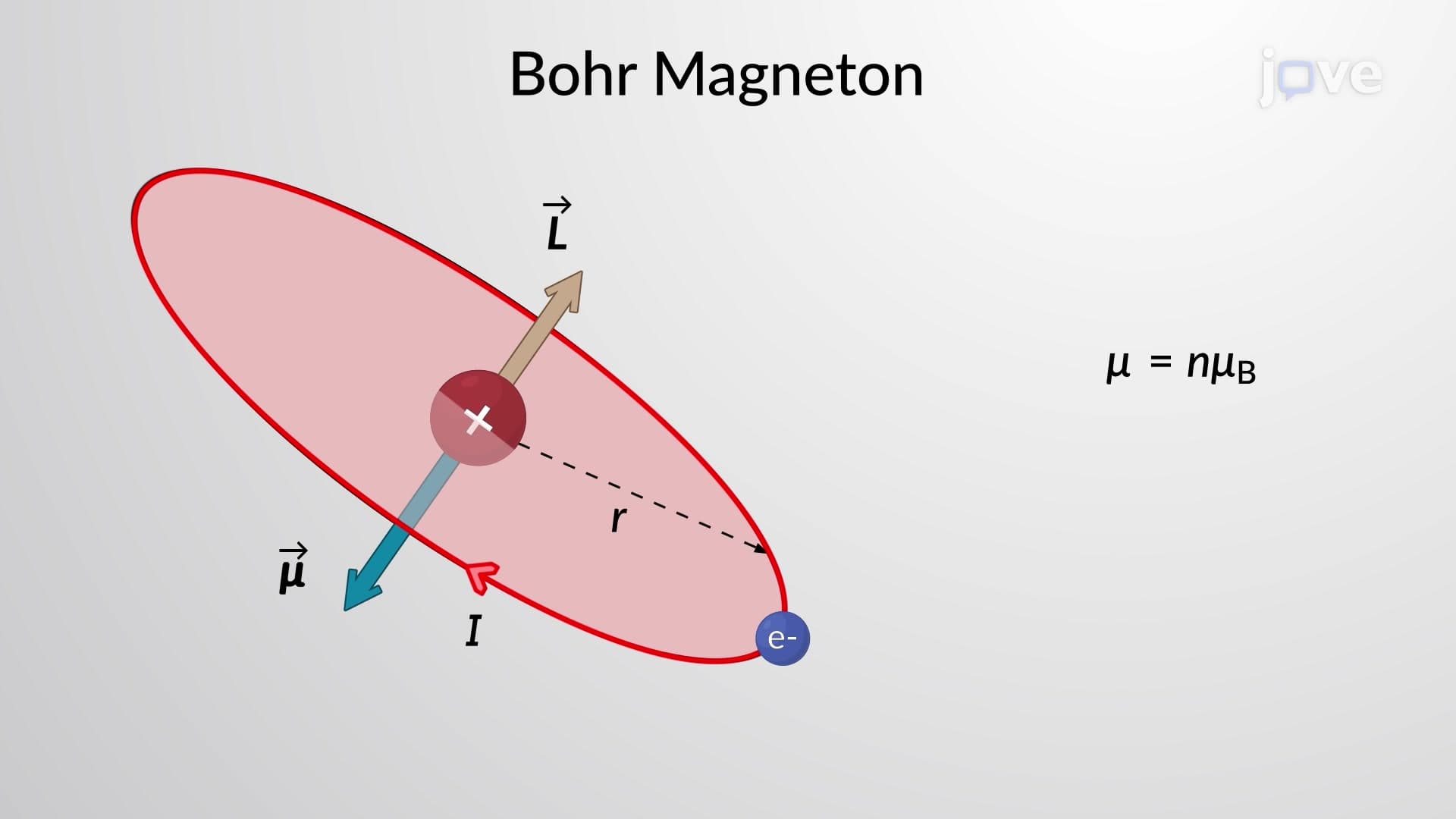
The magnetic moment of an electron represents one of the most elegant examples of how quantum mechanics governs atomic behavior. When we model an electron orbiting a proton in the simplest hydrogen atom, the moving negative charge creates an effective current loop. This orbital motion generates a magnetic dipole moment that can interact with external magnetic fields, forming the foundation for technologies like MRI machines used in American hospitals and magnetic storage devices in computer systems.
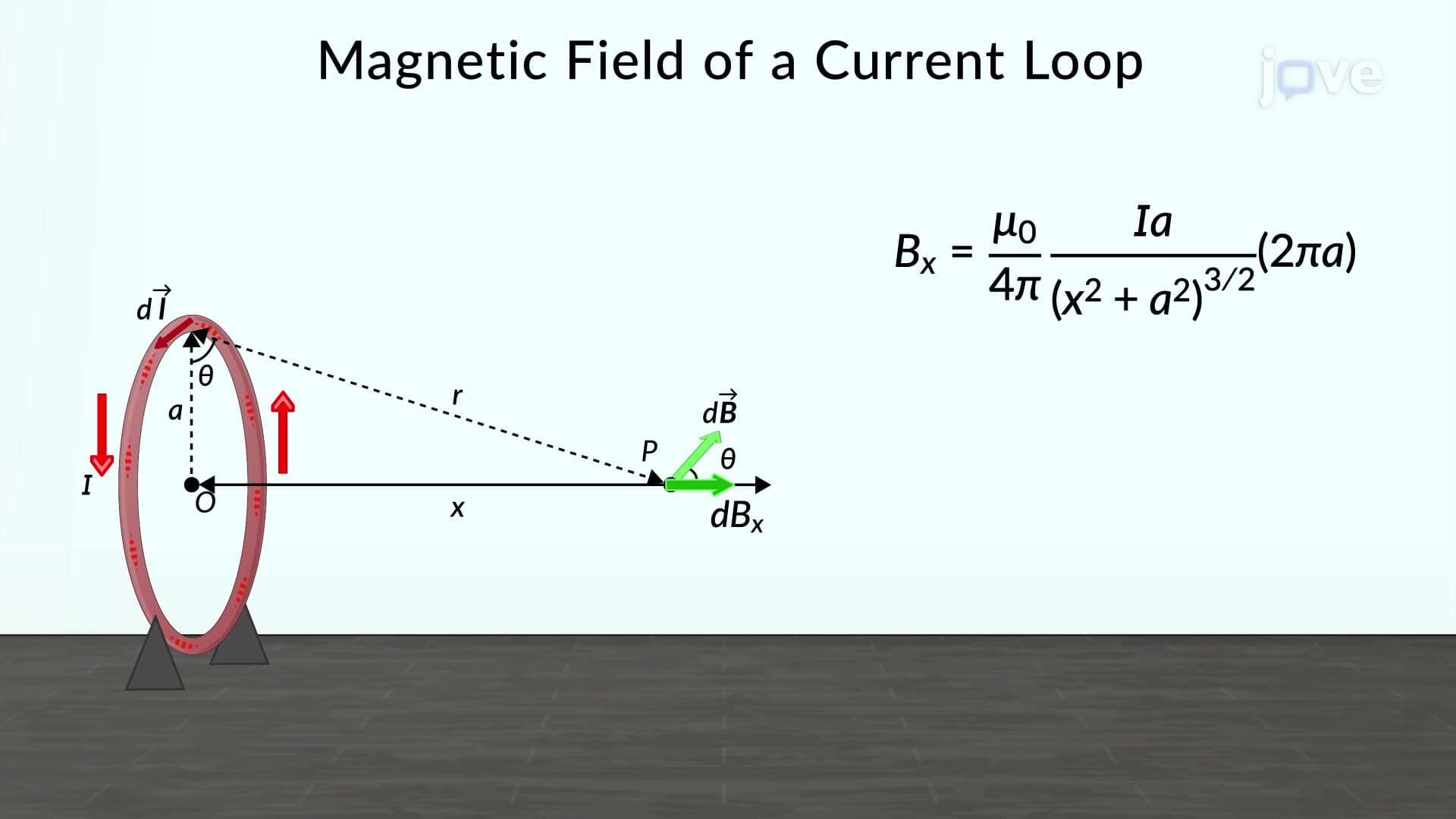
An electron's orbital motion around the nucleus creates what physicists call an equivalent current loop. Since current equals charge divided by time period, and the electron completes one orbit in time T = 2πr/v (where r is orbital radius and v is velocity), we can calculate the effective current. This current, multiplied by the orbital area (πr²), gives us the orbital magnetic dipole moment. The relationship becomes: μ = IA = (e/T)(πr²), where e represents the electron's charge magnitude.
The electron's orbital angular momentum L equals mvr, where m is electron mass, v is velocity, and r is orbital radius. Remarkably, the magnetic moment relates directly to this angular momentum through the equation μ = (e/2m)L. However, because electrons carry negative charge, the magnetic moment vector points opposite to the angular momentum vector-a crucial detail that affects how atoms behave in magnetic fields. This antiparallel relationship explains why electron magnetic moments align against applied magnetic fields in phenomena observed in advanced placement physics laboratories.
Quantum mechanics reveals that electron angular momentum is quantized in integer multiples of ℏ (reduced Planck's constant). This quantization leads directly to magnetic moment quantization in units called Bohr magnetons (μB = 9.27 × 10^-24 Am²). Students preparing for the MCAT or advanced physics courses will encounter this constant frequently when calculating magnetic interactions in atomic systems. The Bohr magneton serves as the fundamental unit for atomic-scale magnetic moments, much like how the elementary charge quantizes electrical phenomena.
Related Micro-courses