Loading subject page…


80,630 views


Video Summary: What are Solenoids
Did you know the MRI machines in US hospitals use powerful solenoids to create detailed images of your body? Solenoids are tightly wound helical coils of insulated wire that generate controlled magnetic fields when electric current flows through them. Unlike permanent magnets, these electromagnetic devices can be switched on and off, making them essential in everything from car door locks to medical equipment. Understanding what solenoids are and how they work reveals the fascinating connection between electricity and magnetism. Watch the full video on JoVE Coach to master this concept with expert-led visuals and step-by-step explanations.
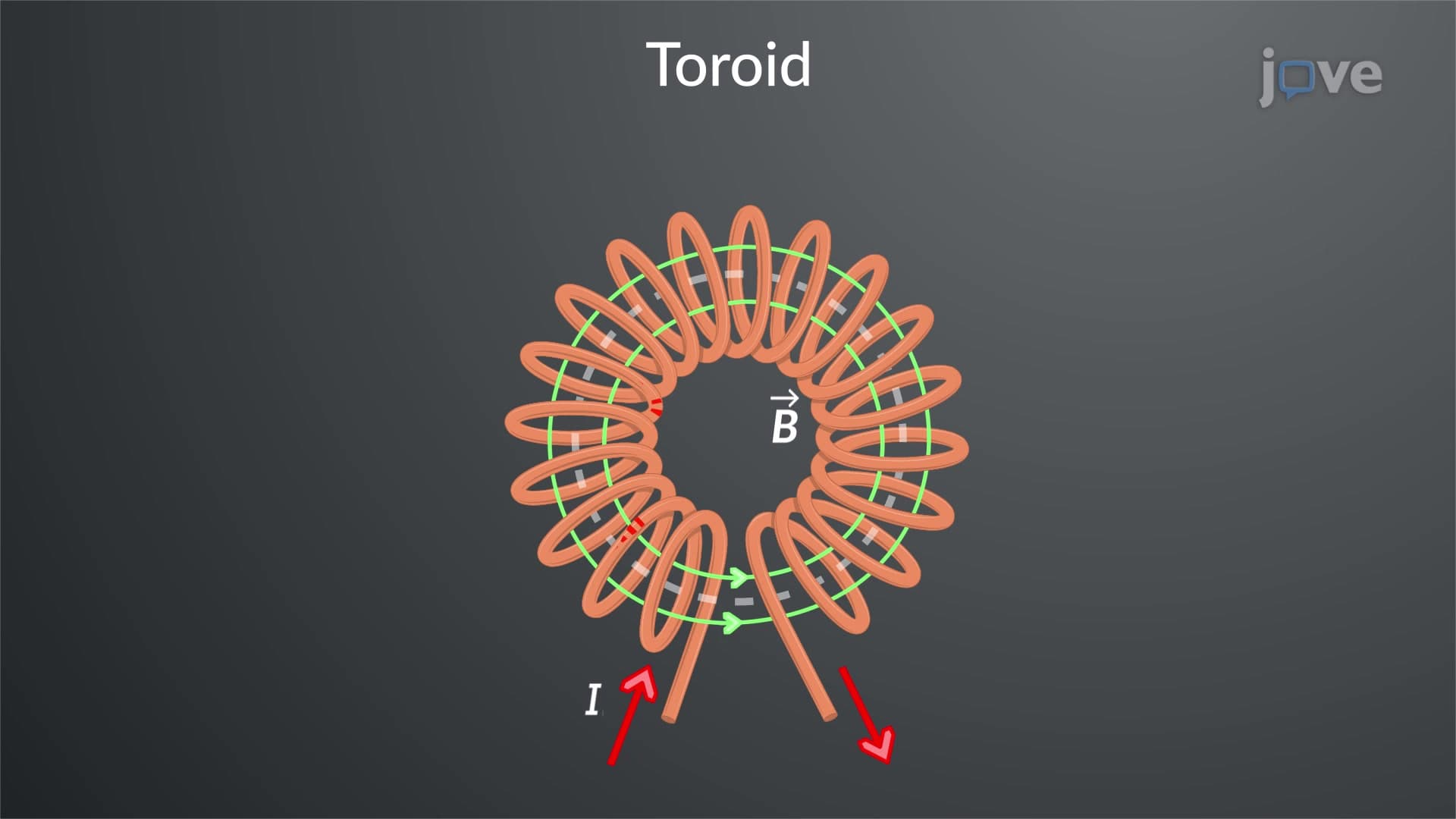
Solenoids represent one of the most practical applications of electromagnetism in modern technology. At its core, a solenoid consists of a conducting wire wrapped in a tight helical pattern around a cylindrical form, with each wire turn insulated to prevent short circuits. This simple yet elegant design transforms electrical energy into controlled magnetic fields.
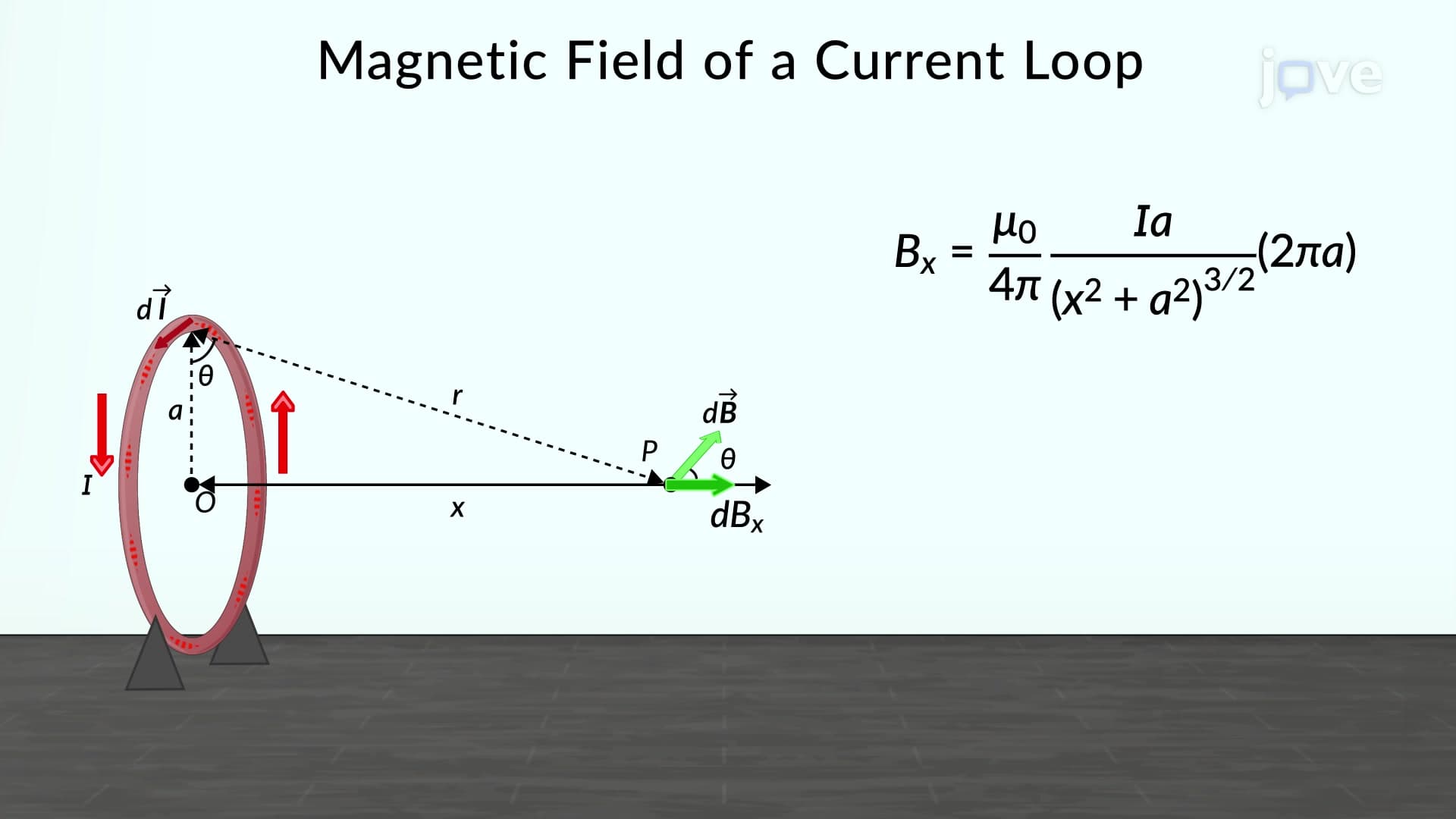
When electric current flows through the solenoid's coils, each individual turn acts like a small circular current loop, generating its own magnetic dipole moment. The collective effect of hundreds or thousands of these turns creates a surprisingly uniform magnetic field inside the solenoid. This principle is crucial for students preparing for AP Physics exams, where solenoid problems frequently appear in both multiple-choice and free-response sections.
The magnetic field behavior inside solenoids follows predictable patterns that make them invaluable in engineering applications. For an ideal solenoid where the length significantly exceeds the radius, the internal magnetic field becomes remarkably uniform and runs parallel to the solenoid's central axis. This uniformity makes solenoids perfect for applications requiring consistent magnetic environments, such as particle accelerators at US national laboratories.
Students can visualize this field pattern by imagining the solenoid as equivalent to a bar magnet stretched along its length. The north and south poles appear at opposite ends, separated by the solenoid's full length. However, unlike permanent magnets, solenoid polarity can be instantly reversed by changing current direction-a property that makes them essential in AC applications and switching circuits.
Understanding solenoids provides insight into countless devices Americans encounter daily. Automobile starter motors use powerful solenoids to engage the engine flywheel. Hospital MRI machines employ superconducting solenoids to generate magnetic fields thousands of times stronger than Earth's. Even simple doorbell systems rely on solenoid principles to convert electrical signals into mechanical motion.
For college students in engineering programs, solenoid calculations appear frequently in circuits courses and electromagnetics classes. The ability to determine magnetic field strength using Ampère's law, calculate induced EMF from changing currents, and predict force interactions with external magnetic fields represents fundamental skills tested on MCAT physics sections and professional engineering examinations.
Related Micro-courses