Loading subject page…


80,630 views


Video Summary: What Is Diamagnetism
Ever wonder why a frog can levitate in a strong magnetic field? Diamagnetism explains this phenomenon-materials like water, copper, and even living tissue naturally repel magnetic fields. Unlike the magnetism you see with refrigerator magnets, diamagnetic materials create their own opposing magnetic moments when exposed to external fields. The Mayo Clinic uses diamagnetic properties in MRI imaging to visualize soft tissues in patients. Watch the full video on JoVE Coach to master this concept with expert-led visuals and step-by-step explanations.
Diamagnetism represents one of the fundamental forms of magnetism where materials exhibit weak repulsion to magnetic fields. At its core, this phenomenon stems from the quantum mechanical behavior of electrons within atoms. Unlike ferromagnetic materials such as iron that strongly attract to magnets, diamagnetic substances like copper, bismuth, and water demonstrate the opposite behavior-they're pushed away from magnetic field sources.
The key to understanding diamagnetism lies in electron pairing. Diamagnetic materials contain atoms where electrons occupy orbitals in pairs with opposite spins, resulting in zero net magnetic moment under normal conditions. This electron configuration is crucial for the diamagnetic response and distinguishes these materials from paramagnetic substances that have unpaired electrons.
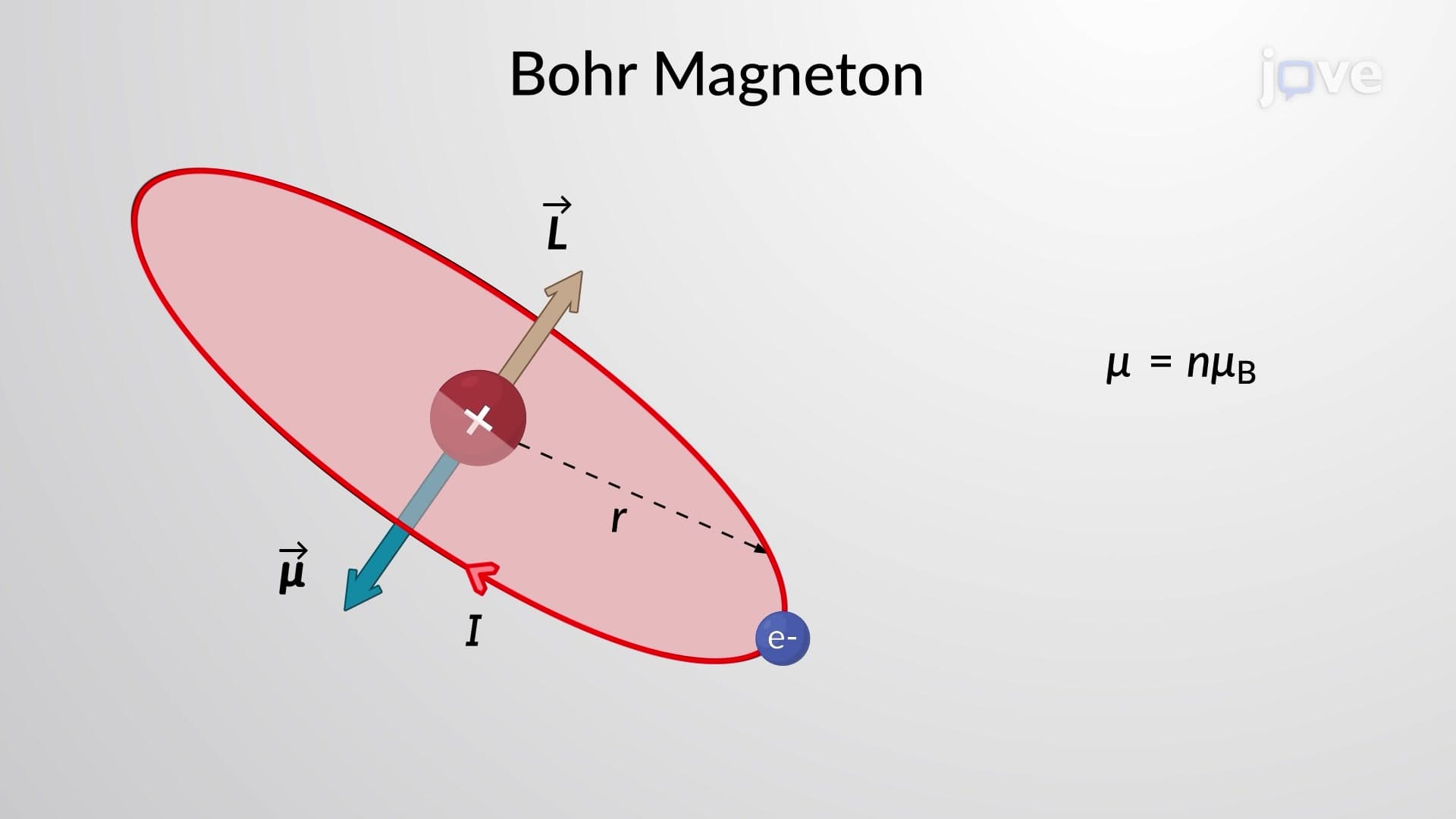
When a diamagnetic material encounters an external magnetic field, the physics becomes fascinating. The applied field induces changes in electron orbital motion through the Lorentz force-the same force that deflects charged particles in magnetic fields. Electrons orbiting in the direction of the field experience increased angular velocity due to inward Lorentz forces, while those orbiting opposite to the field slow down from outward forces.
This asymmetric response creates additional electric currents within the material that generate their own magnetic dipoles. According to Lenz's law, these induced dipoles always oppose the change that created them-in this case, the external magnetic field. The result is a net magnetic moment that points opposite to the applied field, creating the characteristic repulsive behavior of diamagnetic materials.
Diamagnetic substances exhibit several distinctive properties that physics students encounter on AP exams and college coursework. The magnetic susceptibility (χ) of diamagnets is negative and typically ranges from -10^-6 to -10^-4, indicating weak opposition to magnetic fields. Unlike paramagnetic materials, diamagnetic susceptibility remains constant with temperature changes because it doesn't depend on thermal energy affecting electron alignment.
The relative magnetic permeability of diamagnetic materials is less than one (μr < 1), meaning they reduce the magnetic field strength within their boundaries. This property proves essential in applications like superconducting magnetic levitation trains and medical MRI systems used in hospitals across the United States.
Diamagnetism plays crucial roles in modern technology and scientific research. The University of California system utilizes diamagnetic properties in their physics laboratories to demonstrate magnetic levitation using bismuth and strong neodymium magnets. Medical facilities like Johns Hopkins Hospital rely on diamagnetic contrast in MRI imaging, where different tissues' diamagnetic responses help create detailed internal body images.
In industrial applications, companies like General Electric exploit diamagnetic principles in designing superconducting systems for power transmission and magnetic containment in fusion research. Understanding these concepts proves valuable for students preparing for MCAT physics sections or advanced placement physics examinations.
Related Micro-courses