Loading video…


 22 Concepts
 80.6K views


Video Summary: What Is Magnetic Field Solenoid
Ever wondered how MRI machines at hospitals like Johns Hopkins generate their powerful magnetic fields? The magnetic field solenoid is a fundamental electromagnetic device that creates uniform magnetic fields through current-carrying wire coils. This concept explains how closely wound wire loops produce predictable magnetic field patterns, essential for medical imaging, electric motors, and countless technologies. Understanding what is magnetic field solenoid helps students master electromagnetic principles that appear on AP Physics exams and college coursework. Watch the full video on JoVE Coach to master this concept with expert-led visuals and step-by-step explanations.
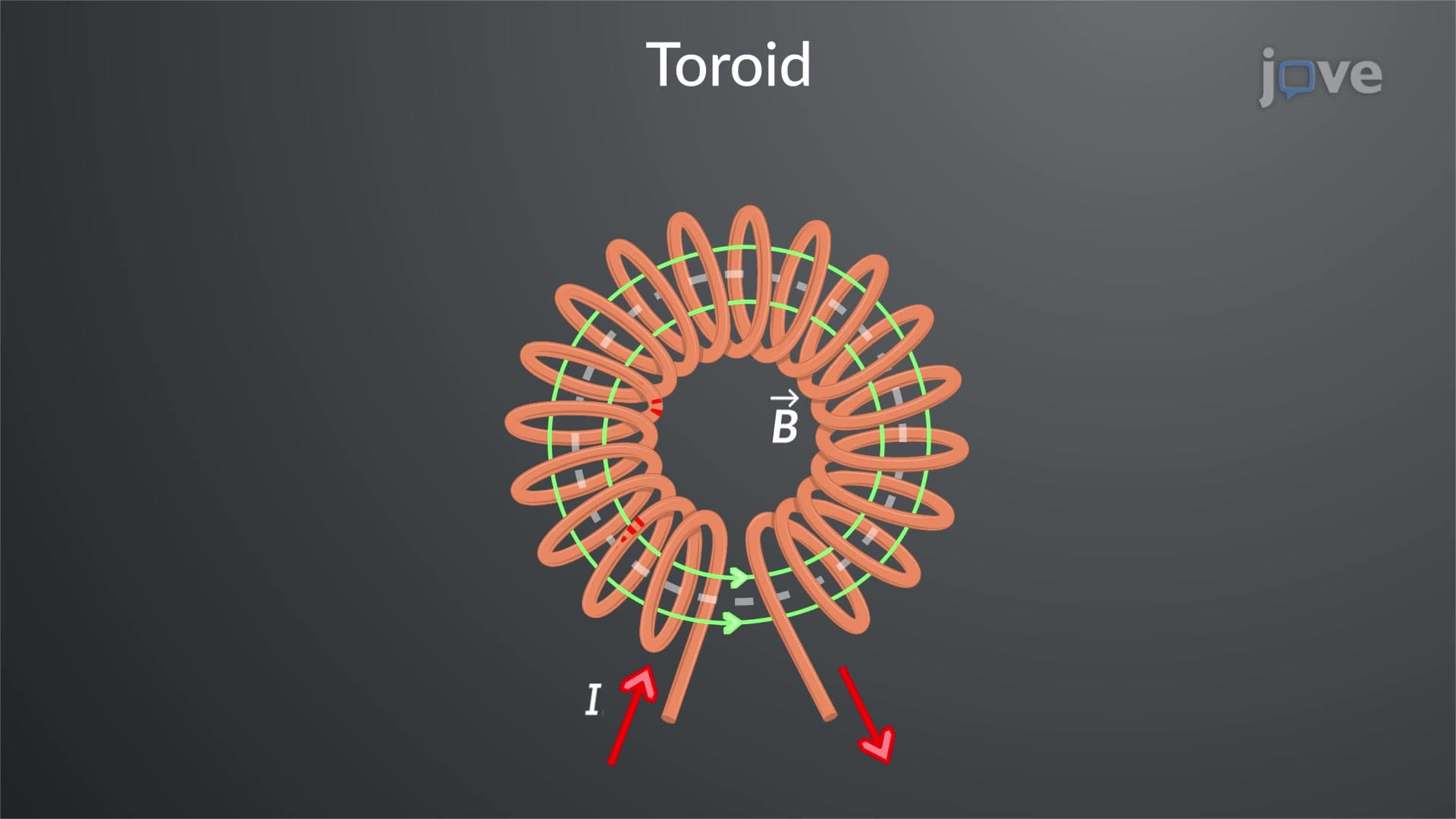
A magnetic field solenoid represents one of the most important electromagnetic devices in physics and engineering. When electric current flows through a tightly wound coil of wire, it creates a remarkably uniform magnetic field inside the coil while producing virtually no field outside. This principle underlies countless technologies, from the MRI scanners at Cleveland Clinic to the starter motors in Ford vehicles.
The magnetic field solenoid behavior follows Ampere's Law, which states that the circulation of magnetic field around any closed loop equals the permeability of free space multiplied by the enclosed current. For an ideal solenoid with length much greater than its radius, applying Ampere's Law to a rectangular path reveals that the magnetic field inside equals B = μ₀nI, where μ₀ is the permeability of free space, n represents turns per unit length, and I is the current.
Students preparing for AP Physics C or college-level electromagnetic courses should understand why the magnetic field outside an ideal solenoid approaches zero. The carefully wound coils create field lines that loop back through the solenoid's interior, concentrating the magnetic flux density inside while minimizing external field effects.
Magnetic field solenoid principles appear frequently on standardized exams including AP Physics, MCAT physics sections, and college midterms. Understanding solenoid behavior helps students tackle problems involving electromagnetic induction, energy storage in magnetic fields, and practical device operation.
In medical applications, solenoid-based electromagnets in MRI machines at institutions like Mayo Clinic generate fields exceeding 1.5 Tesla. Automotive applications include solenoid-operated fuel injectors and transmission controls. Industrial applications range from electromagnetic door locks to automated manufacturing equipment.
When approaching solenoid problems, students should first identify whether the question asks about internal or external fields. For internal fields, apply B = μ₀nI directly. For more complex geometries, consider using Ampere's Law with appropriate symmetry arguments. Remember that real solenoids have finite length, creating edge effects that slightly modify the ideal field pattern.
Related Micro-courses