Loading subject page…


80,630 views


Video Summary: What Is Magnetic Vector Potential
Ever wondered how MRI machines at hospitals like Johns Hopkins create detailed images of your brain? The magnetic vector potential is the mathematical foundation that makes this medical marvel possible. This fundamental concept in electromagnetism describes how magnetic fields arise from electric currents, providing a powerful tool for solving complex physics problems. Understanding what is magnetic vector potential unlocks the door to advanced electromagnetic applications in engineering and medicine. Watch the full video on JoVE Coach to master this concept with expert-led visuals and step-by-step explanations.
The magnetic vector potential represents one of the most elegant concepts in electromagnetic theory, serving as a bridge between abstract mathematics and physical reality. Unlike the magnetic field, which we can visualize through iron filings around a magnet, the magnetic vector potential is a more abstract quantity that encodes the same physical information in a mathematically convenient form.
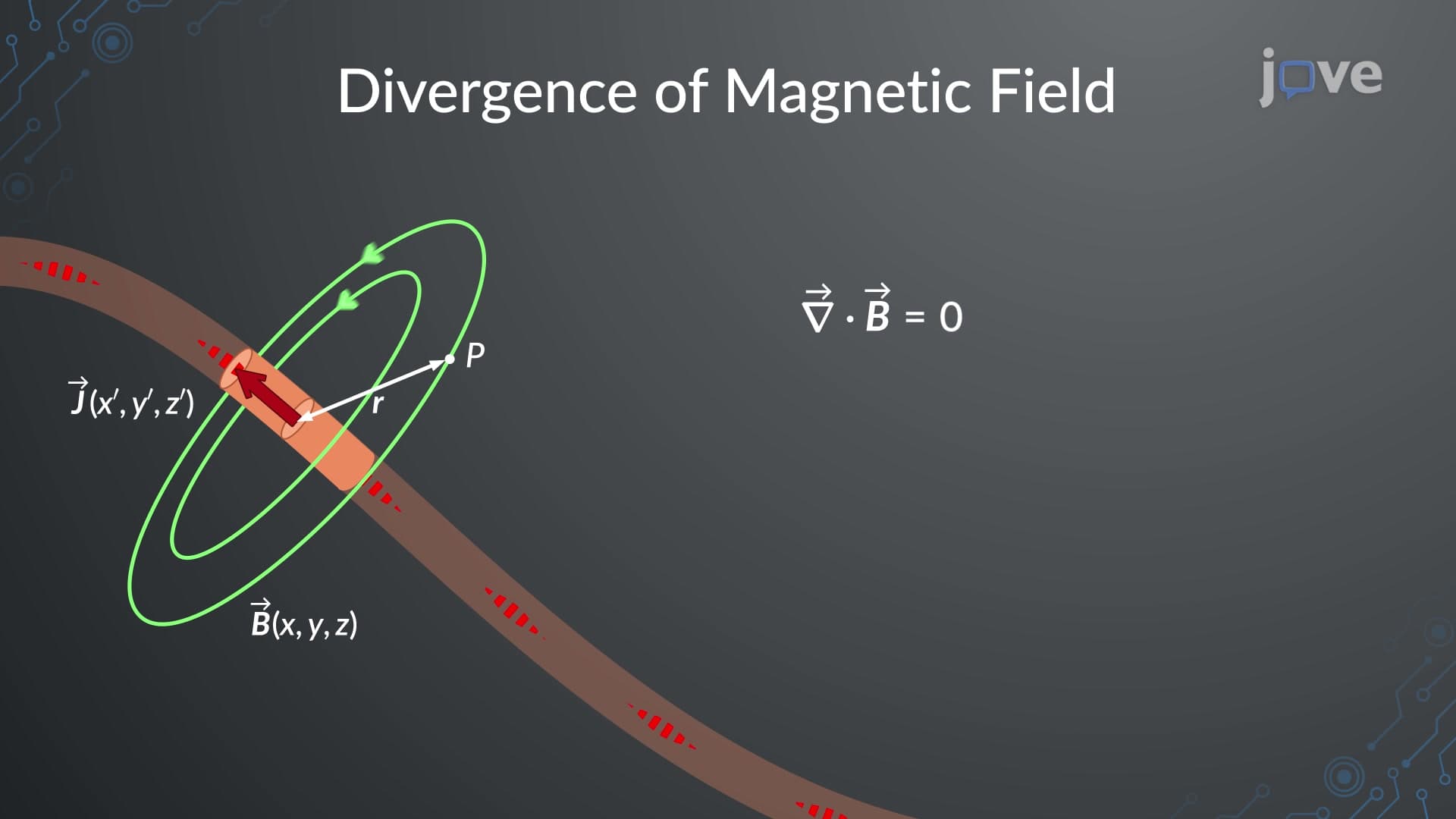
At its core, the magnetic vector potential (typically denoted as A) is defined such that the magnetic field B equals the curl of A. This relationship, B = ∇ × A, emerges naturally from the fundamental property that magnetic field lines never begin or end-they always form closed loops. Mathematically, this translates to the divergence of the magnetic field being zero everywhere.
The power of magnetic vector potential becomes apparent when we examine Ampère's Law, which states that the curl of the magnetic field equals the vacuum permeability times the current density: ∇ × B = μ₀J. By substituting our definition of magnetic field in terms of vector potential, this becomes ∇ × (∇ × A) = μ₀J.
Using the vector identity for the curl of a curl, this transforms into ∇(∇ · A) - ∇²A = μ₀J. Here's where the mathematical elegance shines: we can choose the divergence of A to be zero (called the Coulomb gauge), simplifying our equation to ∇²A = -μ₀J. This is remarkably similar to Poisson's equation in electrostatics, making familiar solution techniques applicable to magnetic problems.
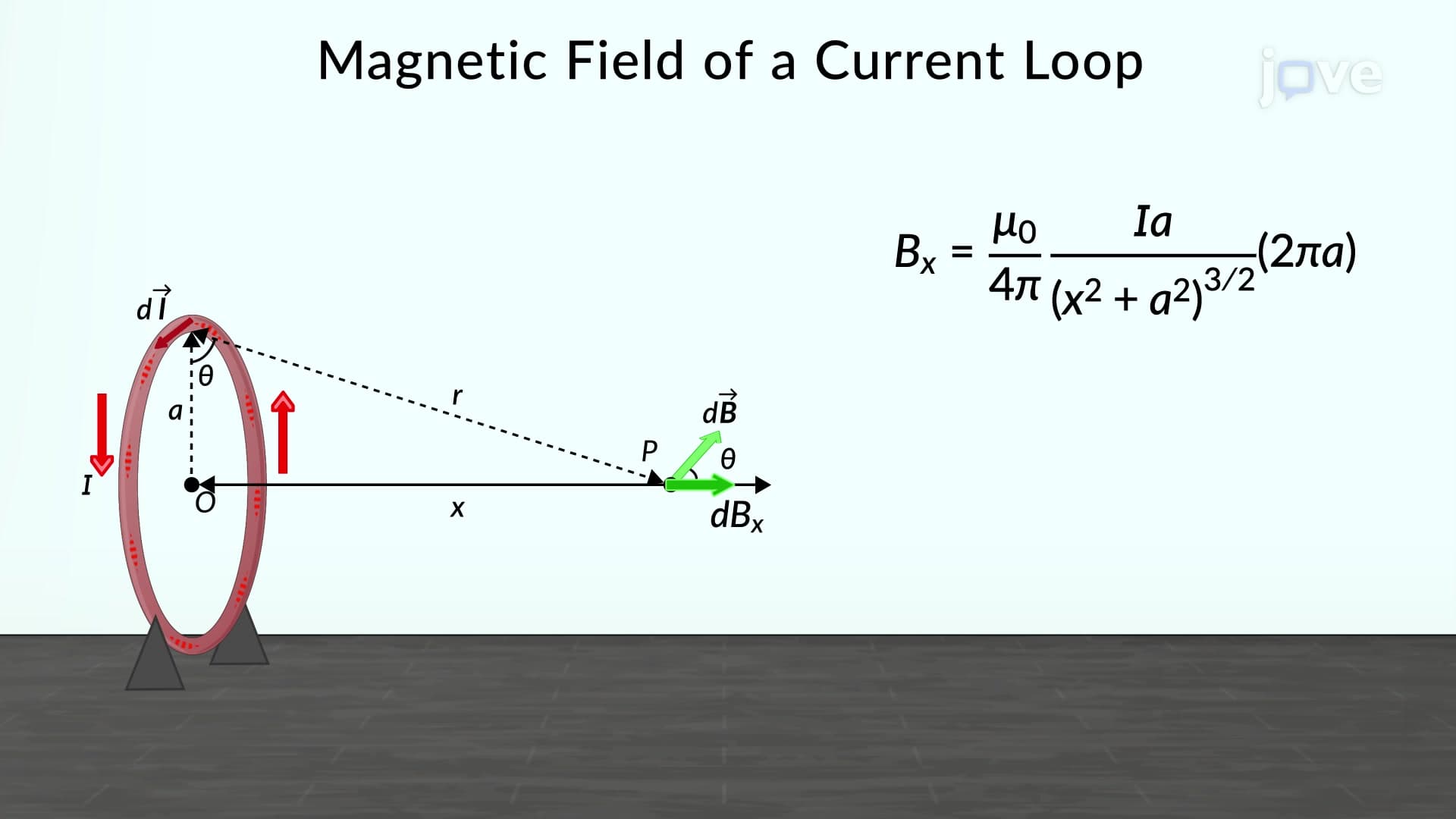
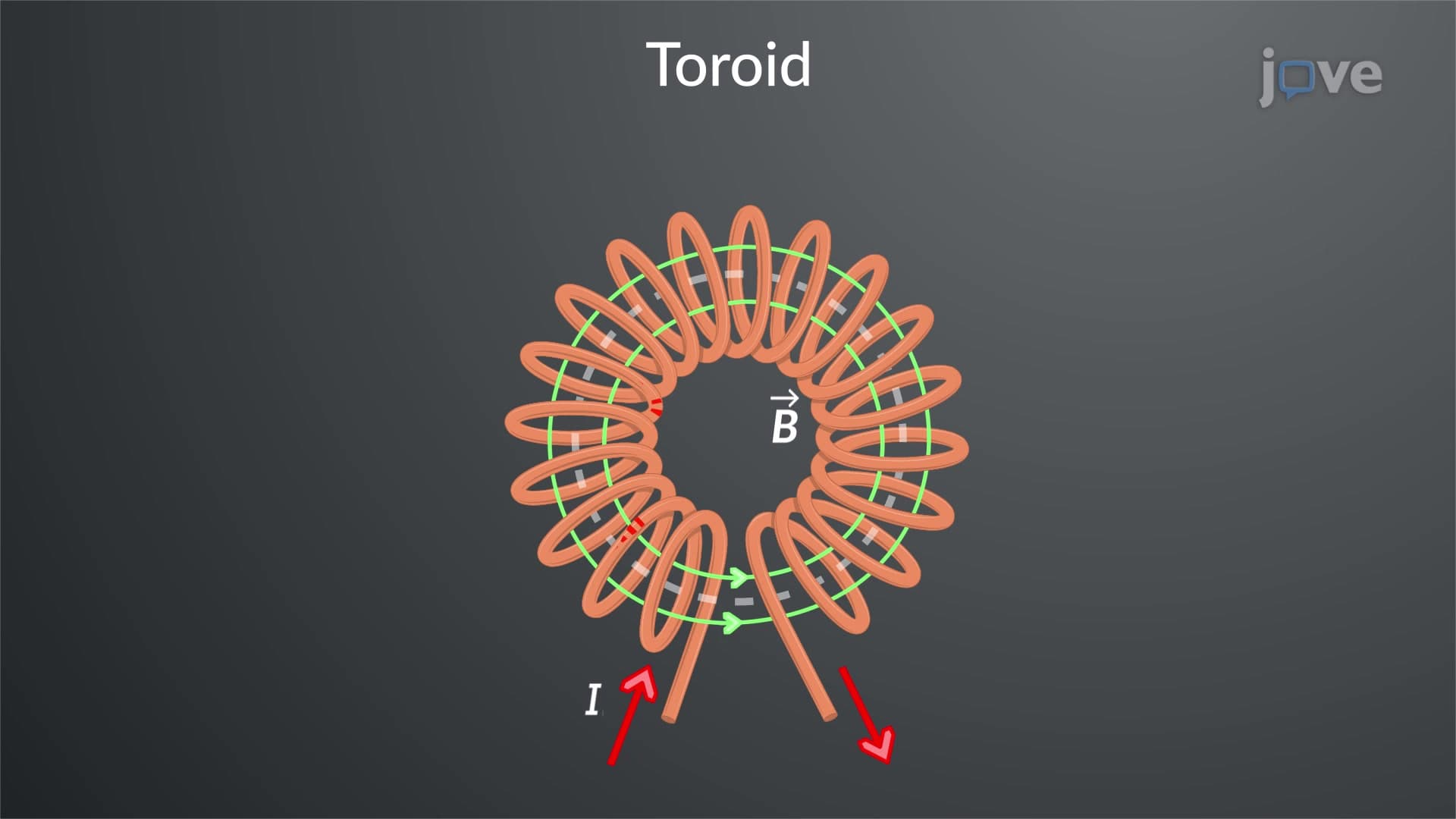
The magnetic vector potential approach proves invaluable in complex geometries where direct calculation of magnetic fields would be prohibitively difficult. For instance, when analyzing the magnetic field inside an MRI machine's superconducting coils, engineers use vector potential methods to design optimal field configurations. Similarly, students preparing for AP Physics C or college-level electromagnetic courses will encounter vector potential in problems involving solenoids, toroids, and current loops.
American innovations in magnetic resonance imaging, particle accelerators at facilities like Fermilab, and electromagnetic compatibility testing for aerospace applications all rely on magnetic vector potential calculations. Tesla's electric vehicle motors, designed in California, use computational models based on vector potential to optimize magnetic field distributions for maximum efficiency.
The concept also appears regularly on standardized tests, including the MCAT physics section and graduate-level qualifying exams at US universities. Students at institutions like MIT and Caltech encounter vector potential in advanced electromagnetism courses, where it forms the foundation for understanding gauge theories and quantum electrodynamics.
Related Micro-courses