Loading subject page…


80,630 views


Video Summary: What Is Paramagnetism
Why do some materials get pulled toward magnets while others don't? Paramagnetism explains this fascinating phenomenon that occurs in materials with unpaired electrons. Unlike the magnetic strips on your credit cards, paramagnetic materials like aluminum foil create temporary magnetism only when exposed to external magnetic fields. This magnetic behavior results from unpaired electrons that can align with applied fields, though thermal motion constantly works against this alignment. Watch the full video on JoVE Coach to master this concept with expert-led visuals and step-by-step explanations.
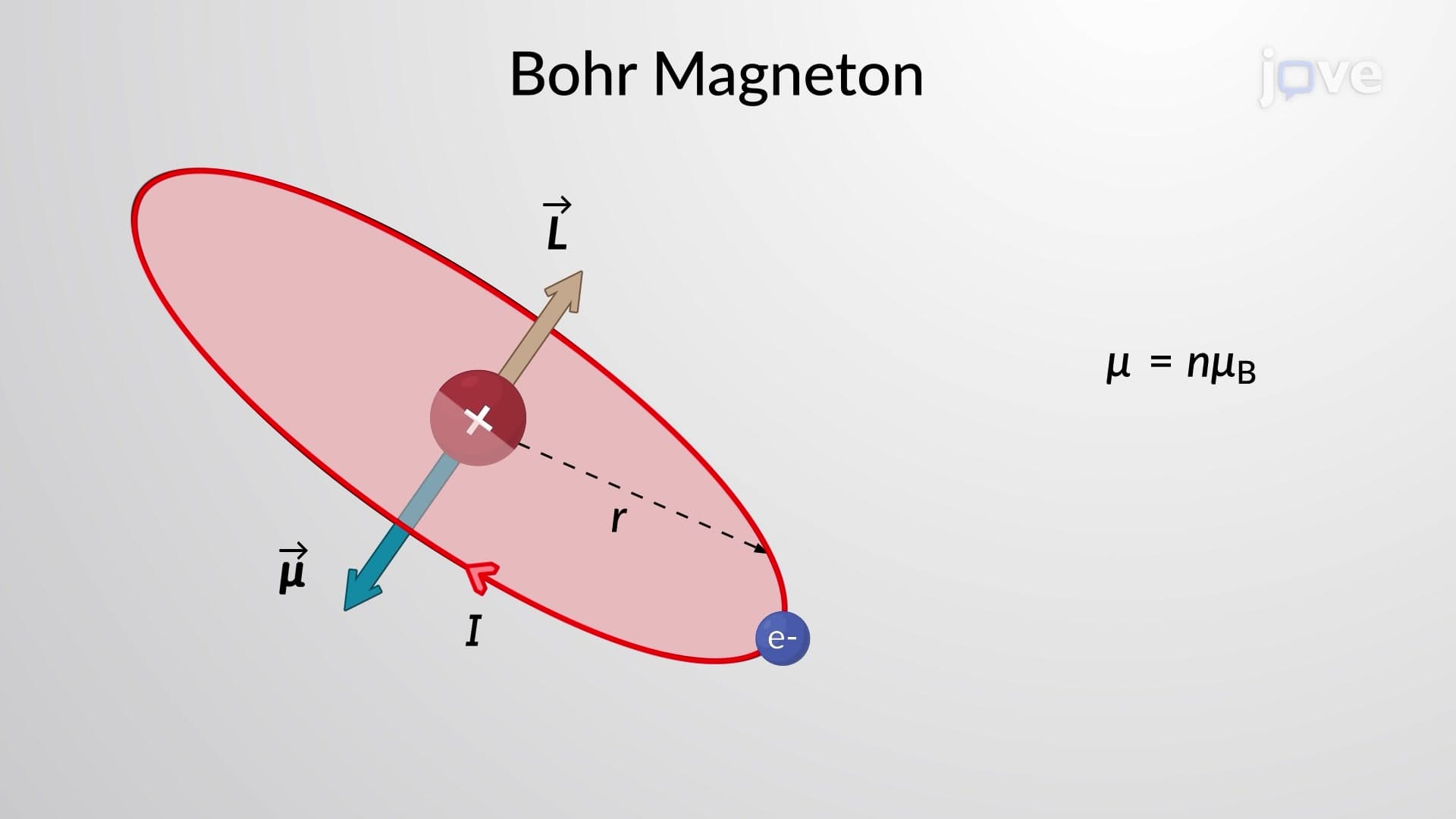
Paramagnetism occurs in materials containing atoms with unpaired electrons that create net magnetic dipole moments. Unlike paired electrons that cancel each other's magnetic effects, unpaired electrons contribute to an atom's overall magnetic character. This fundamental concept appears frequently on AP Chemistry and Physics exams, where students must distinguish between different types of magnetism based on atomic structure.
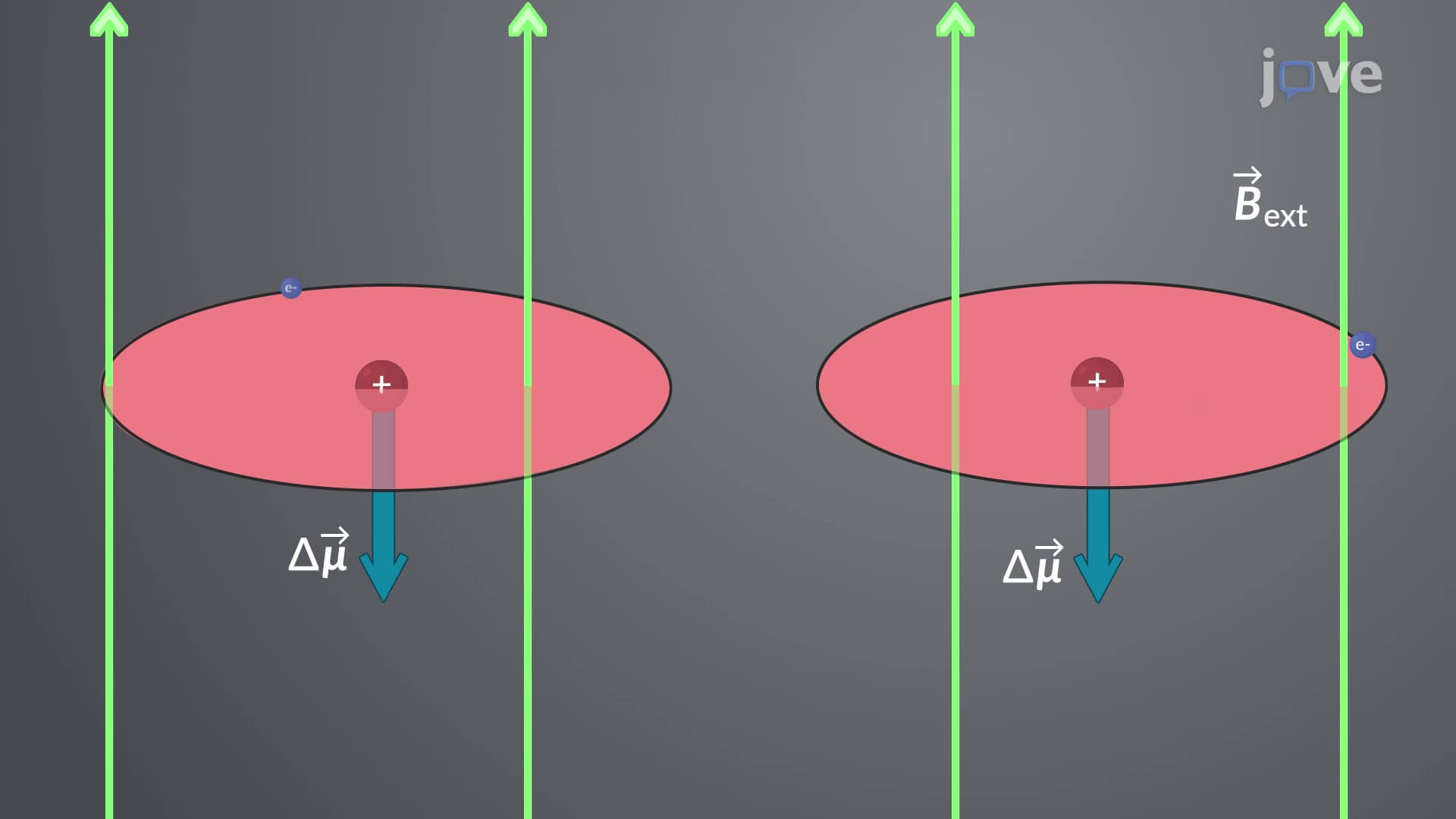
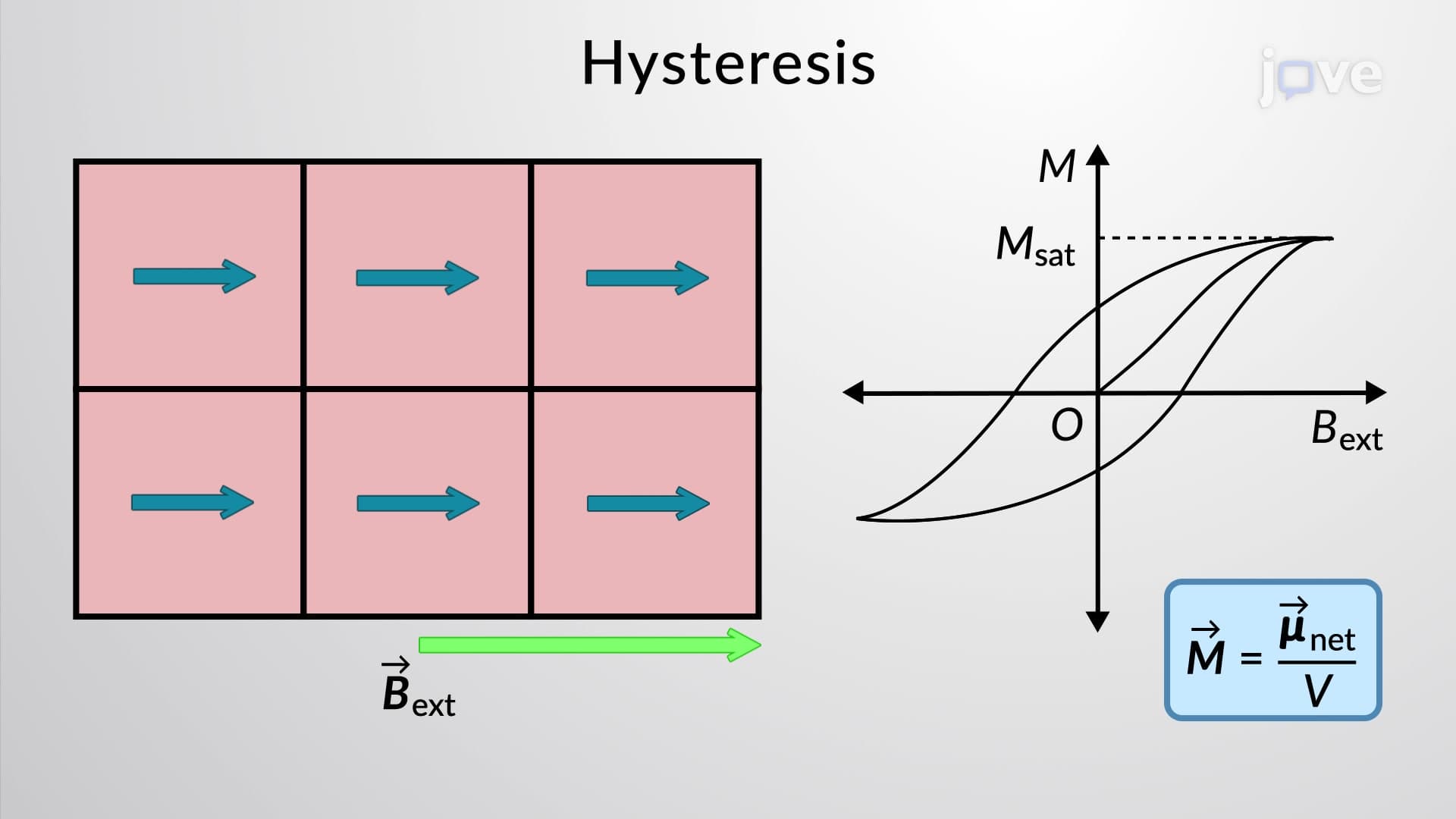
In paramagnetic materials, individual atomic magnetic moments orient randomly without external influence, resulting in zero net magnetization. However, applying an external magnetic field creates competing forces: the field exerts torque trying to align magnetic moments, while thermal energy promotes random orientation. This competition means only a fraction of moments align with the field, creating relatively weak magnetization compared to ferromagnets like iron.
The mathematical relationship governing this behavior follows Curie's Law: magnetization equals the magnetic field strength divided by temperature, multiplied by a material constant. This inverse temperature dependence explains why paramagnetic effects strengthen as materials cool-reduced thermal motion allows better magnetic alignment.
Common paramagnetic materials include aluminum, magnesium, and oxygen gas. Medical MRI machines exploit paramagnetic contrast agents like gadolinium to enhance image quality. In laboratory settings, researchers use paramagnetic materials in magnetic separation techniques, where strong field gradients selectively attract paramagnetic particles while leaving diamagnetic materials unaffected.
College chemistry and physics courses frequently test paramagnetism through electron configuration problems. Students must identify unpaired electrons using orbital diagrams, then predict magnetic behavior. MCAT questions often combine paramagnetism with thermodynamics, asking how temperature changes affect magnetic susceptibility. Key problem-solving strategies include recognizing that paramagnetic susceptibility is positive (unlike diamagnets) and temperature-dependent, making these materials useful as temperature sensors in specialized applications.
Related Micro-courses