Loading subject page…


154,200 views

Video Summary: What are Position and Displacement Vectors
Ever wonder how GPS systems pinpoint your exact location and track your movement from Times Square to Central Park? Position and displacement vectors form the mathematical foundation that makes this possible, using coordinate systems to describe both where objects are located and how they move through space. Consider a drone delivering packages across Manhattan, engineers use these vector concepts to program precise flight paths and monitor real-time location changes. What are position and displacement vectors becomes clear when we examine how these mathematical tools represent an object's location relative to a reference point and calculate the change between two positions. Watch the full video on JoVE Coach to master this concept with expert-led visuals and step-by-step explanations.
Position and displacement vectors serve as fundamental tools in physics and engineering for describing motion and location in space. A position vector represents the exact location of an object relative to a chosen reference point (typically the origin of a coordinate system), while a displacement vector describes the change in position between two points. These concepts appear frequently on AP Physics exams and form the foundation for more advanced topics in college-level mechanics courses.
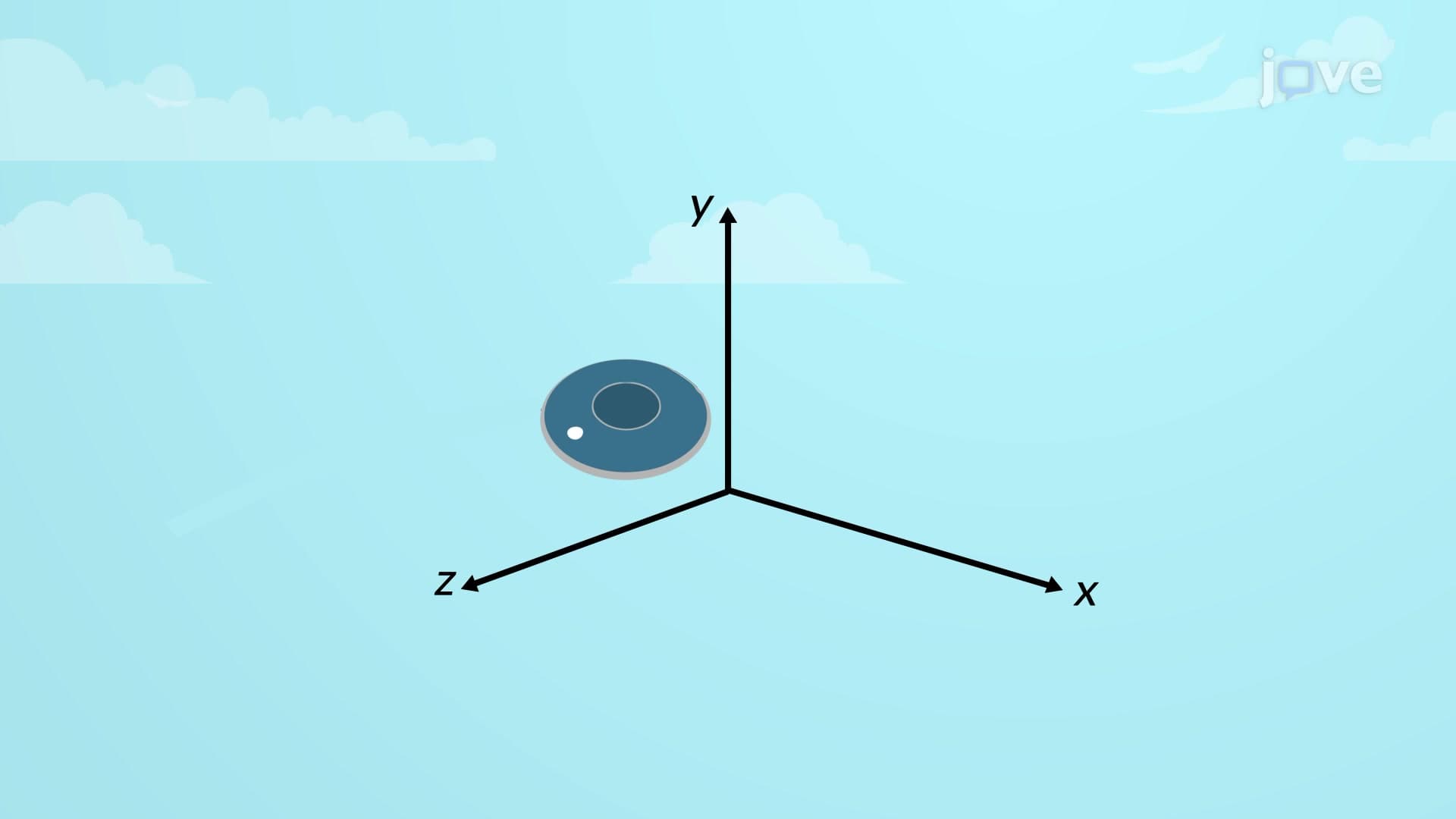
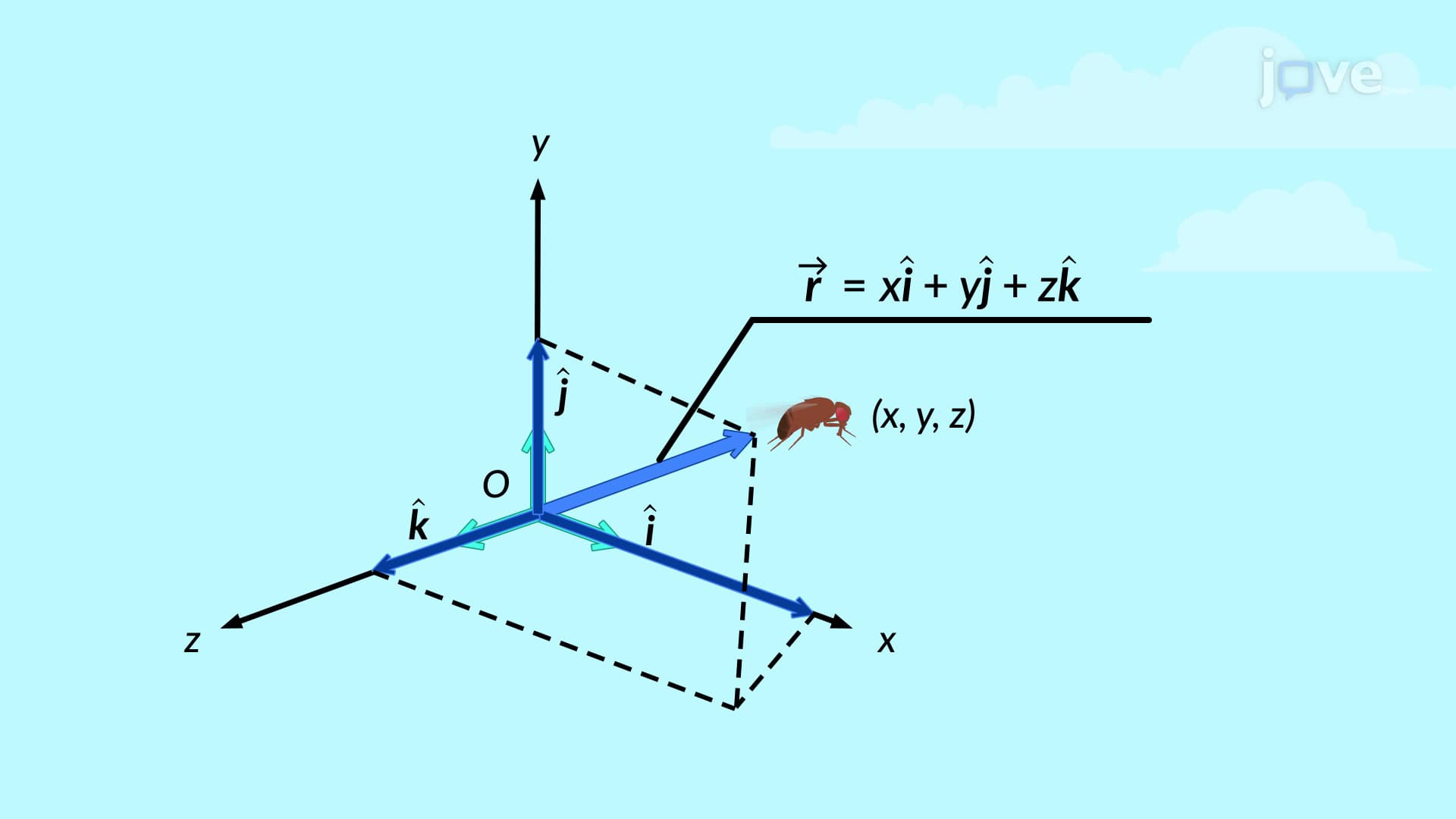
A position vector originates at the coordinate system's origin and terminates at the object's current location. In three-dimensional Cartesian coordinates, we express position vectors as r = xi + yj + zk, where x, y, and z represent the coordinates along each axis, and i, j, k are unit vectors indicating direction. For example, a weather balloon floating above Denver at coordinates (50, 30, 1000) meters would have a position vector r = 50i + 30j + 1000k meters from the launch site origin.
The magnitude of a position vector equals the straight-line distance from the origin to the object's location, calculated using |r| = √(x² + y² + z²). This concept proves essential in fields like aerospace engineering, where NASA engineers track satellite positions relative to Earth's center, and in GPS technology that determines your smartphone's location relative to a global coordinate reference frame.
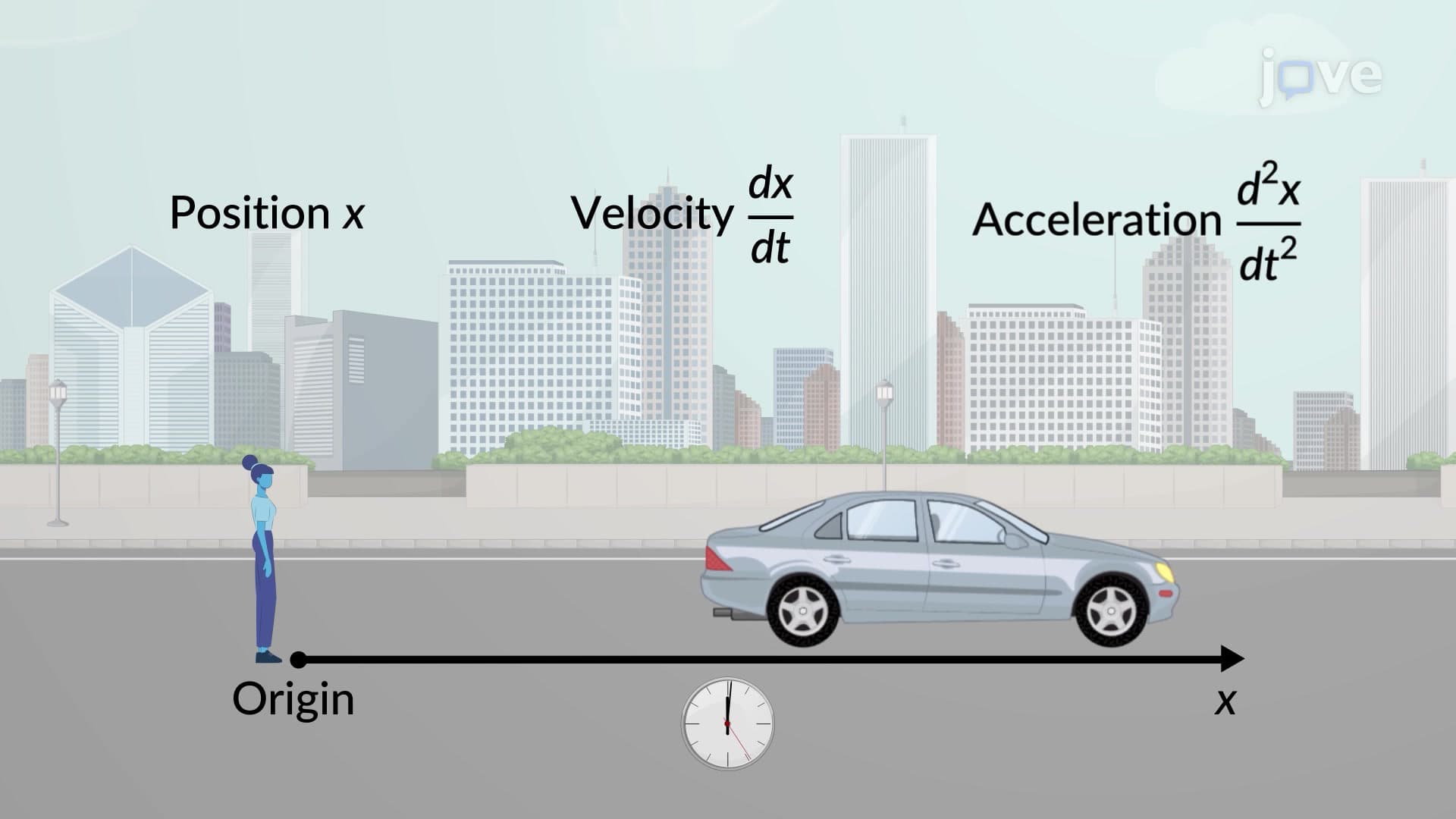
Types of position and displacement vectors vary based on the coordinate system and dimensionality used. Two-dimensional problems, common in introductory physics courses, use only i and j components, while three-dimensional applications incorporate the k component for vertical or depth measurements. Students encounter one-dimensional displacement vectors in basic kinematics problems, such as a car moving along Interstate 95 from Boston to New York.
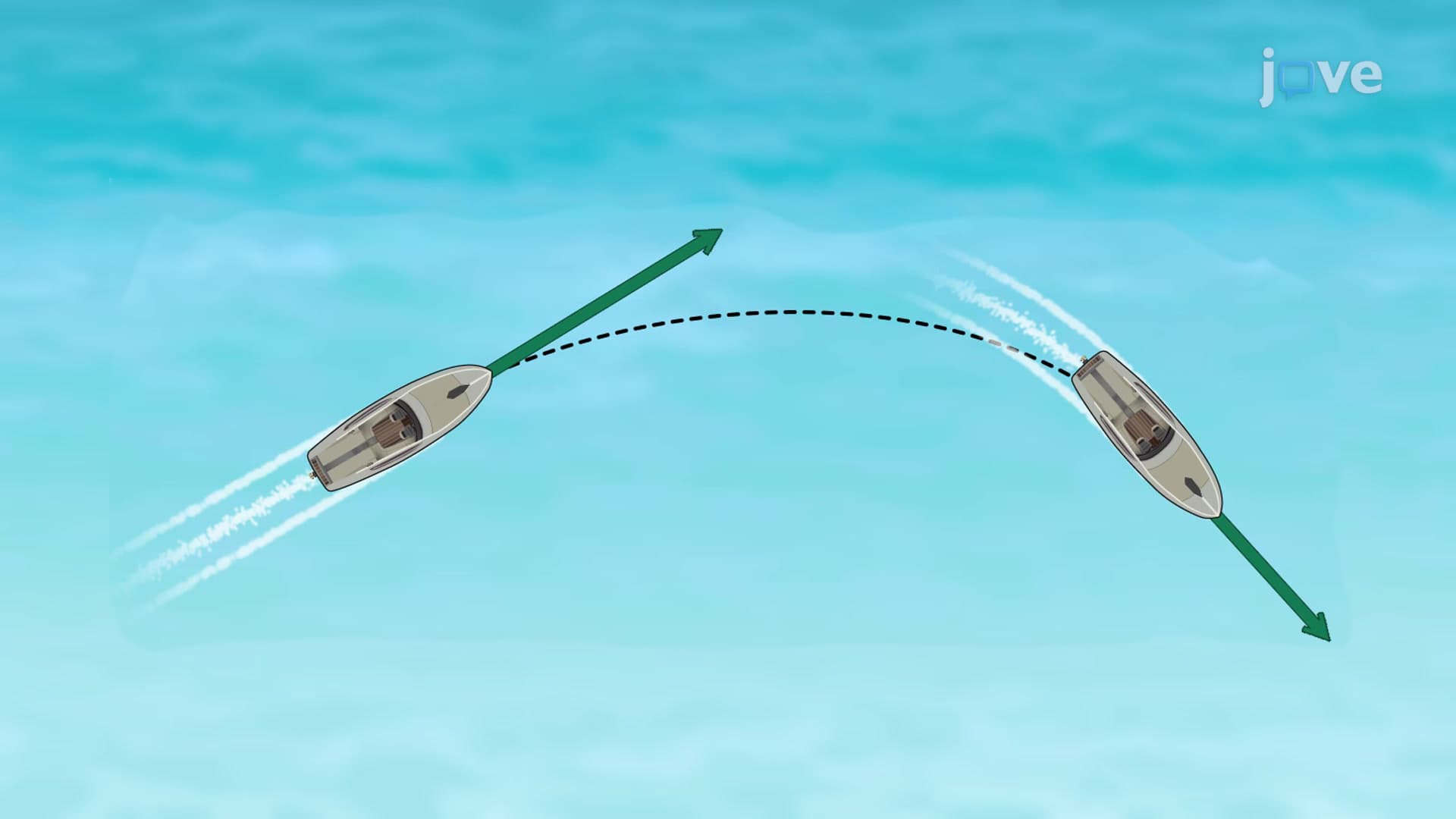
Displacement vectors, represented as Δr = r(final) - r(initial), capture the net change in position regardless of the actual path taken. A delivery truck traveling from warehouse coordinates (10, 5) to customer location (25, 15) experiences displacement Δr = 15i + 10j, even if the driver takes a circuitous route through city streets. This path-independence property distinguishes displacement from distance traveled and appears frequently in SAT Subject Test questions and college physics midterm examinations.
Understanding these vector concepts prepares students for advanced applications in engineering dynamics, where position and displacement vectors describe the motion of robotic arms, aircraft trajectories, and structural vibrations in buildings designed to withstand earthquakes.
Related Micro-courses