Loading video…


 11 Concepts
 154.2K views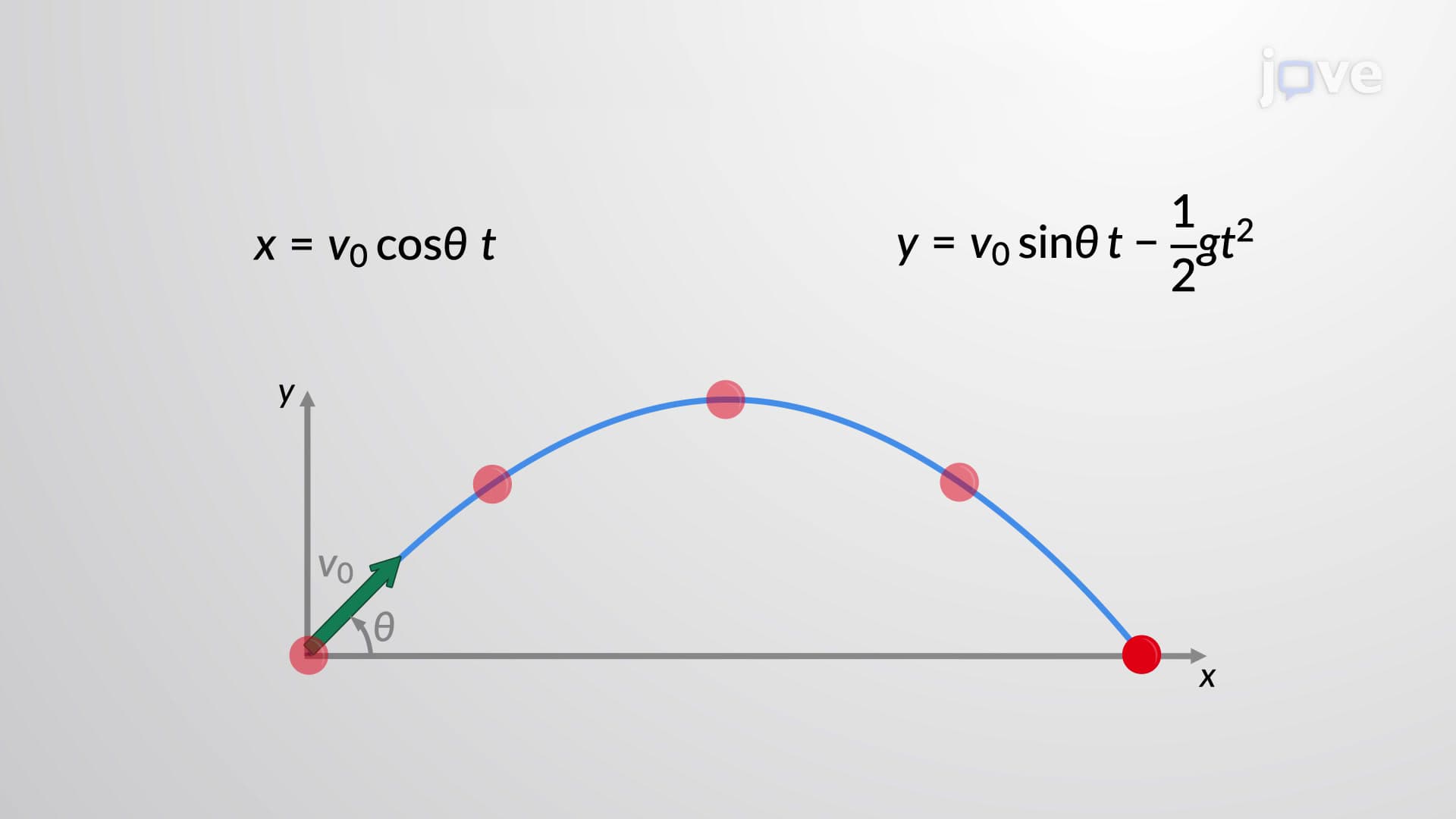

Video Summary: What are Projectile Motion Equations
Ever wondered how NASA calculates the perfect trajectory for a Mars rover landing or how a basketball player knows the ideal angle for a three-pointer? Projectile motion equations are the mathematical tools that describe how objects move through the air under gravity's influence. These fundamental physics equations break down complex curved motion into manageable horizontal and vertical components, revealing why projectiles follow parabolic paths. From analyzing the flight of a baseball at Yankee Stadium to predicting satellite orbits, what are projectile motion equations becomes essential knowledge for any physics student. Watch the full video on JoVE Coach to master this concept with expert-led visuals and step-by-step explanations.
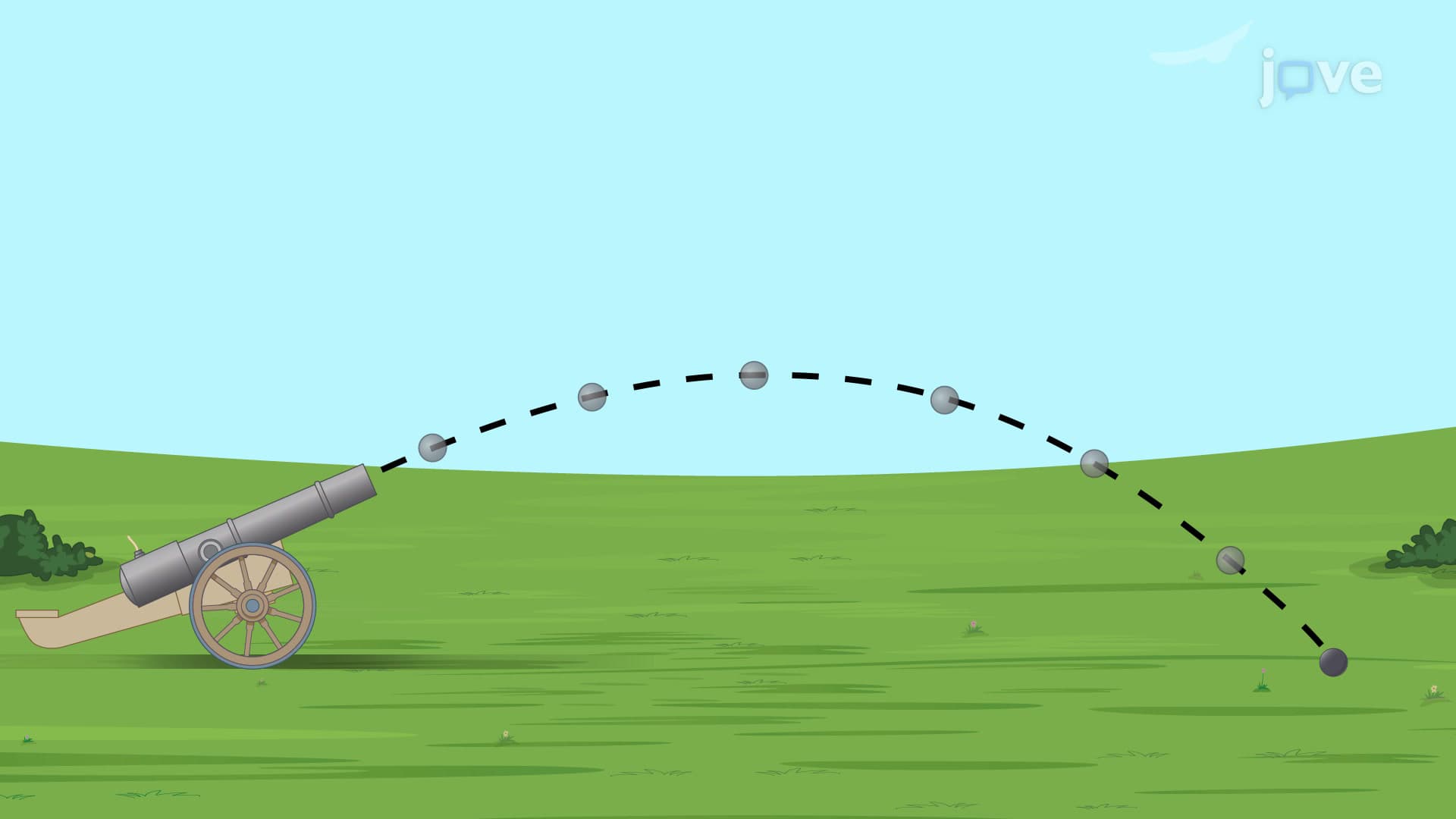
Projectile motion equations form the mathematical foundation for analyzing any object moving through the air under gravity's influence. These equations elegantly solve complex two-dimensional motion by breaking it into independent horizontal and vertical components. The genius lies in recognizing that horizontal motion occurs at constant velocity (no acceleration), while vertical motion experiences constant downward acceleration due to gravity (-9.8 m/s²).
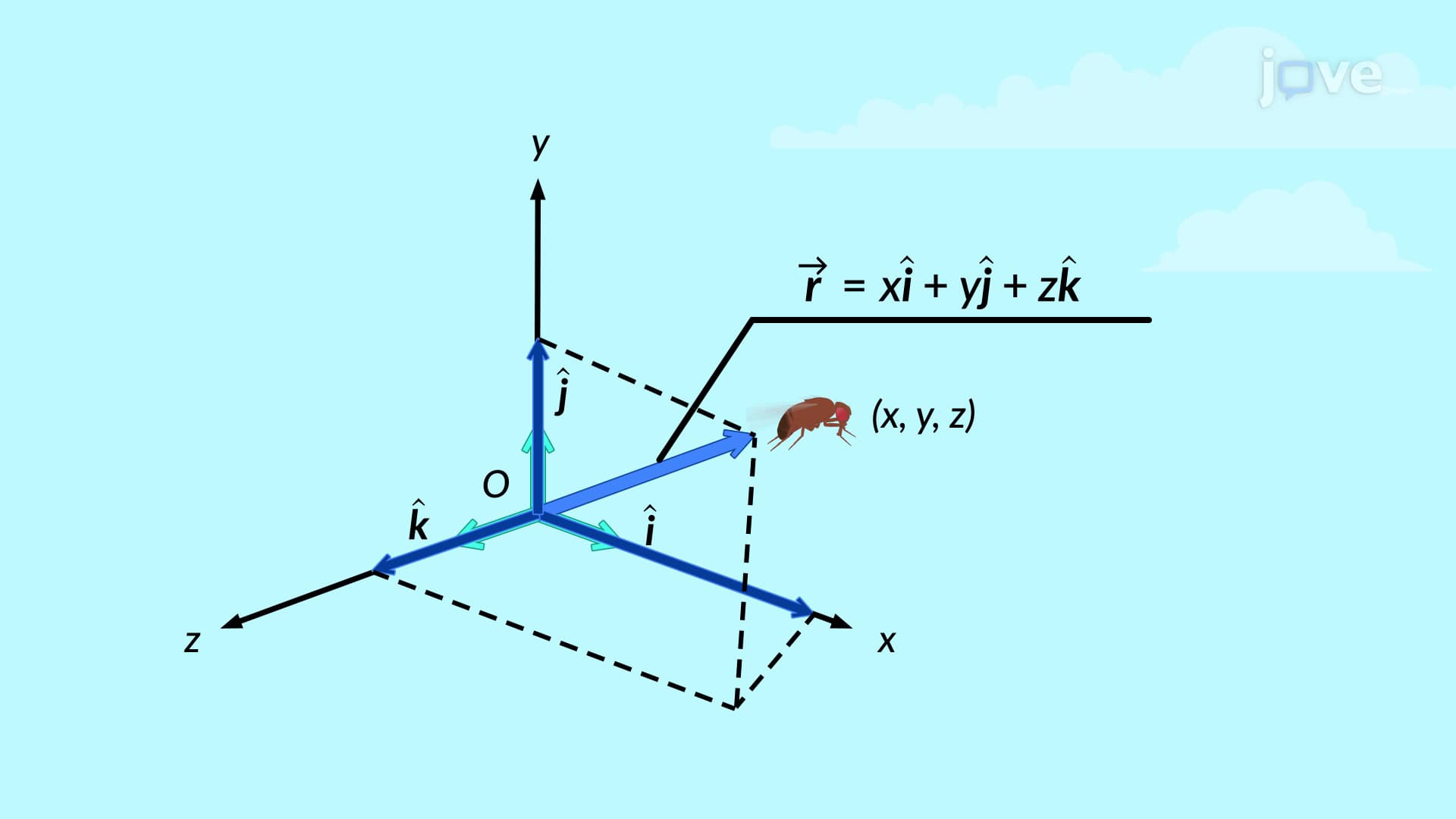
The fundamental types of projectile motion equations include position equations for both axes: x = v₀x × t and y = v₀y × t - (1/2)gt². Velocity equations follow as vx = v₀x (constant) and vy = v₀y - gt. These equations interconnect through trigonometric relationships where v₀x = v₀cos(θ) and v₀y = v₀sin(θ), with θ representing the launch angle.
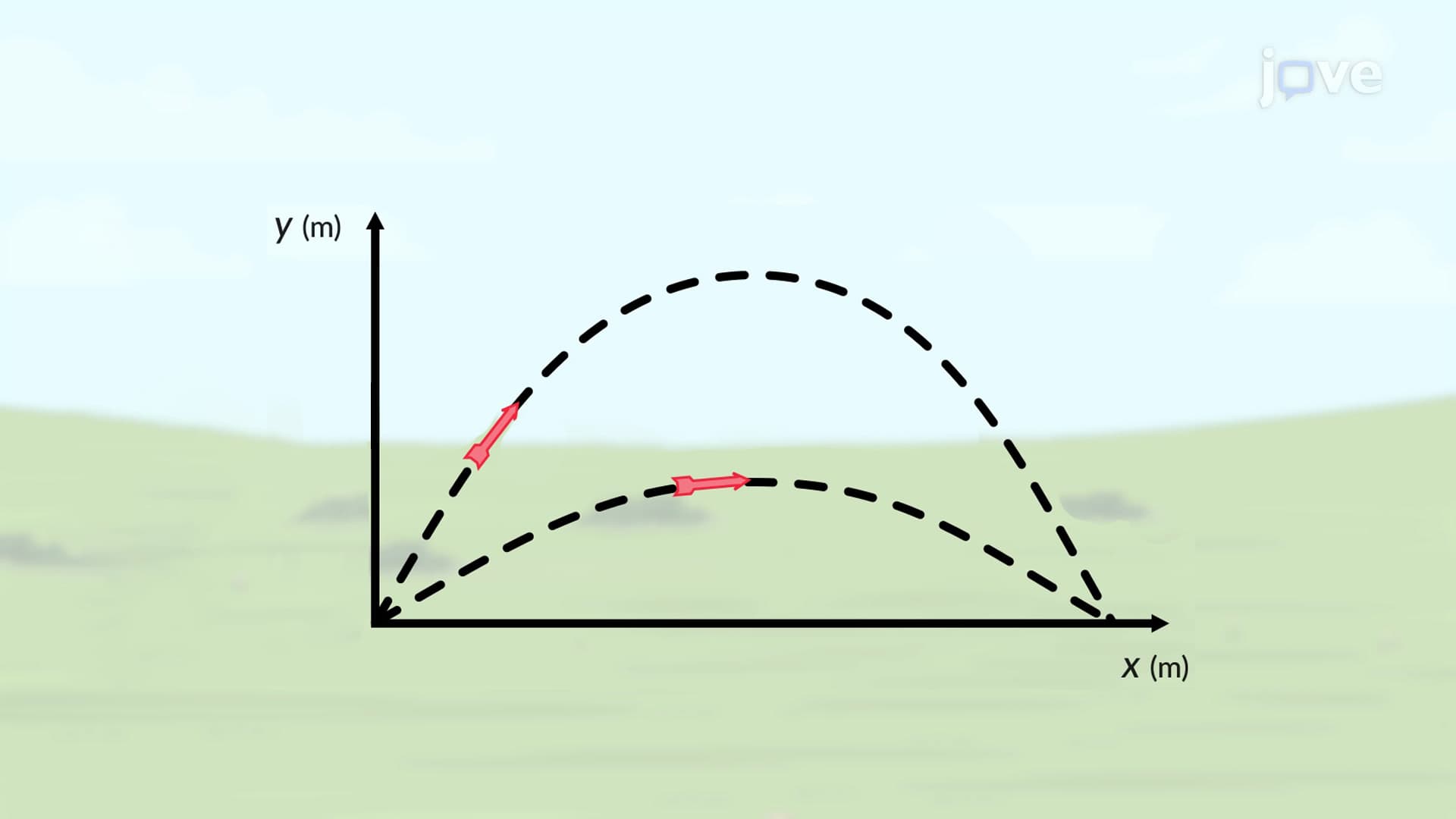
Students preparing for AP Physics exams frequently encounter problems requiring these equations to determine maximum range (R = v₀²sin(2θ)/g) and maximum height (H = v₀²sin²(θ)/2g). The range equation reveals that 45° provides optimal distance for projectiles launched and landing at the same height-explaining why javelin throwers and long jumpers target this angle.
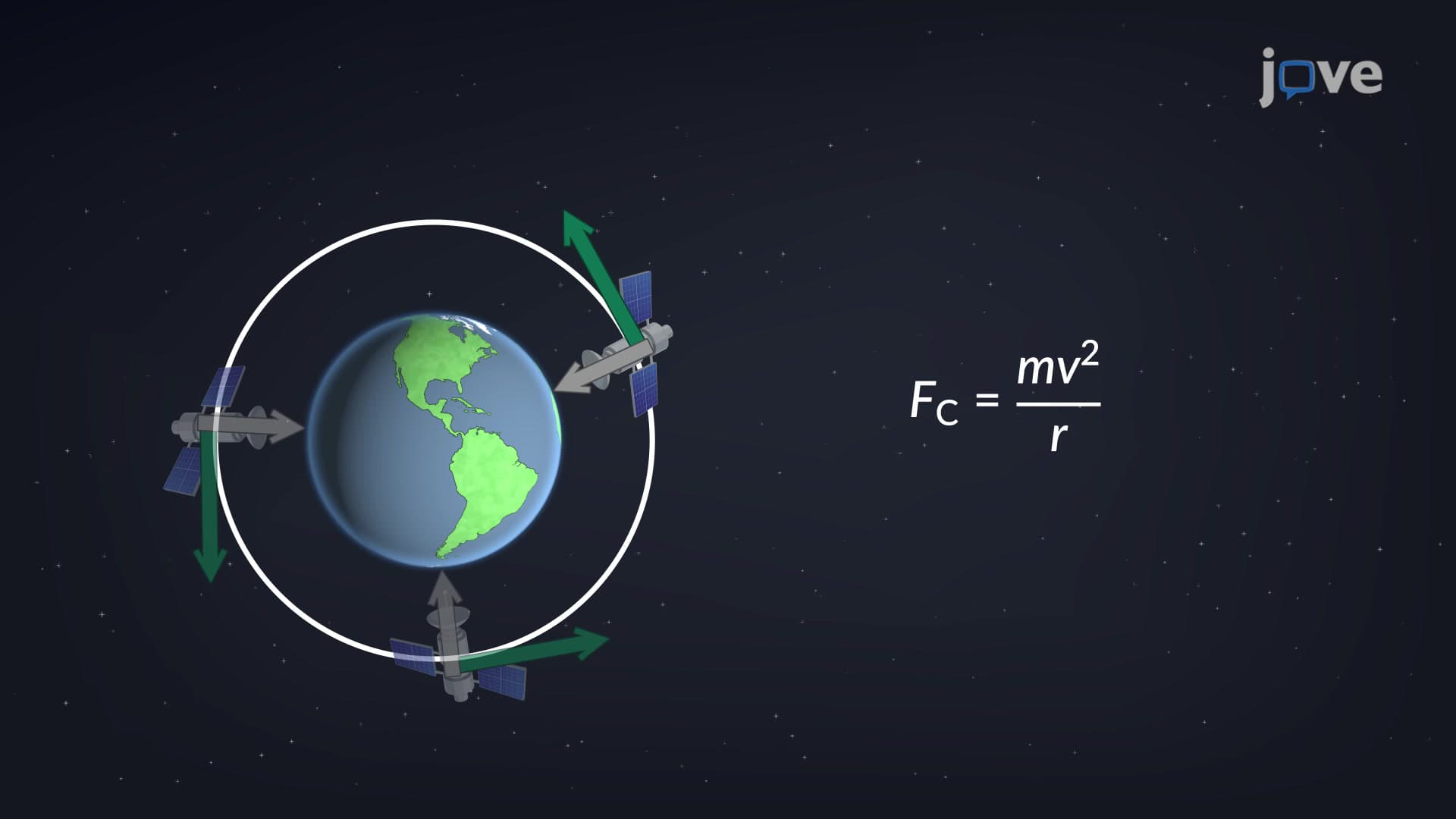
Understanding projectile motion equations basics proves invaluable across numerous fields. NASA engineers use these principles for spacecraft trajectories, accounting for Earth's rotation and gravitational variations. Sports analysts employ projectile motion to optimize athlete performance-basketball shot analysis, golf ball trajectories, and baseball home run predictions all rely on these mathematical relationships.
The trajectory equation y = x×tan(θ) - (gx²)/(2v₀²cos²(θ)) describes the parabolic path characteristic of all projectiles. This equation enables engineers to design everything from water fountain arcs to artillery targeting systems used by the U.S. military.
College physics courses and standardized tests like the SAT Subject Test in Physics emphasize projectile motion problem-solving. Students must master converting between different representations: verbal descriptions, graphs, and mathematical equations. Common exam scenarios include calculating flight times for cliff-launched projectiles, determining optimal angles for maximum range, and analyzing motion at specific trajectory points.
Success requires recognizing that at maximum height, vertical velocity equals zero (vy = 0), while horizontal velocity remains constant throughout flight. This projectile motion equations study guide principle simplifies many complex problems into manageable calculations.
Related Micro-courses