Loading subject page…

- Physics
- Motion in Two or Three Dimensions
- Projectile Motion
Micro-course: Motion in Two or Three Dimensions
154,200 views
Learn key concepts and earn your certificate.

Projectile Motion

00:00
01:20
Video Summary: What Is Projectile Motion
Ever wondered why a basketball follows a curved arc when shot toward the hoop? Projectile motion explains this fascinating phenomenon that governs everything from NFL field goals to NASA rocket launches. When objects are launched at an angle, they follow predictable parabolic paths due to gravity's constant pull. A football quarterback throwing a 40-yard touchdown pass perfectly demonstrates projectile motion in action. Watch the full video on JoVE Coach to master this concept with expert-led visuals and step-by-step explanations.
- Understand what is projectile motion and identify the key components: projectile, trajectory, range, and maximum height
- Analyze how horizontal and vertical motion components operate independently in projectile systems
- Recognize that gravity provides the only significant force affecting projectile motion (assuming negligible air resistance)
- Apply the principle that horizontal velocity remains constant while vertical velocity changes due to gravitational acceleration
- Evaluate how air resistance affects real-world projectile motion compared to ideal vacuum conditions
- Compare the parabolic trajectory shape with different launch angles and initial velocities
- Identify the zenith (maximum height) point where vertical velocity becomes zero
- Explore practical applications of projectile motion in sports, military ballistics, and space exploration
Understanding What is Projectile Motion: Core Principles
What is projectile motion? At its essence, projectile motion describes the curved path any object follows when launched into the air at an angle, subject only to gravitational force. This fundamental physics concept appears everywhere-from a baseball pitcher's curveball to SpaceX rocket trajectories during launch sequences.
The beauty of projectile motion lies in its predictable nature. When a UCLA basketball player shoots a three-pointer, the ball follows a precise parabolic arc determined by initial velocity, launch angle, and gravity's constant downward pull of 9.8 m/s².
Independent Motion Components: Horizontal vs. Vertical
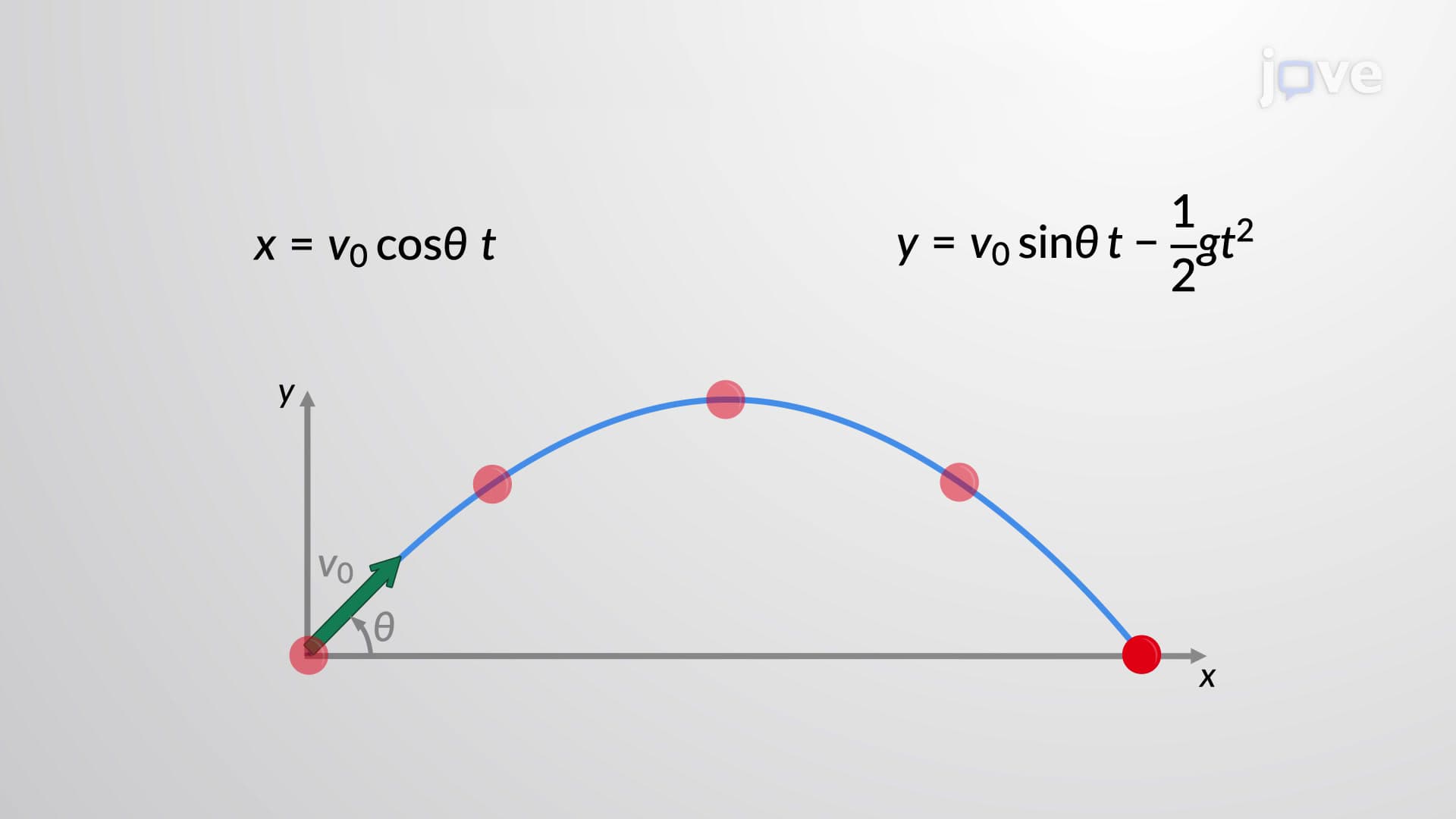
The projectile motion concept breaks down into two independent components. Horizontally, the projectile maintains constant velocity (ignoring air resistance), while vertically, it experiences constant acceleration due to gravity.
Consider a Navy fighter jet launching from an aircraft carrier. The jet's horizontal motion remains steady, but gravity simultaneously pulls it downward. This dual-component analysis simplifies complex calculations and helps students master projectile motion problems on AP Physics exams.
Key Terminology and Trajectory Analysis
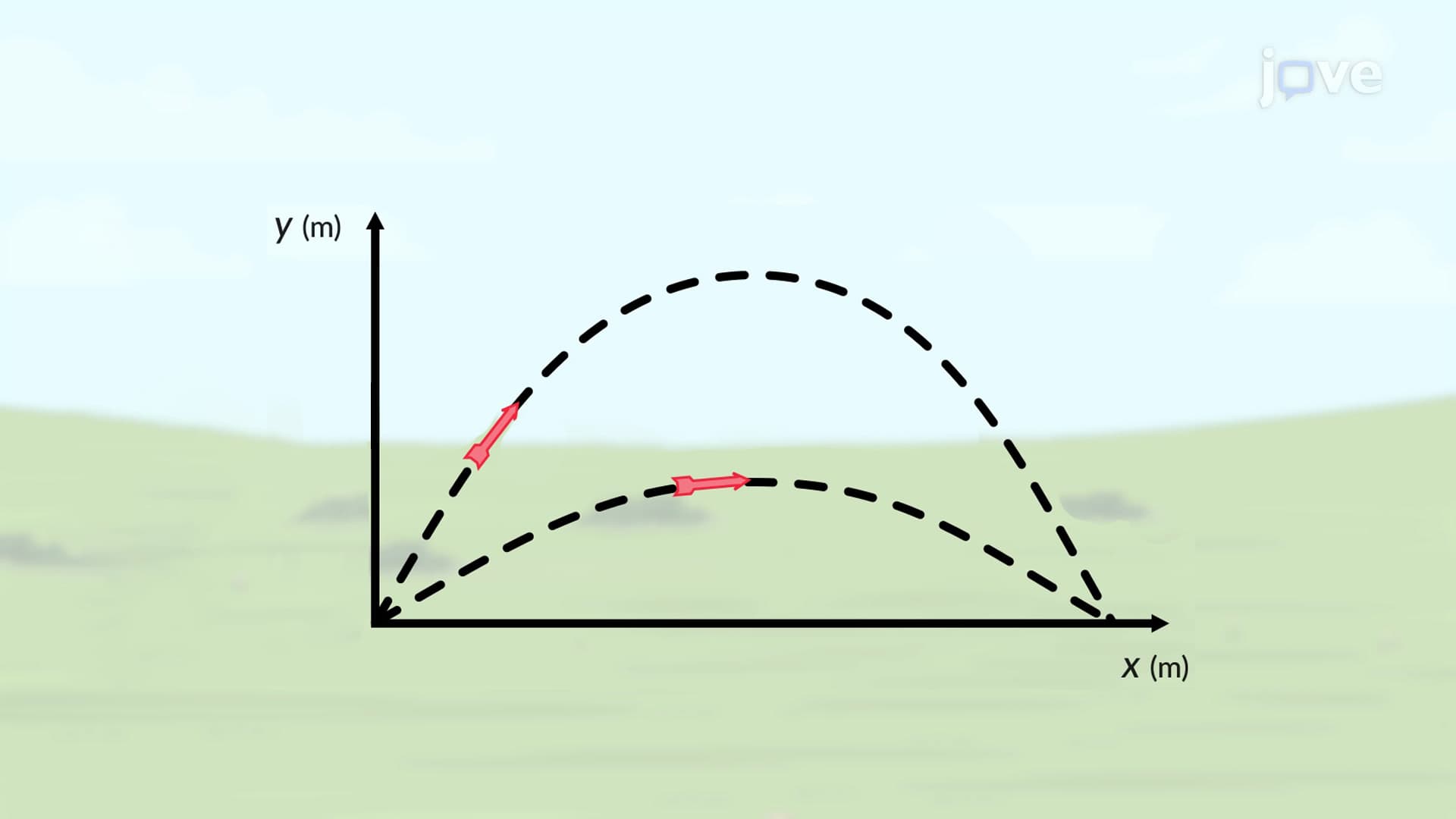
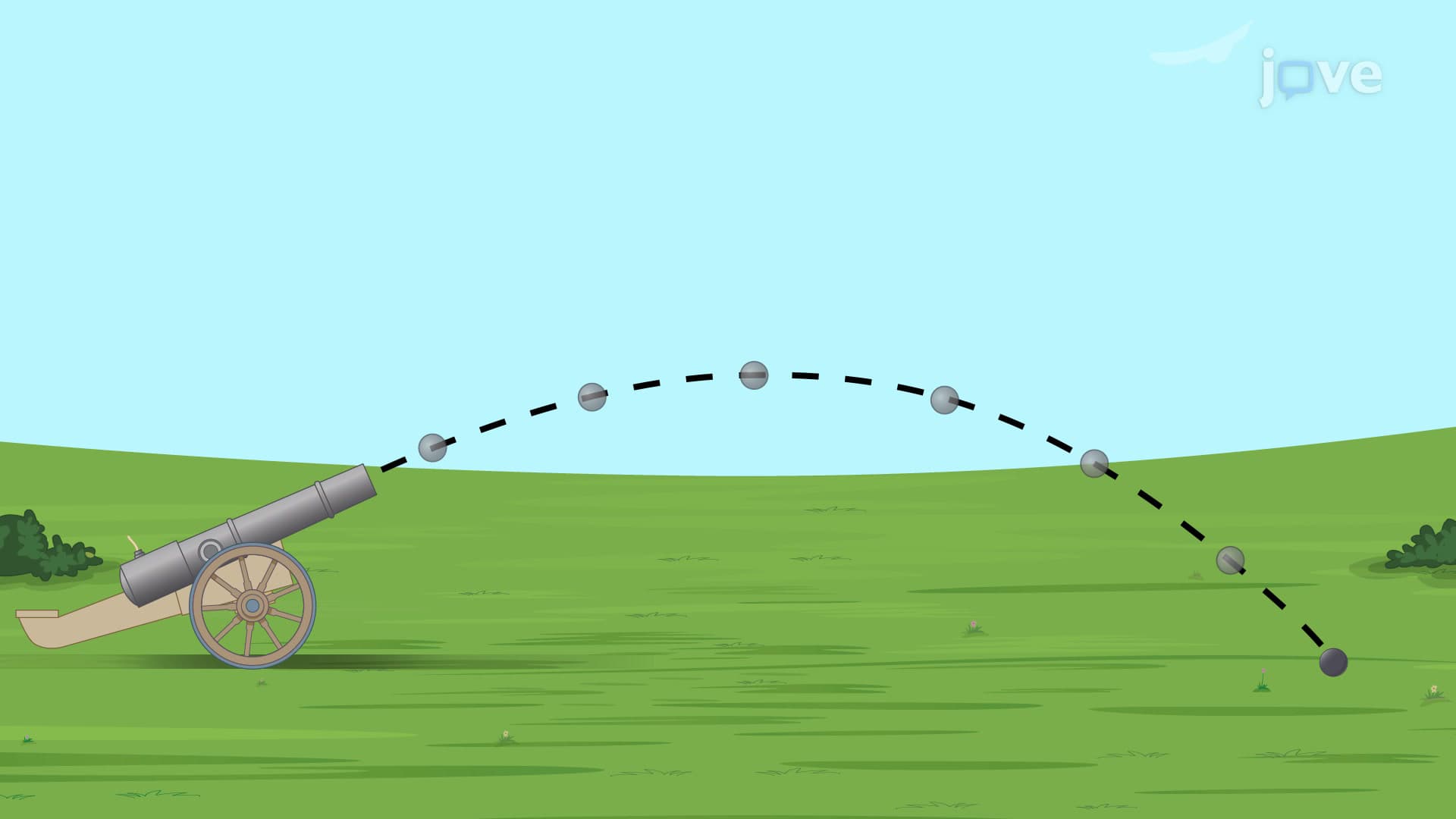
Understanding projectile motion basics requires mastering essential terms. The trajectory represents the complete parabolic path, while range measures horizontal distance traveled. The zenith marks the highest point where vertical velocity momentarily becomes zero.
At the zenith, the projectile experiences a crucial moment-vertical velocity equals zero, but horizontal velocity continues unchanged. This principle helps explain why a football quarterback leads receivers, accounting for both horizontal travel time and gravitational drop.
Real-World Applications and Air Resistance Effects
While idealized projectile motion study guides assume vacuum conditions, real-world scenarios include air resistance. A Major League Baseball pitcher throwing a fastball experiences air drag that reduces both horizontal velocity and overall range compared to theoretical calculations.
Students preparing for SAT Subject Tests or college physics midterms must understand both ideal and realistic scenarios. Military ballistics calculations, NASA mission planning, and even video game physics engines all rely on projectile motion principles, making this concept invaluable for STEM career preparation.
Frequently Asked Questions
Projectile motion is the curved path an object follows when launched into the air at an angle, influenced only by gravity. Think of a basketball shot-it follows a predictable arc due to gravity pulling it downward while maintaining forward momentum.
Projectile motion combines two independent motions: constant horizontal velocity and uniformly accelerated vertical motion due to gravity. The resulting trajectory forms a parabola, with range and maximum height determined by initial velocity and launch angle.
AP Physics 1 and Physics C exams frequently test projectile motion through multi-step problems involving range calculations, time of flight, and maximum height. Students must apply kinematic equations separately to horizontal and vertical components.
The MCAT Physics section tests projectile motion within broader mechanics problems. Students need to identify when objects follow parabolic paths and apply appropriate kinematic equations for exam success.
NFL kickers use projectile motion principles for field goals, adjusting angle and force for optimal range. NBA players intuitively apply these concepts when shooting three-pointers, accounting for arc height and horizontal distance.
Basic algebra and trigonometry suffice for introductory projectile motion. High school students can master fundamental concepts using simple kinematic equations without requiring calculus knowledge.
Practice drawing trajectory diagrams, separating horizontal and vertical components visually. Work through problems systematically, identifying given values and choosing appropriate kinematic equations for each motion direction.
Circular motion, energy conservation, and momentum provide natural progressions. These topics build on projectile motion foundations while introducing rotational dynamics and collision analysis essential for advanced physics courses.
Related Micro-courses
16 Concepts

10 Concepts
15 Concepts