Loading video…


 19 Concepts
 22.5K views

Video Summary: Ionic Strength Effects on Chemical Equilibria Explained
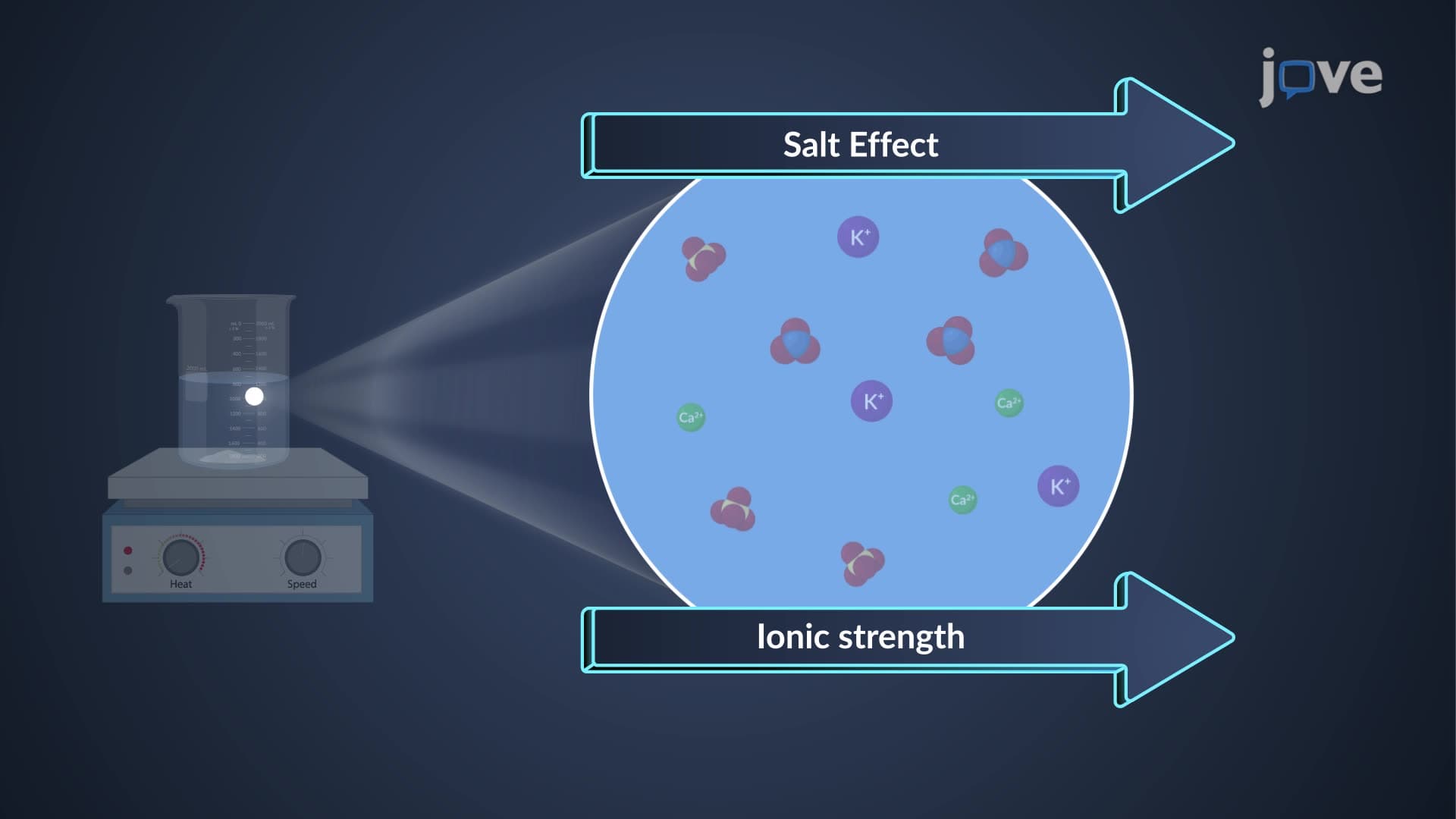
Ever wonder why adding table salt to water can actually make other salts dissolve better? Ionic strength equilibria effects explain this fascinating phenomenon where "innocent bystander" ions dramatically shift chemical equilibrium. When researchers at the University of California added potassium nitrate to calcium sulfate solutions, solubility increased by 30% - demonstrating how ionic strength effects on chemical equilibria can override our basic solubility predictions. Watch the full video on JoVE Coach to master this concept with expert-led visuals and step-by-step explanations.
The concept of ionic strength effects on chemical equilibria revolutionizes our understanding of how dissolved ions behave in aqueous solutions. Unlike the simplified models taught in introductory chemistry, real solutions contain complex ionic interactions that significantly alter equilibrium positions. When we add seemingly "inert" salts to solutions containing sparingly soluble compounds, we observe dramatic increases in solubility that classical equilibrium theory cannot explain.
The key to understanding how ionic strength shifts chemical equilibrium lies in the concept of ionic atmospheres. Every ion in solution becomes surrounded by a cloud of oppositely charged ions, creating what chemists call an ionic atmosphere. This phenomenon occurs because coulombic forces attract opposite charges while repelling like charges. When we add potassium nitrate to a calcium sulfate solution, the K+ and NO3- ions don't just sit passively - they actively participate in forming these ionic atmospheres around Ca2+ and SO42- ions.
The ionic atmosphere effectively "screens" the charges on the primary ions, reducing their apparent charges and weakening the electrostatic attractions between Ca2+ and SO42-. This charge screening allows more calcium sulfate to dissolve, shifting the equilibrium toward the dissociated ionic forms. Students preparing for AP Chemistry exams should note that this effect becomes more pronounced with higher ionic strengths and more highly charged ions.
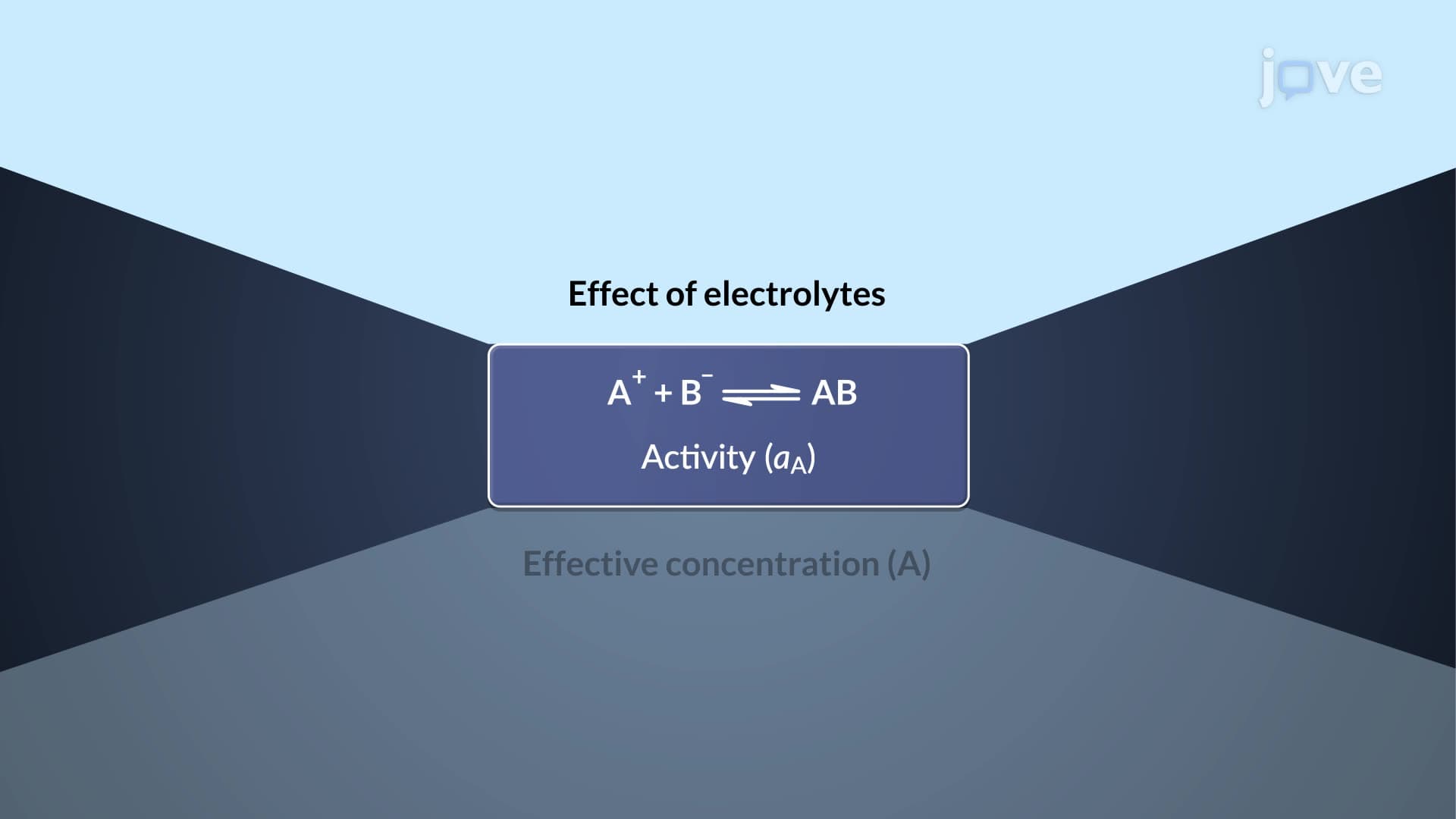
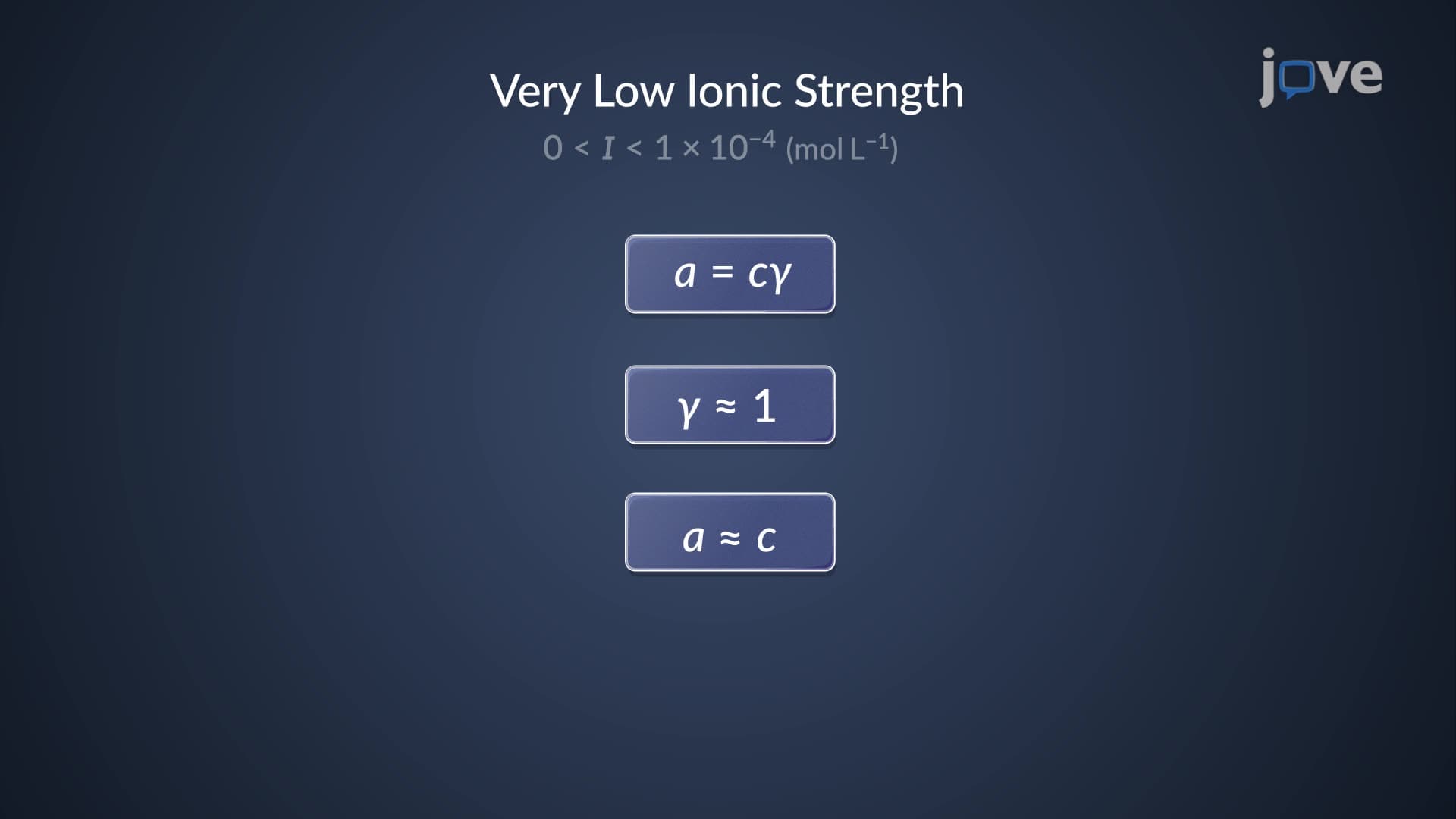
The mathematical treatment of ionic strength effects involves activity coefficients, which correct for deviations from ideal behavior. The Debye-Hückel equation provides the theoretical framework for calculating these coefficients. As ionic strength increases, activity coefficients for most ions decrease below unity, meaning their "effective concentrations" become lower than their actual molar concentrations.
For MCAT preparation, students should understand that equilibrium constants expressed in terms of activities (rather than concentrations) remain truly constant, while apparent equilibrium constants based on concentrations vary with ionic strength. This distinction proves crucial in pharmaceutical chemistry, where drug solubility and bioavailability depend heavily on the ionic environment.
Water treatment facilities across the United States routinely exploit ionic strength effects when removing heavy metals from contaminated groundwater. Environmental engineers at companies like CH2M Hill use controlled ionic strength adjustments to optimize precipitation processes. Similarly, pharmaceutical companies like Pfizer and Merck carefully control ionic strength in drug formulations to ensure consistent bioavailability and stability.
College students studying analytical chemistry will encounter these principles when learning about buffer systems, where ionic strength significantly affects pH measurements and electrode potentials. Understanding these effects proves essential for accurate quantitative analysis in clinical laboratories nationwide.
Related Micro-courses