Chemical equilibria governs how reactions reach balance and quantifies the concentrations of reactants and products at steady state. This comprehensive course explores equilibrium constants chemistry, including how chemical equilibrium is established and quantified through thermodynamic principles, activity coefficients, and ionic strength effects. Master systematic approaches to equilibrium calculations used in analytical chemistry, environmental science, and pharmaceutical applications across the United States. JoVE Coach provides interactive learning tools to enhance your understanding.
Understand how ionic strength affects chemical equilibria and solubility through the salt effect
Learn to calculate activity coefficients using the Debye-Hückel equation for real solutions
Analyze the relationship between chemical potential, activity, and thermodynamic equilibrium constants
Apply systematic approaches to solve complex equilibrium problems with multiple reactions
Explore acid-base equilibria using activity-based pH definitions and ladder diagrams
Identify factors affecting complex formation and the chelate effect in coordination chemistry
Understand redox equilibria and electrochemical potential relationships
Master solubility equilibria calculations including Ksp and common ion effects
Analyze titrimetric methods and their applications in quantitative analysis
1. Ionic Strength and Activity Effects
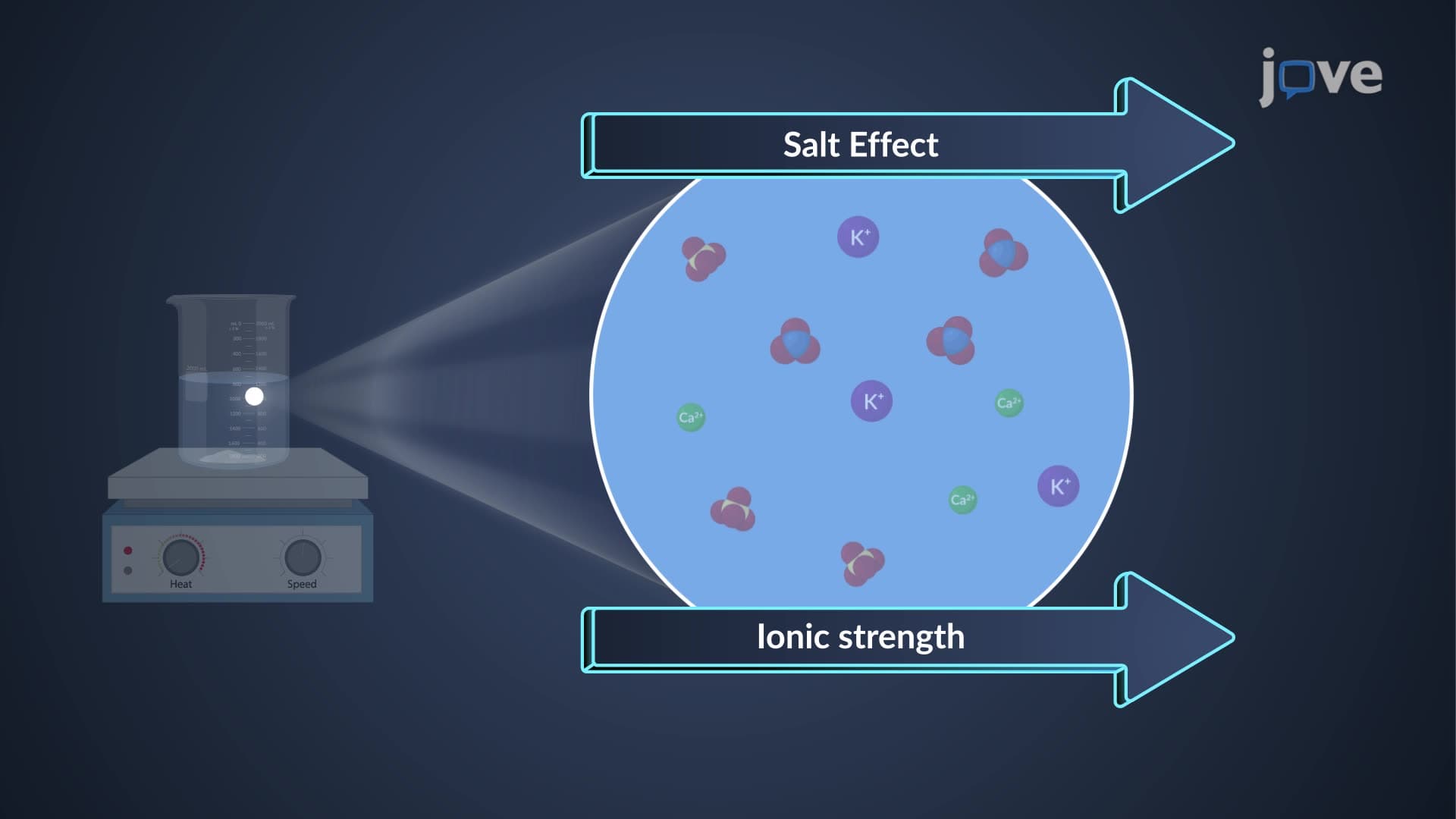
Ionic strength quantifies the total concentration of ions in solution, calculated as I = ½Σ(ci × zi²), where ci is concentration and zi is charge. When potassium chloride dissolves in water at a hospital pharmacy, the ionic atmosphere around each ion affects drug solubility and bioavailability. Higher ionic strength solutions, like those used in IV fluids, show significant deviations from ideal behavior. The salt effect increases solubility of sparingly soluble compounds like calcium sulfate when inert salts are added, explaining why mineral content affects water treatment processes in municipal systems across the US.
2. Activity Coefficients and Real Solution Behavior
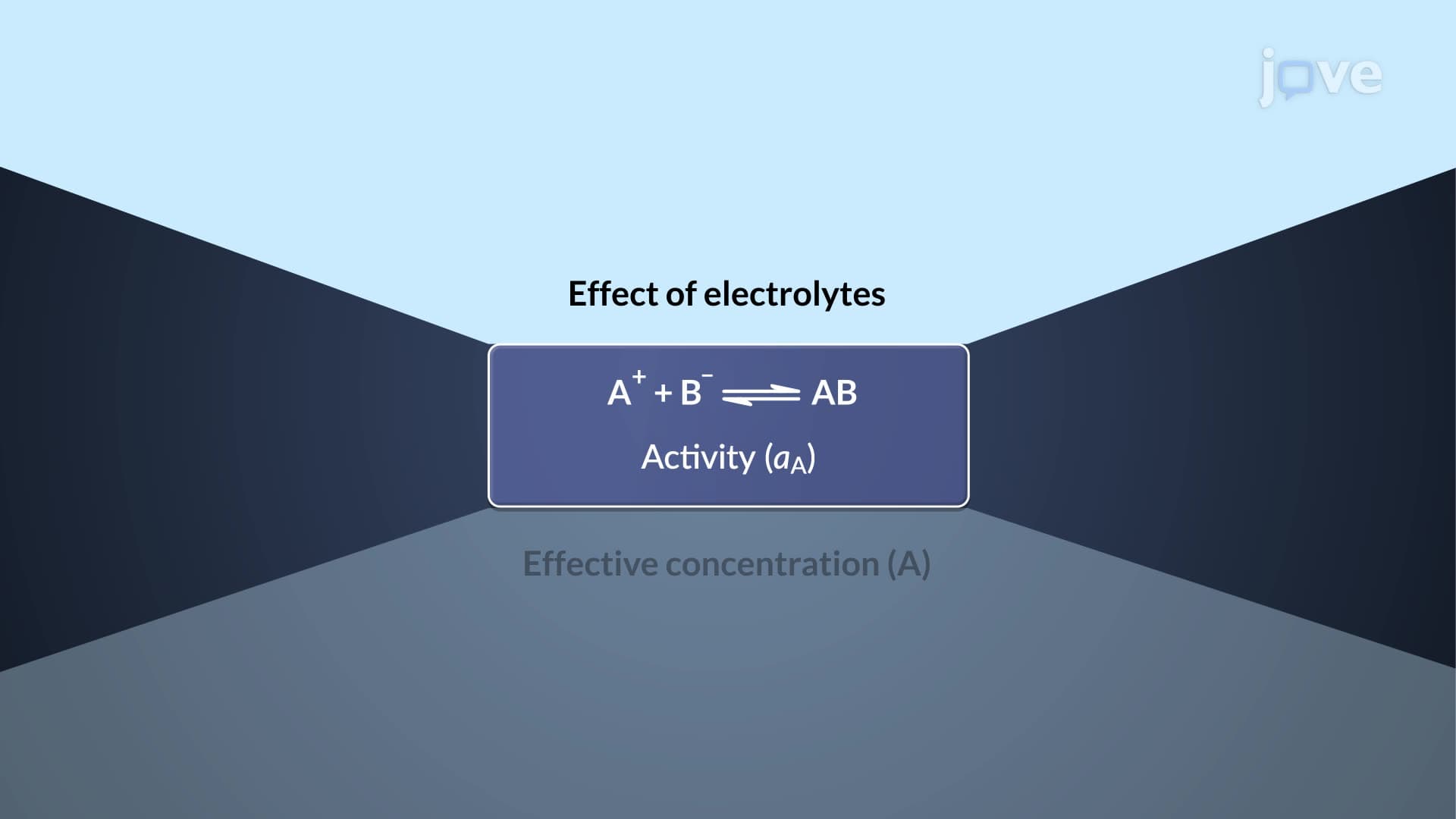
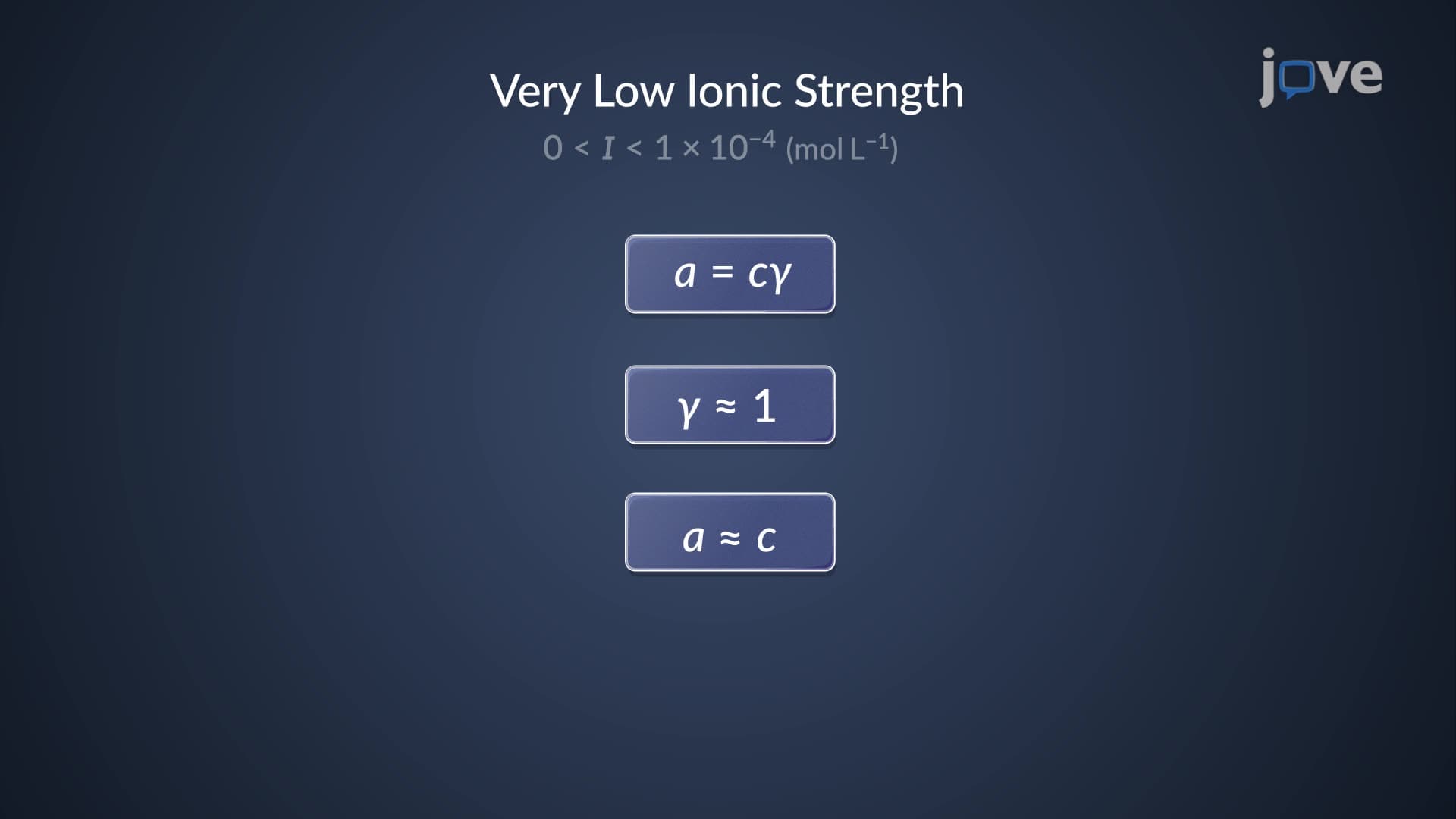
Activity represents effective concentration, expressed as a = γ × c, where γ is the activity coefficient. In dilute solutions used for standardizing analytical instruments, activity coefficients approach unity, making concentration equal to activity. However, in concentrated solutions like those in industrial wastewater treatment, activity coefficients deviate significantly from 1.0. The Debye-Hückel equation predicts these deviations, crucial for accurate pH measurements in environmental monitoring stations throughout the United States. Understanding activity is essential for pharmaceutical formulations where drug interactions depend on effective concentrations.
3. Thermodynamic Equilibrium Constants
True equilibrium constants use activities rather than concentrations, expressed as K = (aProducts)/(aReactants). This distinction becomes critical in high ionic strength solutions found in biological systems. For example, blood plasma contains approximately 0.15 M ionic strength, requiring activity corrections for accurate drug dosing calculations in hospitals. The relationship between concentration and thermodynamic equilibrium constants explains why buffer effectiveness changes in physiological solutions. Environmental engineers use these principles when designing water treatment systems for varying ionic strength conditions across different US regions.
4. Systematic Equilibrium Calculations
Complex equilibrium systems require systematic approaches involving mass balance, charge balance, and equilibrium expressions. Consider a wastewater treatment plant removing heavy metals: multiple equilibria occur simultaneously including precipitation, complexation, and acid-base reactions. The systematic method ensures equal numbers of equations and unknowns, making problems solvable. Mass balance tracks total metal concentration, charge balance maintains electroneutrality, and equilibrium expressions define reaction extents. This approach is essential for environmental compliance calculations required by EPA regulations in industrial facilities.
5. Activity-Based pH Measurements
pH is accurately defined as pH = -log(aH+) rather than concentration alone. In pure water at 25°C, ionic strength approaches zero, so activity equals concentration. However, adding salts like those in physiological solutions decreases activity coefficients, affecting actual pH values. Clinical laboratories must account for these effects when calibrating pH meters for blood gas analysis. The difference between concentration and activity-based pH becomes significant in high-salt environments like seawater desalination plants along US coastlines, where accurate pH control prevents equipment corrosion.
6. Ladder Diagrams for Equilibrium Visualization
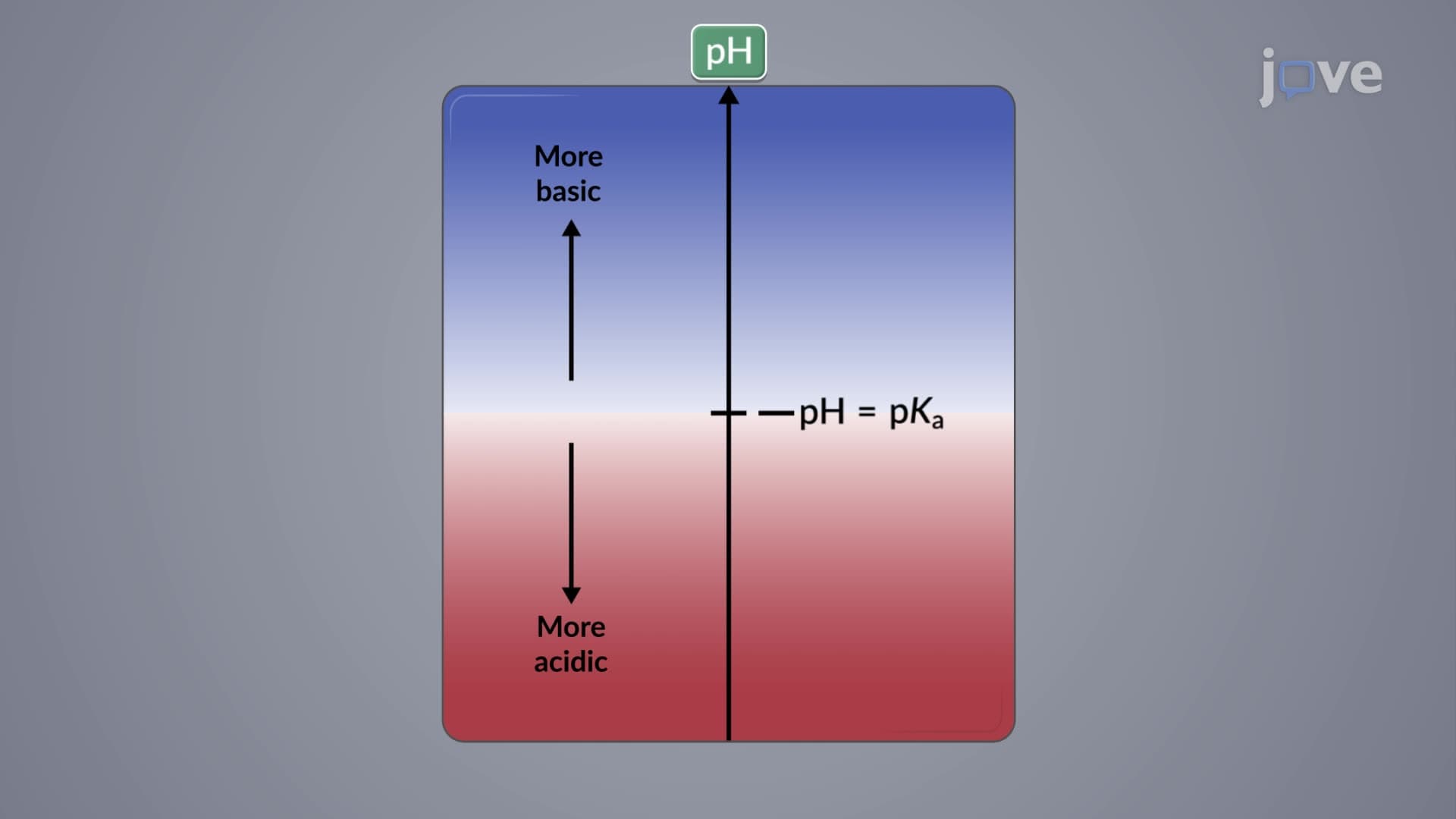
Ladder diagrams graphically represent species distribution in acid-base, redox, and complexation systems. For acid-base systems, horizontal lines at pKa values separate predominance regions on pH scales. Environmental scientists use these diagrams to predict ammonia toxicity in water systems, since NH₃ (toxic) predominates above pH 9.24 while NH₄⁺ (less toxic) dominates below. Redox ladder diagrams using electrochemical potential help predict metal corrosion in infrastructure. Complexation diagrams guide chelation therapy dosing in hospitals treating heavy metal poisoning cases across the United States.
7. Solubility Equilibria and Precipitation
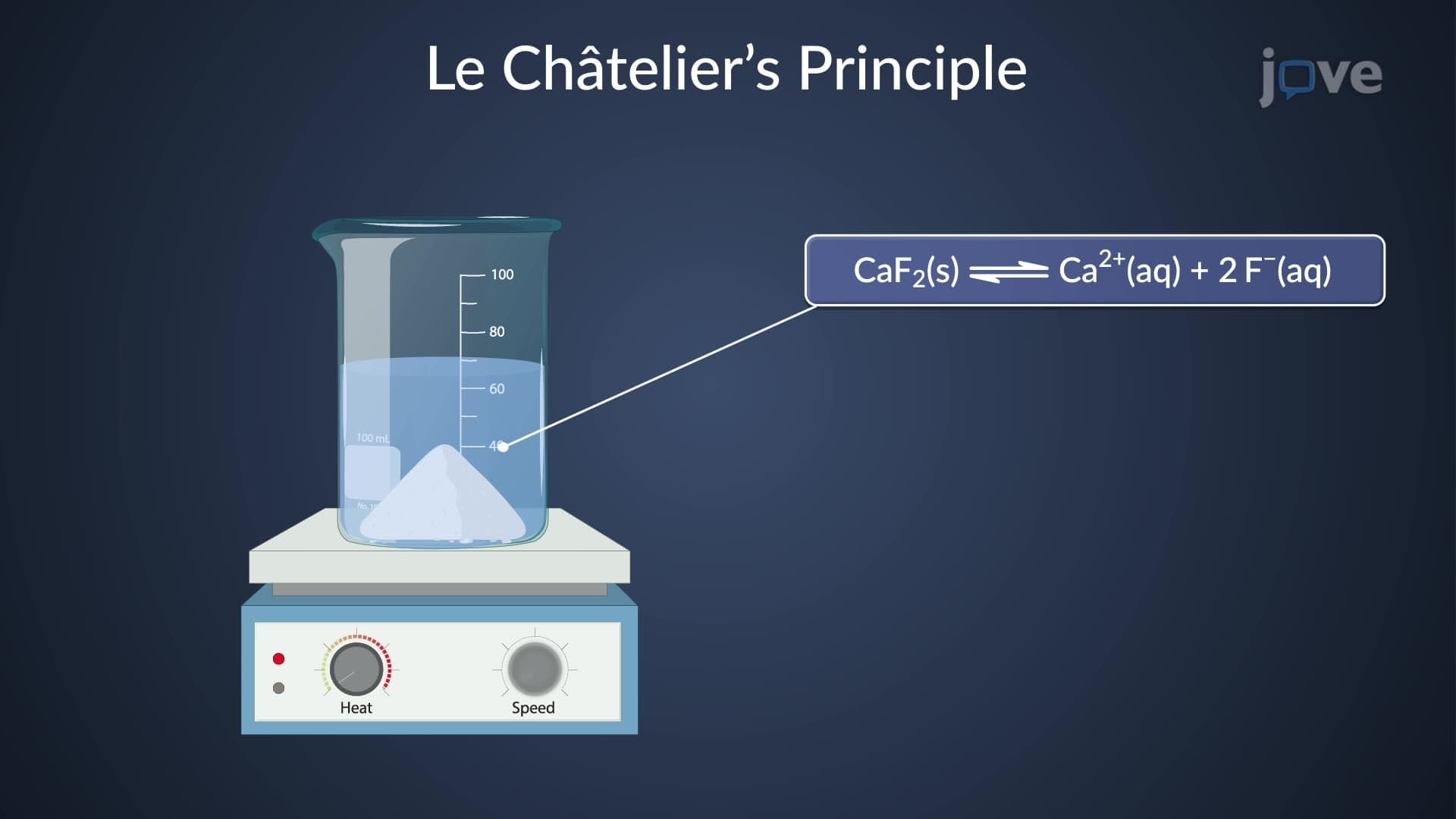
Solubility products (Ksp) quantify sparingly soluble salt equilibria through Ksp = [cation]^m[anion]^n expressions. Hard water treatment plants across the Midwest use these principles to prevent calcium carbonate scale formation in pipes. Temperature increases generally increase Ksp values, explaining why hot water systems experience more scaling problems. Common ion effects decrease solubility, utilized in water softening processes where added sodium reduces calcium carbonate solubility. These calculations are essential for designing municipal water treatment systems meeting Safe Drinking Water Act requirements.
8. Complexation Equilibria and Chelation
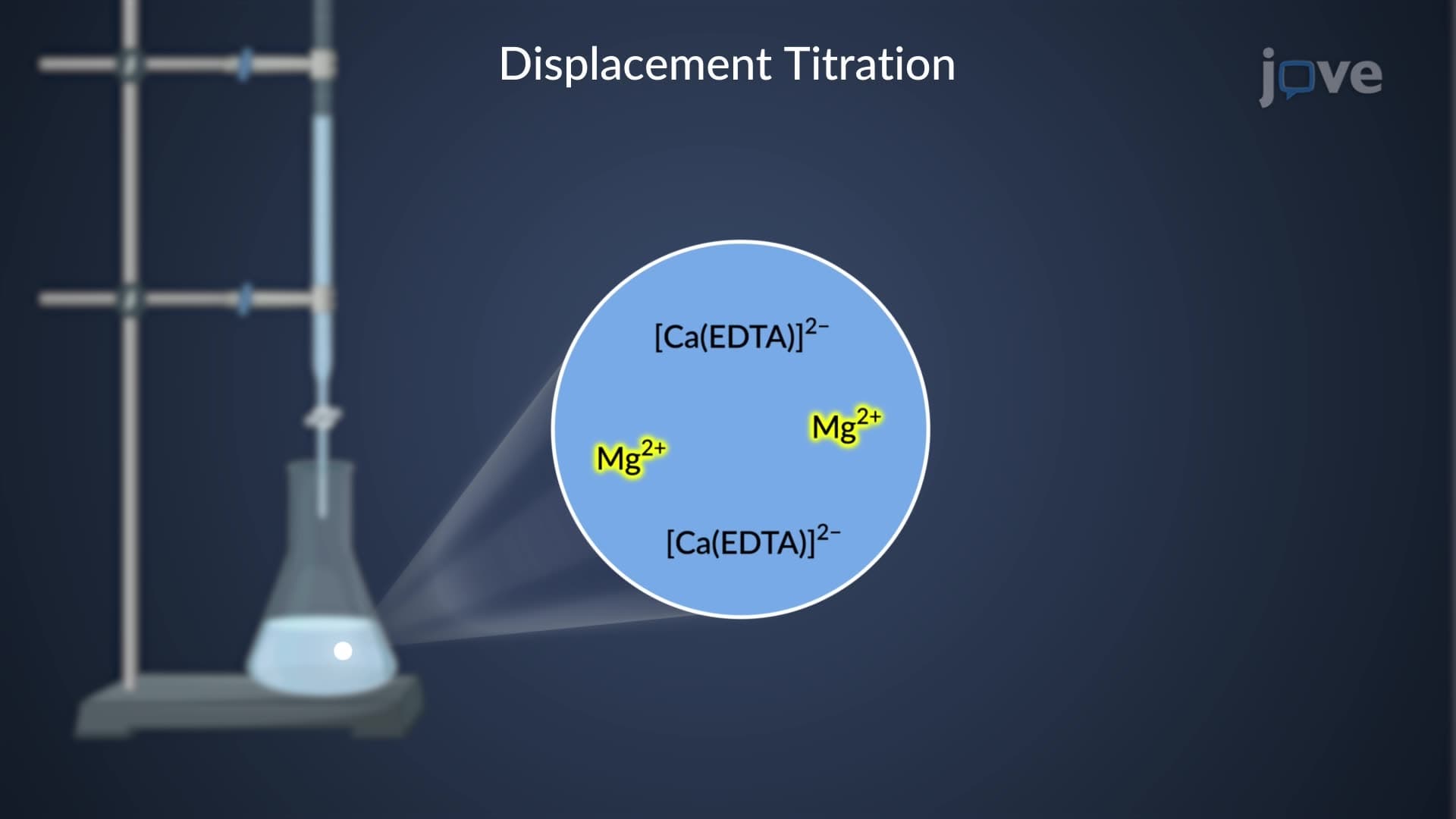
Formation constants (Kf) quantify metal-ligand complex stability, with larger values indicating stronger complexes. EDTA chelation therapy removes lead from children's blood by forming highly stable complexes (log Kf = 18.0 for Pb-EDTA). The chelate effect explains why multidentate ligands like EDTA form more stable complexes than monodentate ligands due to favorable entropy changes. Class A metals (Ca²⁺, Mg²⁺) prefer oxygen/nitrogen donors, while Class B metals (Hg²⁺, Cd²⁺) prefer sulfur donors. This classification guides antidote selection in US poison control centers treating metal toxicity cases.
9. Redox Equilibria and Electrochemical Relationships
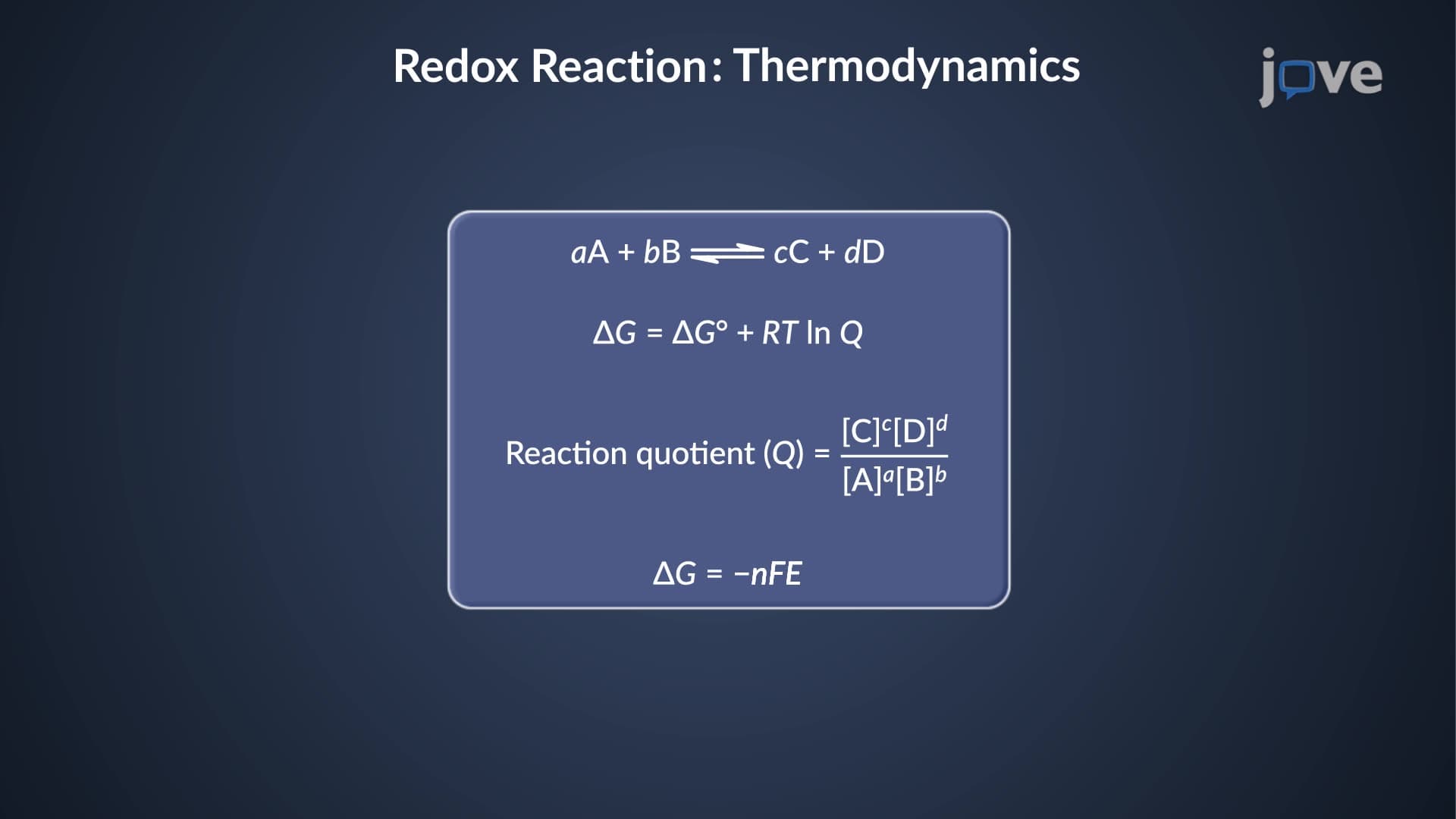
Redox equilibria involve electron transfer quantified by the Nernst equation: E = E° - (0.0592/n)log Q at 25°C. Standard potentials predict reaction spontaneity, with positive E values indicating favorable reactions. Water treatment facilities use chlorine (E° = +1.36 V) to oxidize organic contaminants because of its high oxidizing potential. The relationship ΔG° = -nFE° connects electrochemical and thermodynamic data, essential for battery design and corrosion prevention in infrastructure projects. These principles guide selection of sacrificial anodes protecting pipelines and bridge structures throughout the United States.
Frequently Asked Questions
Concentration-based constants use molarity values directly, while activity-based constants account for ionic interactions in solution. Activity becomes important when ionic strength exceeds 0.01 M, such as in physiological solutions or seawater. Activity equals concentration times the activity coefficient, which deviates from 1.0 in concentrated solutions due to ion-ion interactions.
Higher ionic strength generally increases solubility of sparingly soluble drugs through the salt effect. Hospital IV solutions contain salts that can increase drug solubility, affecting bioavailability and dosing requirements. Pharmaceutical companies must consider these effects when formulating medications for different administration routes.
Focus on writing equilibrium expressions, calculating equilibrium constants, applying Le Chatelier's principle, and solving ICE table problems. The AP exam emphasizes conceptual understanding of how equilibrium responds to changes in concentration, temperature, and pressure rather than complex activity coefficient calculations.
Start by identifying all chemical species and reactions, write equilibrium expressions for each reaction, create mass balance equations, apply charge balance for ionic solutions, and count equations versus unknowns. Make reasonable assumptions about dominant species to simplify calculations, then verify assumptions with your final answer.
Students often struggle with identifying all relevant equilibria in complex systems and setting up proper mass/charge balance equations. The mathematical complexity of solving multiple simultaneous equations can be overwhelming. Practice with systematic approaches and start with simpler two-equilibrium systems before advancing to more complex scenarios.
Environmental scientists use equilibrium principles to predict pollutant behavior, design treatment systems, and assess ecosystem health. For example, pH buffering in natural waters, heavy metal speciation affecting toxicity, and carbonate equilibria influencing ocean acidification all rely on equilibrium calculations for regulatory compliance and environmental protection.
Practice systematic problem-solving approaches consistently, create concept maps linking different equilibrium types, work through progressively complex problems, and focus on understanding underlying principles rather than memorizing formulas. Use ladder diagrams to visualize species distributions and always check if your calculated answers make chemical sense.
This microcourse includes 19 concept videos that walk you through the building blocks of Analytical Chemistry. Each video is short, about 1 minute, so you can cover a full topic during a coffee break or between classes. The full sequence starts with Ionic Strength: Overview and ends with Classification of Titrimetric Analysis Based on Reaction Types.