Loading video…


 15 Concepts
 30.2K views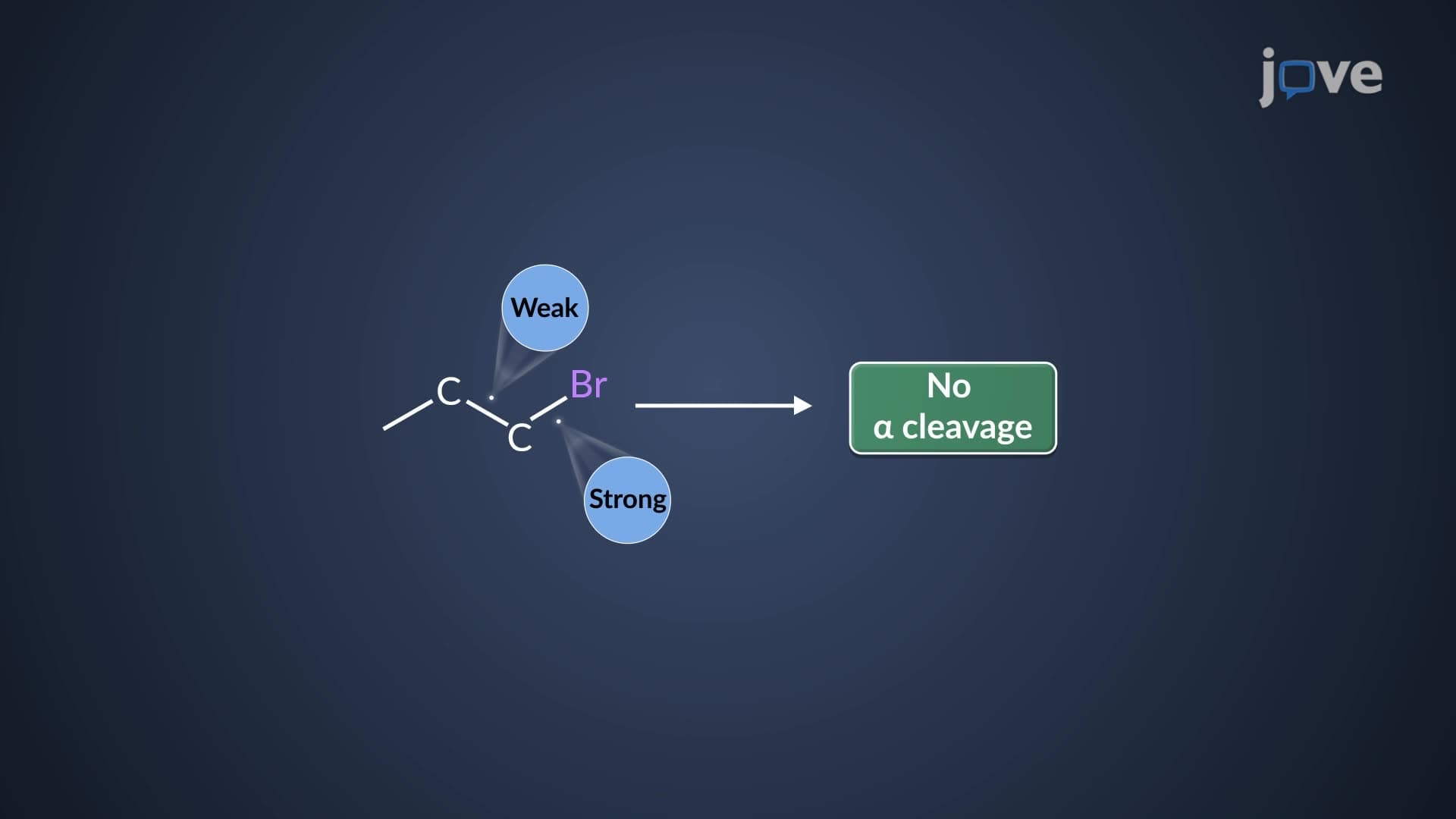

Video Summary: Mass Spectrometry Alkyl Halide Fragmentation Explained
Ever wonder why forensic labs can identify unknown compounds from microscopic samples? Alkyl halide MS fragmentation creates unique isotope patterns that act like molecular fingerprints. When chlorinated compounds like those found in environmental contamination are analyzed, they show distinctive 3:1 peak ratios due to chlorine isotopes. This pattern helps EPA laboratories identify pollutants and confirm their structures. Watch the full video on JoVE Coach to master this concept with expert-led visuals and step-by-step explanations.
Mass spectrometry reveals the molecular architecture of alkyl halides through distinctive fragmentation patterns that serve as structural fingerprints. When alkyl halides enter the mass spectrometer, they undergo ionization and subsequent fragmentation in predictable ways that reflect the underlying chemistry of carbon-halogen bonds.
The most striking feature of alkyl halide mass spectra is the isotope pattern created by naturally occurring halogen isotopes. Chlorine exists as two isotopes: Cl-35 (75% abundance) and Cl-37 (25% abundance), creating the characteristic 3:1 ratio in molecular ion peaks. For example, when analyzing chlorinated solvents like those used in pharmaceutical manufacturing, 1-chloropropane displays molecular ions at m/z 78 and 80 with relative intensities of 3:1.
Bromine isotopes (Br-79 and Br-81) occur in nearly equal abundance, producing 1:1 peak ratios. This difference allows analytical chemists at companies like Merck or Pfizer to immediately distinguish chlorinated from brominated intermediates during drug synthesis quality control.
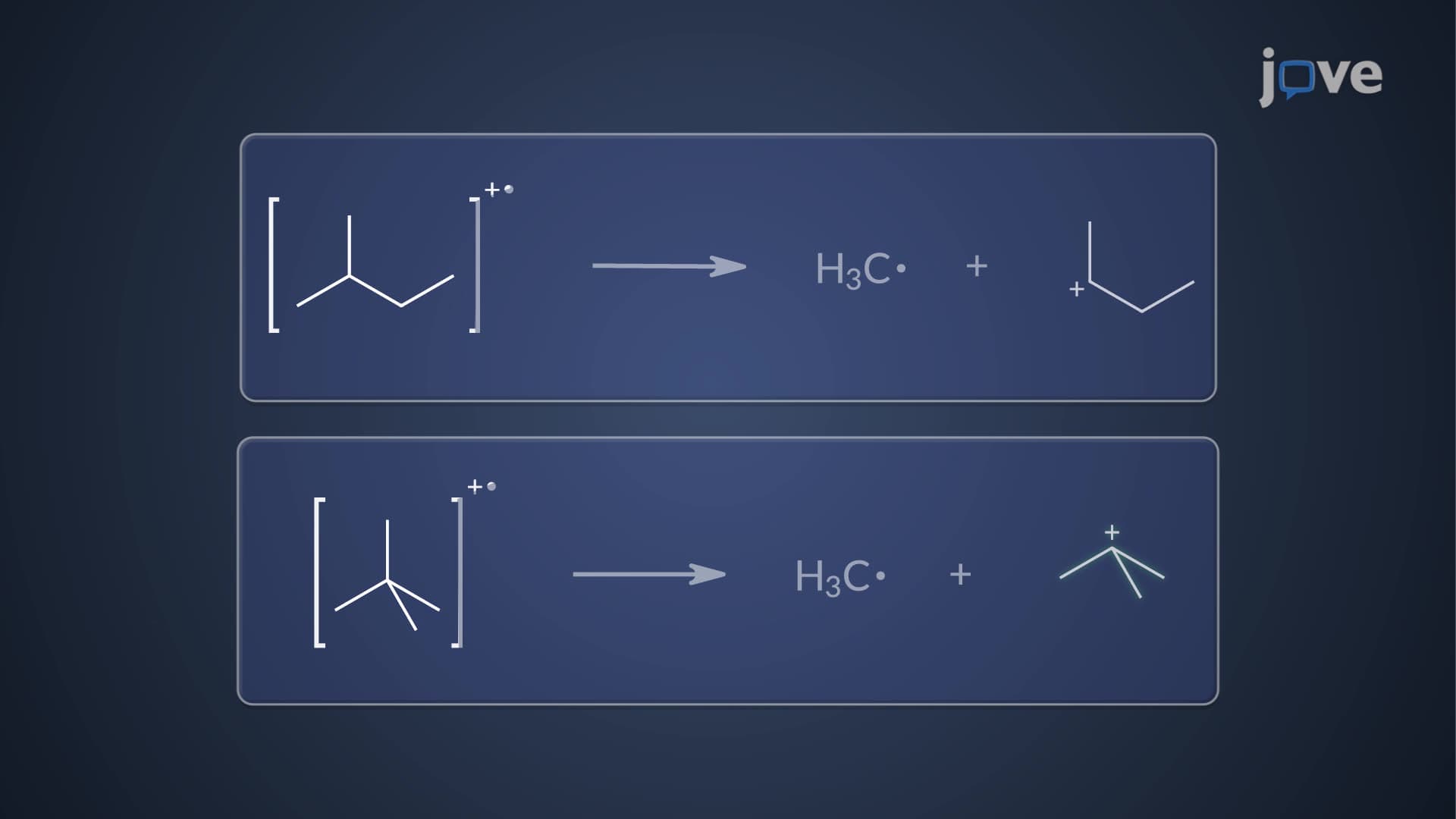
The base peak in alkyl halide spectra typically results from heterolytic cleavage of the C-X bond, where X represents the halogen. This process generates a stable carbocation and a neutral halogen radical. The carbocation's stability depends on substitution patterns-tertiary carbocations from compounds like 2-chloro-2-methylpropane produce intense base peaks due to hyperconjugation and inductive stabilization.
Alkyl chlorides exhibit unique behavior due to comparable C-Cl and C-C bond strengths (approximately 80 kcal/mol each). This similarity enables both cleavage pathways, creating multiple fragment peaks. Environmental testing laboratories analyzing PCB contamination rely on these patterns to identify specific chlorinated biphenyl isomers.
Students preparing for the MCAT encounter alkyl halide fragmentation in organic chemistry sections, where isotope pattern recognition demonstrates understanding of molecular structure determination. AP Chemistry courses increasingly include mass spectrometry interpretation, with alkyl halides serving as excellent introductory examples due to their clear patterns.
Industrial applications span pharmaceutical quality control, environmental monitoring, and forensic analysis. The FDA uses these techniques to verify drug purity, while EPA laboratories identify halogenated pollutants in water supplies across states like California and Texas.
Related Micro-courses