Loading subject page…


2,101,787 views

Video Summary: What Is Exocytosis
Did you know that insulin-producing cells in your pancreas release thousands of hormone molecules every second through a precisely orchestrated cellular dance? Exocytosis is the fundamental process by which cells package and export essential molecules-from hormones to neurotransmitters-by fusing internal vesicles with the cell membrane. Consider how neurons in your brain communicate: they rely on exocytosis to release neurotransmitters like dopamine and serotonin that control everything from mood to movement. Watch the full video on JoVE Coach to master this concept with expert-led visuals and step-by-step explanations.
Exocytosis represents one of biology's most elegant solutions to a fundamental challenge: how can cells efficiently package, transport, and release specific molecules while maintaining the integrity of their protective membrane barriers? This sophisticated cellular process enables everything from the release of digestive enzymes in your stomach to the rapid-fire communication between neurons that allows you to read these words.
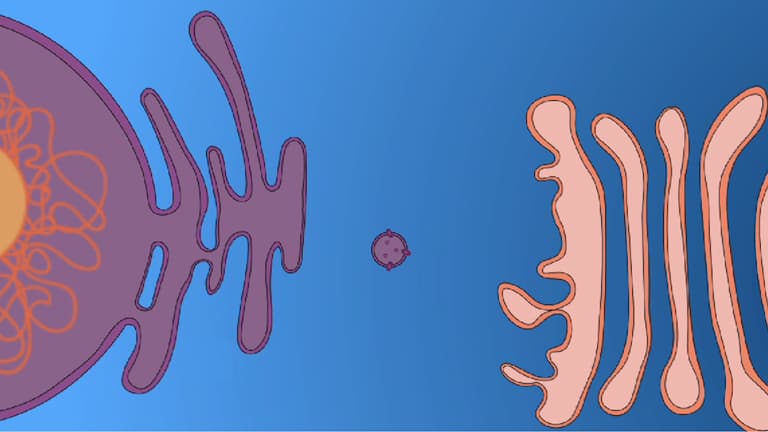
The exocytosis pathway begins in the endoplasmic reticulum (ER), where newly synthesized proteins destined for export are carefully folded and packaged into transport vesicles. These microscopic containers then embark on a precisely regulated journey through the Golgi apparatus-often called the cell's "post office"-where proteins undergo additional modifications like glycosylation.
At the trans-Golgi network, the final sorting station, proteins are packaged into secretory vesicles based on their ultimate destination. Some vesicles move directly to the plasma membrane for immediate release (constitutive exocytosis), while others await specific cellular signals before fusing with the membrane (regulated exocytosis). This distinction proves crucial in understanding how cells respond to changing physiological demands.
Exocytosis plays vital roles throughout human physiology. Pancreatic beta cells use regulated exocytosis to release insulin in response to rising blood glucose levels-a process that becomes impaired in Type 2 diabetes. Similarly, neurons rely on calcium-triggered exocytosis to release neurotransmitters across synapses, enabling everything from muscle contraction to memory formation.
Understanding exocytosis becomes particularly important for students preparing for standardized exams. The MCAT frequently tests this concept in passages about cell biology and physiology, while AP Biology exams often include questions about membrane dynamics and cellular transport. College-level courses in cell biology, biochemistry, and physiology extensively cover exocytosis mechanisms, making solid foundational knowledge essential for academic success.
The culminating event of exocytosis-membrane fusion-requires precise molecular machinery including SNARE proteins that act like cellular "zippers" to merge vesicle and plasma membranes. This fusion creates a temporary pore through which cargo molecules escape into the extracellular environment, completing the secretory process while allowing the cell membrane to remain intact.
Related Micro-courses