Loading video…


 21 Concepts
 852.1K views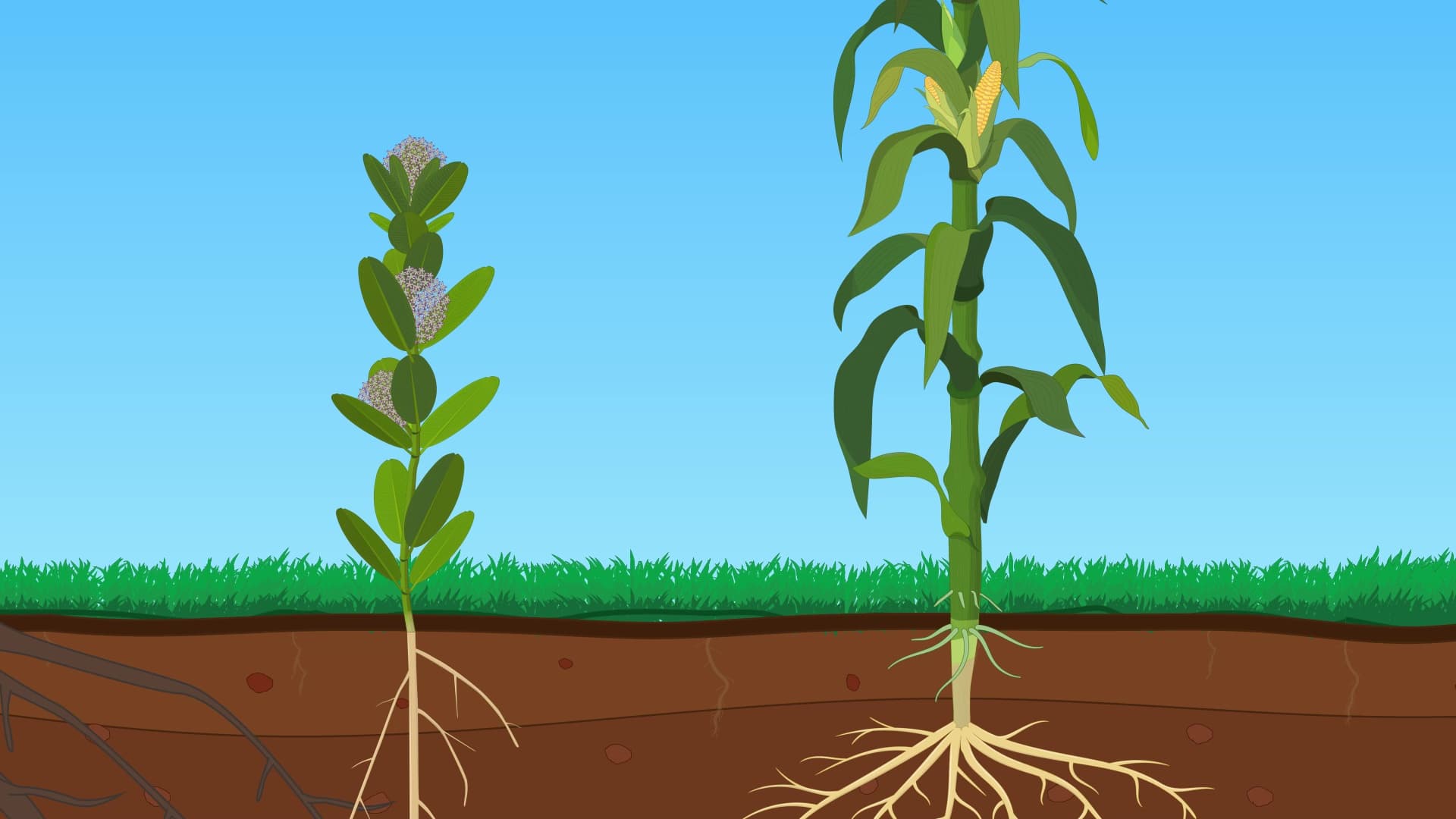

Video Summary: Basic Plant Anatomy Roots Stems Explained
Did you know that a single corn plant's roots can extend over 6 feet deep and spread 3 feet wide underground? Understanding basic plant anatomy roots reveals how plants survive and thrive through specialized organ systems that rival animal complexity. From California's towering redwoods anchored by extensive root networks to the fibrous root systems supporting Midwest wheat crops, Basic Plant Anatomy Roots Stems Explained demonstrates how two primary organ systems-shoot and root-work together to sustain plant life. Watch the full video on JoVE Coach to master this concept with expert-led visuals and step-by-step explanations.
Plant biology reveals remarkable organizational complexity that students often underestimate. Unlike the mobile nature of animals, plants have evolved sophisticated stationary systems that efficiently capture resources from both soil and atmosphere. This dual-environment strategy requires specialized organs working in perfect coordination-a concept frequently tested on AP Biology exams and college botany courses.
The underground root system serves as the plant's foundation and resource acquisition network. Taproot systems, exemplified by plants like carrots and oak trees throughout the American landscape, feature a dominant primary root that penetrates deep into soil layers. This design provides exceptional drought resistance-critical for plants in California's Mediterranean climate or Texas's arid regions. The primary root's depth allows access to groundwater and deep mineral deposits while lateral roots spread horizontally to maximize nutrient absorption.
Conversely, fibrous root systems dominate grass species across American prairies and suburban lawns. These shallow, densely branched networks excel at capturing surface water and preventing soil erosion. The adventitious roots that characterize fibrous systems develop from stem tissue rather than the original seedling root, creating redundancy that enhances survival if portions become damaged.
Above ground, the shoot system balances structural support with photosynthetic efficiency. Stems provide the architectural framework, with nodes serving as attachment points for leaves and branches, while internodes determine plant height and leaf spacing. This arrangement appears frequently in MCAT biology sections, where students must understand how stem modifications like runners (strawberry plants) or bulbs (tulips) serve reproductive functions.
Leaf diversity reflects environmental adaptation strategies. Simple leaves with single blades per petiole, like those found on maple trees throughout New England, maximize photosynthetic surface area while minimizing resource investment. Compound leaves, such as those on American ash trees, create larger total surface areas while maintaining structural integrity against wind damage-an evolutionary response to environmental pressures.
Understanding plant anatomy directly impacts American agricultural practices. Corn's fibrous root system influences planting density decisions across Midwest farms, while knowledge of taproot depth guides irrigation strategies in California's Central Valley. These concepts connect classroom learning to real-world applications, making plant anatomy relevant for students considering careers in agriculture, environmental science, or biotechnology research.
Related Micro-courses