Loading subject page…


442,001 views


Video Summary: What Is Gastrulation
Did you know that every organ in your body-from your beating heart to your thinking brain-originated from just three simple tissue layers formed during the third week of human development? Gastrulation is the fundamental process that transforms a simple ball of cells into these three distinct germ layers that will eventually become all your body systems. This critical developmental milestone occurs in human embryos around day 14-21 after fertilization, similar to what researchers study in medical schools like Johns Hopkins and Harvard Medical School. Watch the full video on JoVE Coach to master this concept with expert-led visuals and step-by-step explanations.
Gastrulation represents a pivotal transformation in human embryonic development, occurring approximately two weeks after fertilization. This process converts the relatively simple blastocyst into a complex, three-layered structure that serves as the blueprint for all future organ systems. Understanding gastrulation is essential for students preparing for advanced biology courses, pre-medical studies, and standardized tests like the MCAT and AP Biology exam.
Before gastrulation begins, the implanted blastocyst undergoes significant reorganization. The inner cell mass differentiates into two distinct populations: the epiblast and hypoblast. These layers form what embryologists call the bilaminar embryonic disc. The epiblast cells, which will ultimately give rise to the embryo proper, organize around the newly formed amniotic cavity. Meanwhile, hypoblast cells migrate to create the yolk sac, establishing the basic architecture necessary for subsequent development.
The hallmark of gastrulation is the formation of the primitive streak, a specialized structure that appears along the midline of the embryonic disc. This streak serves as a "migration highway" through which epiblast cells move during the process of ingression. The primitive node, located at the anterior end of the streak, acts as an organizing center that will later play crucial roles in neural development. Students studying for the USMLE Step 1 often encounter questions about these structures and their developmental significance.
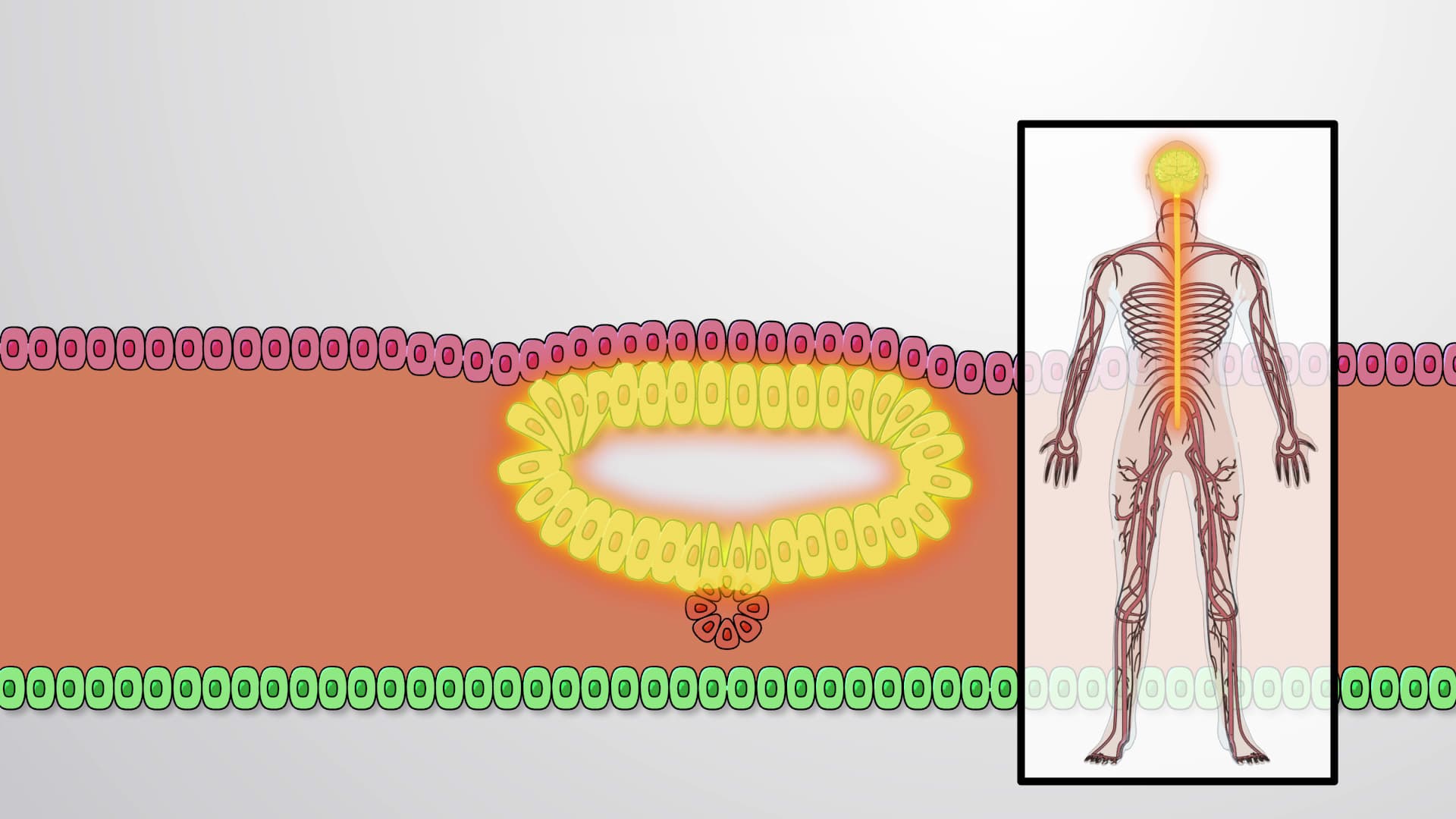
Through coordinated cell migration, gastrulation establishes three fundamental tissue layers. The endoderm, formed by cells that migrate through the primitive streak and displace the hypoblast, will eventually develop into the respiratory and digestive systems. The mesoderm emerges as cells continue migrating, ultimately contributing to the skeletal, circulatory, and muscular systems. Finally, the ectoderm consists of epiblast cells that remain in place, destined to form the nervous system and skin. This three-layer organization is so fundamental that medical students at institutions like Stanford and UCLA spend considerable time mastering these germ layer derivatives for both coursework and board examinations.
Related Micro-courses