
To respond to a bad performance review, don't reply on the spot. In the first 24 hours, reread it and sort each point into accurate or inaccurate. Then ask your manager for specific examples, agree a plan for the fair points, and write a short, factual rebuttal only for points that are wrong and matter.
Knowing how to respond to a bad performance review starts with not responding, at least not right away. The first reaction to a tough review is usually hurt, then anger, then a strong urge to fire back an email. That email is almost always a mistake, because whatever you write may stay attached to your review.
This guide gives you a 48-hour plan, a way to decide whether you need a rebuttal at all, and a calm template if you do.
Should you write a rebuttal to your performance review?
A rebuttal is your written response, added to your review. As SHRM's Johnny C. Taylor, Jr. explains in his Ask HR answer on unfair reviews, its purpose is to add a permanent record to the review, and you should confirm with your manager or HR how to submit one under company policy.
Permanent is the key word. A rebuttal can protect you when a review is wrong. A defensive one can hurt you for years. So before writing anything, sort each criticism with two questions: is it accurate, and how much rides on it?

Most criticism lands in the left column. A formal rebuttal is for the top-right box. Be honest in that sorting. Most criticism in a bad review is at least partly fair, even when the delivery stings. A rebuttal is for the criticism that's factually wrong or missing important context, and that affects your pay, promotion, or job.
How to respond to a bad performance review in 48 hours
Hours 0 to 2: say less than you want to
In the meeting, or right after reading the review, your only job is to keep options open. One calm sentence does it:
Thank you. I'd like to take some time to read this properly, and I'll come back with questions. Could we meet again on Thursday?
A few things to avoid in these first hours:
- Don't argue point by point on the spot. You'll remember the fight, not the feedback.
- Don't send an email tonight. Anything you write now is a first draft of your rebuttal, written at your angriest.
- Don't vent to teammates or online. It travels.
- Ask before you sign. If you're asked to sign the review, ask whether signing means you agree or only that you received it. It usually means receipt, but check.
Staying steady here is a skill, sometimes called professional composure. Feeling hurt is normal. What matters is not letting that feeling write your reply.
Hours 2 to 24: sort the facts from the sting
Read the review twice, a few hours apart. The first read is emotional. The second is where you see what it actually says. Then put every criticism into a simple table:
| What the review says | Accurate, partly, or wrong? | My evidence | What I'll do |
|---|---|---|---|
| "Missed several project deadlines" | Partly: 2 late, but both had approved extensions | Approval emails from March and June | Ask for the extensions to be noted |
| "Needs to communicate more with stakeholders" | Accurate | None needed | Start a weekly two-line update |
| "Did not complete the Q3 training" | Wrong: completed September 14 | Completion certificate | Include in a rebuttal |
The table does two things. It shows you that most of the review is probably fair, which is easier to accept once it's written down. And it pulls out the few points that are wrong, with proof attached.
Owning the fair points is as important as challenging the wrong ones. Managers notice who takes responsibility, and personal accountability after a tough review often earns more trust than a strong rebuttal does.
If the review has shaken your confidence more than you expected, you're not alone. Even people promoted for strong work go through a dip, as this piece on imposter syndrome in new managers describes. The table helps here too, because it turns a vague "I'm bad at this" into a short list of specific, fixable things.
Hours 24 to 48: meet, ask, and decide
Go back to your manager with questions, not a defense. Good ones:
- "Can you give me a specific example of the communication issue, so I know what to change?"
- "What would a strong rating look like for me next time?"
- "Two of the late deadlines had approved extensions. Could those be noted?"
Asking for examples is fair. Clear feedback names a moment and its effect, as these SBI feedback examples show, and a good manager can do that.
By the end of this meeting you should know three things: which points your manager will correct, what improvement they expect and by when, and whether you still need a written rebuttal. The way you handle this conversation shapes the next year of working with your manager, so keep it collaborative, even if you disagree.

Rebuttal to a performance review: a template
If a point is wrong and it matters, write a rebuttal. Keep it to one page, stick to facts, and agree with what's fair before you correct what isn't. Check with HR how to submit it, so it's attached to the review.
Subject: My response to my [year] performance review
Dear [Manager's name],
Thank you for my performance review on [date] and for our follow-up conversation on [date]. I'd like to add this response to my file.
I agree with the feedback on [fair point], and I've already started [specific action] to improve it.
I'd like to add context on the following points:
1. The review states [quote the point]. [Fact that corrects it], as shown in [evidence, with date].
2. The review states [quote the point]. [Fact that corrects it], as shown in [evidence, with date].
I'm committed to [your improvement goal], and I'd welcome a check-in on [date] to review my progress.
Sincerely,
[Your name]
[Date]
Notice the order: thanks, agreement, then corrections, then a commitment. It shows you can take feedback, which makes your corrections more believable.
What not to write in your response
| Don't write | Why it backfires | Write instead |
|---|---|---|
| "This review is completely unfair." | A judgment with no facts | The specific point and your evidence |
| "Everyone else missed deadlines too." | Shifts blame, and reads as an excuse | Your own record, with dates |
| "My manager has never liked me." | Makes it personal, and can't be proven | Stick to the work |
| A three-page list of every comment | Buries your strong points | One page, two or three corrections |
| Anything written the same day | Emotion shows | Wait at least 24 hours |
If you believe the review reflects discrimination or retaliation, that's a different situation. Talk to HR, and consider outside advice, rather than relying only on a rebuttal. This post is general guidance, not legal advice.
Even then, tone matters. Calm, factual professionalism at work is what makes people take your case seriously.
After your response: the next 90 days
A bad review is one data point. What you do next matters more.
- Turn the fair points into a plan. Pick one or two, set a measurable target, and share it with your manager.
- Ask for monthly check-ins. Regular feedback means no surprises next time.
- Track your wins as you go. Keep a running note of results with dates, so your next review covers the whole year.
- Think about the bigger picture. If the review pointed at a skill gap, it may be the push to plan your career development more deliberately.
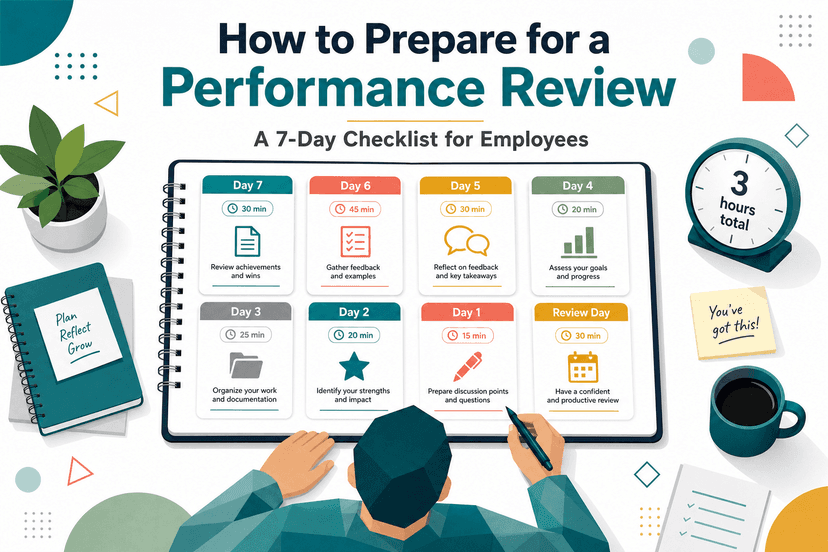
Here's how turning feedback into measurable improvement works in practice. If the review pointed at a skill gap, it may be the push to plan your career development more deliberately. When the next review comes around, this guide on how to prepare for a performance review gives you a 7-day plan.
Build the skill that makes the next tough moment easier
The hardest part of a bad review is the first 24 hours, when emotion wants to take over. Staying calm, naming what you feel, and choosing your response is a skill you can practice. The course on emotional intelligence at work covers handling negative feedback, reframing setbacks, and keeping your composure, in short videos you can watch on your own time.

Related course - Managing Emotions in Workplace Situations
Short lessons on handling negative feedback, reframing setbacks, and keeping your composure, so the first 24 hours after a tough review don't write your reply for you.
Common Questions
Should I respond to a bad performance review in writing?
Only if part of it is factually wrong or missing important context, and it affects your pay, promotion, or job. If the criticism is fair, respond with an improvement plan instead. Either way, wait at least 24 hours, and check with HR how written responses are added to your file.
How do you respond to a negative performance review professionally?
Thank your manager, ask for time to read it, and come back within a day or two with questions and specific examples. Accept the fair points, correct the wrong ones with evidence, and agree on an improvement plan with check-in dates. Avoid arguing in the moment or sending an emotional email.
Can a performance review rebuttal change your rating?
Sometimes, if it corrects a clear factual error, but often the rating stays the same once a review is closed. The rebuttal still matters because it adds your side to the permanent record, which can help in future promotion decisions or disputes.