Loading subject page…


669,502 views

Video Summary: Comparing Intermolecular Forces Melting Point Explained
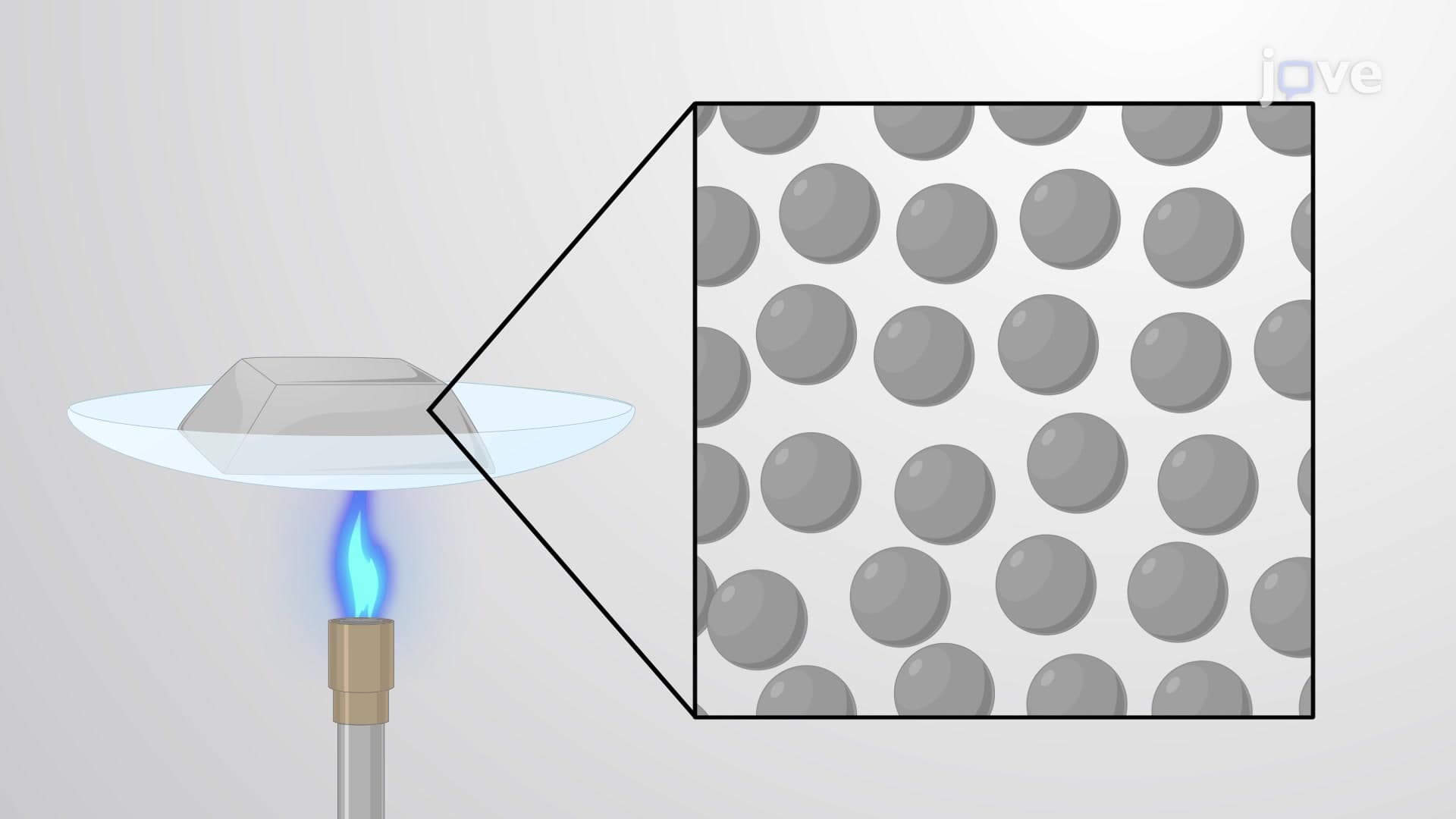
Ever wonder why ice melts at 32°F while table salt requires over 1,400°F? Comparing intermolecular forces melting point relationships reveals how molecular attractions determine phase transitions. Different substances like water versus petroleum wax demonstrate how stronger intermolecular forces require more energy to overcome, directly affecting melting temperatures in everyday materials. Watch the full video on JoVE Coach to master this concept with expert-led visuals and step-by-step explanations.
Comparing intermolecular forces melting point connections provides fundamental insight into why substances behave differently when heated. These molecular-level attractions determine how much energy is needed to transition from solid to liquid phases, explaining everything from why butter melts easily in your hand to why steel requires industrial furnaces.
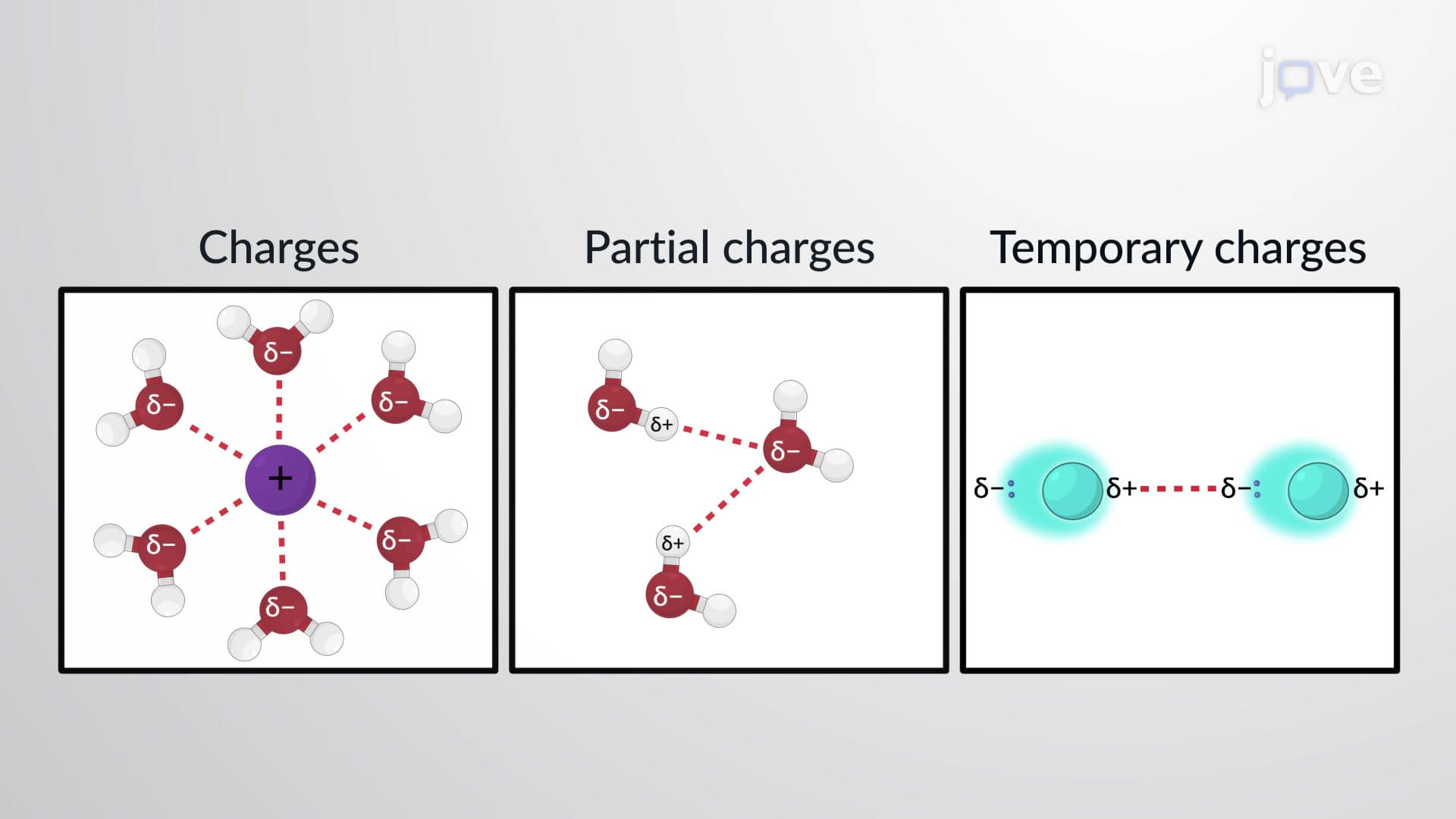
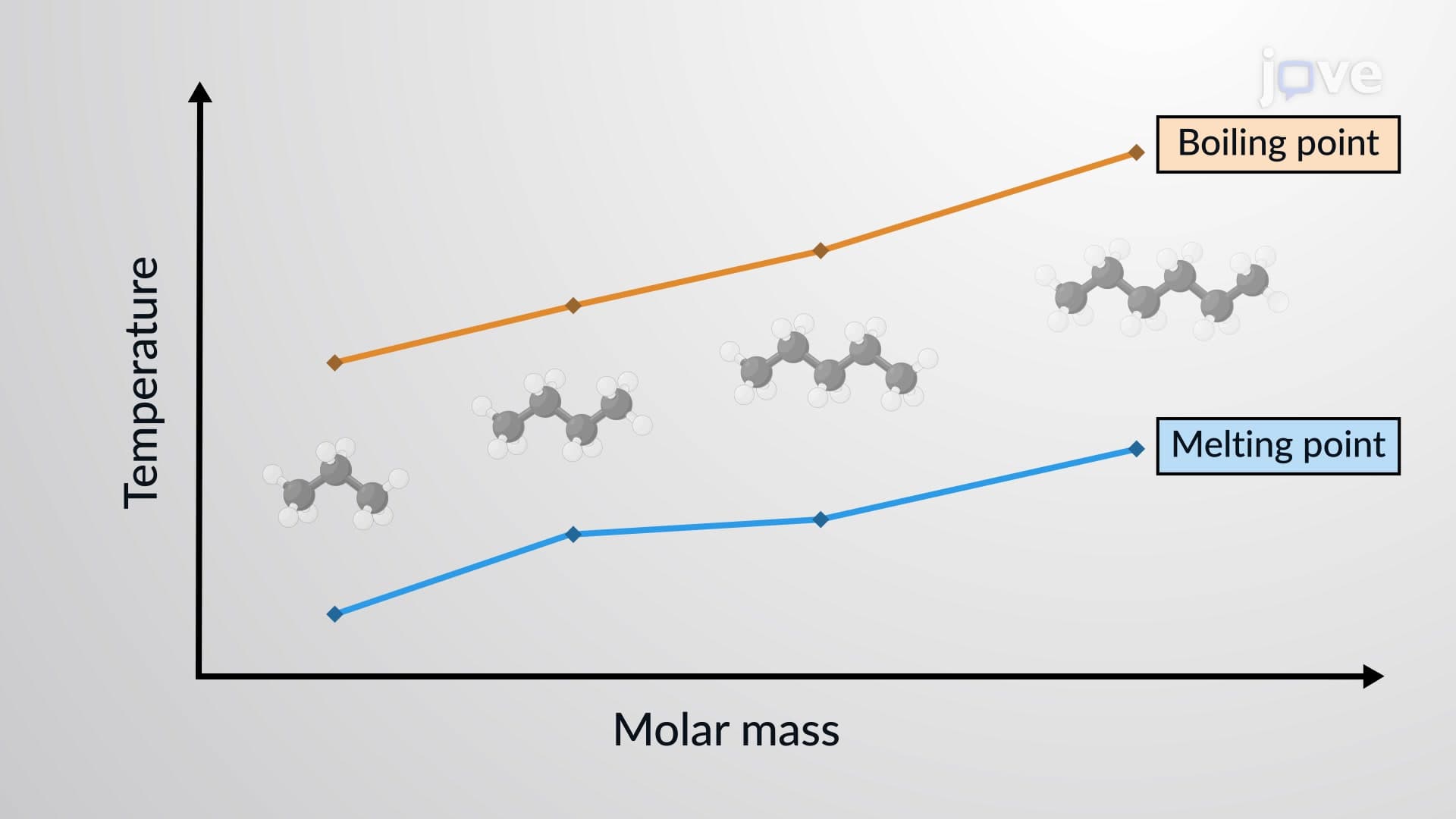
All molecules experience dispersion forces (also called London forces), the weakest but most universal intermolecular attraction. These forces arise from temporary electron distribution fluctuations that create instantaneous dipoles. In hydrocarbon chains like those found in petroleum products, increasing molecular mass strengthens dispersion forces because larger molecules have more electrons and greater surface contact area.
This principle explains trends in the alkane series used in fuel production. Methane (natural gas) remains gaseous at room temperature, while longer hydrocarbons like octane (gasoline component) exist as liquids, and even longer chains form solid paraffins. Students preparing for AP Chemistry exams frequently encounter these trends when analyzing hydrocarbon properties.
Structural isomers demonstrate how shape influences intermolecular attractions independent of molecular mass. Linear n-pentane exhibits stronger dispersion forces than branched neopentane because the straight-chain structure maximizes surface contact between molecules. This concept appears regularly in college organic chemistry courses and MCAT preparation, where students must predict physical properties based on molecular geometry.
The branching effect has practical applications in fuel design. Highly branched gasoline components resist premature ignition (knocking), leading to the development of octane rating systems that measure fuel quality in American automotive standards.
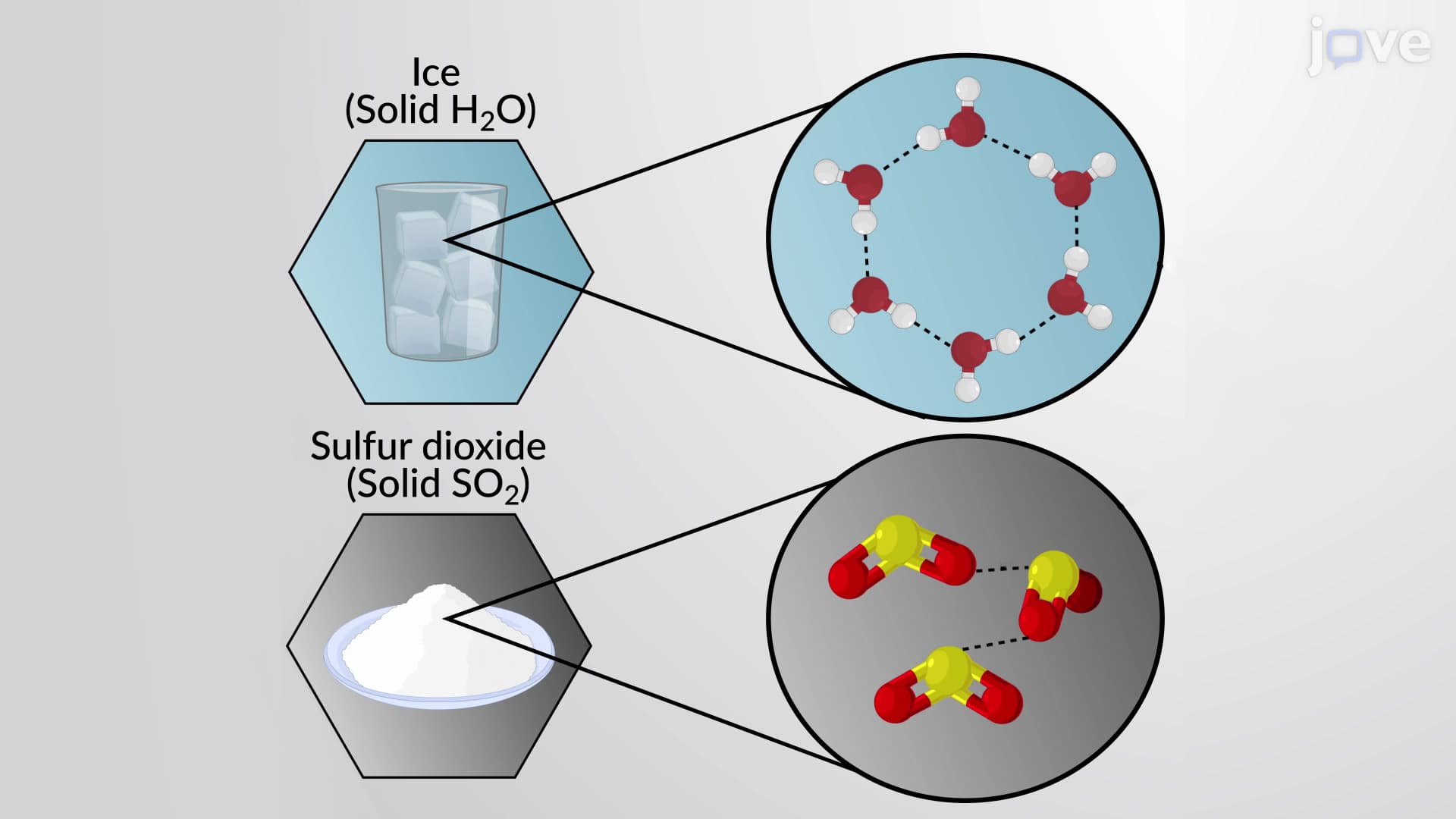
Substances capable of hydrogen bonding-like water, alcohols, and biological molecules-exhibit dramatically higher melting points than predicted by molecular mass alone. This explains why water remains liquid across most environmental temperatures despite being relatively lightweight, making life as we know it possible.
In pharmaceutical applications, drug solubility often depends on hydrogen bonding capability. Aspirin's solubility in water versus oil demonstrates how intermolecular forces determine bioavailability, a concept crucial for students pursuing healthcare careers and MCAT preparation.
The principle "like dissolves like" stems directly from intermolecular force compatibility. When mixing substances, favorable interactions occur between molecules with similar force types and strengths. This explains why oil spills create environmental disasters-petroleum hydrocarbons cannot integrate with water's hydrogen-bonded network, leading to persistent contamination layers that resist natural cleanup processes.
Related Micro-courses