Loading video…


 4 Concepts
 2.6K views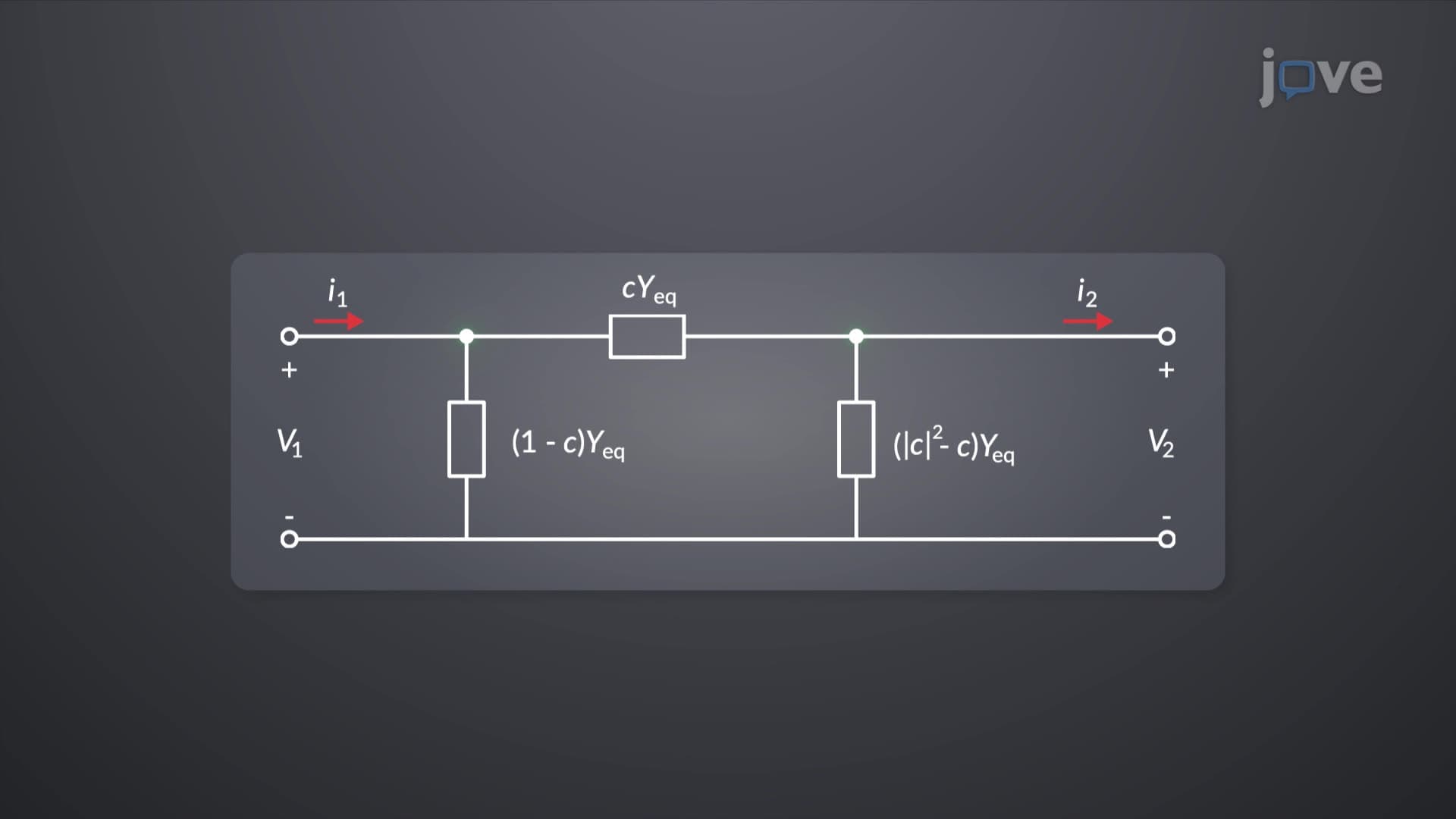

Video Summary: Transformers with Off Nominal Turns Ratios Explained
Ever wonder why your neighborhood electrical grid can handle power from multiple sources simultaneously? Transmission line design considerations become critical when parallel transformers with different ratings must work together seamlessly. Consider how Pacific Gas & Electric manages thousands of transformers across California's grid - engineers use sophisticated per-unit models with off-nominal turns ratios to ensure stable power delivery. These Transformers With off Nominal Turns Ratios Explained represent advanced modeling techniques that solve real-world power system challenges. Watch the full video on JoVE Coach to master this concept with expert-led visuals and step-by-step explanations.
Transmission line design considerations become particularly complex when dealing with parallel transformers that have different voltage ratings. In real power systems like those operated by major US utilities such as American Electric Power or Southern Company, engineers frequently encounter situations where multiple transformers must operate in parallel despite having different specifications.
Traditional per-unit analysis assumes that voltage base ratios match the transformer's voltage ratings perfectly. However, this ideal scenario rarely exists in practice. When transmission line design considerations involve parallel transformers with different ratings, selecting appropriate voltage bases becomes a significant engineering challenge. For instance, if one transformer has a 138kV/13.8kV rating while another has 138kV/12.47kV, engineers cannot simply use proportional voltage bases for both units.
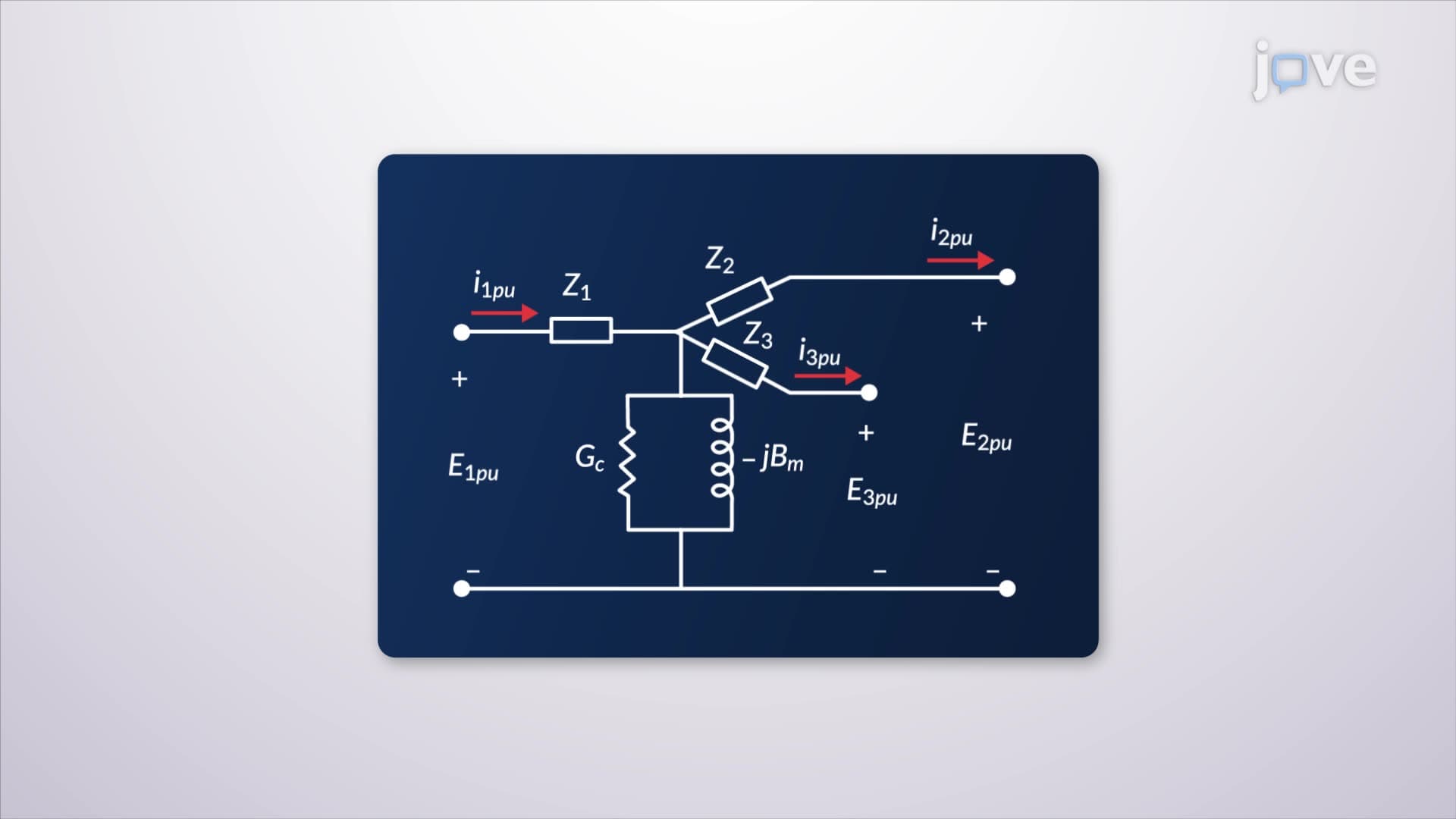
The mathematical approach involves three key terms: 'a' represents the actual rated voltage relationship, 'b' represents the chosen voltage base relationship, and 'c' represents their ratio (c = b/a). This framework allows engineers to model the system using two transformers in series - one representing the standard per-unit model with losses, and another representing an ideal transformer that accounts for the off-nominal ratio.
Modern power system analysis software used by utilities across the US employs different strategies for handling these complex models. Some programs use nodal equations that provide admittance parameters specifically designed for off-nominal turns ratio transformers. When the ratio 'c' is real, engineers can implement pi circuit networks that effectively model the transformer behavior while maintaining computational efficiency.
These concepts frequently appear in electrical engineering coursework at institutions like MIT, Georgia Tech, and UC Berkeley. Students preparing for the Fundamentals of Engineering (FE) exam or Professional Engineering (PE) exam will encounter similar problems involving parallel transformer analysis and per-unit system calculations.
Related Micro-courses